
The 8th China International Robot Exhibition (CIROS 2019) was successfully held at the National Exhibition and Convention Center in Shanghai from July 10 to 13. This edition of the exhibition continued its distinctive format of “international high-end conferences + industry professional exhibition,” delving deeply into the theme of “Gathering Wisdom, Pioneering Innovation, Sharing Intelligence, and Fostering Integration.” The event highlighted the critical role of “Intelligent+” in driving the transformation and upgrading of traditional manufacturing sectors, with a strong focus on the advancements and future directions of the China robot industry.
The exhibition served as a pivotal platform for showcasing the latest innovations in robotics and intelligent manufacturing, emphasizing how the China robot ecosystem is evolving to meet global demands. With numerous enterprises, experts, and policymakers in attendance, CIROS 2019 underscored the rapid growth and technological prowess of the China robot market, which continues to lead globally in industrial robot consumption. The integration of “Intelligent+” concepts was a central thread throughout the event, reflecting its inclusion in China’s government work report as a new driver for industrial modernization.
- Event Overview and Significance of ‘Intelligent+’ in Manufacturing
The China International Robot Exhibition (CIROS) is a premier event that gathers stakeholders from across the robotics and automation sectors. This year’s edition, CIROS 2019, emphasized the transformative potential of “Intelligent+”—a concept that extends beyond “Internet+” to encompass artificial intelligence, industrial internet, and smart technologies in revitalizing traditional manufacturing. The China robot industry is at the forefront of this shift, with data indicating robust growth. In 2018, the robotics and intelligent manufacturing sector in China achieved a main business revenue of 286.296 billion yuan, marking a year-on-year increase of 6.68%. This growth rate significantly outpaces the average for the broader mechanical industry, highlighting the dynamism of the China robot market.
Furthermore, China has maintained its position as the world’s largest consumer of industrial robots for six consecutive years, underscoring the scale and importance of the China robot ecosystem. The government has supported this through initiatives such as approving 618 national-level intelligent manufacturing pilot projects and establishing 537 local intelligent manufacturing industrial parks. These efforts are shaping industrial belts dedicated to smart manufacturing, where the China robot industry plays a central role in driving innovation and efficiency.
- Cultivating New Intelligent Manufacturing Models and Building Industrial Ecosystems
Parallel to the exhibition, a series of professional technical conferences were held, including the 2019 China International Robotics and Intelligent Manufacturing Development Summit Forum, the “Golden Finger Award” ceremony, and thematic forums on integration applications, production logistics automation, metal stamping, polishing, core components, and new application fields. Among these, the 2019 China International Robotics and Intelligent Manufacturing Development Summit Forum stood out for its in-depth discussions on “Intelligent+ Manufacturing.” Over 300 industry experts and entrepreneurs exchanged views on development directions, common technology cases, and the application of artificial intelligence in manufacturing processes and the robotics industry.
The forum emphasized the need to explore and cultivate new models of intelligent manufacturing. Participants advocated for focusing on discrete and process manufacturing models to promote smart production. By fostering networked collaboration and building cloud manufacturing service platforms, new business formats that mutually reinforce each segment of the industrial chain can emerge. This approach is crucial for the sustained growth of the China robot sector, as it enhances connectivity and innovation across the supply chain. The China robot industry is seen as a key enabler in this ecosystem, providing the hardware and software solutions necessary for smart factories.
- Insights from Industry Experts and Forums on Challenges and Opportunities
During the summit, prominent figures shared their perspectives on the challenges and opportunities in implementing “Intelligent+” strategies. Yang Huayong, an academician of the Chinese Academy of Engineering, pointed out that advancing industrial internet for intelligent manufacturing faces significant hurdles. For instance, “Intelligent+” requires collaborative efforts between industrial and IT specialists, and the沉淀 of industrial components and algorithm models is complicated by diverse industrial scenarios and algorithms. This complexity poses a major challenge for the China robot industry as it seeks to deepen smart manufacturing capabilities.
Yu Haibin, Director of the Shenyang Institute of Automation, Chinese Academy of Sciences, analyzed the difficulties in industrial internet, highlighting two key issues: deep perception at the底层 level, which is not traditionally the forte of internet companies, and跨联合 data sharing and integration with IT and operational technology (OT). These technical barriers must be overcome to fully leverage the potential of the China robot market in smart environments.
Du Pinsheng, Vice President of Phoenix Contact China, proposed that the success of Industry 4.0 should be measured by improvements in product quality, cost reduction, accelerated R&D, and enhanced efficiency with reduced emissions in the internet era. Without addressing these practical concerns, “Intelligent+” risks remaining a virtual concept. This pragmatic view resonates with the goals of the China robot industry, which aims to deliver tangible benefits to manufacturers.
Mao Jinsheng, Inspector of the Intellectual Property Protection Department of the National Intellectual Property Administration, provided evidence of the rapid development of China’s intelligent manufacturing sector through patent applications. Globally, cumulative artificial intelligence patent applications have reached 1.9 million, with China leading in the number of filings. This surge is closely linked to the booming China robot and smart manufacturing industries, reflecting intense innovation and competitive advantage.
Additionally, during the event, reports such as the “2019 Intelligent Manufacturing Industry Patent Analysis Report,” “Intelligent Manufacturing Standard Achievements Release,” and “Intelligent Manufacturing Implementation Case Collection” were jointly released by the National Intellectual Property Administration and the Intelligent Manufacturing Branch of the China Machinery Industry Federation. Patrick Schwarzkopf, Executive Committee Member of IFR and Chairman of the VDMA Robotics and Automation Association, presented the “Global Robot Latest Statistics Release and Analysis” report, while Dr. Qu Daokui, President of Shenyang Siasun Robot & Automation Co., Ltd. and Chairman of the China Robot Industry Alliance, delivered a report on “China Robot Latest Statistics Release and Analysis.” These presentations underscored the global and domestic trends shaping the China robot landscape.
- Global and China Robot Market Statistics and Industry Performance
According to the latest global statistics released by the International Federation of Robotics (IFR), the worldwide industrial robot market experienced modest growth in 2018, with sales reaching a new record high of approximately 384,000 units, a 1% increase year-on-year. Regionally, Europe and the Americas maintained growth, selling 71,000 and 49,000 units respectively, up by 7% and 6%. However, the Asian market saw a slight decline of 1%, with sales of 260,000 units. Within Asia, the China robot market remains a dominant force, driving demand despite broader fluctuations.
By application industry, automotive and electrical/electronics sectors continued to be the largest consumers, with sales of 116,000 and 113,000 units respectively in 2018, though these figures represent declines of 6% and 8% compared to the previous year. In contrast, the metal processing (including machinery manufacturing) industry showed robust growth, with sales increasing by 10% to 48,000 units. The plastics and chemical products, as well as food manufacturing industries, also saw positive trends, with sales growth of 7% and 24% respectively. These dynamics highlight the evolving applications where the China robot industry is expanding its footprint.
The data reinforces the importance of fostering innovation and enhancing the core competencies of the robotics sector. For the China robot industry, this means focusing on hard technological strengths to maintain its global leadership. CIROS 2019 addressed this by spotlighting market needs and industry services, bringing together leading enterprises to showcase advancements and discuss collaborative strategies.
- Showcase of Innovations and Exhibitor Highlights at CIROS 2019
The exhibition floor was a testament to the vibrancy of the China robot ecosystem, with participation from numerous companies such as Zhongnan Intelligent, Shenyang Siasun, Tianji, Aviation Manufacturing, Sumitomo, Han’s Laser, Greenland, Canbot, Continental Intelligence Source, Yongyida, Kuangshi, and Aobus. These exhibitors displayed a wide array of robot本体, related components, and integration applications, while also highlighting cutting-edge technologies like智能制造 system platform technology,智能制造 cloud platform technology, industrial robot AR control technology, and AI human-computer interaction technology.
Shenyang Siasun, a leader in the China robot market, presented two collaborative robot applications tailored for the 3C industry, offering practical solutions to manufacturing challenges in this sector. These demonstrations illustrated how the China robot industry is addressing real-world production issues with flexible and intelligent systems.
Guoji Intelligent showcased multiple industrial robots with broad application ranges, along with smart equipment such as multi-station数控 electric spark precision micro-hole processing machines and three-dimensional laser cutting machines. Their exhibits also included industrial robot system applications like 3D vision recognition, loading/unloading, and handling, as well as the iMES smart factory manufacturing operation system. This comprehensive display highlighted the ability of the China robot sector to provide end-to-end intelligent manufacturing solutions.
Qingneng Dechuang exhibited its CoolDrive RC series of compact integrated network servo drives, aligning with the technical trends of lightweight and miniaturization in the China robot industry. This innovation underscores the ongoing advancements in core components that are essential for enhancing robot performance and efficiency.
Canbot leveraged the exhibition to unveil its new humanoid commercial service robot, the Youyou U05H hotel robot. This product integrates seven functions: proactive reception and hospitality, fully自助 business processing, all-weather guidance, warm consulting services, festival activity and conference assistance, personalized exclusive services, and intelligent control center. It exemplifies how the China robot industry is expanding into service robotics, creating versatile machines for diverse environments.
The diversity of exhibits at CIROS 2019 reflected the百花齐放 of the robotics industry, where collaboration robots are experiencing rapid market growth, service robots are being deployed in new application areas, and artificial intelligence is significantly improving robot capabilities in mobility, vision, and grasping. Moreover, the deep integration of robots with smart factories is becoming a reality, and the impending implementation of 5G technology is expected to unlock further opportunities for the China robot market.
- Future Trends, Challenges, and the Path Forward for the China Robot Industry
The discussions and displays at CIROS 2019 collectively pointed to an exciting era for robotics. The China robot industry is poised to play a pivotal role in the global shift toward intelligent manufacturing. However, challenges remain, particularly in terms of talent integration, data sharing, and the development of standardized algorithms for complex industrial scenarios. As noted by experts, the成功 of “Intelligent+” hinges on solving practical issues like cost reduction and quality improvement, rather than treating it as a mere conceptual upgrade.
Looking ahead, the China robot sector must continue to innovate in areas such as协作 robotics, AI-enhanced performance, and integration with emerging technologies like 5G and industrial internet. The growth of the China robot market is not only driven by domestic demand but also by its increasing influence on international standards and trends. With strong government support, a robust patent portfolio, and a thriving ecosystem of enterprises and research institutions, the China robot industry is well-positioned to lead the charge in the “Intelligent+” revolution.
In conclusion, the 8th China International Robot Exhibition served as a microcosm of the dynamic progress in robotics and smart manufacturing. By fostering dialogue, showcasing innovations, and providing a platform for collaboration, CIROS 2019 reinforced the critical role of the China robot industry in empowering traditional manufacturing transformation. As the world watches, the China robot market continues to set benchmarks, driving forward with a blend of technological prowess and strategic vision that promises to reshape industries for years to come.
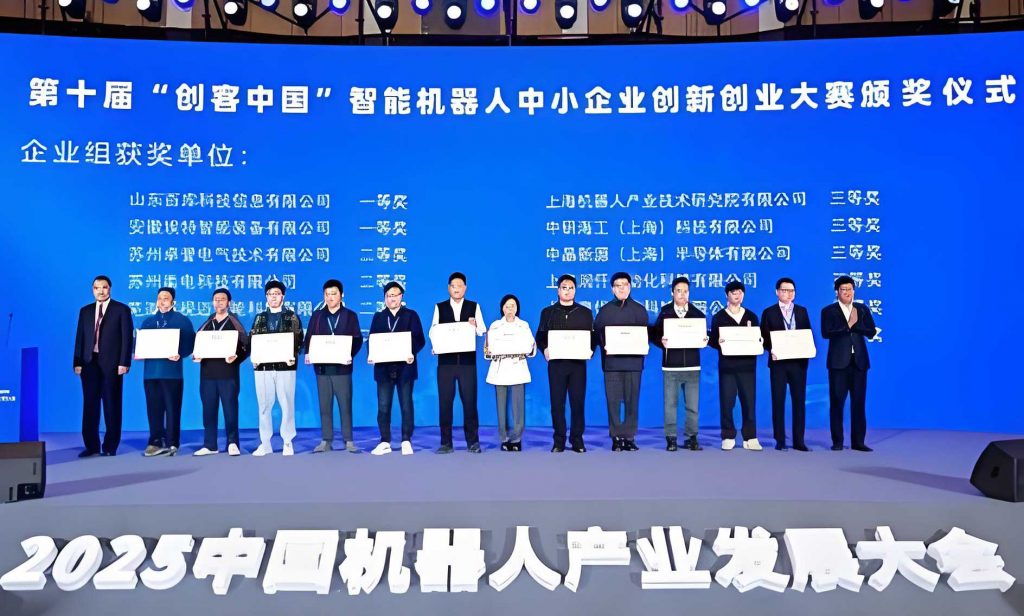
The event also featured interactive sessions such as the iFES salon dialogues on “Opportunities and Challenges of Intelligent Manufacturing Transformation” and “Intelligent+ Robotics,” along with the 4th “Golden Finger Award” 2019 China International Robot Annual Selection颁奖 ceremony, where评选 results were announced. These activities further enriched the exchange of ideas and celebrated achievements within the China robot community, highlighting the collective efforts to advance the field. As the exhibition concluded, it left a lasting impression of a sector in rapid motion, with the China robot industry at its core, steering toward a future where intelligence and automation become ubiquitous in manufacturing and beyond.