
The global robotics revolution is accelerating, with nations vying for technological supremacy and market leadership. As a critical barometer of manufacturing and scientific prowess, the robot industry has become a focal point for major economies worldwide. In this landscape, the China robot sector stands at a pivotal juncture. Despite a booming domestic market and significant governmental support, Chinese robot enterprises grapple with profound challenges that stifle growth and innovation. With foreign brands commanding over 90% of the domestic market share, the China robot industry’s own players hold less than 10%, underscoring an urgent need for transformative action. This news analysis delves into the core constraints impeding the sustainable development of the China robot industry and explores comprehensive strategies to unlock its vast potential, ensuring it becomes a global powerhouse rather than a peripheral player.
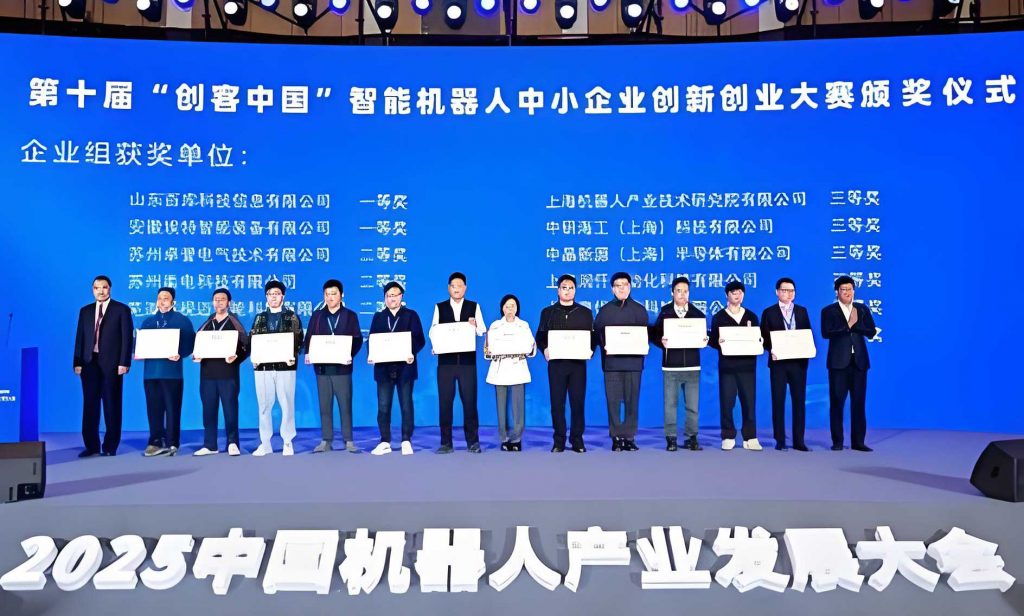
The ascent of the China robot industry is not merely an economic imperative but a strategic necessity for national technological independence. However, the path is fraught with systemic hurdles. From fragmented policies and a reliance on imported core components to a scattered industrial ecosystem and a severe talent deficit, the obstacles are multifaceted. Addressing these issues requires a coordinated, national-level approach that leverages China’s market scale, fosters innovation, and builds a resilient, homegrown supply chain. This report outlines the key constraints and proposes actionable measures to propel the China robot industry toward sustainable, globally competitive development.
1. Constraints Hindering the Sustainable Development of the China Robot Industry
The rapid expansion of the China robot market has paradoxically exposed significant weaknesses in its domestic industrial foundation. While demand soars, local enterprises struggle to capture value, trapped by a series of interconnected challenges that prevent them from advancing beyond low-margin, assembly-oriented roles. The following sections detail these primary constraints.
1.1 Inadequate Institutional Framework and Policy Coordination
The absence of a cohesive and robust institutional environment poses a fundamental barrier to the China robot industry’s progress. Although plans like the “Service Robot Technology Development ‘Twelfth Five-Year’ Special Plan” exist, a clear industry authority and a unified national association are yet to be firmly established. This lack of leadership leads to a vacuum in overarching standards, quality certification protocols, and authoritative national testing centers. While various state-funded support programs have been initiated, they often operate in silos, failing to generate synergistic effects across the industry. The absence of effective mechanisms for sharing research outcomes results in rampant duplication of effort; many research entities start projects from scratch, wasting precious resources. Furthermore, tariff policies inadvertently disadvantage local manufacturers: complete robots can be imported with zero tariffs, while critical components are taxed, creating an uneven playing field that stifles the growth of domestic integrators and OEMs within the China robot ecosystem.
1.2 Risk of Low-End Technology Lock-in and Innovation Deficit
A profound innovation gap threatens to consign the China robot industry to the lower tiers of the global value chain. Chinese firms file numerous patents, but few possess high conversion value or address core technologies. Critical modules for perception and intelligence, as well as essential components like precision reducers, servo motors, and drives, remain heavily dependent on foreign suppliers. The high cost of licensing core patents from abroad makes it exceedingly difficult for the China robot sector to ascend into high-end market segments or influence international standards. Most domestic companies risk becoming mere assembly plants or system integrators for multinational corporations. Compounding this issue is the lukewarm participation from China’s vibrant internet sector in next-generation robotics R&D, widening the gap in emerging fields like cloud robotics and AI-driven automation. Moreover, regional governments’ fervent but often misguided promotion of robot industrial parks has sparked wasteful investments and cut-throat price wars in low-end markets, further diverting resources from meaningful innovation.
1.3 Prohibitive Product Costs and Lack of Economies of Scale
Cost competitiveness remains a critical weakness for the China robot industry. With over 50% of total robot cost attributed to core components like reducers and servo systems—which are predominantly imported—domestic manufacturers face a severe cost disadvantage. Import tariffs further inflate prices, making Chinese-assembled robots significantly more expensive than their foreign counterparts, sometimes by a factor of two compared to their prices in the country of origin. For instance, the cost of a 165kg six-axis articulated robot from a foreign brand is approximately 169,000 RMB, while a domestic version can cost up to 299,000 RMB, with the reducer procurement alone costing five times more for the Chinese firm. This price gap, often exceeding 70,000 RMB per unit, erodes any potential market advantage. Additionally, some domestic projects, in pursuit of high technical specifications to secure state funding, develop products that are not only expensive but also unsuitable for mass-market adoption. Without large-scale production runs, the China robot industry cannot achieve the reliability improvements and cost reductions that come with manufacturing volume, perpetuating a cycle of high cost and limited appeal.
1.4 Fragmented and Incomplete Industrial Chain
The China robot industry suffers from a disjointed value chain that hampers efficiency and innovation. A clear disconnect exists between entities with strong R&D capabilities, such as universities and research institutes, which lack market commercialization skills, and enterprises, which are reluctant to invest in foundational research. The absence of a solid institutional framework for industry-academia-research collaboration results in isolated efforts and duplicated R&D projects. Consequently, the linkages between research, manufacturing, and application are weak, leading to low returns on investment. Companies that have made progress in key component development often vertically integrate into whole-machine production, undermining the development of a specialized, cooperative industrial chain. Furthermore, the diverse and small-batch nature of robot production, coupled with low parts commonality, discourages dedicated component suppliers from entering the market. This forces the entire China robot sector to rely on imports for the four major core components, preventing the formation of a robust domestic supply ecosystem.
1.5 Unclear Corporate Positioning and Absence of Market Leaders
The landscape of the China robot industry is characterized by a multitude of small, scattered players without a clear strategic focus or dominant champions. Reports indicate the existence of approximately 420 industrial robot companies in China, with a staggering 86% engaged in system integration, while only a tiny fraction—around 5.67% in servo systems, 4.25% in controllers, and 3.68% in reducers—focus on core technologies. With dozens of new companies entering the field annually, the industry is poised for intense, low-level competition. Most of these firms are small-scale and weak, with about 75% acting as agents or distributors for foreign brands. Only about 100 companies possess independent design and manufacturing capabilities. In 2013, nine of the top ten foreign brands each shipped over 1,000 units in China, whereas almost all domestic companies shipped below 500. Even leading domestic firms like Siasun, which exceeded 1,000 units, remain far behind international giants. This fragmentation means the China robot industry lacks the economies of scale, brand power, and R&D muscle to compete effectively, often resulting in wafer-thin profit margins in low-end markets.
1.6 Overwhelming Market Dominance of Foreign Brands
Foreign robot manufacturers enjoy an entrenched and overwhelming advantage in the China robot market, capturing over 90% of the market share. This dominance is bolstered by strong brand recognition, technological superiority, and strategic market practices. Multinational corporations often employ tactics such as dumping complete machines at low prices while charging high fees for maintenance and spare parts. When Chinese firms make technological inroads, these foreign players swiftly lower prices to maintain market control. With most multinationals having established production facilities in China, the competitive space for local China robot companies is shrinking further. Foreign brands predominantly supply high-end, six-axis and above multi-joint robots for sectors like automotive manufacturing and welding, which constitute about 62% of the Chinese industrial robot market. In contrast, domestic products are largely confined to three or four-axis robots for lower-end applications like material handling. Without strong policy mandates to promote domestic procurement in strategic sectors, the China robot industry finds it exceedingly difficult to break into high-value market segments.
1.7 Severe Duplication and Speculation in Industrial Park Construction
A wave of speculative and redundant industrial park construction poses a significant risk to the rational development of the China robot industry. Following the release of supportive policies, local governments have planned over 40 robot industrial bases, covering more than 28,000 mu of land, with projected investments exceeding 500 billion RMB by 2020. This “campaign-style” construction frenzy often neglects genuine industrial foundations and market radiation capacity, leading to resource misallocation. The unchecked expansion of low-end production capacity exacerbates price wars and delays industrial upgrading. Many such projects risk becoming mere real estate ventures (“land enclosure movements”) rather than genuine hubs for innovation and advanced manufacturing. To be effective, these parks must focus on attracting top-tier R&D institutions, facilitating technology transfer, and creating environments conducive to产学研 collaboration, rather than contributing to overcapacity and fragmented competition within the China robot sector.
1.8 Critical Shortage of a Systematic Talent Pipeline
The sustainable growth of the China robot industry is critically hampered by an acute and systemic talent shortage, estimated to be in the hundreds of thousands. The educational system currently produces graduates skewed towards theoretical research, programming, and特种机器人 development, with a severe lack of professionals skilled in industrial robot application engineering, system integration, and maintenance. While the state has invested in R&D funding, insufficient attention has been paid to building a holistic talent ecosystem—encompassing recruitment, training, incentive mechanisms, and practical deployment. The misalignment between educational output and industry needs has failed to cultivate a critical mass of project-leading innovators and key engineering experts necessary to drive the China robot industry to the next level.
2. Strategic Measures for the Sustainable Development of the China Robot Industry
To overcome these formidable challenges and secure a leading position in the global robotics arena, the China robot industry must embark on a coordinated, multi-pronged strategic transformation. The following measures, derived from industry analysis and best practices, outline a comprehensive pathway forward.
2.1 Strengthening Top-Level Design and Policy Frameworks
A robust and coherent policy architecture is the bedrock for revitalizing the China robot industry. The state should, within WTO frameworks, formulate preferential policies to support domestic robot enterprises. Enacting a “Technological Innovation Law” could clarify the roles of innovation entities, funding mechanisms, venture capital, and成果 transfer. Additionally, a “Cooperative R&D Regulation” and improved technology market laws would foster良性 collaboration among enterprises, universities, and research institutes. The government must formulate a unified industrial development plan and technology roadmap for the China robot sector, detailing development paths for next-generation, internet-integrated robots. This should include identifying key technologies and components for breakthrough and establishing clear industrialization paths.完善ing robot industry support policies, exploring market access systems, building supply-demand对接 platforms, and cultivating demonstration bases are essential. Furthermore, establishing a comprehensive standard system with detailed specifications for hardware/software modularization, alongside authoritative public service platforms and component testing centers, will help consolidate resources and avoid R&D duplication. Leveraging government-guided funds to attract social capital into dedicated industry development funds can provide crucial financial support. Tax incentives for the production, export, and use of products with independent intellectual property are vital. Finally, establishing a national robot industry association can help standardize corporate behavior and curb wasteful, low-level competition within the China robot landscape.
2.2 Constructing an Interdisciplinary, Industry-University-Research-Application Integrated Innovation System
Innovation must be systemic and collaborative to propel the China robot industry forward. A multi-tiered R&D system should be established, where research institutes conduct前瞻性 studies, leading enterprises focus on core technology development, and SMEs concentrate on market applications. Reforming scattered project subsidy systems into a holistic, industry-level approach is necessary to build high-end platforms for R&D, testing, and innovation. R&D funding should be strategically倾斜ed toward leading enterprises, with regular performance evaluations. Continuing to launch major national research projects, facilitated by public innovation platforms and strategic industry alliances, can enable joint攻关 on common core technologies, breaking the cycle of重复 research. Different organizational and assessment models should be applied to long-term, short-term, and commercial projects. A model where government grants引导 enterprises to collaborate with platforms—enterprises leading, platforms providing personnel and equipment, and government supervising—could be highly effective. Focusing on industrial and service robots as突破口, the China robot industry must achieve breakthroughs in key component reliability and stability to enable large-scale adoption in critical sectors. Concurrently, increased R&D into next-generation, information-based robots connected to networks is essential for future技术储备.
2.3 Leveraging Resource Integration for Leapfrog Development
The China robot industry cannot afford a slow, incremental catch-up path. It must pursue unconventional, leapfrog development by strategically integrating global resources. While mastering core technology is paramount, the competition is increasingly about comprehensive corporate strength and business models. Therefore, cultivating international-caliber robot enterprises is crucial; without them, an international-level industry is impossible. The successful model of China’s high-speed rail sector offers a lesson: concentrating national resources on a champion enterprise (CRRC) and leveraging the domestic market boom to foster a global leader. The China robot industry should emulate this, learning from global best practices, utilizing international capital, attracting worldwide talent, and fostering synergies between robot firms and internet companies. By整合ing superior resources, the China robot sector can achieve跨越式 development and rapidly close the gap with established players.
2.4 Exploring Opportunities for Niche and Asymmetric Competition
Given the current dominance of foreign firms in standardized, high-volume markets like automotive, the China robot industry can find fertile ground in specialized, fragmented, and emerging sectors. The robot industry inherently requires customization for different applications, even in batch production. Foreign giants are often less focused on low-margin or niche markets, such as五金建材, ceramics, or sanitary ware—sectors with numerous small-to-medium enterprises and low automation levels. These areas present ideal opportunities for agile Chinese companies. By rapidly supporting domestic whole-machine brands and leveraging规模化 applications to fuel continuous R&D, the China robot industry can build a solid foundation. Additionally, capitalizing on strengths in本体 design and system integration for specific, underserved industries allows Chinese firms to cultivate their own “fertile fields” and avoid direct, unfavorable confrontation in saturated high-end segments.
2.5 Fostering Specialized Industrial Clusters and Champions
Building a healthy industrial ecosystem is key for the China robot industry. An industrial layout should be established with整机 hosts and system integrators as the牵引, supported by协同发展的 component suppliers. Detailed policies for mergers and acquisitions should be formulated, offering incentives at the national level to accelerate the consolidation of companies with proprietary IP and facilitate the acquisition of foreign firms with strong brands and core technology. Preferential tax policies for leading enterprises must be implemented to help them grow bigger and stronger. The government should both increase direct investment and mitigate innovation risks to encourage更多 enterprises, including private ones, to engage in R&D and manufacturing of own-brand China robot products. Domestic research institutions and firms should actively seek cooperation—through产学研 partnerships, upstream-downstream alliances, and inter-company collaboration—as well as investments and控股 in foreign technology and market assets to bolster their capabilities. Encouraging financial institutions to innovate products like IP质押 lending for robot firms, and establishing state-level母 funds to inject capital into venture funds, can provide vital support to promising China robot enterprises. Tax incentives like R&D cost deductions and streamlined post-subsidy退税 cycles are also crucial.
2.6 Driving Large-Scale Adoption of Domestic Robot Products
Creating a robust domestic market pull is essential for the China robot industry to achieve scale and improve. Currently, the robot density (number of robots per 10,000 employees) in China is merely 0.23%, compared to an international average of 5.08%, indicating vast room for growth. Policy tools must be aggressively deployed. Utilizing关税保护 within trade rules can help shield the domestic market. Legislation and fiscal policies should be used to mandate or incentivize the use of domestic robots, especially in hazardous or undesirable jobs like喷涂, casting, and mining, where labor laws could enforce automation with China robot solutions. Government procurement in public service and special application fields should prioritize domestic products, coupled with subsidies for首台(套)equipment use. Establishing a government-guided, market-operated insurance mechanism for first-of-its-kind applications can mitigate adoption risks. Major national projects should actively nurture and employ domestic automation solution providers, fostering a virtuous cycle between本体 development and engineering applications within the China robot sector.
2.7 Establishing O2O Third-Party Internet Platforms for Robot Sales and Integration
Innovating business models can significantly enhance market efficiency and accessibility for the China robot industry. Building Online-to-Offline (O2O) third-party platforms dedicated to robot sales, system integration, and services can transform the procurement landscape. Such a platform would allow end-users to transparently compare and procure products and services, eliminating gray areas in traditional sales channels and making costs more competitive. By disintermediating distributors, robot prices could become more affordable, enticing smaller enterprises to adopt automation and thus expanding the overall market for China robot solutions. On such platforms, relationships between robot manufacturers and system integrators would evolve into collaborative partnerships共同 serving clients. Integrators would benefit from lower customer acquisition costs, qualified leads, and reduced financial burdens from not having to pre-purchase robots, thereby lowering the barrier to entry and enriching the ecosystem supporting the China robot industry.
2.8 Cultivating and Attracting High-Caliber Talent and Thought Leaders
Addressing the talent crisis requires a systematic, multi-faceted approach. The state should promote institutional frameworks for joint talent cultivation between industry, academia, and research. After foundational theoretical training at universities, enterprises should provide practical platforms to hone skills in R&D, engineering, and application specific to the China robot industry’s needs. Innovative incentive mechanisms and career growth paths must be designed to attract and retain a cohort of project-leading innovators and key technical experts. Given that intelligent robotics is a multidisciplinary field integrating mechanics, electronics, software, and AI, establishing comprehensive robotics institutes or colleges—with departments for industrial, service, medical, and defense robotics—could cultivate both specialists and generalists for the China robot sector. Furthermore, enhancing postgraduate programs in智能科学与技术 and mechatronics with dedicated robotics tracks will strengthen the pipeline of high-level research talent crucial for the future of the China robot industry.
In conclusion, the China robot industry stands on the brink of either breakthrough or stagnation. The constraints are significant, ranging from systemic policy gaps and technological dependencies to market fragmentation and talent shortages. However, the strategic measures outlined—from fortifying top-level design and fostering integrated innovation to cultivating champions, exploiting niche markets, and revolutionizing business models—provide a clear roadmap. By executing these strategies with determination and coordination, the China robot industry can transform its challenges into opportunities, reduce its reliance on foreign technology, and ultimately capture a dominant share of its own market while competing globally. The journey requires patience, substantial investment, and unwavering focus, but the prize—a sustainable, innovative, and world-leading China robot industry—is within reach, promising to be a cornerstone of the nation’s advanced manufacturing and technological sovereignty for decades to come.