
As an observer of global industrial trends, I have witnessed a profound shift in manufacturing paradigms, with industrial robots at its core. These machines, defined as multi-jointed manipulators or multi-degree-of-freedom robots for industrial applications, are not merely tools but transformative agents. They operate under human command or pre-programmed instructions, primarily serving sectors like automotive, electrical and electronics, metal processing, and machinery. Today, the spotlight is intensely focused on the China robot landscape. The convergence of demographic shifts, economic restructuring, and technological aspiration is crafting a narrative of unprecedented opportunity for the China robot sector. This article delves into the multifaceted dimensions of this emerging giant, employing data, formulas, and comparative analysis to unpack the immense potential and inherent challenges.
The global journey of industrial robotics began in the early 1970s in Japan and Germany. What started as a niche innovation has exploded into a cornerstone of modern manufacturing. The stock of operational industrial robots worldwide tells a compelling story of exponential growth.
| Year | Global Stock | Key National Stocks (Approx.) |
|---|---|---|
| 1973 | 3,000 units | Japan & Germany: Early adopters |
| 1983 | 66,000 units | Japan leading technological development |
| 1997 | N/A (Peak for Japan) | Japan: 410,000 units |
| 2011 | 1,150,000 units | Japan: ~300,000; Germany: ~150,000; USA: ~150,000; China: 74,000 |
Japan’s early lead is evident, with its stock peaking in the late 1990s and stabilizing thereafter. Germany and the United States have maintained steady, significant fleets. The most dramatic entry, however, is the China robot market, which began around the year 2000. By 2011, China’s robot stock reached 74,000 units, with annual sales of 22,000 units accounting for 14% of global sales that year. This marks the China robot player as a rapidly ascending force in the global arena.
The adoption drivers for industrial robots are robust and structural. While the 2008-09 financial crisis caused a temporary dip, the 2010 rebound of nearly 100% in global sales underscored a resilient, accelerating trend. Robots enhance productivity, ensure quality consistency, handle hazardous tasks, and paradoxically, create more technically demanding jobs. For the China robot ecosystem, two fundamental forces are at play.
1. Demographic Transition: The backbone of any workforce is its population aged 15-64. In developed nations like Japan, Germany, and the USA, the share of this cohort approached its upper limit (65-70%) during the 1970s-80s, signaling the exhaustion of the post-war baby boom dividend. This scarcity catalyzed robot innovation. We can model the relationship between labor force pressure and robot adoption impetus. If we define a “Labor Pressure Index” (LPI) as inversely related to the growth rate of the prime working-age population, the historical push for automation correlates strongly with rising LPI. The breakthrough period in Japan and Germany during the 1970s set the stage, with global stock leaping from 3,000 to 66,000 units in a decade. Now, the China robot market faces a similar demographic inflection point, where an aging population and rising wages are creating an analogous pressure.
2. Economic Restructuring: Development economics posits that a per capita GDP range of $4,000-$6,000 often signifies mid-stage industrialization, a period ripe for critical transitions. South Korea’s experience is instructive. Upon reaching ~$5,000 per capita GDP in 1987, with its working-age share nearing a peak, its industrial sector’s share in GDP and manufacturing employment began to decline in the 1990s. Yet, the period 1992-1995 saw the fastest proliferation of industrial robots in Korea, with stock growing at 45% annually and sales at 50%. This highlights a dual opportunity for the China robot industry: compensating for impending shortages of low-cost labor and upgrading manufacturing technology. The transformation can be summarized by a conceptual formula linking economic development stage (E), labor cost (L), and robot adoption rate (R):
$$ \frac{dR}{dt} = f\left(\frac{dL}{dt}, \frac{dE}{dt}\right) $$
Where a positive derivative of labor cost (dL/dt > 0) and a transition in economic structure (dE/dt marking a shift towards higher value-add) jointly drive the adoption rate (dR/dt) upward. The China robot growth trajectory is now entering this function’s high-sensitivity zone.
The economic calculus for robot adoption is becoming increasingly favorable in China. In 2010, the average annual wage in Chinese manufacturing was approximately ¥30,000, growing at a compound annual rate of about 14%. Meanwhile, an industrial robot unit, comprising the mechanical body, servo system, reducer, and controller, costs around ¥300,000 with an operational lifespan of roughly 12 years. We can construct a simplified cost-benefit model to evaluate the economic break-even point.
Let \( C_{L}(t) \) represent the cumulative labor cost for a specific task over \( t \) years, and \( C_{R} \) represent the total cost of robot ownership (purchase and operational costs). Assuming one robot replaces one worker’s output, and ignoring productivity gains for simplicity:
$$ C_{L}(t) = W_0 \times \sum_{n=0}^{t-1} (1 + g)^n $$
$$ C_{R} = P_{robot} + M \times t $$
Where \( W_0 \) is the initial annual wage (¥30,000), \( g \) is the annual wage growth rate (0.14), \( P_{robot} \) is the robot unit price (¥300,000), and \( M \) is annual maintenance cost (assumed negligible or a fixed fraction for this analysis). The net cost saving \( S(t) \) in year \( t \) from substitution is:
$$ S(t) = C_{L}(t) – C_{R} $$
Projecting to 2015 (t=5 years from 2010), the cumulative labor cost for five years would be approximately ¥30,000 * [(1.14^5 – 1)/0.14] ≈ ¥30,000 * 6.61 ≈ ¥198,300. Compared to the robot cost of ¥300,000, the saving is not yet positive. However, the key metric is the annualized cost. By 2015, the annual wage would be \( ¥30,000 \times (1.14)^5 \approx ¥57,800 \). If we amortize the robot cost over its 12-year life, the annualized capital cost is about ¥25,000. Adding annual operation/maintenance costs (estimating ¥5,000-¥10,000), the total annual robot cost is ¥30,000-¥35,000, already below the projected annual wage. The referenced analysis suggests a 31% cost saving by 2015. More precisely, the economic advantage emerges when the annualized total cost of robot ownership falls below the annual wage cost, a threshold the China robot market is crossing between 2014 and 2016. This economic tipping point will be a powerful accelerator for the China robot adoption curve.
The potential market space is best quantified using robot density—the number of operational robots per 10,000 employees in a given industry or manufacturing overall. International evidence confirms a strong positive correlation between manufacturing sophistication, automotive output, and robot density.
| Country/Region | Automotive Industry (Robots per 10,000 workers) | General Manufacturing (Robots per 10,000 workers) |
|---|---|---|
| Japan | 1,584 | 339 |
| Germany | ~1,100 (estimated) | ~250 (estimated) |
| Global Average | N/A | ~55 |
| China | 141 | ~20 |
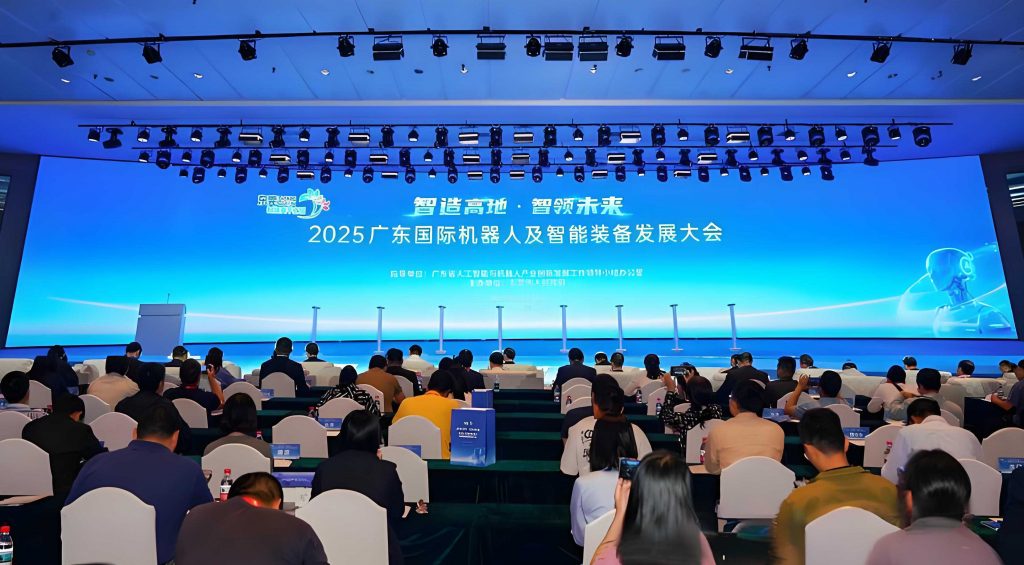
In 2011, China produced over 18 million vehicles, yet its automotive robot density was merely 141, less than a tenth of Japan’s. The general manufacturing density of about 20 is a fraction of the developed world’s levels. This gap is not a weakness but a map of immense opportunity for the China robot industry. If China’s manufacturing density were to even approach half of Japan’s current level, the required number of robots would run into the millions. The growth runway is exceptionally long. The visual below captures the dynamic landscape of automation in modern Chinese factories, a scene set to become exponentially more common.
The current industrial structure of the China robot market reveals a distinct dichotomy. The value chain consists of robot unit (or “singleton”) manufacturers and system integrators. A robot unit is the core device, which must be integrated with peripherals like grippers, welders, and conveyors to form a workable robot system.
Unit Suppliers: This segment is overwhelmingly dominated by foreign giants. The “Big Four”—Fanuc, ABB, Kuka, and Yaskawa—command the market. For instance, in a recent year, Fanuc alone sold around 3,400 units in China, capturing over 20% of the China robot unit market. Domestic Chinese manufacturers have struggled to compete at this core level.
System Integrators: Here, domestic Chinese firms have found a niche. An end-user (e.g., an automotive plant) typically contracts an integrator, specifying robot models and required functions. The integrator procures the robot units (often through agents or directly from foreign suppliers) and sources the peripheral equipment to deliver a turnkey system. Domestic integrators often bid at a 25% discount compared to foreign integrators, yet retain slim profit margins. Their advantages are twofold: access to a complete, low-cost domestic supply chain for peripherals (fixtures, welding guns, etc.), and significantly lower engineering labor costs coupled with local market knowledge. Consequently, over 90% of domestic automotive projects are executed by local integrators.
| Segment | Key Players | Market Position in China | Basis of Competition |
|---|---|---|---|
| Robot Unit (Singleton) | Fanuc, ABB, Kuka, Yaskawa | Absolute dominance (~80%+ share) | Technology, reliability, brand, global scale |
| Robot Unit (Domestic) | A few state-backed & private firms | Very small, non-competitive in core tech | Price, local policy support |
| System Integration | ~1,000 domestic firms, few foreign | Domestic firms dominate project execution | Price, local service, speed, low-cost engineering |
However, the integration business is characterized by low barriers to entry. A small to medium project might require only a team of 3-5 engineers, leading to fierce price competition, high staff turnover, and fragmented margins. This places domestic integrators in a challenging position within the value chain: facing rising costs from upstream foreign unit suppliers, intense internal competition, and strong bargaining power from downstream clients like large automakers. The growth disparity is telling: while global robot sales grew 38% in 2011, mirroring the growth rates of major international companies, the industrial robot revenue growth of a leading domestic representative firm was only around 10%.
The central challenge stifling the full potential of the China robot industry lies in the technological dependency on foreign core components. China initiated R&D in industrial robots in the 1990s and has achieved localization in controllers and mechanical bodies to some extent. However, large-scale, reliable production of complete robot units remains elusive. The two most critical and costly components—the precision reducer (often a harmonic drive or RV reducer) and the high-performance servo motor and drive system—are still largely imported. This dependency erodes the cost advantage and strategic autonomy of the China robot supply chain. We can express the cost structure of a domestically assembled robot unit as:
$$ C_{domestic\_unit} = C_{local\_body+controller} + C_{imported\_servo} + C_{imported\_reducer} + \pi $$
Where \( \pi \) represents profit margin. Currently, \( C_{imported\_servo} + C_{imported\_reducer} \) constitutes a dominant share of the total cost, making a domestically produced unit uncompetitive against imported counterparts on both cost and performance grounds.
The future growth and health of the China robot sector, therefore, hinge on a breakthrough in these core technologies. Such a breakthrough would have a multiplicative effect. First, it would drastically enhance the price competitiveness of domestic system integrators, as their core input costs would fall. More importantly, it would enable the scalable production of reliable, home-grown robot units. This would initiate a virtuous cycle of large-scale import substitution, driving down costs further, increasing adoption, and fostering a robust domestic ecosystem. The formula for sustainable industry growth would then transform:
$$ Growth_{China\_robot} = \alpha \cdot (Market\_Gap) + \beta \cdot (Economic\_Incentive) + \gamma \cdot (Tech\_Independence) $$
Currently, \( \gamma \) is a limiting factor. Once it becomes a strong positive contributor, the entire equation accelerates. The demographic and economic fundamentals ensure that the Market_Gap and Economic_Incentive terms are powerfully positive for the foreseeable future. The China robot narrative is thus one of a vast market opportunity temporarily constrained by a specific technological bottleneck. The concerted efforts in national industrial policy, corporate R&D, and venture investment are all converging on this bottleneck. When it clears, the China robot industry will not merely be a massive market for foreign goods but a global powerhouse in automation innovation and manufacturing. The journey from integration-based participation to core technology mastery and scaled production is the critical path for the China robot ascendancy, promising to reshape global manufacturing landscapes in the decades to come.