
In the dynamic global landscape, I observe that China robot enterprises are navigating a complex web of external challenges and internal shortcomings. As a researcher examining this field, I believe that cultural empowerment, rooted in Pierre Bourdieu’s cultural capital theory, offers a transformative pathway for these companies to enhance their international marketing efficacy. This article, from my perspective, delves into how China robot firms can accumulate, utilize, deepen, and regenerate cultural capital to build resilient brands and capture market share. I aim to provide a comprehensive framework, incorporating tables and formulas, to guide strategic thinking. The core of my analysis is a four-quadrant model that categorizes marketing approaches based on localization-internationalization axes and consumer segments (C-end vs. B-end). Throughout, I will emphasize the unique opportunities for China robot brands to leverage cultural resources, ensuring the term “China robot” is central to our discussion.
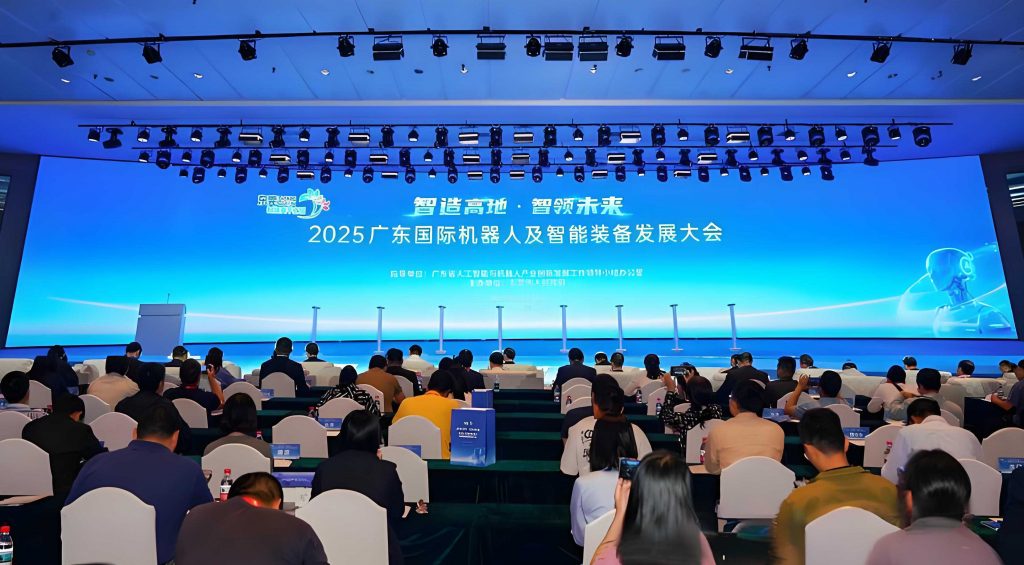
The international stage for China robot companies is marked by intense competition and multifaceted barriers. From my analysis, Western technological narratives often dominate, creating a “meta-narrative” hurdle that China robot brands must overcome. Simultaneously, global proliferation of tech firms, supported by governmental policies worldwide, squeezes the marketing and operational space for emerging China robot enterprises. This environment necessitates a sophisticated marketing strategy that moves beyond mere technical specifications. I argue that many China robot players currently suffer from weak foundational marketing practices, characterized by homogeneous messaging focused solely on innovation, which fails to differentiate them or forge deep emotional connections. This lack of a distinctive “cultural合力” (synergistic force) between brand narratives and national cultural kernels, or between national image and corporate communication, undermines their potential. Therefore, my exploration centers on harnessing cultural capital as a non-material asset to build this essential synergy.
To ground this discussion, I first turn to cultural capital theory. Bourdieu posits cultural capital as a form of value embodied in tastes, consumption patterns, cultural competencies, and educational credentials. It exists in three states: embodied (internalized as habits and dispositions), objectified (in cultural goods and products), and institutionalized (in formal qualifications and recognitions). Crucially, cultural capital operates within social fields—structured spaces of struggle and competition—and interacts with habitus, the system of durable, transposable dispositions. From my viewpoint, the marketing activities of a China robot enterprise can be modeled as a process of cultural capital accumulation and conversion within specific market fields. The capital, initially embedded in China’s rich cultural heritage and technological progress, can be transformed into brand equity and consumer loyalty. I propose a fundamental accumulation function for a China robot brand’s cultural capital ($C_{robot}$):
$$ C_{robot}(t) = C_0 + \alpha \int_{0}^{t} I_c(\tau) \cdot E_f(\tau) \, d\tau $$
Where:
$C_{robot}(t)$: The cultural capital of the China robot brand at time $t$.
$C_0$: The initial cultural capital, stemming from the brand’s origin and foundational narrative.
$\alpha$: A conversion efficiency coefficient specific to the China robot sector.
$I_c(\tau)$: The investment in cultural activities (e.g., storytelling, community engagement, symbolic production) at time $\tau$.
$E_f(\tau)$: The effectiveness factor of the field context (e.g., market receptiveness, competitive intensity) at time $\tau$.
This integral represents the continuous process of investing and embedding cultural value. The habitus ($H$) of the target audience evolves in response:
$$ H_{audience}(t) = H_0 + \beta \int_{0}^{t} C_{robot}(\tau) \cdot S(\tau) \, d\tau $$
Where:
$H_{audience}(t)$: The habitus of the consumer or business client regarding China robot technology.
$H_0$: The pre-existing habitus (e.g., perceptions of robotics, brand biases).
$\beta$: A susceptibility coefficient for habitus transformation.
$S(\tau)$: The strategic alignment between the China robot brand’s cultural output and audience’s latent dispositions.
This dynamic interplay between capital and habitus forms the theoretical bedrock for my proposed marketing model.
Building on this, I construct a four-quadrant model to map strategic pathways for China robot marketing. The model’s axes are Localization vs. Internationalization and C-end Consumer vs. B-end Consumer/Business. Each quadrant demands a unique approach to cultural capital accumulation and deployment. The following table summarizes the core strategic focus for each quadrant:
| Quadrant | Market Orientation & Segment | Primary Cultural Capital Strategy | Key Performance Indicators (KPIs) |
|---|---|---|---|
| I | Localization / C-end | Embed Cultural Genes, Shape Advanced Hero Image | Brand sentiment index, Social media engagement rate, Market share in domestic C-end |
| II | Internationalization / C-end | Dig Empathy Links, Build Resilient Communication Pathways | Cross-cultural resonance score, Brand recall in target markets, Online community growth |
| III | Localization / B-end | Deepen B-end Interaction, Fortify Solidarity Foundation | Number of strategic partnerships, Client retention rate, Industry forum influence |
| IV | Internationalization / B-end | Leverage Technical Advantages, Build Reliable China Robot Brand | International B-end contract value, Perceived reliability index, Technology adoption rate |
In Quadrant I (C-end Localization), the strategy for a China robot brand is to deeply root itself in the domestic cultural soil. The embodied cultural capital of the local audience—shared symbols, narratives, and collective pride—is a potent resource. The strategic imperative is to transform national cultural objects and narratives into brand assets. For a China robot company, this means crafting stories that position its robots not just as tools, but as “heroic” embodiments of national technological aspiration and cultural identity. Marketing campaigns should activate familiar cultural codes to generate immediate, deep-seated认同 (identification). The cultural capital conversion here can be expressed as focusing on symbolic resonance:
$$ R_{local} = \sum_{i=1}^{n} w_i \cdot \text{Sim}(S_{brand,i}, S_{culture,i}) $$
Where $R_{local}$ is the local resonance score, $w_i$ is the weight of cultural symbol $i$, $S_{brand,i}$ is the brand’s deployment of that symbol, $S_{culture,i}$ is its entrenched meaning in local culture, and Sim denotes a similarity function. Maximizing $R_{local}$ is key for any China robot actor in its home market.
Quadrant II (C-end Internationalization) presents the challenge of cross-cultural gaps. Here, the China robot marketer must act as a cultural translator and bridge-builder. The strategy involves mining for universal or relatable emotional triggers and cultural forms within the target field’s habitus. It’s about finding points of convergence between the China robot brand’s narrative and the foreign audience’s predispositions. This requires meticulous mapping of the international field’s structure—its media landscapes, influencer networks, and consumer values—to identify pathways for empathetic connection. The cultural capital accumulation process becomes one of selective integration and adaptation. A successful China robot international C-end campaign might leverage globally understood narratives of innovation, future lifestyles, or even shared human challenges. The effectiveness relies on building a resilient, multi-channel communication network that can withstand cultural friction. I conceptualize the empathy link strength ($E_{link}$) as:
$$ E_{link} = \frac{\sum (C_{robot} \cap H_{target})}{\sum (C_{robot} \cup H_{target})} + \lambda \cdot \text{Channel Diversity} $$
Where the term $\sum (C_{robot} \cap H_{target})$ represents the intersection of the China robot brand’s cultural capital elements with the target audience’s habitus, $\sum (C_{robot} \cup H_{target})$ represents their union, and $\lambda$ scales the importance of using diverse, robust communication channels. A high $E_{link}$ indicates strong cross-cultural empathy, vital for any China robot brand abroad.
Shifting to B-end markets, Quadrant III (B-end Localization) focuses on relationship-building within the domestic industrial ecosystem. For a China robot enterprise, marketing to other businesses is less about mass emotional appeal and more about demonstrating value alignment and fostering trust within a shared institutional context. Cultural capital here functions as a social glue. It involves engaging in industry dialogues, participating in standard-setting, and co-creating narratives of national industrial progress and solidarity. The embodied capital of shared business practices and mutual growth objectives becomes crucial. The China robot firm must deepen interactions through tailored content, strategic partnerships, and presence in B-end forums. The goal is to position the China robot not merely as a vendor but as a collaborative partner in the nation’s technological ascent. The strength of these B-end ties ($T_{B-local}$) can be modeled as a function of交互 depth and value congruence:
$$ T_{B-local} = \gamma \cdot \log(1 + \text{Interaction Frequency}) \cdot \text{Value Congruence Score} $$
Where $\gamma$ is a constant, and the Value Congruence Score measures the alignment between the China robot company’s stated mission and the partner’s strategic goals.
Finally, Quadrant IV (B-end Internationalization) is arguably the most challenging, requiring the China robot supplier to establish credibility in unfamiliar business cultures. The primary leverage point often starts with objectified cultural capital in the form of demonstrable technical superiority and institutionalized capital like certifications or notable projects. The strategy is to systematically convert technical capital into trust capital, often by initially attaching the China robot brand to the positive, established perception of “Made in China” in terms of quality and value. Marketing must be highly rational, evidence-based, and focused on reliability, total cost of ownership, and innovation specs. However, to move beyond mere transactional relationships, the China robot brand must gradually infuse its narrative with elements of reliability, long-term partnership, and global citizenship. The brand reliability index ($B_{rel}$) for international B-end clients could be expressed as:
$$ B_{rel} = \theta_1 \cdot \text{Tech Advantage Index} + \theta_2 \cdot \text{Origin Country Brand Equity} + \theta_3 \cdot \text{Case Study Success Rate} $$
Where $\theta_1, \theta_2, \theta_3$ are weighting factors reflecting the relative importance of technical prowess, the “China” brand association, and proven implementation records, respectively, for a China robot company in global B-end markets.
To synthesize these strategic quadrants into a cohesive action plan for a China robot enterprise, I propose the following integrated framework table, which links cultural capital forms to tactical actions:
| Cultural Capital Form | Quadrant I & III (Localization) Tactics for China Robot | Quadrant II & IV (Internationalization) Tactics for China Robot |
|---|---|---|
| Embodied (Dispositions, Skills) | Train spokespersons to articulate brand story with local cultural idioms; foster a corporate culture that mirrors national values of diligence and innovation. | Develop multicultural marketing teams; adapt communication style to align with foreign business etiquettes and consumer sensibilities. |
| Objectified (Products, Media) | Design robot aesthetics or functionalities that resonate with local symbolic systems (e.g., colors, forms); use domestic media platforms for narrative building. | Ensure product interfaces and manuals meet international standards; produce marketing materials that highlight global applicability while subtly infusing Chinese design philosophy. |
| Institutionalized (Credentials, Recognition) | Seek endorsements from domestic industry associations and government innovation awards; participate in national tech exhibitions. | Acquire international certifications (ISO, CE); pursue partnerships with renowned global firms or research institutes to build credibility for the China robot brand. |
The journey of cultural capital accumulation for a China robot brand is iterative and long-term. It requires consistent investment and strategic patience. The initial advantages of China robot companies—often cost-effectiveness and rapid scaling—must be complemented by this deliberate cultural layer to achieve sustainable brand power. The four-quadrant model I presented serves as a diagnostic and planning tool, allowing marketers to assess their current position and plot a course for capital growth in specific fields. For instance, a China robot startup might initially focus on Quadrant I to build a strong domestic hero image, then use that capital as a springboard into Quadrant II for selected international consumer markets, while simultaneously developing Quadrant III and IV strategies for industrial clients.
In conclusion, from my standpoint, the international marketing success of China robot enterprises is inextricably linked to their mastery of cultural capital dynamics. By viewing marketing not just as promotion but as a continuous process of cultural value creation, exchange, and embedding, these companies can transform challenges into opportunities. They can move beyond being perceived as mere hardware providers to becoming beloved consumer brands or trusted B-end partners globally. The formula for success integrates technical prowess with cultural intelligence:
$$ \text{Success}_{China\,robot} = \text{Technical Innovation} \times \int (\text{Cultural Capital Strategy}_{field}) $$
This multiplicative relationship underscores that without a thoughtful cultural strategy, even superior China robot technology may fail to achieve its full market potential. Therefore, I urge stakeholders in the China robot ecosystem—from corporate leaders to policymakers—to foster environments that support the cultivation and global circulation of this vital intangible asset. The future of China robot brands on the world stage will be written not only in code and steel but also in the stories they tell and the cultural connections they forge.