
As I reflect on the transformative journey of robotics, particularly within the context of my own observations and engagements, the 2019 World Robot Conference in Beijing stands out as a pivotal moment. It was a gathering where the phrase “China robot” echoed with both promise and introspection. The conference, themed “Smart New Ecology, Open New Era,” was not merely an event but a testament to the global recognition of robotics as a cornerstone of the fourth industrial revolution. From my perspective, the fervor and scale of that assembly underscored a critical truth: the evolution of China robot is not just a national narrative but a significant chapter in the global saga of technological advancement.
I have always been fascinated by how robotics transcends mere machinery to become an extension of human capability. The traditional metrics of robot performance—speed, precision, payload, and reliability—are now being supplanted by intelligent attributes such as autonomous decision-making and adaptive interaction. This shift is encapsulated in the transition from programmed automation to cognitive robotics. For China robot, this represents both an immense opportunity and a daunting challenge. The mathematical foundation of this intelligence can be partly expressed through algorithms for perception and control. For instance, the basic motion planning for a China robot manipulator can be modeled using kinematic equations. The forward kinematics for a serial robot arm with n joints can be given by:
$$ \mathbf{T}_n^0 = \prod_{i=1}^{n} \mathbf{T}_i^{i-1}(q_i) $$
where $\mathbf{T}_i^{i-1}$ is the homogeneous transformation matrix from joint i-1 to i, and $q_i$ is the joint variable. The quest for intelligence integrates this with sensor data fusion and machine learning models, such as deep neural networks for visual recognition:
$$ y = f(\mathbf{W} \cdot \mathbf{x} + \mathbf{b}) $$
where $y$ is the output decision, $\mathbf{x}$ is the input sensor vector, $\mathbf{W}$ and $\mathbf{b}$ are learned parameters, and $f$ is a non-linear activation function. This mathematical underpinning is crucial for China robot to achieve the “independent decision-making and motion-interaction abilities” that mimic human behavior.
The global landscape for robotics has been dynamic. Over the past decade, while the worldwide robot market grew at an average annual rate of 12%, the China robot sector surged at approximately 25%, maintaining the top position for eight consecutive years. This growth trajectory is not accidental; it is fueled by China’s vast manufacturing base and escalating demand across sectors. However, to comprehend the full picture, one must dissect the market structure. The following table summarizes the comparative growth and market share dynamics, highlighting the position of China robot.
| Region/Country | Average Annual Growth Rate (Past 10 Years) | Current Global Market Share (Estimate) | Key Driver for China Robot |
|---|---|---|---|
| Global Average | 12% | 100% | N/A |
| China | 25% | ~30% of industrial robot installations | Manufacturing automation, policy support |
| United States | 10% | ~15% | Advanced R&D, service robotics |
| European Union | 8% | ~20% | Precision engineering, automotive |
| Japan/South Korea | 9% | ~25% (combined) | Legacy in industrial robotics |
This data illustrates the explosive growth of China robot, but it also masks underlying vulnerabilities. As I delved deeper into the industry, I realized that the dominance in application volume does not automatically translate into technological leadership. The core components of a robot—often likened to its “brain” and “muscles”—remain a bottleneck. For a China robot, the reliance on imported precision reducers, servo motors, and controllers stifles innovation and profitability. We can model the cost structure of a typical industrial China robot using a simple formula:
$$ C_{total} = C_{core} + C_{integration} + C_{software} $$
where $C_{core}$ represents the cost of key imported components (often 60-70% of total), $C_{integration}$ is assembly and machining, and $C_{software}$ is control algorithms and AI integration. Currently, for many China robot manufacturers, $C_{core}$ is disproportionately high due to external dependencies. This economic reality hampers the competitiveness of China robot brands on the global stage, where they often occupy the mid-to-low end of the value chain.
The strategic response to this has been articulated in national policies. China’s “Robot Industry Development Plan (2016-2020)” was a blueprint I studied intently. It positioned robot manufacturing as a barometer of national innovative capacity and industrial competitiveness. From my analysis, this plan was not just aspirational; it set tangible targets for density of robots per 10,000 workers and for domestic market share. Yet, the gap between policy and practice persists. The following table breaks down the key goals versus the current status for China robot, based on my assessment of available data.
| Aspect | Plan Target (2020) | Current Status (Estimated) | Implication for China Robot |
|---|---|---|---|
| Industrial Robot Density | 150 units/10,000 workers | ~120 units/10,000 workers | Progress made, but lag in high-end adoption |
| Domestic Brand Market Share | 50% in domestic market | ~30% | Foreign brands still dominate key sectors |
| Key Component Self-sufficiency | Breakthroughs in reducers, servos | Partial progress, high-end still imported | Core technology gap remains critical |
| Application Field Expansion | Beyond manufacturing to services, healthcare | Rapid expansion in logistics, cleaning; healthcare nascent | China robot diversification is underway |
In my journey, I have often pondered the analogy of robot development as a biological system requiring “优生” or “optimal birth.” This concept, which I interpret as systematic, high-quality development from inception, is vital for China robot. It means fostering innovation ecosystems where “crazy exploration” and free thinking are encouraged. The synergy between robotics and artificial intelligence (AI) is paramount. The integration can be expressed through a collaborative framework: Robot + AI = Cognitive Machine. This is not just a slogan; it involves concrete technical convergence. For example, the control loop of an intelligent China robot can be enhanced with reinforcement learning:
$$ \pi^*(s) = \arg \max_a \mathbb{E} \left[ \sum_{t} \gamma^t R(s_t, a_t) | s_0 = s \right] $$
where $\pi^*$ is the optimal policy, $s$ is the state, $a$ is the action, $R$ is the reward, and $\gamma$ is the discount factor. Achieving this requires deep collaboration between domain experts in mechanical engineering and AI scientists—a fusion that is still evolving in the China robot landscape.
The human capital dimension is, in my view, the “Achilles’ heel” for China robot. With an estimated shortage of 200,000 robotics application professionals, the pipeline from education to industry is strained. This shortage impacts not only operation and maintenance but also R&D for next-generation China robot. We can model the talent gap using a simple supply-demand equation:
$$ \Delta H = D(t) – S(t) $$
where $\Delta H$ is the talent deficit, $D(t)$ is the demand function growing with industry expansion, and $S(t)$ is the supply function from educational institutions. Currently, for China robot, $\Delta H$ is positive and widening, posing a strategic risk. Addressing this requires curriculum reforms, vocational training, and international exchanges to cultivate the “quirky talents” capable of breakthrough innovations.
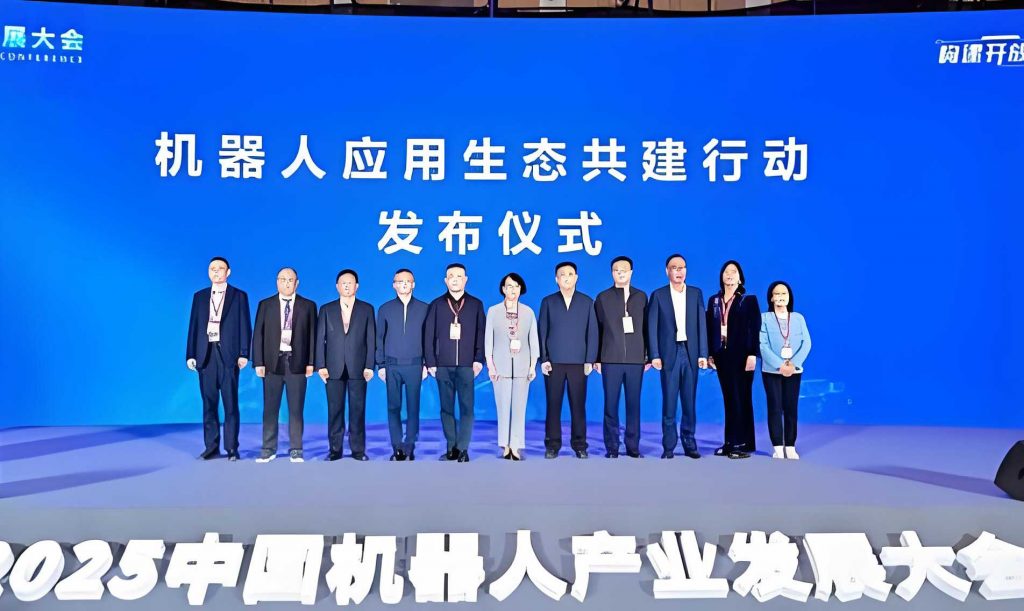
Observing the global stage, I am convinced that isolation is detrimental. The development of China robot cannot occur in a vacuum. The concept of a “global robot ecosystem” based on open cooperation and shared win-win outcomes is not idealistic but essential. This ecosystem involves standards harmonization, joint research initiatives, and cross-border investment. For instance, the performance benchmarking of a China robot against international peers can be quantified through indices like the Technology Readiness Level (TRL) or cost-effectiveness ratios. A collaborative framework might involve shared testing platforms where China robot prototypes are evaluated in diverse environments, accelerating iteration and improvement.
From a personal vantage point, the words from 2014 about robots being the “pearl on the crown of manufacturing” resonate deeply. They were a clarion call to action. Today, while China robot has made remarkable strides, the status is largely that of a “follower” in core technologies. The path to becoming a “leader” is arduous but not insurmountable. It demands relentless focus on independent innovation and strategic breakthroughs. The analogy with Huawei’s journey in telecommunications is apt—persistent R&D investment and global market savvy are key. For China robot, this means not only catching up in components but also pioneering in areas like collaborative robots (cobots), AI-driven perception, and human-robot interaction.
Let me elaborate on the technical frontiers. The new generation of China robot must embrace modularity and flexibility. A modular robot system can be described by a configuration space C, where each module m_i contributes to the overall capability. The design optimization problem can be formulated as:
$$ \min_{m_i \in M} \left( \alpha \cdot C_{cost} + \beta \cdot \frac{1}{C_{performance}} \right) $$
subject to constraints like payload $P \geq P_{required}$ and workspace $W \supseteq W_{task}$. Here, $M$ is the set of available modules, and $\alpha, \beta$ are weighting factors. This approach allows China robot manufacturers to rapidly customize solutions for diverse applications, from electronics assembly to elderly care.
Furthermore, the integration of digital twins—virtual replicas of physical China robot—is revolutionizing development cycles. The twin can simulate performance under various conditions using physics engines, reducing costly physical prototypes. The synchronization between physical robot $R_p$ and digital twin $R_d$ can be modeled as:
$$ \frac{d}{dt} \left( \begin{array}{c} \mathbf{q}_p \\ \mathbf{q}_d \end{array} \right) = \left( \begin{array}{cc} \mathbf{A}_p & 0 \\ \mathbf{K} & \mathbf{A}_d \end{array} \right) \left( \begin{array}{c} \mathbf{q}_p \\ \mathbf{q}_d \end{array} \right) + \mathbf{B} \mathbf{u} $$
where $\mathbf{q}$ are state vectors, $\mathbf{A}$ are system matrices, $\mathbf{K}$ is a coupling matrix for data feedback, and $\mathbf{u}$ is control input. This technology is pivotal for China robot to accelerate innovation and ensure reliability.
The economic impact of China robot extends beyond manufacturing. In services, logistics, and agriculture, robots are boosting productivity. We can estimate the contribution of China robot to GDP growth using a simplified production function:
$$ Y = A \cdot K^\alpha \cdot L^\beta \cdot R^\gamma $$
where $Y$ is output, $A$ is total factor productivity, $K$ is capital, $L$ is labor, and $R$ is robot stock. For China, the elasticity $\gamma$ is increasing as robot penetration rises. Projections suggest that China robot adoption could account for a significant portion of future economic growth, potentially reaching 50% of the global robot market in terms of installations. However, this growth must be sustainable and inclusive, avoiding social displacement through reskilling initiatives.
In my reflections, the cultural aspect is often overlooked. The success of China robot hinges on fostering a scientific culture that celebrates curiosity and tolerates failure. Just as Qian Xuesen exemplified interdisciplinary brilliance, today’s China robot pioneers need to blend mechanical engineering with computer science, cognitive psychology, and even ethics. The human-robot collaboration paradigm requires trust, which can be quantified through metrics like task completion rate under uncertain conditions. For a China robot working alongside humans, the safety standard must adhere to rigorous norms, such as ISO 10218 and ISO/TS 15066, which specify force and speed limits for collaborative operations.
Looking ahead, the roadmap for China robot must be clear and adaptive. Based on my analysis, I propose a multi-phase strategy: First, consolidate the manufacturing base by achieving self-sufficiency in key components through focused R&D consortia. Second, leapfrog in AI integration by establishing national labs for robot learning. Third, expand into nascent fields like medical robotics and micro-nano robots. Fourth, build a global talent network by attracting diaspora experts and partnering with top universities. Fifth, champion international standards that reflect the unique contributions of China robot. Each phase can be tracked via key performance indicators (KPIs) summarized in the table below.
| Strategic Phase | Time Frame | Key KPIs for China Robot | Enabling Policies |
|---|---|---|---|
| Core Component Independence | 2023-2027 | Domestic share of reducer market >40%; cost reduction of servos by 30% | Tax incentives for R&D import substitution subsidies |
| AI-Robot Fusion | 2025-2030 | Number of AI-powered China robot models >100; patents in robot learning >5000 | Open data platforms; AI-robot innovation zones |
| Application Diversification | 2024-2035 | Robot density in services >50 units/10,000 workers; healthcare robot sales growth >20% annually | Procurement mandates for public sectors; regulatory sandboxes |
| Global Ecosystem Leadership | 2030 onwards | China robot standards adopted internationally >10; overseas market share >15% | Bilateral robotics treaties; global talent visa programs |
The journey of China robot is, in essence, a microcosm of China’s broader technological ascent. It is a story of leveraging market scale for iterative improvement, yet confronting deep-seated gaps in foundational technology. From my first-hand experiences at conferences and factory visits, the energy is palpable. Engineers and entrepreneurs are driven by a vision where China robot not only serves domestic needs but also sets global benchmarks. The mathematical models, economic equations, and strategic frameworks I have discussed are tools to navigate this complex terrain. Ultimately, the success of China robot will be measured not just by units sold, but by the value created for humanity—enhancing productivity, enriching lives, and fostering a shared future of human-robot symbiosis.
In conclusion, as I envision the future, the phrase “China robot” will symbolize not just a product of national industry, but a beacon of innovation in the global community. The race to the “pearl on the crown” is indeed on, and with sustained effort, collaboration, and a spirit of “optimal birth,” China robot is poised to transition from a follower to a leader, shaping the next era of intelligent machines for all.