
As an observer deeply immersed in the technological evolution of automation, I have witnessed the remarkable ascent of China robots in the global industrial landscape. The journey from nascent beginnings to a position of significant influence is a testament to strategic policy support, relentless innovation, and a burgeoning patent ecosystem. This article delves into the current state of industrial robotics in China, examining the developmental trajectory, key players, and intricate patent landscapes that define this dynamic sector. The term “China robots” encapsulates not just machines, but a national endeavor towards technological sovereignty and manufacturing supremacy.
The progression of China robots can be modeled through a phase-based growth function. Let us consider the cumulative technological maturity \( M(t) \) over time \( t \), which can be represented as:
$$ M(t) = \int_{0}^{t} P(s) \cdot I(s) \, ds $$
Here, \( P(s) \) represents policy impetus as a function of time, and \( I(s) \) represents industrial investment. The integral signifies the accumulated effect over decades. Historically, the development of China robots is segmented into distinct eras:
| Phase | Time Period | Key Characteristics | Approximate Annual Production/Adoption Rate |
|---|---|---|---|
| Germination | 1970s | Initial research, limited application | Negligible, experimental prototypes |
| Development | 1980s | Focused R&D, state-led projects | < 100 units |
| Practicalization | 1990s | Industrial application in niche sectors like painting and welding | 100-500 units |
| Industry Leap | 2005-Present | Explosive growth, market expansion, technological convergence |
This phased growth aligns with the national strategic focus on upgrading the manufacturing sector, where China robots play a pivotal role. The market share of China robots globally has surged from single digits to over 20% in recent years, a phenomenon driven by both supply-side innovations and demand-side pressures such as rising labor costs.
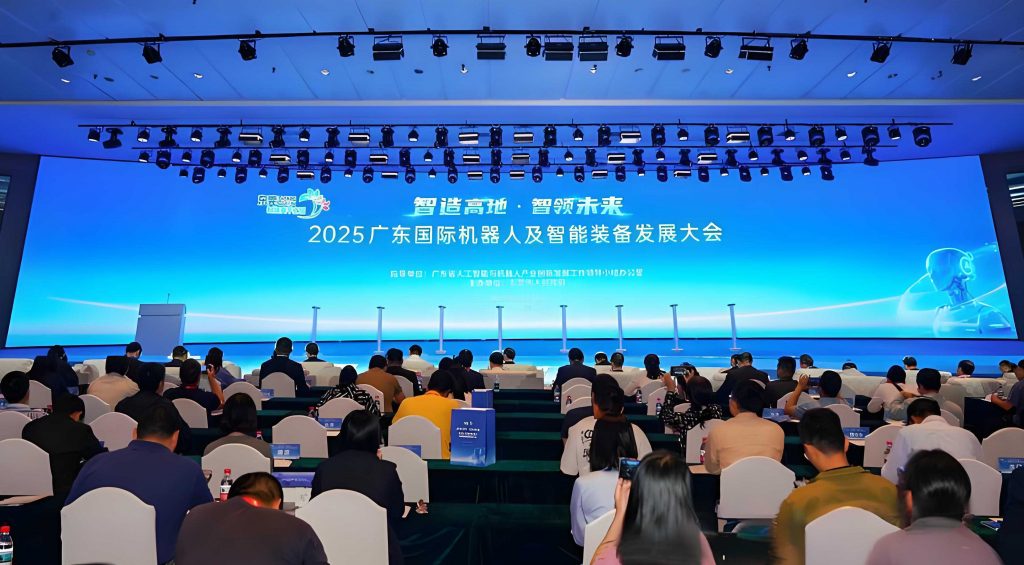
The policy framework for China robots has been instrumental in this ascent. A series of national plans have provided clear direction and substantial resources. The following table summarizes the key policy milestones that have shaped the ecosystem for China robots:
| Year | Policy/Initiative | Core Objectives for China Robots | Target Metrics |
|---|---|---|---|
| 2012 | 12th Five-Year Plan for Smart Manufacturing Technology Development | Breakthroughs in core components: reducers, servo drives, controllers | Industrialize自主研发 (self-developed) robot engineering products |
| 2012 | 12th Five-Year Plan for National Strategic Emerging Industries | Establish a complete smart manufacturing equipment system | 50% domestic market share for smart manufacturing equipment |
| 2013 | Guidelines on Promoting Industrial Robot Industry Development | Cultivate 3-5 internationally competitive leaders and 8-10 industrial clusters | Robot density >100, high-end product share >45% by 2020 |
| 2015 | Made in China 2025 | Breakthroughs in key components and system integration | Promote standardization and modularization of China robots |
| 2016 | Robot Industry Development Plan (2016-2020) | Scale up production and increase core component localization | Annual output of 100,000 self-brand industrial China robots, 50% core part localization, density of 150 |
The efficacy of these policies can be analyzed through a simplified impact model. Let \( G \) be the growth rate of the China robots industry, which is a function of policy strength \( S_p \), R&D investment \( I_{rd} \), and market demand \( D_m \):
$$ G = \alpha \cdot \log(S_p + 1) + \beta \cdot I_{rd}^{0.5} + \gamma \cdot D_m $$
Where \( \alpha, \beta, \gamma \) are positive coefficients specific to the Chinese context. The logarithmic term for policy strength reflects diminishing marginal returns after a certain threshold, while the square root for R&D investment indicates that initial investments yield significant technological jumps. Empirical data suggests that post-2012, with enhanced \( S_p \), the growth \( G \) for China robots exceeded 40% annually for several years.
The landscape of China robots is defined by a constellation of leading enterprises, each with distinct strategies and technological foci. From my analysis, these companies have evolved through organic growth, academic collaborations, and strategic mergers and acquisitions. Their collective effort is pushing the boundaries of what China robots can achieve. The table below provides a comparative overview of key players in the China robots ecosystem:
| Enterprise (Representative) | Core Technological Competence | Supply Chain Strategy | Notable Collaborations/Acquisitions | Estimated Patent Portfolio Size (Industrial Robot Domain) |
|---|---|---|---|---|
| Company A (Robotics Giant) | Full product line, system integration | Controllers developed in-house, strategic partnerships for digital factories | Deep ties with national research academies, agreements with transmission specialists | ~300 patents (leading in volume) |
| Company B (Automation Specialist) | Servo systems, controllers, robot本体 (body) | High degree of localization, imports specific reducers | University partnerships for core technology, self-reliant in most components | ~150 patents |
| Company C (CNC Leader) | Motion control, servo drives, system integration | Collaborates for reducers, owns core controller and drive tech | Acquisitions to enter integration sector, university research ties | ~80 patents |
| Company D (Applied Robotics Focus) | High-volume manufacturing applications | Mixed sourcing for reducers and controllers via joint ventures | International technology introductions, joint ventures for control systems | ~50 patents |
| Company E (CNC & Robotics) | Robot本体 manufacturing, control systems | One of few mastering full本体 manufacturing domestically | Primarily independent R&D | ~50 patents |
| Company F (Drive & Control) | Servo systems, programmable controllers | Core components like servos and controllers in-house | Acquisitions in application fields, partnerships for specific technologies | ~70 patents |
| Company G (Industrial Automation) | Servo drives, control systems, industrial vision | Focus on core components, partnerships for application systems | Equity investments in application firms, technical collaborations | ~40 patents |
| Company H (Motion Control Core) | PC-based and embedded motion controllers | Leader in control system technology | Joint ventures with robot manufacturers for controller supply | ~20 patents |
The technological capabilities of these firms driving China robots forward can be expressed in terms of a capability vector \( \vec{C} = (C_{本体}, C_{控制}, C_{驱动}, C_{集成}) \), where each component represents competency in body, control, drive, and integration, respectively. For instance, Company A’s vector might be (0.9, 0.8, 0.7, 0.9) on a normalized scale, indicating strength across the board, while Company H’s vector might be (0.1, 0.95, 0.6, 0.3), highlighting its specialization in control systems. The evolution of China robots depends on the weighted sum of these vectors across the industry.
A critical dimension of the advancement of China robots is the intellectual property landscape. Patent analysis reveals the intensity and direction of innovation. The aggregate patent filing trend for major players in China robots shows a distinct inflection point. Let \( N(t) \) be the number of patent applications filed in year \( t \). The data indicates an exponential growth phase post-2010, which can be approximated by:
$$ N(t) = N_0 \cdot e^{k(t – t_0)} \quad \text{for } t > t_0 \approx 2010 $$
Where \( N_0 \) is the baseline applications and \( k \) is the growth constant. From a handful of applications in the early 2000s, the volume surged to over 130 annual filings by 2012 among key firms, stabilizing at a high level thereafter. This mirrors the national policy push and increased R&D expenditure in China robots.
The distribution of these patents across technological domains is telling of the priorities within the China robots industry. A significant concentration is observed in control systems (encompassing controllers, drives, safety, communication interfaces, and teach pendants) and mechanical本体 (focusing on arms, end-effectors, and manipulators). The relative focus \( F_i \) for domain \( i \) can be calculated as:
$$ F_i = \frac{P_i}{\sum_{j} P_j} $$
Where \( P_i \) is the patent count in domain \( i \). Based on available data, for major China robots firms, \( F_{control} \approx 0.45 \), \( F_{mechanical} \approx 0.30 \), \( F_{drive} \approx 0.15 \), and \( F_{integration} \approx 0.10 \). This highlights that mastering the “brain” and “body” of China robots is the primary battleground for innovation. Companies like Company A and Company B have more balanced portfolios across these domains, whereas others like Company G and Company H exhibit a strong skew towards control and drive technologies.
The international patenting activity for China robots, however, reveals a strategic gap. While domestic filings are robust, overseas patent families are limited primarily to a few entities. This can be modeled by an internationalization ratio \( R_{int} \):
$$ R_{int} = \frac{\text{Overseas Patent Families}}{\text{Domestic Patent Applications}} $$
For most China robots leaders, \( R_{int} < 0.1 \), with exceptions for the most proactive firms venturing into markets like the US, Japan, and India. This relative lack of global IP footprint poses a challenge for China robots aspiring to compete internationally, as it limits freedom to operate and the ability to leverage intellectual property in cross-licensing negotiations.
Despite the impressive strides, the journey of China robots faces several formidable challenges. First, there is a product stratification issue. A large proportion of domestically produced China robots are engaged in material handling and loading/unloading tasks, which are considered lower value-added segments. The market for high-precision, complex assembly, or collaborative China robots is still dominated by foreign brands. This can be expressed as a market share disparity function \( D(p) \) for robot type \( p \):
$$ D(p) = \frac{M_{foreign}(p) – M_{domestic}(p)}{M_{total}(p)} $$
Where \( M(p) \) denotes market share. For high-end \( p \), \( D(p) \) remains significantly positive, indicating foreign dominance.
Second, the ecosystem for core components remains a vulnerability. While progress has been made in controllers and servos, precision reducers—often described as the “heart” of a robot—are still largely imported. The dependency ratio \( \delta_{comp} \) for a core component is high. If \( Q_{import} \) is the imported quantity and \( Q_{total} \) is the total consumption, then:
$$ \delta_{comp} = \frac{Q_{import}}{Q_{total}} $$
For high-performance reducers, \( \delta_{reducer} \) is estimated to be above 0.7 for many China robots manufacturers. Although domestic suppliers are emerging, achieving parity in reliability and performance is an ongoing process. The patent density in these core component areas is also lower compared to system integration, indicating a thinner innovation moat.
Third, the collaborative innovation model, while beneficial, sometimes leads to fragmented intellectual property. Many China robots firms rely on partnerships with universities or acquisitions to bolster their technology portfolios. This can create integration challenges and potential gaps in fundamental research dedicated to next-generation China robots.
To overcome these hurdles and propel China robots to the next echelon, a multi-pronged strategy is essential. From my perspective, the following avenues are critical:
1. Directed Innovation and Leapfrogging: Instead of merely catching up in traditional robotic architectures, China robots developers should invest in disruptive technologies. This includes advanced AI for robot control, novel materials for lightweight arms, and innovative actuator designs. The innovation output \( O \) should shift towards higher-risk, higher-reward domains:
$$ O = \int (\lambda \cdot R_{traditional} + (1-\lambda) \cdot R_{disruptive}) \, dt $$
Where \( \lambda \) is the resource allocation fraction to traditional R&D, which should gradually decrease, and \( R \) represents research productivity. Policy incentives could be tailored to reward patents in underrepresented, high-potential domains for China robots.
2. Deep Vertical Integration and Standard Setting: Leading China robots companies should intensify efforts to master the entire value chain, particularly in component manufacturing. This involves not just production but also setting industry standards. By defining standards for interfaces, communication protocols, and safety for China robots, domestic players can shape the global ecosystem. The value captured \( V \) by a firm is proportional to its degree of integration \( I_v \) and its influence on standards \( S_t \):
$$ V \propto I_v^{\alpha} \cdot S_t^{\beta} $$
3. Strategic Global Patent Portfolio Construction: To safeguard and enable international expansion, China robots firms must adopt a more proactive global IP strategy. This involves conducting thorough freedom-to-operate analyses in target markets and filing high-quality patents abroad. The international patent portfolio size \( P_{int} \) should grow as a function of export volume \( E \) and R&D spending \( I_{rd} \):
$$ P_{int}(t+1) = P_{int}(t) + \eta \cdot E(t) \cdot \sqrt{I_{rd}(t)} $$
Where \( \eta \) is a strategy coefficient. Building IP arsenals in key markets will be crucial for the long-term success of China robots on the world stage.
4. Fostering Open Innovation Platforms: While protecting core IP, creating open platforms for application development and system integration can accelerate adoption and create a vibrant ecosystem around China robots. This can attract software developers and niche solution providers, enhancing the overall value proposition.
In conclusion, the narrative of China robots is one of transformative growth, strategically guided by national vision and executed by a dynamic mix of enterprises. The sector stands at a crossroads: possessing immense scale and domestic market strength, yet facing the imperative to move up the value chain and build global intellectual leadership. The formula for future success lies in balancing incremental improvement in core technologies with bold bets on next-generation automation. As the fourth decade of development unfolds, the trajectory of China robots will not only define the competitiveness of Chinese manufacturing but also significantly influence the global geography of innovation in industrial automation. The continued emphasis on R&D, strategic patenting, and ecosystem building will determine whether China robots evolve from being volume leaders to becoming synonymous with technological excellence and innovation in the global robotics arena.