
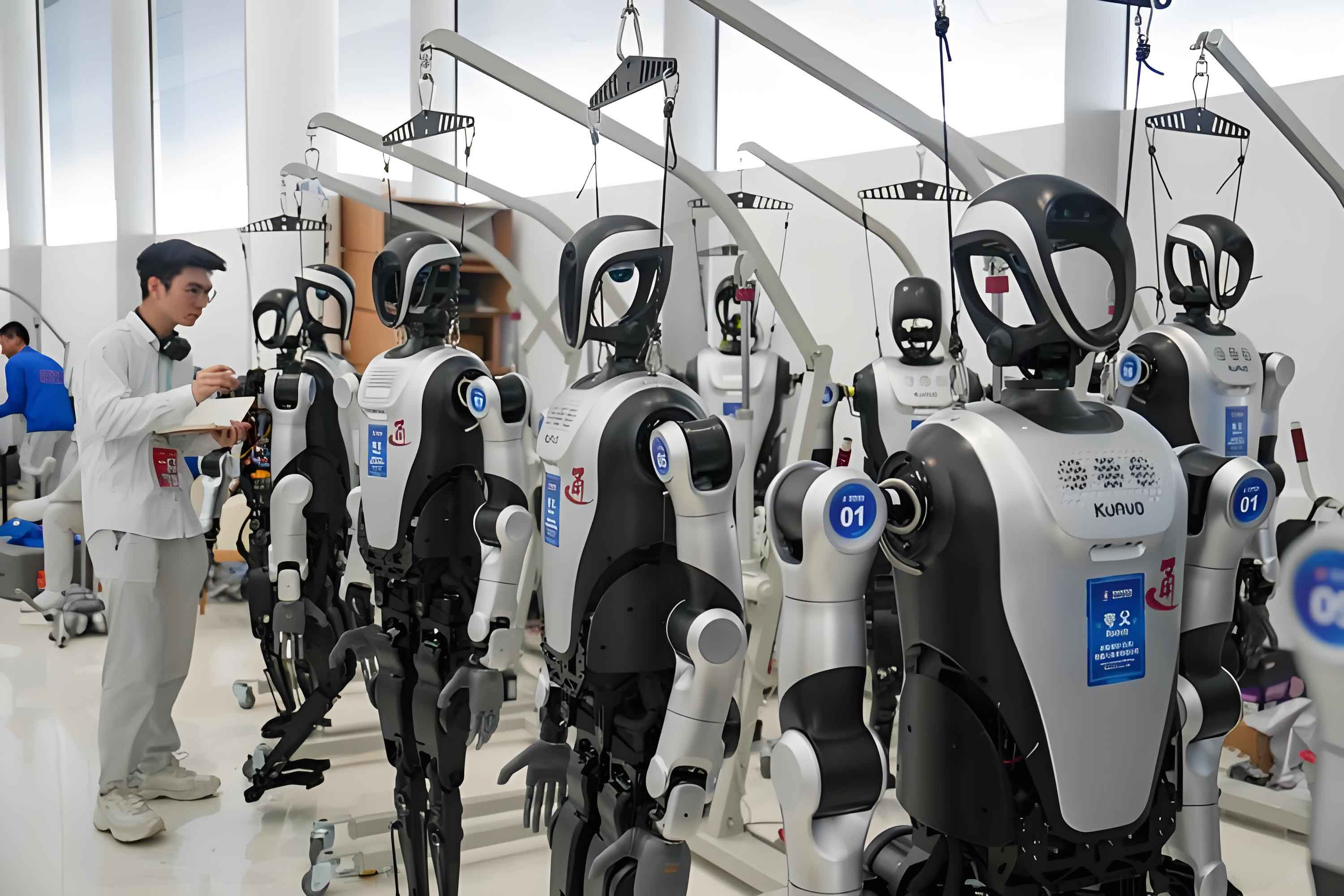
The rise of the humanoid robot is no longer a distant laboratory story. It is becoming a public story, a market story, and a social story. As the humanoid robot moves from controlled research environments into real-world demonstrations, competitions, factories, exhibition halls, schools, and virtual platforms, public relations becomes a critical bridge between technical achievement and public understanding. The 2025 Beijing Yizhuang Half Marathon and Humanoid Robot Half Marathon offered a vivid example of this shift. The event drew widespread attention because it placed the humanoid robot in a highly visible, unpredictable, and emotionally charged setting. Instead of remaining an abstract machine, the humanoid robot became a participant in a public drama, capable of surprising audiences, generating debate, and creating meaning.
In a global technology wave, the humanoid robot is increasingly seen as a symbol of industrial ambition, scientific creativity, and future social transformation. Yet technical brilliance alone does not guarantee acceptance. The humanoid robot must be explained, framed, and trusted. Public relations helps humanoid robot enterprises break through technical barriers and ethical controversies. It helps shape a brand image that is both technologically advanced and humane. It also helps the humanoid robot industry move from a narrow “technology-driven” identity toward a broader “value-driven” identity. The humanoid robot is not only a machine that walks, grasps, and learns. It is also a public idea that must be carefully cultivated.
For the humanoid robot sector, public relations is not decorative communication. It is strategic infrastructure. It connects engineers with citizens, companies with regulators, investors with the public, and research institutions with real-world users. The humanoid robot industry needs more than prototypes. It needs narratives that explain why the humanoid robot matters, how it will be governed, and what kind of future it can help build. This article examines the public relations role of the humanoid robot, the practical communication paths available to the humanoid robot industry, and the future innovation directions that can strengthen trust, collaboration, and sustainable development.
-
Public Relations as a Catalyst for the Humanoid Robot Industry
Public relations has a major promotional effect on the humanoid robot industry. The humanoid robot is a complex technological product, but it is also a social object that triggers hope, curiosity, fear, and ethical reflection. Public relations can translate technical progress into public meaning. It can help the humanoid robot industry move beyond narrow engineering language and enter broader conversations about safety, work, care, education, mobility, and human-machine coexistence. When public relations is used well, it does not merely advertise the humanoid robot. It creates the conditions in which the humanoid robot can be understood, evaluated, and accepted.
- Using Public Relations Strategies to Improve Public Understanding of the Humanoid Robot
The humanoid robot often provokes public concern because of its highly anthropomorphic features. The uncanny valley effect can make people feel uneasy when a machine looks almost human but not quite human. Ethical questions also arise: Will the humanoid robot replace jobs? Will it collect private information? Will it make decisions without human oversight? These concerns are real, and they cannot be dismissed by technical enthusiasm alone. Public relations addresses them through storytelling, framing, and emotional translation.
The Beijing Humanoid Robot Half Marathon provides a useful example. When a humanoid robot experienced an unexpected technical condition, such as a head falling off while the machine continued to run, public relations teams could have allowed the incident to become a simple failure story. Instead, the event was reframed through a story-oriented narrative. The humanoid robot was presented through the lens of “the romance of mechanical life,” emphasizing resilience and persistence. This narrative transformation helped convert a negative incident into an opportunity to show the unique charm and spiritual meaning of the humanoid robot. It reduced public anxiety about technical risk and encouraged a more inclusive and positive attitude toward the development of the humanoid robot.
This does not mean hiding problems. It means giving the public a meaningful frame for interpreting them. A humanoid robot that stumbles, falls, or malfunctions is still a humanoid robot in development. Public relations can explain that the humanoid robot is not a finished miracle but an evolving system. By humanizing the process without deceiving the public, public relations can turn technical uncertainty into a shared journey. The humanoid robot becomes less threatening when its limitations are presented with honesty, context, and a sense of purpose.
- Scenario-Based Technology Demonstration and Humanoid Robot Brand Value
Public relations activities can promote the brand value of the humanoid robot through scenario-based demonstrations. Technical specifications such as degrees of freedom, torque, battery life, and control frequency are important to engineers, but they are often abstract to the public. Scenario-based communication translates those parameters into visible social value. A humanoid robot walking with a natural gait, using dexterous hands, or adapting to an industrial task becomes more than a specification sheet. It becomes evidence of usefulness, reliability, and future potential.
UBTech’s industrial humanoid robot Walker S, for example, was shown in an automotive factory training video. The communication around this humanoid robot did not simply list technical capabilities. It demonstrated industrial scenario practicality and reinforced the company’s brand positioning as a pioneer in intelligent manufacturing. The humanoid robot appeared as a participant in production, not as a distant prototype. This kind of public relations helps the humanoid robot enter the imagination of manufacturers, workers, investors, and policymakers.
Shanghai offers another important example. Through international events such as the World Artificial Intelligence Conference, the city has helped build a hub for industry dialogue. The display of the “Qinglong” open-source humanoid robot combined technical breakthrough with a public relations communication matrix. It attracted global developers and helped form a closed loop of “technology debut and ecosystem co-creation.” This model transforms technical strength into industrial appeal. It also uses standardized results in real scenarios to open a path for the humanoid robot to move from the laboratory toward commercialization with both credibility and innovation.
For the humanoid robot industry, scenario-based public relations is especially important because the humanoid robot is often judged by imagination rather than direct experience. Most people have not used a humanoid robot. They have seen videos, read headlines, or watched demonstrations. Public relations must therefore provide concrete scenes that help the public visualize the humanoid robot in daily life, at work, in hospitals, in schools, in factories, and in public spaces. The more clearly the humanoid robot is situated in a scenario, the more likely the public is to understand its value and assess its risks.
- Public Relations, Ecosystem Cooperation, and Industrial Synergy
Public relations also plays a bridge-building role in the humanoid robot industrial ecosystem. The humanoid robot industry depends on collaboration among component suppliers, software developers, research institutes, universities, manufacturers, service providers, regulators, and end users. No single company can build a mature humanoid robot ecosystem alone. Public relations can organize industry summits, seminars, cooperation fairs, and technical exchange events. These activities create shared platforms for technology, talent, capital, and market demand.
The China Humanoid Robot Industry Alliance Assembly is an example of how the humanoid robot field can gather government, industry, academia, and research communities. Through summit-style dialogue, participants discuss technological innovation and scenario implementation. The event functions as a platform for intellectual exchange in the humanoid robot field. The Beijing Humanoid Robot Innovation Center, as a national and local jointly built embodied intelligent robot innovation center, has also held seminars that encourage universities and research institutes to share frontier results in sensors, algorithms, and related areas. Enterprises can provide feedback on market needs. This kind of public relations activity accelerates the transformation of research results and strengthens the humanoid robot supply chain.
In this sense, public relations is not only about external image. It is also about internal coordination and ecosystem trust. A strong public relations strategy can help the humanoid robot industry speak with a more coherent voice. It can reduce fragmentation, encourage standardization, and align different stakeholders around common goals. When the humanoid robot sector faces questions about safety, ethics, or economic impact, a coordinated communication ecosystem is more capable of responding with clarity and credibility.
- Using Public Relations Strategies to Improve Public Understanding of the Humanoid Robot
-
Practical Communication Paths for the Humanoid Robot
The humanoid robot public relations process requires both theoretical planning and practical implementation. Effective public relations activities can provide enterprises and institutions in the humanoid robot industry with concrete communication methods and experience. The goal is to promote technology dissemination, improve brand image, and support industrial development. In practice, several areas deserve focused attention.
- Content Creation and Distribution for the Humanoid Robot
Content creation is a foundation of humanoid robot public relations. Professional yet accessible articles, carefully produced videos, and engaging visual stories can introduce the humanoid robot’s technical principles, application scenarios, and development trends. This kind of content can improve public awareness and interest. Boston Dynamics’ humanoid robot videos are a well-known example. By showing remarkable movement ability and flexibility, those videos attracted a global audience and generated widespread discussion and media coverage. They helped push humanoid robot technology into mainstream conversation.
High-exposure events can also be used for marketing, especially when the humanoid robot is combined with sports events and cultural scenes. This has become a core method of humanoid robot marketing. Zhongqing Robot SE01 appeared in a CCTV New Year Gala performance featuring a “blue light tunnel” dance. The artistic expression helped reshape public perception. The precise rhythm of the mechanical arm was combined with light and shadow aesthetics. This broke the rigid label of the humanoid robot as merely a tool and built a sensitive image of a “future art partner.” The performance achieved a two-way penetration of technology communication and emotional resonance.
The humanoid robot needs content that is not only informative but also memorable. A video can show the humanoid robot walking through a factory. An article can explain how the humanoid robot perceives its environment. A comic can illustrate how the humanoid robot might help in education or care. Each format reaches a different audience and creates a different entry point into the humanoid robot story. The more varied the content, the more likely the humanoid robot is to become part of everyday public awareness.
- Media Cooperation and Publicity for the Humanoid Robot
Media cooperation expands the reach and influence of humanoid robot information. Cooperation with technology media, industry media, and mass media can produce news releases, special reports, and in-depth analysis. Tesla’s launch of the Optimus humanoid robot is an example. The company worked with major global media to carry out comprehensive publicity and reporting. The launch attracted widespread attention across society and played an important role in market development and brand promotion for the humanoid robot.
Industry cases can also build public credibility. In the high-altitude power operation scenario of the Yunnan Honghe Power Supply Bureau, a humanoid robot under worker motion control drove dexterous hands to perform installation work on high-altitude jumper line spacers. The communication around this case emphasized “reducing safety risks and achieving human replacement.” This not only helped establish the image of the humanoid robot as an “industrial safety guardian.” It also supported the development of industry standards and paved the way for scaled application. When the humanoid robot is presented through real operational cases, the public can see not only novelty but also responsibility, safety, and practical value.
Media cooperation must be handled with care. The humanoid robot is a sensitive topic because it touches on employment, privacy, and human identity. Media messages that are overly sensational can increase fear. Messages that are overly technical can remain invisible to the public. The most effective media strategy explains the humanoid robot in clear language while acknowledging uncertainty and regulation. It treats journalists as interpreters rather than mere amplifiers. It provides context, evidence, and access to credible experts.
- Social Media and Word-of-Mouth Communication for the Humanoid Robot
Social media and word-of-mouth communication can amplify humanoid robot public relations through network effects. On platforms such as Weibo, WeChat, Douyin, and LinkedIn, companies can share humanoid robot technical breakthroughs, application cases, and enterprise updates. They can interact with users and strengthen public participation and stickiness. UBTech Technology, for example, has published creative humanoid robot videos on Douyin and attracted a large fan base. It has become an internet-famous brand in the humanoid robot field.
Social media interaction can also improve user experience. Comments, likes, voting, and question-and-answer sessions can increase participation. Online activities such as robot programming contests and creative design challenges encourage users to participate and share their work. This can improve brand loyalty and uncover potential innovative applications and user needs. It also provides reference for product improvement and market promotion. For the humanoid robot, social media is not just a broadcast channel. It is a listening channel. It reveals what people find exciting, confusing, threatening, or desirable about the humanoid robot.
Word-of-mouth is especially powerful for the humanoid robot because the technology is still unfamiliar to many people. A friend’s explanation, a teacher’s demonstration, or a short video shared in a family group can be more persuasive than a corporate announcement. Public relations should therefore encourage positive sharing without trying to control every conversation. It should create moments that people want to talk about. It should also be prepared to respond when misunderstandings spread. The humanoid robot benefits when social media conversation is informed, diverse, and respectful.
- Social Responsibility and Public Welfare with the Humanoid Robot
Social responsibility and public welfare activities are a powerful complement to humanoid robot public relations. By organizing humanoid robot science popularization activities, participating in charity, and supporting education, companies can improve their social image and public recognition. They can also create a better social environment for the promotion and application of the humanoid robot. Some humanoid robot enterprises have entered schools and communities to hold science lectures and demonstrations. These activities allow the public to understand the humanoid robot at close range and inspire interest in technology.
The humanoid robot can also support special groups and public welfare causes. Companies can apply humanoid robot products to services for special populations, such as medical rehabilitation and elderly companionship, to show the warmth of technology. Some rehabilitation robots developed by enterprises provide rehabilitation training support through precise motion guidance and real-time feedback. They help people with disabilities restore physical function and improve quality of life. Companies can also cooperate with public welfare organizations, donate robot equipment, or provide technical support to promote education equity and environmental protection. These actions can enhance corporate social image and public recognition.
For the humanoid robot, social responsibility is not an add-on. It is a way to demonstrate that the technology is being developed with human values. The humanoid robot should not only be judged by what it can do. It should also be judged by whom it serves and how it shares benefits. Public relations that highlights responsible use can help the humanoid robot gain trust among communities, educators, caregivers, and policymakers.
Public Relations Goal Communication Approach Humanoid Robot Example Public Value Emphasized Reduce anxiety and improve familiarity Storytelling and metaphor Humanoid robot in the Beijing Yizhuang Half Marathon and Humanoid Robot Half Marathon Resilience, charm, and the romance of mechanical life Demonstrate practical usefulness Scenario-based technology demonstration UBTech Walker S in automotive factory training Intelligent manufacturing, industrial practicality, and brand credibility Build ecosystem collaboration Industry summits and seminars China Humanoid Robot Industry Alliance and Beijing Humanoid Robot Innovation Center Shared innovation, research transformation, and industrial coordination Create cultural and emotional resonance High-exposure artistic performance Zhongqing Robot SE01 in a CCTV New Year Gala dance performance Future art partnership, beauty, and human-machine emotional connection Establish safety and reliability Media case studies and public reporting Humanoid robot in high-altitude power operation with the Yunnan Honghe Power Supply Bureau Industrial safety, risk reduction, and human replacement in dangerous work Show social warmth and responsibility Public welfare and rehabilitation applications Rehabilitation robots and humanoid robot science popularization in schools and communities Care, accessibility, education equity, and technology with a human purpose - Content Creation and Distribution for the Humanoid Robot
-
Future Innovation Directions for Humanoid Robot Public Relations Strategy
In an era of rapid technological iteration and evolving social needs, innovation in humanoid robot public relations strategy is essential. It can help resolve public concerns about new technology, reshape the image of the humanoid robot industry, connect precisely with market demand, and accelerate commercialization. Based on the relationship between public relations and the humanoid robot, as well as the practical paths explored above, several future directions can be proposed. These directions can provide key support for building a healthy ecosystem and releasing social value for the humanoid robot industry.
- Building a Multi-Dimensional Industrial Ecosystem for the Humanoid Robot
Enterprises can work with government to build open-source platforms that provide developers with technical resources and communication space. Developer competitions, project cooperation, and other public relations activities can stimulate participation and promote iterative innovation. This creates a force for technological innovation around the humanoid robot. A stronger developer ecosystem helps the humanoid robot evolve faster and more transparently.
Scenario application expansion and demonstration are also important. A “robot typical application case library” can collect and organize humanoid robot application cases in different scenarios. Data visualization can show social value to the public, such as improving efficiency in industrial production or assisting rehabilitation in the medical field. This not only enhances public recognition of the humanoid robot. It also provides direction for technology research and development. It promotes scenario innovation and accelerates the implementation of humanoid robot technology across industries. In this way, the humanoid robot industry can move toward a positive cycle of ecosystem development.
Public relations activities can also create a favorable opinion environment for the humanoid robot industry. By guiding public attention toward the positive contributions and development potential of the humanoid robot industry, public relations can create a good atmosphere for industrial development. It can attract more social resources into the field and promote rapid industry growth. The humanoid robot needs an ecosystem that includes not only engineers and entrepreneurs but also educators, ethicists, artists, and citizens. Public relations can help bring these groups into a shared conversation.
- Strengthening Multi-Level Public Relations Communication for the Humanoid Robot
Cross-industry co-branding and cooperation can expand the humanoid robot audience. The cooperation model between Zhongqing Robot and STEM education institutions is one example. Through “robots enter classrooms” activities, technology communication can be integrated into youth science education. Companies can also cooperate with fashion brands or cultural tourism intellectual property to create cultural symbols and strengthen public emotional identity. The humanoid robot can become a cultural figure as well as an industrial product.
Big data can support precise communication. Multimodal data analysis, such as social media sentiment monitoring and scenario application feedback, can optimize public relations content placement. For industrial clients, communication may focus on efficiency improvement data. For family users, communication may emphasize emotional companionship stories. This differentiated communication helps the humanoid robot speak to different audiences in relevant ways. It avoids a one-size-fits-all message that fails to connect.
Warm public relations narratives can also help the humanoid robot become a brand with emotional resonance and social responsibility. Companies can explore the stories and values behind humanoid robot products. For example, in education, a public relations team can focus on the theme of “technology empowering education equity.” It can explain how a humanoid robot enters schools in remote areas and brings quality educational resources to children. This demonstrates corporate social responsibility and helps build a positive brand image. It can win public trust and goodwill. The humanoid robot becomes not only a technical achievement but also a participant in social progress.
- Opening New Communication Boundaries and Forms for the Humanoid Robot
The combination of the humanoid robot with virtual social platforms, digital humans, and other new technologies creates more possibilities. It expands the communication boundaries of humanoid robot public relations. A humanoid robot can participate in virtual social platforms as a virtual image or digital human identity. This breaks the limits of the physical world and enters an infinite virtual space. It allows the humanoid robot to reach broader audiences, including potential users who are difficult to reach in the physical world.
The humanoid robot can also take on multiple roles, such as virtual anchor, guide, or food delivery assistant, and interact with users in immersive ways. This interaction is novel and unique. It breaks through the limitations of traditional interaction and provides users with personalized immersive experiences. Through these interactions, users can better understand the advantages of the humanoid robot, such as efficiency, stability, and customization. This improves awareness and recognition of the humanoid robot and strengthens interest in related products and brands. It lays a solid foundation for the widespread application and market promotion of humanoid robot technology.
Through virtual image interaction, users can establish a close emotional connection with the humanoid robot. They may see it as an emotional partner and weaken the feeling that it is merely a machine. This emotional connection can be transformed into brand loyalty. Users may become more willing to follow and support the development of the humanoid robot. Improved brand loyalty not only benefits product market promotion. It also builds a user base for the long-term development of the humanoid robot brand. In the future, the humanoid robot may exist in both physical and virtual spaces, and public relations must be ready to tell a coherent story across both.
- Improving Ethical Foresight in Crisis Public Relations for the Humanoid Robot
As the application range of the humanoid robot continues to expand, it may face various potential risks and crises, such as privacy leakage, employment impact, and social ethical disputes. A systematic ethical framework should be built. An “ethics white paper” can be prepared in advance to clarify the boundaries of technology application and the attribution of responsibility. Ethical norms should be integrated into the entire process of product research and development, production, and application. The humanoid robot industry cannot wait for a crisis to begin discussing ethics. It must build ethical foresight into its public relations strategy.
Public dialogue should be actively carried out. Once a crisis occurs, the public relations team needs to respond quickly and formulate a reasonable crisis response strategy. When a humanoid robot experiences a technical failure that causes public panic, the public relations team should promptly hold a press conference. It should honestly explain the cause of the failure, the scope of impact, and the solution. It should show a proactive and responsible attitude. Alternatively, humanoid robot enterprises can join with ethicists, social scientists, and other experts to hold discussions, academic speeches, forums, and small public salons. These activities can discuss the social impact of robot technology. They can guide rational public understanding in the early stage of technology promotion and dissolve potential resistance.
A dynamic monitoring mechanism should also be established. Through public opinion analysis and social surveys, the industry can track public ethical concerns about the humanoid robot in real time. It can adjust public relations strategy in a timely manner. By combining crisis warning with ethical assessment, the humanoid robot industry can move from passive response to active guidance. This helps maintain a sustainable development environment. The humanoid robot must be communicated not only as a breakthrough but also as a responsibility. Ethical public relations is not a constraint on innovation. It is a condition for durable innovation.
- Building a Multi-Dimensional Industrial Ecosystem for the Humanoid Robot
-
Conclusion: Trust, Meaning, and the Future of the Humanoid Robot
The humanoid robot is entering a decisive period. Technical progress is accelerating, public attention is growing, and commercial expectations are rising. Yet the humanoid robot cannot succeed on engineering alone. It must earn trust, create meaning, and demonstrate social value. Public relations is central to this process. It helps the humanoid robot move from laboratory curiosity to public participant. It helps the humanoid robot industry move from technology-driven ambition to value-driven responsibility. It helps the humanoid robot brand become more than a product name. It becomes a promise about how humans and intelligent machines can coexist.
The humanoid robot needs storytelling that is honest, scenario-based communication that is concrete, media cooperation that is credible, social media engagement that is participatory, and social responsibility that is visible. It also needs ecosystem cooperation, ethical foresight, and crisis communication that treats the public as a partner rather than an audience. The humanoid robot will not be accepted simply because it is impressive. It will be accepted when people understand what it is for, who it serves, how it is governed, and why it matters.
In the future, the humanoid robot may appear in factories, hospitals, schools, homes, virtual platforms, and public events. It may be a worker, a companion, a guide, an artist, or a platform for new forms of human-machine interaction. Each role requires a different public relations approach, but all roles require trust. The humanoid robot industry must continue to innovate not only in hardware and software but also in communication and ethics. Public relations can help the humanoid robot become a trusted partner in social development. It can help the humanoid robot industry build a healthy ecosystem, release social value, and contribute to a future in which technology serves human flourishing.