
At the 2026 World Robot Conference, a retail service robot at Leju Robotics’ booth turned after a user selected an item on a touchscreen, reached accurately for the target product on a shelf, returned smoothly, and handed the item to the operator. Not far away, another robot at a small-parts feeding station worked quietly while a large screen beside it scrolled real-time operation data. Such demonstrations are no longer unusual in retail, logistics, and guiding scenarios. The more significant development was that these robots were working on their own, without the remote control that had long been a standard feature of earlier embodied intelligence displays.
The shift from remote-controlled operation to autonomous work marks an industrial turning point as embodied intelligence robots move toward practical deployment. Zhang Dapeng, assistant vice president of Leju Robotics, said that for a robot to operate autonomously and sustain autonomous operation, the body, the model, and the data are three indispensable elements. These three elements are also the key pieces that Qingdao has assembled in its embodied intelligence industry.
Qingdao has gathered more than 600 artificial intelligence and robotics enterprises, covering key points across the industrial chain. The city is accelerating the clustering and expansion of these enterprises and has built the initial shape of an embodied intelligence industry matrix. The body, the model, and the data form the foundation of that matrix. Together they create a closed loop that supports the evolution of embodied intelligence from laboratory demonstrations to real-world work.
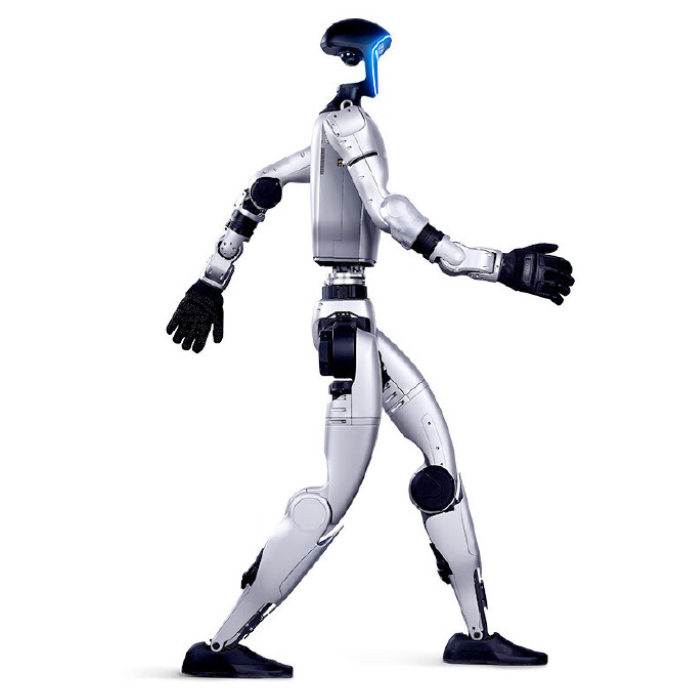
- The Three Critical Pieces of the Embodied Intelligence Puzzle
Embodied intelligence describes artificial intelligence systems that perceive, reason, decide, and act within the physical world. Unlike software-only artificial intelligence, embodied intelligence must connect digital models with mechanical bodies, sensors, and real environments. A robot that can see, move, grasp, and adapt must integrate hardware, software, and operational experience. The three pieces are therefore not optional features but structural requirements.
The body provides the physical platform. It includes the robot’s structure, joints, actuators, sensors, and control systems. The model provides understanding, reasoning, decision-making, and execution capabilities. The data provides the training material that allows the model to learn how to act in the physical world. In Qingdao, each of these pieces is represented by enterprises, research institutions, and infrastructure projects.
This framework helps explain why embodied intelligence is attracting attention from industry, capital markets, and research communities. It is not simply a new term for robotics. It represents the convergence of artificial intelligence, advanced manufacturing, sensor technology, motion control, and large-scale data collection. For a city with a strong manufacturing base, embodied intelligence offers an opportunity to connect traditional industrial strengths with next-generation artificial intelligence.
In the embodied intelligence value chain, the body is the platform that interacts with the physical world. The model is the decision layer that interprets goals and environments. The data is the experience layer that improves performance over time. When these three layers are isolated, progress is slow. When they are connected, each improvement can reinforce the others. Better bodies generate more data. More data improves models. Better models make bodies more useful. More useful robots create demand for better bodies and more diverse data.
| Area | Data |
|---|---|
| Artificial intelligence and robotics enterprises in Qingdao | More than 600 |
| Harmonic reducer types produced by Fengguang Precision | 03-32 series full range |
| Guohua Intelligent annual production capacity | 100,000 harmonic reducers, 50,000 rotary joints, 3,000 humanoid robot bodies |
| KUAVO-VLA cost and training impact | Data and computing cost reduced by more than 50%; training cycle compressed from weeks to days |
| Shandong first batch of key embodied intelligence robot training grounds | 26 projects; Qingdao has 8, the highest in the province |
| Qingdao Humanoid Robot Data Collection Training Ground | Planned annual high-quality real-machine data collection exceeding 1 million items |
| Fengguang Precision first half 2026 revenue | 133 million yuan, up 30.86% year on year |
| Fengguang Precision first half 2026 net profit attributable to parent | 3.4951 million yuan, up 332.67% year on year |
| Fengguang Precision first half 2026 non-GAAP net profit | 3.4421 million yuan, up 171.55% year on year |
| Projected humanoid robot harmonic reducer demand by 2030 | 32 million units, compound annual growth rate of 178% |
| China embodied intelligence themed investment and financing in first half 2026 | 172 events, totaling 109.174 billion yuan |
- Strengthening the Body: From Harmonic Reducers to Full Robot Platforms
From the opening of the 2026 World Robot Conference and Unitree Robotics’ listing on the STAR Market to the second World Humanoid Robot Games, embodied intelligence robots have once again moved into the spotlight. At the opening ceremony of the second World Humanoid Robot Games, humanoid robots ran the 100-meter dash in 9.39 seconds and reached a high jump result of 2.88 meters. These striking performances depend on precise and efficient motion joint systems. A core executive component within those joints is the harmonic reducer.
A harmonic reducer can be understood as the muscle controller of a robot joint. On a robot body, the motor provides force, while the harmonic reducer ensures that force is applied correctly. In the industry, a single humanoid robot typically requires 14 to 28 harmonic reducers, and the component accounts for a significant share of robot production costs. According to a recent forecast by China Merchants Bank International, as reducer usage per robot increases, demand for harmonic reducers used in humanoid robots will reach 32 million units by 2030, with a compound annual growth rate of 178%.
In Qingdao, manufacturing strength in this core component is growing. Qingdao Fengguang Precision Machinery Co., Ltd., known as Fengguang Precision, is a representative enterprise. The company focuses on precision machining and die-casting manufacturing and has long supplied harmonic reducer supporting parts to industry customers. As China’s robotics industry advanced rapidly, the company decided to achieve core technological breakthroughs in this component field.
A representative of the company said that after years of effort, Fengguang Precision has gained mass production capability for the full 03-32 series of harmonic reducers used in humanoid robots. The numbers in the series refer to the diameter of the flexspline pitch circle of the harmonic reducer. A smaller number indicates a smaller size and greater processing difficulty. This range matters because different robot joints require different sizes and performance characteristics. Compact joints demand extremely high precision, while larger joints must handle greater force and repeated motion.
Robot-related business, represented by harmonic reducers, is now accelerating the steady development of Fengguang Precision. The company’s 2026 half-year report showed that first-half revenue was 133 million yuan, up 30.86% year on year. Net profit attributable to the parent company was 3.4951 million yuan, up 332.67% year on year. Non-GAAP net profit attributable to the parent company was 3.4421 million yuan, up 171.55% year on year.
The half-year report stated that during the reporting period, market expansion for the new harmonic reducer product was highly synergistic with existing operations. It not only further consolidated the company’s cooperation with existing customers in robot automation but also, through core technological breakthroughs, attracted new customers upstream and downstream of the robot industrial chain, laying a solid foundation for sustained growth.
Guohua (Qingdao) Intelligent Equipment Co., Ltd., known as Guohua Intelligent, is also seizing opportunities in the embodied intelligence robot industry. Its business has expanded to planetary roller screws, harmonic rotary joint modules, robot arms, and wheeled and biped humanoid robot bodies. The company has achieved full-stack independent research and development and production from key components to complete machine hardware.
At the 2026 World Robot Conference, Guohua Intelligent presented a core product matrix including fully self-developed harmonic reducers and joint modules. With strong performance in motion control, the products attracted attention and recognition from multiple complete machine manufacturers.
Liu Jinyu, founding partner and deputy general manager of Guohua Intelligent, said at the Guohua Embodied Intelligence Industrial Park that the park already has an annual production capacity of 100,000 harmonic reducers, 50,000 rotary joints, and 3,000 humanoid robot bodies. Full-stack independent research and development brings advantages in cost reduction and speed. Liu said the company has reduced the unit price of harmonic rotary joint modules to the thousand-yuan level and the unit price of robot arms to the ten-thousand-yuan level, significantly lowering the innovation threshold for the industry.
Components are being refined, and carriers are being built. At the Qingdao Artificial Intelligence Industrial Park, the Qingdao Embodied Intelligence Robot Innovation Center project has been completed. According to different functional zones, the center will host research and development, assembly, and production of industrial application robots, home service application robots, and commercial service application robots. It will also include software and chip research and development related to robot brains and cerebellums, a research and innovation center, industrial ecosystem support, and research and manufacturing of core robot components such as sensors, servo motors, reducers, and joint modules.
This combination of component manufacturing, complete machine development, and innovation infrastructure strengthens the body of Qingdao’s embodied intelligence industry. The body is not only a mechanical shell. It is the platform on which models and data act. Better bodies make autonomous operation more reliable, safer, and more efficient. Lower-cost components make experimentation more accessible. Faster production cycles allow new designs to move from concept to deployment more quickly.
For embodied intelligence, the body also determines the range of possible tasks. A wheeled platform may be ideal for logistics and retail. A bipedal humanoid platform may be better suited to environments designed for people. A robotic arm may be more efficient for fixed workstations. Qingdao’s component and complete machine enterprises are building capabilities across these forms. That diversity is important because embodied intelligence will not be limited to one type of robot or one type of task.
- Building the Brain: Large Models Move Embodied Intelligence Beyond Remote Control
Wang Xingxing, founder of Unitree Robotics, said at the 2026 World Robot Conference that when a general-purpose robot can complete about 80% of tasks in an unfamiliar environment, the industry will reach a critical point for explosive growth. That could happen in two to three years, or it could take five or ten years. At present, the largest bottleneck worldwide is that the generalization capability of embodied intelligence is insufficient.
How can this bottleneck be overcome? The answer may point to large models. Without large-model empowerment, a robot is only a remote-controlled toy. A robot may have a strong body, but without understanding, reasoning, and decision-making, it cannot adapt to changing environments or complete continuous autonomous work.
At the 2026 World Robot Conference, Leju Robotics said it clearly felt that the event was not a show for a single hardware category. It was a display of a full-stack technology system covering the brain, cerebellum, and body of embodied intelligence robots. The industry’s focus has shifted from what actions a robot can perform to how a robot can enter real scenarios. Enterprises at the conference demonstrated not only flexible bipedal walking or precise robotic arm trajectories but also large-model-driven understanding, reasoning, decision-making, and execution capabilities.
Leju Robotics said it relies on a self-developed full-link development toolchain that supports rapid migration of cross-configuration models. Modular design allows flexible adaptation to diverse scenarios. All demonstrations were mature commercial solutions ready for delivery and benchmarked against real operational standards.
Leju Robotics has worked for years on building the brain for embodied intelligence robots. On August 26, the company officially released the vertical domain large model KUAVO-VLA and made it open source through multiple channels.
The core idea of KUAVO-VLA is to add an industrial vertical domain model between a general foundation model and task skills. This layer undertakes body adaptation and domain capability accumulation. Compared with a foundation model, KUAVO-VLA does not need to repeatedly learn action space and industrial vertical domain knowledge. The data and computing cost for developing new industrial skills are both reduced by more than 50%, and the training cycle is compressed from weeks to days.
This approach addresses a practical problem in embodied intelligence. General foundation models can understand language and images, but they may not know how a specific robot body moves, how much force a particular gripper needs, or how an industrial task is sequenced. A vertical domain model can bridge that gap. It can encode knowledge about the robot’s body and the target industry while still benefiting from broader foundation model capabilities.
Haier also demonstrated an autonomous home AI cooking robot, CR3, at the conference. The robot has a built-in AI cooking large model. From seasoning amount, heat control, and cooking time to the order of ingredient placement and the ratio of meat to vegetables, it accurately replicates master-level cooking standards.
Earlier, on August 8, Qingdao University of Technology and UBTECH Robotics Corp., Ltd. signed a strategic cooperation agreement. The two sides proposed to focus on collaborative efforts in education applications, co-building a data collection center, and developing vertical models and embodied world models.
These developments show that the model layer of Qingdao’s embodied intelligence ecosystem is not limited to one company or one application. It includes industrial vertical models, home service models, cooking models, educational cooperation, and world-model research. The model layer is where embodied intelligence gains the ability to understand tasks, transfer skills, and operate in dynamic environments. It is also where the value of data and the capability of the body are unlocked.
For Qingdao, the model layer connects local manufacturing with broader artificial intelligence research. It allows component makers, robot builders, and software developers to collaborate on complete solutions. It also allows the city to participate in the development of standards, tools, and platforms that will shape how embodied intelligence robots are deployed in factories, stores, homes, and public spaces.
| Participant | Contribution |
|---|---|
| Fengguang Precision | Mass production capability for 03-32 series harmonic reducers; precision machining and die-casting; acquisition of Weishi Shenlan to integrate precision machining and intelligent perception systems |
| Guohua Intelligent | Full-stack independent development and production from harmonic reducers, planetary roller screws, and rotary joint modules to robot arms and wheeled and biped humanoid robot bodies |
| Leju Robotics | Vertical domain large model KUAVO-VLA; full-link development toolchain; cross-configuration model migration; modular design for commercial solutions |
| Haier | Autonomous home AI cooking robot CR3 with built-in AI cooking large model |
| Qingdao University of Technology and UBTECH | Strategic cooperation in education applications, data collection center co-building, vertical models, and embodied world models |
| DPVR | RoboPilot robot teleoperation and data collection solution using VR and spatial computing |
| Qingdao Artificial Intelligence Industrial Park | Core carrier with 18 embodied intelligence enterprises and more than 300 artificial intelligence enterprises |
| Qingdao Embodied Intelligence Robot Innovation Center | Completed project for research, assembly, and production across industrial, home, and commercial service robots, plus software, chips, and core components |
- Collecting Data: Real-World Action Data Feeds the Evolution of Embodied Intelligence
Just as a brain needs knowledge to learn, a large model needs data to train. For embodied intelligence robots, the data required for training is action data generated when tasks are executed in the real physical world. This includes how to control gripping force and how to coordinate spatial perception to complete complex actions. Such data is difficult to obtain from simulations alone. It requires real robots, real objects, real environments, and repeated practice.
Qingdao is accelerating the entry of embodied intelligence robots into real scenarios through the construction of data collection and training grounds. In July, the Shandong Provincial Department of Industry and Information Technology announced the first batch of 26 key embodied intelligence robot training grounds. Eight Qingdao projects were selected, the highest number in the province.
One example is the Qingdao Humanoid Robot Data Collection Training Ground. It is the first humanoid robot data collection training ground in Shandong Province. It covers three major fields: industry, family, and commerce. Its annual plan includes collecting more than 1 million high-quality real-machine data items. The data collected by robots in the training ground is continuously fed to large models to help them learn complete work and life skills.
There is also a group of technology enterprises deeply engaged in the spatial computing track. By tackling core technologies in spatial positioning, motion tracking, and low-latency human-robot interaction, they are lowering the threshold for data collection.
During the 2026 World Robot Conference, DPVR, headquartered in the Qingdao Virtual Reality Industrial Park, presented its RoboPilot robot teleoperation and data collection solution. It jointly demonstrated embodied intelligence applications with Aoyi Technology and Lingqiao Intelligence, showing the practical application of a VR teleoperation solution on different robot hardware.
Chen Zhaoyang, founder of DPVR and chairman of LeXiang Technology, said that RoboPilot can adapt to different robot hardware and control systems. It obtains the operator’s hand spatial pose and motion trajectory in real time. While completing real-time teleoperation, it can simultaneously collect operation data for action teaching, algorithm training, and dataset construction. The solution has already served research teams from universities in the United States and the United Kingdom, as well as multiple leading embodied intelligence robot enterprises in Shanghai and Shenzhen.
Data collection is not a peripheral activity. It is a core part of the embodied intelligence value chain. Every successful grasp, every adjusted movement, and every completed task produces experience that can improve a model. As training grounds expand and data collection tools become more accessible, the speed at which embodied intelligence learns new skills can increase. This is especially important for industrial, commercial, and household scenarios, where tasks vary widely and environments are not fully predictable.
For embodied intelligence, data quality matters as much as data quantity. Real-world action data must capture not only successful outcomes but also the conditions that led to success. It must include variations in object position, lighting, surface material, human interference, and task sequence. Training grounds provide controlled but realistic environments where these variations can be captured systematically. Teleoperation and spatial computing tools then make it easier to record human demonstrations and translate them into machine learning material.
| Item | Details |
|---|---|
| Shandong first batch of key embodied intelligence robot training grounds | 26 projects announced; Qingdao has 8, ranking first in the province |
| Qingdao Humanoid Robot Data Collection Training Ground | First in Shandong; covers industry, family, and commerce; planned annual high-quality real-machine data collection exceeding 1 million items |
| DPVR RoboPilot solution | Robot teleoperation and data collection; adapts to different robot hardware and control systems; serves university research teams in the United States and the United Kingdom and leading embodied intelligence robot enterprises in Shanghai and Shenzhen |
| Data usage | Feeds large models for action teaching, algorithm training, and dataset construction |
- An Ecosystem in Motion: Investment, Manufacturing, and Cluster Development
Embodied intelligence is regarded as one of the core development directions of the second half of artificial intelligence. It carries strong curiosity and hope about whether artificial intelligence can enter the physical world and truly work. Every small step taken by embodied intelligence robots can generate significant discussion in the online world and capital markets.
Data from iiMedia Research shows that in the first half of 2026, China had 172 investment and financing events themed on embodied intelligence, with a total amount of 109.174 billion yuan. This level of capital activity reflects broad expectations for the field, but it also places pressure on companies and cities to move beyond concepts and demonstrate real capabilities.
Qingdao is not a bystander in this industrial race. The city has gathered more than 600 artificial intelligence and robotics enterprises. From Fengguang Precision’s harmonic reducers to Guohua Intelligent’s full-stack independent research and development and production, and to the expanding data collection training grounds, Qingdao has quietly built a closed loop of the three key pieces: body, model, and data. This loop draws on the city’s deep accumulation in advanced manufacturing and artificial intelligence and on its natural abundance of real data from industrial scenarios.
Industrial competition is not only about single-point technological breakthroughs. It also requires a complete ecosystem that can reduce costs and accelerate technological iteration. At present, multiple core component enterprises are strengthening the outward extension of the robot industry through market forces. For example, Fengguang Precision acquired Weishi Shenlan to integrate precision machining business with intelligent perception system business and help the company upgrade toward an intelligent equipment integrated solution provider.
The Qingdao Science and Technology Innovation Corridor, which is being solidly advanced, also provides a platform for the flow and interaction of talent, policy, capital, scenarios, data, and other elements needed by the industry. The corridor brings together eight national key laboratories, eight universities, and nearly 1,000 high-tech enterprises. A group of scattered innovation resources is being linked together like beads on a string.
Take the Qingdao Artificial Intelligence Industrial Park as an example. As the core carrier of embodied intelligence industry in the Qingdao Science and Technology Innovation Corridor, it has gathered 18 embodied intelligence enterprises and attracted more than 300 artificial intelligence enterprises to settle there. It has initially formed an embodied intelligence industrial cluster featuring research and development institutions, core enterprises, and supporting enterprises.
This cluster model matters because embodied intelligence is inherently interdisciplinary. It requires mechanical engineering, electronics, control theory, artificial intelligence, computer vision, natural language processing, materials science, and data science. No single company can master every link efficiently. A cluster allows specialized firms to collaborate, share knowledge, and respond to customer needs faster. It also allows component suppliers, model developers, data service providers, and complete machine manufacturers to iterate together.
The body gives embodied intelligence its physical presence. The model gives it understanding and decision-making. The data gives it experience. When these three pieces are connected, embodied intelligence can move from demonstration to deployment. It can work in retail stores, logistics centers, factories, homes, and commercial spaces. It can adapt to different tasks and environments. It can continue learning from real-world operation.
- From Demonstration to Deployment: The Next Phase of Embodied Intelligence
The retail robot at Leju Robotics’ booth and the feeding robot at the small-parts station represent more than a technical display. They show a direction of travel. The remote control is disappearing from the center of the story. The robot is becoming a worker, a helper, and a participant in real processes. This transition is the essence of embodied intelligence industrialization.
For Qingdao, the opportunity lies in combining manufacturing strength with artificial intelligence capability. The city already has enterprises that can produce harmonic reducers, rotary joints, robot arms, and humanoid robot bodies. It has model developers working on vertical domain large models and full-stack toolchains. It has data collection training grounds and spatial computing companies that lower the cost of collecting real-world action data. It has parks and innovation centers that bring these capabilities together.
The result is an embodied intelligence ecosystem that is still evolving. The body is becoming stronger and cheaper. The model is becoming more general and more efficient. The data is becoming richer and more structured. Each improvement in one piece increases the value of the others. Cheaper components make more robots available for data collection. More data improves models. Better models make robots more capable. More capable robots create more demand for components and more scenarios for data collection.
This flywheel effect is central to the development of embodied intelligence. It also explains why cities and companies are investing across the entire stack rather than focusing on isolated products. A robot that cannot understand its environment is limited. A model without a body cannot act. A body without data cannot learn. The integration of all three is what makes embodied intelligence practical.
Qingdao’s current position reflects this integrated approach. The city has more than 600 artificial intelligence and robotics enterprises. It has built the initial shape of an embodied intelligence industry matrix. It has gathered the three key pieces of body, model, and data. It is now working to strengthen each piece and connect them more tightly.
At the same time, the field remains at an early stage. The generalization capability of embodied intelligence is still insufficient. The critical point when general-purpose robots can complete about 80% of tasks in unfamiliar environments may be years away. The exact timing remains uncertain. But the direction is clear. Capital, talent, and industrial attention are moving toward embodied intelligence. Cities that can provide the infrastructure, supply chain, data, and application scenarios will be better positioned to capture value.
Qingdao’s manufacturing foundation and rich industrial scenarios give it a natural advantage. Factories, warehouses, retail spaces, homes, and public environments provide diverse settings for embodied intelligence to learn and operate. The city’s data collection training grounds turn these settings into sources of training data. Its component manufacturers turn designs into physical systems. Its model developers turn data into intelligent behavior.
As embodied intelligence continues to evolve, the boundary between hardware and software will become less rigid. Robots will be evaluated not only by how they look or how they move but by how well they understand tasks, adapt to change, and complete useful work. The body, model, and data will need to advance together. Qingdao has assembled the pieces. The next challenge is to scale the ecosystem, lower costs, improve reliability, and demonstrate value in real physical scenarios.
With core components strengthening the body and models and data cultivating intelligence, more embodied intelligence robots carrying Qingdao genes can be expected to continue evolving in real and complex scenarios. The city’s embodied intelligence industry is not simply following a global trend. It is building an integrated base from which robots can move beyond remote control and into autonomous, continuous, and useful work.
For the broader embodied intelligence industry, Qingdao’s experience suggests that progress will depend on coordination. Component breakthroughs must be matched by model development and data infrastructure. Research cooperation must be matched by commercial deployment. Investment must be matched by real-world validation. The city’s emerging ecosystem brings these elements into proximity. That proximity can shorten feedback loops, accelerate learning, and create the conditions for the next generation of embodied intelligence robots to work reliably in everyday environments.