
Supply chain management is entering a new phase in which digital twins and embodied intelligence are being brought together to reshape how end-to-end logistics is planned, executed and continuously optimized. A newly proposed application framework outlines how a physical entity layer, a digital twin layer and a human-machine interaction layer can work in concert to deliver real-time perception, predictive simulation and closed-loop execution in highly dynamic environments. At the center of the framework sits embodied intelligence — agents that learn through perception, interaction and feedback in real or near-real environments — with human judgment retained as the ultimate decision-making authority.
The research arrives as manufacturers face mounting pressure from shorter product life cycles, increasingly diversified and smaller-batch product structures, rising expectations for order fulfillment speed, and steadily climbing customer requirements for product performance and service quality. These forces compound one another, producing an operating environment that is highly dynamic and difficult to forecast, and placing substantial strain on conventional supply chain models built around experience-driven planning and static configuration. Under these conditions, building a digital-intelligent supply chain with agile response, dynamic regulation and structural resilience has shifted from an optional competitive advantage to a core foundation for long-term, stable development.
Digital-intelligent supply chains integrate the Internet of Things, big data, blockchain and artificial intelligence to drive full-process digital reconstruction and intelligent evolution across planning, procurement, production and delivery. The essential objective is to form a highly collaborative value network in which demand-side and supply-side information is linked in real time and matched efficiently, thereby lifting overall operating efficiency, risk response capability and system resilience. In practice, however, existing systems continue to be constrained by fragmented data, slow response and insufficient adaptability to complex, dynamic environments — precisely the gaps that the convergence of digital twins and embodied intelligence is positioned to address.
- Why Digital Twins Have Moved Beyond Static Mapping
Supported by the coordinated advance of IoT, big data and artificial intelligence, digital twins have evolved from state reproduction for a single physical object into a system-level virtual mapping architecture that spans multiple elements, scales and processes. Such an architecture can deliver high-frequency perception and real-time feedback on the operating states of physical entities, while also providing a unified data semantics and collaborative optimization foundation for complex systems that cross organizations and nodes. In supply chain management, digital twins support end-to-end visibility and collaborative decision-making by integrating demand, inventory, logistics and production resources into a single modeling environment.
Prior work has shown considerable potential for digital twins in inventory level optimization, demand forecasting and supply risk scenario deduction. Much of this work, however, remains at the stage of static mapping or offline simulation based on historical data, and the real-time interaction and closed-loop regulation between physical systems and virtual models still require further strengthening. To address this gap, researchers have constructed logistics digital twin models that fuse container loading planning with delivery route optimization, achieving dynamic visualization and interactive decision support for the distribution process and validating the feasibility of digital twins in online optimization of complex logistics systems.
Other teams have targeted the practical problems of fragmented information and delayed response in warehouse operations, proposing an intelligent warehousing system architecture based on digital twins. Through three-dimensional modeling, virtual simulation and real-time data interaction, that architecture achieves holistic optimization of warehouse resource allocation and operating processes. At a higher system level, researchers examining the difficulty of quantifying the benefits of digital supply chain twins have proposed a systematic evaluation method framework covering use case definition, scenario construction and multi-level simulation analysis, applying it to an organic food supply chain through a multi-scenario study comprising forty simulation experiments.
- How Embodied Intelligence Is Advancing Toward the Shop Floor
Embodied intelligence emphasizes that an intelligent agent achieves cognitive evolution through interaction between its “body” and the environment. Building on embodied cognition theory and technological innovation theory, researchers have systematically summarized the core attributes of embodied intelligence and examined industrial practice dynamics led by intelligent driving and humanoid robots. On that basis, a theoretical framework spanning technology chain integration, supply chain reorganization and business model innovation has been proposed to explain the structural transformation underway in the automotive industry.
In the industrial domain, embodied intelligence robots demonstrate precise manipulation and autonomous adaptability in flexible manufacturing. Research frameworks for industrial embodied intelligence have been put forward to address frontier developments in intelligent manufacturing. Compared with conventional industrial automation systems that depend on preset programs and rules, industrial embodied intelligence possesses the capacity for self-learning and adjustment, enabling it to cope with dynamic and complex industrial environments.
The concept of a digital genealogy, which generates multiple generations of product digital models, supports world model training for industrial embodied intelligence and reflects the generative capability of digital twins in data-scarce scenarios. In supply chain settings, embodied intelligence agents such as robots and intelligent connected vehicles execute sorting, handling and assembly tasks through multimodal perception and reinforcement learning. Embodied intelligence robot technology deployed in a smart manufacturing plant has been reported to autonomously complete insertion and removal operations for 5G product connectors and optical modules, realizing closed-loop “perception-action” control. Deployment of embodied intelligence nevertheless remains constrained by environmental complexity and model generalization capability. Taken together, existing systems tend to be intelligent yet insufficiently flexible, making it difficult for them to respond to sudden disruptions.
- The Transformation Imperative Facing Digital-Intelligent Supply Chains
Digital-intelligent supply chains leverage artificial intelligence and large models to push the supply chain from a linear chain toward an ecosystem-oriented system. The contradiction between demand-side personalization and supply-side uncertainty requires supply chains to possess real-time response and collaborative optimization capabilities. Empirical work indicates that digital-intelligent transformation can enhance enterprise competitiveness through industrial chain empowerment, while technological heterogeneity and the absence of standards constrain the effectiveness of that transformation.
The fusion of digital twins and embodied intelligence is well positioned to bridge the gap between virtual planning and physical execution, yet related research remains fragmented. The application of these technologies is still dominated by single-point deployment and local optimization, lacking collaborative design that runs through the entire supply chain process. Analysis and deduction results produced in virtual models struggle to form a stable and continuous feedback loop at the physical execution layer, which limits further improvement of overall system performance.
At the same time, as embodied intelligence agents take on a greater role in critical business processes, questions around operational safety, system reliability and the interpretability of decision-making have become more prominent. The relevant operating mechanisms and constraint conditions have yet to form a clear and unified understanding, creating an urgent need for systematic organization and regulation at a higher level. These issues indicate that relying on digital twins or embodied intelligence alone cannot fully support the comprehensive requirements of digital-intelligent supply chains for rapid response, autonomous decision-making and continuous optimization. It is therefore necessary to re-examine the collaborative relationship and integration path between the two from the perspective of overall architecture and operating mechanisms.
- A Three-Layer Application Framework Built on Human-in-the-Loop Governance
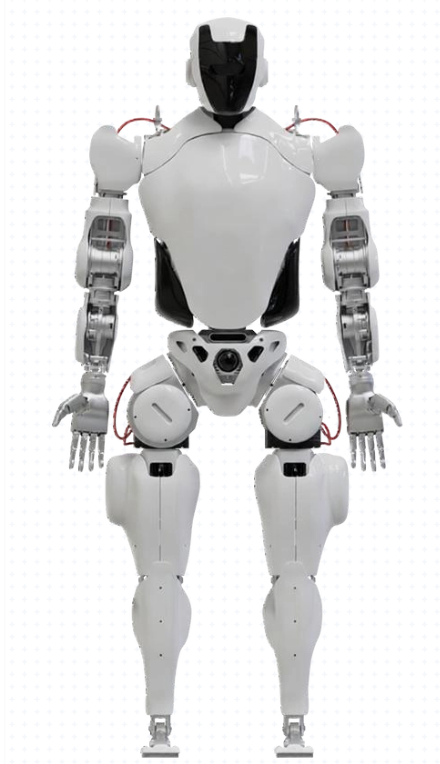
The proposed framework is composed of a physical entity layer, a digital twin layer and a human-machine interaction layer. It achieves closed-loop operation through dynamic virtual-physical mapping and intelligent agent collaboration, while carrying through the principle of human-machine collaboration and human-centered design. Human judgment is retained at critical decision points to strengthen system reliability, interpretability and practical applicability.
Drawing on the fundamental concepts of cyber-physical systems, the framework adapts a three-layer architecture to the specific characteristics of digital-intelligent supply chains, including frequent dynamic changes, diverse participating entities and complex collaborative relationships. The architecture does not attempt to cover every possible application dimension. Instead, it is organized around the response delay and insufficient collaboration efficiency that arise in supply chains because processes span multiple organizations, information is dispersed and collaborative chains are long.
- The Physical Entity Layer: Embodied Intelligence Agents and Supply Chain Objects
The physical entity layer forms the execution terminal of the digital-intelligent supply chain in the physical world. Its core elements include embodied intelligence agents such as intelligent trucks, industrial robots, autonomous guided vehicles, autonomous mobile robots, intelligent handling equipment and drones; multimodal perception systems such as vision sensors, force sensors, auditory sensors and RFID; and the physical objects being operated on and managed, including materials, work-in-progress, finished goods, warehouses and production line environments.
The fundamental role of this layer is to directly undertake concrete physical operations in supply chain scenarios and to collect first-hand data on the environment and operating states in real time. Effective operation depends on constructing a complete perception-decision-action-feedback loop. Embodied intelligence agents first acquire environmental information in real time through their own multimodal perception capabilities, then perform local decision-making and planning based on instructions issued internally or from the cloud, and subsequently drive actuators to complete specific actions such as grasping, assembly and handling. The effect of the action is captured once again by the perception system, forming feedback that is used to evaluate and adjust subsequent behavior. This closed-loop mechanism is the key to ensuring that the entire supply chain system can dynamically adapt to complex and changing environments and achieve precise, efficient operations.
- The Digital Twin Layer: Model Repository and Algorithmic Core
The digital twin layer serves as the model repository and algorithmic core of the system, with the primary task of constructing high-fidelity virtual models and undertaking complex computational work. It focuses on multi-scale, multi-physical digital expression of all supply chain elements, including materials, components, equipment, inventory and logistics units, and performs simulation, prediction and optimization analysis in virtual space based on real-time and historical data. It can generate hierarchical models from parts to systems, used to simulate equipment wear, predict logistics bottlenecks or test the effects of different inventory strategies.
By integrating large language models and knowledge graphs, this layer is able to process natural language instructions and convert them into executable simulation tasks, while incorporating expert experience and other knowledge into the analysis process to generate data-driven insight and optimization schemes. In short, the digital twin layer is a dynamically evolving decision laboratory, responsible for thinking things through and, crucially, thinking them through in advance by producing optimal strategy blueprints through computation and deduction.
- The Human-Machine Interaction Layer: Collaborative Control and Evolution Mechanism
The human-machine interaction layer exists both to ensure efficient collaboration between physical entities and digital models and to reinforce ethical norms at the mechanism level, establishing the human as the highest decision-maker of the entire system so as to avoid uncertain risks such as artificial intelligence hallucination. On one hand, the layer undertakes the functions of data hub and control agent, achieving real-time and reliable data synchronization and instruction transmission between the physical layer and the digital twin layer through a unified data bus and standardized interfaces.
On the other hand, it constructs a human-in-the-loop decision mechanism. Under normal circumstances, the system operates autonomously based on optimization schemes generated by the digital twin layer, such as picking routes. Once a preset major risk or uncertainty is identified, the system automatically pauses and requests human intervention, with the human making the final judgment and issuing instructions. During this process, the human-machine interaction layer continuously compares expected and actual execution differences and drives iterative system optimization through methods such as reinforcement learning. The layer is therefore not only a dynamic channel ensuring that intelligent decisions are precisely implemented, but also a key link for carrying through human-centered governance principles and maintaining system trustworthiness and controllability.
- Intelligent Perception and Precise Execution
The core operating process of the framework reflects deep collaboration between digital twins and embodied intelligence. The physical entity layer is the execution terminal of the digital twin-driven framework in the physical world, and its core mission is to achieve a high degree of integration between intelligent perception and precise execution, which is precisely where embodied intelligence surpasses conventional automation.
Relying on multimodal sensing networks deployed on intelligent carriers such as robots, autonomous guided vehicles, autonomous mobile robots and intelligent connected vehicles, including vision, force, auditory and lidar sensing, the layer can not only collect environmental data in real time, such as cargo posture, equipment vibration and temperature and humidity changes, but also actively identify and understand semantic information in physical scenes. A robotic arm, for example, can judge the material hardness of a grasped object through tactile feedback, while an autonomous mobile robot can rely on visual semantic segmentation to identify temporary obstacles in a passage and determine their attributes. This semantically fused perception capability upgrades the entity layer from a single data collector into an intelligent agent with preliminary environmental cognition.
In terms of precise execution, the entity layer can conduct analysis and decision-making based on its own edge intelligence or receive optimization instructions issued by the human-machine interaction layer, such as picking routes and assembly sequences, and convert them into specific joint motion trajectories or chassis control signals. Benefiting from technologies such as deep reinforcement learning, agents can achieve flexible control and real-time adjustment in dynamic environments. An autonomous mobile robot in a narrow passage, for instance, can dynamically adjust speed and avoidance strategy based on real-time crowd density. This local perception-decision-action closed loop ensures that even under network latency or interruption, the physical entity layer maintains basic autonomy, significantly improving overall system robustness. By continuously feeding execution results back to the digital twin layer, the physical entity layer forms a bidirectional intelligent evolution mechanism that drives the system from mechanical execution toward dexterous operation.
- Virtual Mapping and Iterative Simulation
The digital twin layer first constructs high-fidelity virtual models of supply chain elements based on real-time and historical data collected by the physical entity layer. These models are not static representations; they can simulate the operating states and interaction logic of entities under multiple working conditions, forming a dynamic mapping in which the virtual and physical worlds are synchronized. On this basis, the digital twin layer further exercises predictive capability. By integrating mechanistic models with data-driven algorithms, such as intelligent networks combining physical laws or reinforcement learning, it conducts advance deduction of supply chain operations, identifies potential bottlenecks, predicts production capacity degradation or evaluates the impact of sudden anomalies. It can simulate the throughput limit of a warehouse during an order surge, or predict the delay risk of a specific logistics route.
Such prediction provides the basis for proactive decision-making. Based on simulation and prediction results, the digital twin layer generates globally optimized strategy schemes, such as dynamic work plans, resource allocation schemes or exception handling processes. These strategies undergo multiple rounds of hypothetical analysis and iterative simulation in virtual space, where their effectiveness is continuously validated and optimized before executable decision instructions are formed. The core value of this process lies in transforming traditional after-the-fact response into advance anticipation, and in driving continuous optimization of the supply chain system through sustained digital iteration.
- Closed-Loop Learning and Continuous Evolution
The human-machine interaction layer drives continuous system evolution through an evaluation-optimization-feedback autonomous learning loop. This mechanism continuously compares the decision expectations of the digital twin layer, such as simulated task duration and energy consumption budgets, with the actual execution data returned by the physical entity layer, such as real elapsed time, energy consumption and operational precision, thereby identifying the gap between the virtual model and real-world performance. Based on algorithms such as reinforcement learning, the system can automatically analyze the causes of the gap and correspondingly optimize control strategies at the physical layer, fine-tune digital twin layer model parameters, or even calibrate model structure.
The entire learning process carries through the principle of human-machine collaboration and human-centered design. Under routine scenarios, the system can autonomously complete the learning and optimization cycle. When major anomalies, strategy conflicts or high-risk adjustments are identified, such as a potential contradiction between an optimization direction and safety specifications, the system suspends automatic updates and requests human review and decision-making, with the human acting as the highest decision-maker to determine whether to adopt, revise or reject the relevant optimization scheme. This mechanism grants the system the ability to learn from failure experiences such as collisions and out-of-tolerance results, while integrating human experience and ethical judgment into the evolution process, effectively avoiding artificial intelligence hallucination caused by excessive model confidence or data bias.
The learning outcomes formed in this way, including more efficient path planning algorithms, force control models adapted to multi-material grasping and human experience, are systematically integrated into the digital twin layer under human supervision, updating virtual models and being deposited into the strategy library as reliable alternatives for similar future scenarios. This builds a human-machine collaborative learning loop of deduction, verification, correction and re-deduction, enabling the system not only to continuously optimize from historical experience but also to evolve safely and credibly toward dexterous operation and scenario self-adaptation under human guidance.
Through deep collaboration across the three layers, the framework transforms the supply chain from a relatively static system dependent on manual experience into an organic entity capable of real-time perception, scientific decision-making, precise execution and continuous self-optimization, delivering qualitative improvement in core supply chain operating indicators.
- Where the Framework Applies: Five Representative Scenarios
Through a closed-loop mechanism of virtual-physical mapping, perception and decision-making, and physical execution, digital twins combined with embodied intelligence can be widely applied across procurement, production, warehousing, logistics and service links in digital-intelligent supply chains. The defining characteristic is deep integration of multi-agent collaboration, autonomous decision-making and physical execution in complex dynamic environments, which markedly improves system real-time performance, robustness and overall collaborative efficiency. This model is pushing the supply chain from system automation toward embodied autonomous intelligence.
| Application Scenario | Core Enabling Technologies | Improvement Effects |
|---|---|---|
| Supplier intelligent factory audit | Digital twin-driven remote site mapping and immersive interaction, embodied intelligence audit robots, multimodal perception and human-machine collaborative review mechanisms combining robotic pre-screening with expert judgment | Reduces audit costs and labor input, improves audit efficiency and result consistency, and strengthens supply chain quality assurance and compliance management |
| Intelligent production and flexible manufacturing | High-fidelity digital twin production line modeling, embodied intelligence working robots, imitation learning and reinforcement learning, virtual-physical closed-loop process calibration | Supports mixed production of multiple varieties in small batches, shortens production line changeover and process verification cycles, and shifts production systems from rigid configuration to flexible reconfiguration |
| Intelligent warehouse kitting and picking | Digital twin warehouse modeling and picking simulation, collaborative task and route planning, embodied intelligence picking robots, vision-force fusion perception and fine grasping control | Reduces mis-picking and missed-picking risks, raises picking efficiency and accuracy, and strengthens warehouse responsiveness to order fluctuations and production takt changes |
| Intelligent end-to-end material handling | Full-process digital twin modeling and simulation deduction, embodied intelligence handling robots, virtual-physical collaborative scheduling and online optimization mechanisms | Achieves unmanned, continuous material flow from suppliers to production lines, improves loading, unloading and docking precision, and enhances reliability, responsiveness and overall resilience of supply chain operations |
| Intelligent installation and commissioning | Digital twin simulation training, embodied intelligence delivery robots, multimodal perception and virtual-physical closed-loop calibration | Significantly shortens equipment installation and commissioning cycles, reduces on-site trial and error and equipment damage, improves installation precision and commissioning success rates, and supports rapid delivery of complex products |
- Supplier Audits Conducted Through Embodied Intelligence
Supplier factory audits are a key link in supply chain management for safeguarding product quality and compliance, yet traditional manual on-site audits have clear limitations in cost, efficiency and scalability. Embodied intelligence audit robots based on digital twins can map supplier site environments and critical processes to a remote platform in real time, enabling immersive and interactive remote review. The robots collect equipment status, environmental parameters and operating processes through multimodal perception, and complete automatic verification of standardized indicators under rule constraints. For complex or unstructured problems, expert judgment is introduced through a human-machine collaboration mechanism. This model lowers audit costs and labor input while improving audit efficiency and result consistency, effectively strengthening supply chain quality assurance and compliance management.
- Flexible Manufacturing Powered by Embodied Intelligence
Against the backdrop of growing demand for multi-variety, small-batch production, the fusion of digital twins and embodied intelligence offers a new implementation path for flexible manufacturing. By constructing a high-fidelity digital twin production line, equipment status, material flow and process parameters can be mapped and simulated in real time, providing a decision basis for process adjustment and production line changeover. Embodied intelligence working robots translate virtual optimization results into physical execution and achieve adaptive adjustment of motions and process parameters through learning mechanisms. The virtual-physical closed-loop calibration mechanism enables the production system to respond quickly to order changes and process iteration, significantly shortening changeover and verification cycles and shifting production systems from rigid configuration toward flexible reconfiguration.
- Warehouse Kitting and Picking Supported by Embodied Intelligence
Warehouse kitting and picking is an important link connecting order demand with production execution, and its efficiency and accuracy directly affect production takt and delivery stability. Digital twin-based warehouse modeling and picking simulation allow collaborative planning of task allocation, picking routes and operation sequences in a virtual environment, with schemes dynamically optimized according to order and inventory changes. Embodied intelligence picking robots rely on fused visual and force perception to complete precise identification and flexible grasping in actual operations, feeding site status back to the digital twin system in real time to support online re-planning. Through the closed-loop collaboration of virtual planning and physical execution, picking error rates and response delays are effectively mitigated, and the warehouse’s ability to adapt to production takt fluctuations is significantly enhanced.
- End-to-End Material Handling Driven by Embodied Intelligence
End-to-end intelligent material handling aims to achieve continuous, unmanned material flow from suppliers to production lines. Through full-process digital twin modeling and simulation deduction, key links such as loading and unloading, transportation and production line docking can be rehearsed and optimized, providing precise guidance for the actual execution of embodied intelligence handling robots. Supported by multimodal perception and adaptive control, the robots can complete loading, unloading, docking and handling operations in dynamic environments, and correct execution strategies in real time through virtual-physical collaborative scheduling and online optimization mechanisms. This model effectively improves loading, unloading and docking precision, and enhances the reliability, responsiveness and overall collaborative performance of the logistics system.
- Installation and Commissioning with Embodied Intelligence Assistance
During the equipment installation and commissioning stage, the collaboration of digital twins and embodied intelligence provides important support for shortening deployment cycles and reducing on-site risk. Through digital twin simulation training, robots can repeatedly rehearse assembly paths and commissioning processes in a virtual environment, forming in advance the operating strategies needed to cope with parameter deviations and complex working conditions. Once in the actual scenario, robots obtain real-time feedback through multimodal perception and dynamically adjust motions and parameters under a virtual-physical closed-loop calibration mechanism, thereby improving installation precision and commissioning success rates. This model significantly reduces on-site trial and error and equipment damage risk, laying a foundation for rapid delivery of complex equipment and subsequent intelligent operations and maintenance.
Across these scenarios, the fusion of digital twins and embodied intelligence achieves intelligent collaboration and efficiency gains in auditing, production, warehousing, logistics and installation and commissioning through virtual-physical mapping, multimodal perception, collaborative decision-making, closed-loop optimization and precise execution, effectively strengthening system responsiveness, reliability and flexibility. Beyond the scenarios described here, the approach retains broad potential for expansion in supply chain operations and control.
- Barriers Standing Between the Framework and Large-Scale Deployment
Large-scale implementation of this architecture still faces a series of challenges. These include high complexity of cross-platform technology integration, the absence of secure sharing mechanisms for multi-source heterogeneous data, the high cost of high-precision modeling and simulation computing power, and the relatively high investment threshold for system deployment and operations and maintenance.
Each of these barriers interacts with the others. Fragmented data environments make it harder to train reliable embodied intelligence models, while the computational demands of high-fidelity twins limit how widely they can be deployed across distributed supply chain nodes. At the same time, the participation of embodied intelligence agents in critical business processes raises unresolved questions about safety, reliability and the interpretability of decision-making, reinforcing the need for governance mechanisms that keep human judgment in the loop.
- Three Directions Shaping the Road Ahead
Future work can seek breakthroughs in three main directions. The first is lightweight and adaptive technical models. There is a need to develop lightweight digital twin models and embodied intelligence algorithms oriented toward edge computing, reducing excessive dependence on cloud computing power. At the same time, adaptive models with online learning capability should be explored, enabling the system to continuously fine-tune and optimize using incremental data during actual operation, so as to better adapt to dynamic changes in supply chain scenarios.
The second direction is collaborative construction of standards and ecosystems. A cross-disciplinary, cross-industry standards system covering hardware interfaces, data formats, communication protocols and evaluation specifications should be established more quickly. This requires coordinated efforts from all parties across the industrial chain, breaking down integration barriers through deep cooperation spanning industry, academia, research and application, and promoting the replicability and large-scale application of technical solutions.
The third direction is deep integration and reconstruction of human-machine relationships. Future work should actively explore new human-machine integration models such as human-in-the-loop co-embodied intelligence. The aim is to build a collaborative system that both leverages the advantages of human experts in anomaly handling and creative decision-making and utilizes the efficient execution characteristics of intelligent agents in repetitive and high-risk tasks, realizing a paradigm shift from humans managing machines to genuine human-machine collaboration.
- From Static Digital Mapping to Intelligent Symbiosis
Taken together, the combination of digital twins and embodied intelligence is driving the supply chain from static digital mapping toward dynamic intelligent symbiosis. The proposed three-layer architecture integrates the physical execution capability of embodied intelligence with the global deduction and optimization capability of digital twins, markedly improving supply chain transparency, resilience and operating efficiency in dynamic environments.
Although the path toward mature application still requires crossing numerous technical and engineering gaps, the substantial potential demonstrated in raising overall industrial chain efficiency and cultivating new quality productive forces confirms the value and prospects of this exploration path. As embodied intelligence agents become more capable and digital twin models become more lightweight and adaptive, the boundary between virtual planning and physical execution will continue to blur, and the supply chain will increasingly behave as an organic entity that perceives, decides, acts and learns as a unified whole.