
The 2026 World Robot Conference (WRC) offered a vivid snapshot of an industry moving faster than its commercial foundations. On one side of the exhibition floor, capital continues to pour into embodied intelligence at an extraordinary pace. On the other side, companies are still searching for the kind of repeatable, large-scale orders that can justify those valuations. The result is a temperature gap that has become one of the defining features of the embodied intelligence sector.
During the first half of 2026, domestic financing in the embodied intelligence track reached 93.5 billion yuan, nearly five times the level of the same period in 2025. During the conference, the 2026 Humanoid Robot Industry Development Report showed that China’s humanoid robot shipments had already exceeded 40,000 units in the first half of the year, raising the country’s global share to 97 percent. At the same time, State Grid issued a 6.8 billion yuan procurement plan. These figures suggest a market on the edge of scale. Yet many industry experts at the conference warned that genuinely commercial, large-scale mass-production orders remain scarce. The apparent contradiction between headline numbers and order-book reality is not a simple contradiction. It is a classic feature of an industry climbing the steep part of an S-curve.
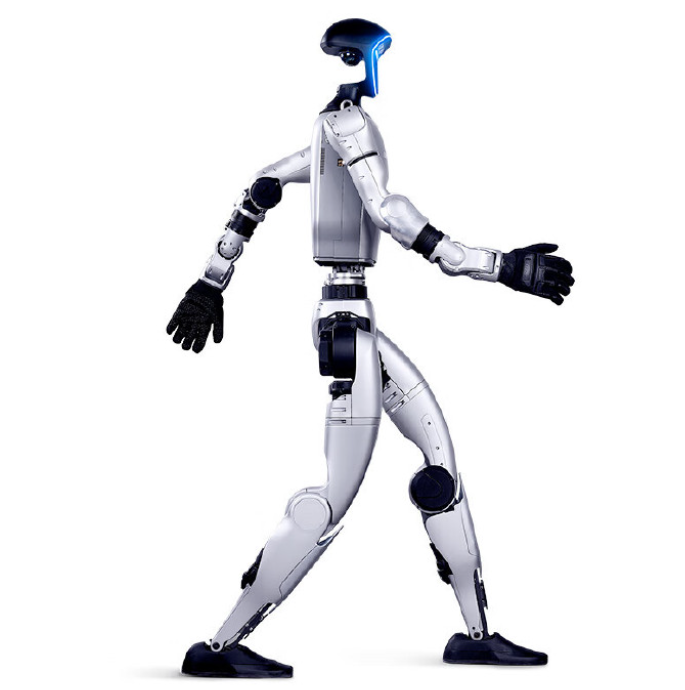
For embodied intelligence, the question is no longer whether robots can perform impressive demonstrations. The question is whether they can perform useful work, at acceptable cost, with sufficient reliability, across enough scenarios, and for customers willing to pay repeatedly. That shift from technical possibility to commercial necessity was visible in almost every corner of the 2026 WRC. The conference theme changed from “Make Robots Smarter” to “Human-Machine Symbiosis, Production-Demand Integration,” a phrase that signals a move away from pure capability display and toward market demand.
At the same time, the gap between capital enthusiasm and industrial readiness is not uniform. Some companies are already operating in real scenarios, while others remain trapped in demonstration loops. Some procurement demands are clear and specific, while others remain exploratory. Some technology routes are moving toward commercialization, while others are still betting on a long-term ideal. Understanding the temperature gap in embodied intelligence requires looking at financing, shipments, orders, data, generalization, hardware routes, and the changing behavior of investors. Each factor tells part of the story.
- Capital Heat and Order Cold: Where Does the Temperature Gap Come From
The most striking feature of the 2026 WRC was the coexistence of enormous capital flows and persistent anxiety over a shortage of rigid-demand orders. This is not because customers are uninterested. It is because the distance between a working robot and a scalable business remains wider than many investors expected. The conference responded by creating a Procurement Day for the first time. At that event, 49 central state-owned enterprises brought 12 application scenarios into a single venue. State Grid, CNPC, CRRC, and other major players entered the room with clearly listed needs: power inspection, oil and gas pipeline operation and maintenance, mining, and metallurgy.
Xu Xiaolan, chairman of the Chinese Institute of Electronics, said at the main forum that embodied intelligence products are at a critical inflection point, moving from small-batch trials toward large-scale deployment. That statement captures both the promise and the pressure. The promise is that demand exists. The pressure is that the industry has not yet converted that demand into a predictable order pipeline. According to public data, domestic financing in the embodied intelligence track reached 93.5 billion yuan in the first half of 2026, nearly five times the same period in 2025. The 2026 Humanoid Robot Industry Development Report, released during the conference, showed that China’s humanoid robot shipments exceeded 40,000 units in the first half of 2026, with the global share rising to 97 percent.
Yet several industry experts at the conference said that scalable mass-production orders with genuine commercial value are still rare. One side of the market shows central state-owned enterprises placing batch procurement orders. The other side shows a broad “rigid demand order shortage.” This seemingly contradictory situation is typical of an industry in the steep climbing phase of an S-curve. Capital markets often price in a future that the industrial base cannot yet deliver. Operational teams, meanwhile, must survive on today’s cash flow and tomorrow’s pilots.
Zhang Xiaorong, president of the Deep Technology Research Institute, told China City News that shipment volume is not the same as rigid demand and cannot hide the shortage of rigid orders. In his view, the capital side has already overdrawn the next three to five years of valuation, while the industrial side still has very few genuinely profitable orders. That mismatch is visible in the stock market as well. On August 19, Unitree Robotics listed on the STAR Market with an issue price of 150.80 yuan. It opened at 1,100 yuan, and its intraday market capitalization once exceeded 440 billion yuan.
The next day, Wang Xingxing, speaking at the main forum, said directly that the core reason humanoid robots have not been widely adopted is that efficiency remains lower than human labor, and generalization capability is insufficient. Immediately after his remarks, Unitree’s stock fell 18.7 percent that day, and more than 60 billion yuan in market value evaporated. The rise and fall within such a short period revealed a shift in how capital markets approach the robotics track. Investors are moving from betting on stories to verifying quality. For embodied intelligence, that is a healthy but painful transition.
Indicator Reported Figure Context Embodied intelligence financing, first half of 2026 93.5 billion yuan Nearly five times the same period in 2025 China humanoid robot shipments, first half of 2026 More than 40,000 units Global share rose to 97 percent State Grid procurement plan 6.8 billion yuan Announced during the 2026 WRC period Unitree Robotics issue price 150.80 yuan Listed on the STAR Market on August 19 Unitree Robotics opening price 1,100 yuan Intraday market capitalization once exceeded 440 billion yuan Unitree Robotics single-day decline 18.7 percent More than 60 billion yuan in market value evaporated The table above shows why the temperature gap is so difficult to ignore. The headline numbers are enormous, but they do not automatically translate into healthy unit economics. A shipment can be a pilot, a demonstration, a research purchase, or a subsidized deployment. An order can be a framework agreement, a trial procurement, or a conditional commitment. What the embodied intelligence industry needs is not simply more announcements. It needs orders that are repeated, profitable, and scalable. That is the difference between shipping robots and building a robotics business.
The WRC’s Procurement Day was an attempt to close that gap. By bringing central state-owned enterprises together with technology providers, the conference created a structured channel for demand and supply to meet. Power inspection, oil and gas pipeline maintenance, mining, and metallurgy are not glamorous consumer applications. They are difficult, dangerous, repetitive, and often labor-constrained. That makes them natural early markets for embodied intelligence. They also come with high reliability requirements, strict safety standards, and long procurement cycles. In other words, they are real. That reality is exactly what the industry needs.
However, real demand does not guarantee easy deployment. Central state-owned enterprises may list clear needs, but they also require proven performance, service networks, maintenance systems, and measurable returns. A robot that works in a laboratory may fail in a substation, a pipeline corridor, or a mine. A robot that succeeds in one site may not generalize to another. The temperature gap therefore is not only a financing phenomenon. It is a deployment phenomenon. Capital has moved faster than the operational evidence required to justify it.
For embodied intelligence, the first half of 2026 was a period of extraordinary attention. The second half may be a period of verification. Investors are asking harder questions. Customers are asking for proof. Companies are being forced to move from storytelling to execution. That transition will produce winners and losers, but it will also produce a more durable industry. The temperature gap is uncomfortable, but it is also a signal that the market is beginning to separate hope from reality.
- Limbs Are Trained, but the Brain Is Still Hungry
At the 2026 WRC, Wang Xingxing’s comments about efficiency and generalization were not isolated. They pointed to a deeper technical bottleneck that runs through the entire embodied intelligence sector. The industry has made remarkable progress in hardware. Robot limbs, joints, actuators, sensors, and control systems have improved rapidly. Supply chains have matured. Costs have fallen. Yet the “brain” of the robot remains far behind the body. In many cases, the machine can move, but it cannot understand, adapt, or decide with the reliability required by real work.
Generalization is the largest technical bottleneck. Large language models operate in a vector space where inputs and outputs can be compared with relatively small deviations. A robot, by contrast, performs physical operations in the real world, where every action introduces deviation and loss. A slight change in object position, lighting, surface friction, or human behavior can alter the outcome. As a result, generalization and success rates remain difficult to improve. In a fixed scene, a robot’s task success rate may approach 100 percent. But if the object changes or the environment shifts slightly, the success rate can fall sharply. Wang Xingxing called this the “last few centimeters” problem.
The path to better generalization depends on data and scenarios. But where does the data come from? During the conference, one data point was repeatedly mentioned: China has only 500,000 hours of compliant data from real physical interaction scenarios. Commercial deployment, however, requires a data volume in the tens of millions of hours. The gap is more than 99 percent. This is not a small shortfall. It is a fundamental constraint on the development of embodied intelligence. Without data, models cannot learn. Without real scenarios, data cannot be collected. Without deployment, real scenarios do not exist. The industry is caught in a circular dependency.
Grant Thornton noted in a report that domestic supply chain companies have significantly reduced the core cost of humanoid robots. However, the efficiency of real-world data collection and the success rate of Sim-to-Real migration remain major disturbances on the industrial path. Sim-to-Real refers to the transfer of skills learned in simulation to the physical world. Simulation is useful because it is fast, cheap, and scalable. But simulation is not reality. The real physical world is far more complex than any simulation platform can fully cover. A robot trained in a digital environment may still fail when it encounters dust, vibration, temperature changes, unpredictable humans, or unusual objects.
Zhang Xiaorong argues that the three major challenges often cited by the industry all point to the same root cause: data. In his view, the lack of million-hour-level, high-quality data from real scenarios is the central problem. He told China City News that the current bottleneck is that robots do not have a brain and that battery life is insufficient. The phrase “no brain” does not mean robots lack processors. It means they lack the embodied intelligence required to understand context, adapt to change, and make reliable decisions in open environments. The phrase “battery life” points to another practical constraint. A robot that must recharge frequently cannot perform long shifts. A robot that cannot work a full shift cannot replace human labor in most industrial settings.
JD Cloud President Cao Peng highlighted the same difficulty at the main forum. He said real-scene interaction data is hard to obtain and expensive to collect. Data diversity is insufficient, which limits model generalization. Different robot bodies also create data islands. In Cao Peng’s view, competition in embodied intelligence appears to be a competition over model capabilities, but it is essentially a competition over data scale, data quality, and data systematization. This is a critical insight. Many companies claim to have models. Fewer have the data pipeline required to keep those models improving.
Xue Yifan, security industry director of the sales and marketing department at Zhishen Technology, told China City News that the traditional approach is “SLAM mapping plus path planning.” With that approach, a change in scenario requires redeployment. Zhishen Technology did not take that path. Instead, it built what it describes as the industry’s first data-driven end-to-end autonomous driving large model, allowing robots to navigate and make decisions autonomously like intelligent vehicles. Its self-developed MATRiX 2.0 simulation platform plays the role of a training ground. Before a robot enters a real scenario, it has already practiced countless times in the digital world.
But simulation cannot solve everything. The complexity of the real physical world exceeds the coverage of any simulation platform. An investor who spent three days walking the conference floor said that everyone is talking about data, but very few companies actually have data. Money cannot buy it, and technology cannot easily produce it. That is the most awkward part of the current situation. For embodied intelligence, data is not just an input. It is the raw material of intelligence. Without it, the brain remains hungry, no matter how capable the limbs become.
Data and Generalization Gap Reported Figure or Condition Implication for Embodied Intelligence Compliant real physical interaction data in China 500,000 hours Far below the volume needed for commercial deployment Estimated data volume required for commercialization Tens of millions of hours Data gap exceeds 99 percent Fixed-scene task success rate Can approach 100 percent Performance is strong under controlled conditions Changed object or slightly altered environment Success rate falls sharply Generalization remains the core technical bottleneck Key bottlenecks identified by Zhang Xiaorong No brain and insufficient battery life Intelligence and endurance must improve together The data problem is compounded by fragmentation. Different robot makers use different hardware, sensors, and software stacks. Data collected by one robot may not be useful to another. This creates data islands, slowing the collective learning of the embodied intelligence ecosystem. If the industry can standardize data formats, improve collection efficiency, and build shared pipelines, progress could accelerate. But standardization is difficult when companies compete on proprietary systems. The tension between openness and competition is another reason the temperature gap persists.
For embodied intelligence to move from demonstration to deployment, the brain must improve. That means better models, more diverse data, stronger simulation-to-reality transfer, and longer battery life. It also means better evaluation. The industry needs clear benchmarks for success, not just impressive videos. It needs metrics for uptime, task completion, intervention rate, maintenance cost, and return on investment. Without such metrics, customers cannot compare solutions, and investors cannot separate substance from spectacle. The “last few centimeters” problem is not only technical. It is also commercial and organizational.
- Route Debate: Bipedal, Wheeled, and the Commercialization Calculus
What should a robot look like? At the 2026 WRC, the answer was far from unified. Some companies are betting on bipedal humanoids. Others are choosing wheeled platforms. Still others are developing quadruped or hybrid forms. The route debate is not merely aesthetic. It determines cost, stability, application scope, and commercial viability. It also shapes how the market thinks about embodied intelligence.
Galbot released a new bipedal humanoid robot, Galbot ET1. The company had previously focused on wheeled humanoids, so the move toward legs attracted attention. Robot Era, Ant Lingbo, and other companies have also placed humanoid robots into express sorting positions. On the other side, Moqi Intelligence introduced MORPHI KINO with a wheeled chassis. At the conference, it autonomously completed a 15-minute cross-region home task. The contrast illustrates that technical routes and product designs still involve trade-offs. There is no single answer that fits every scenario.
A veteran industry observer who has attended the conference for many years said that last year almost everyone talked about bipedal humanoids. This year, people have started calculating accounts. They calculate cost, scenario fit, and whether customers are willing to pay. That shift is important. It shows that the embodied intelligence industry is moving from technology push to market pull. In the early stage, novelty drives attention. In the commercialization stage, economics drives adoption.
Zhang Xiaorong argues that the bipedal route is a long-term “must-have” but a short-term “non-essential.” Wheeled or half-body forms are the realistic path to commercialization, with a bill of materials cost only one-tenth that of bipedal robots. Bipedal robots remain the long-term ideal for unstructured scenarios. In his view, the industry will maintain a “multiple legs” pattern, and there will be no final debate over the ultimate form. Different routes will serve different use cases. A factory floor may favor wheeled platforms. A disaster zone may require legs. A home may require both. The market will decide.
Xue Yifan told China City News that Zhishen Technology’s move from quadruped to biped reflects a common underlying control capability. The company is building a complete technology system covering robot research and development, training, manufacturing, and application. It has more than 300 ecosystem partners. Its products have landed in security, emergency response, power, and other core industries. These products are already operating in real scenarios, not停留在展示阶段. That last point is central. The route debate matters less if a company can deliver working products in real customer environments. The route debate matters more if a company only has demonstrations.
According to statistics from Robotics Lecture Hall, among 311 robotics industry financing deals in the first half of 2026, seed and angel rounds plus A-round series totaled 222 deals, accounting for more than 72 percent of the market. This means the majority of financing is still going to early-stage companies. Very few companies have entered the scale validation stage. The route debate is therefore not just about hardware. It is about which companies can survive the long transition from early funding to commercial scale.
Financing and Market Structure Reported Figure Interpretation Total robotics financing deals, first half of 2026 311 Broad investor interest across the robotics sector Seed, angel, and A-round deals 222 More than 72 percent of total market share Companies entering scale validation Still limited Most embodied intelligence firms remain early stage Zhishen Technology ecosystem partners More than 300 Partnership network supports deployment in security, emergency, and power The route debate also affects customer expectations. A bipedal humanoid robot may capture imagination, but a wheeled robot may deliver higher reliability at lower cost. For many industrial tasks, the environment is structured. Floors are flat. Routes are predictable. Objects are positioned within a known range. In such settings, legs add complexity without adding enough value. For unstructured environments, legs may be necessary. The key is to match the form to the task. The embodied intelligence industry is learning that lesson in real time.
At the same time, the route debate is not only technical. It is also financial. Bipedal robots require more actuators, more sensors, more complex control software, and more maintenance. That increases BOM cost and reduces margins. Wheeled platforms may be less capable in some scenarios, but they can be cheaper to build, deploy, and service. For early commercialization, lower cost and higher reliability often matter more than human-like appearance. Customers do not buy a form factor. They buy a solution to a problem.
That is why the 2026 WRC felt more pragmatic than previous editions. The industry is still excited about humanoids, but it is also testing wheeled, quadruped, and hybrid systems. It is asking which form can generate repeat orders. It is asking which form can operate for a full shift. It is asking which form can be maintained by existing service networks. These are not glamorous questions, but they are the questions that determine whether embodied intelligence becomes a durable industry or remains a capital-market theme.
- From Demonstration to Deployment: What Changed at the 2026 World Robot Conference
The 2026 WRC was not a show of backflips and dance performances. The conference theme moved from “Make Robots Smarter” to “Human-Machine Symbiosis, Production-Demand Integration.” That change in wording pointed to a change in industrial focus. The question is no longer only “What can a robot do?” The question is “What does the market need?” This shift was visible in the demonstrations, the procurement sessions, and the conversations on the floor.
At the Yunji Technology booth, visitors lined up as a noodle-cooking robot delivered a bowl of hot noodles in about one minute. At the Chery Mocha exhibition area, a large screen rotated live scenes from 22 cities. Smart police robots stood at intersections, directing traffic and capturing illegal parking. An industry insider who had attended the conference for two consecutive years said that last year many scenarios were still demonstrations, but this year they are really happening. That comment captures the transition from proof of concept to early deployment.
The first-ever Procurement Day was another sign of this transition. For the first time, 49 central state-owned enterprises brought 12 application scenarios together. State Grid, CNPC, CRRC, and other major players entered with clearly defined needs. Power inspection, oil and gas pipeline operation and maintenance, mining, and metallurgy were listed as concrete demand areas. This is significant because it gives technology providers a clearer target. Instead of guessing what customers might want, they can respond to documented needs.
Xu Xiaolan’s statement that embodied intelligence products are at a critical inflection point from small-batch trials to large-scale deployment reflects the mood of the conference. The industry is no longer asking whether robots can work. It is asking whether they can work at scale, at acceptable cost, and with acceptable reliability. That is a much harder question. It requires progress in hardware, software, data, service, and financing. It also requires customers to change their processes. A robot is not simply a replacement for a human worker. It is a new element in an operational system.
For embodied intelligence, deployment is not a single event. It is a process of iteration. A robot enters a site, collects data, encounters edge cases, receives updates, and gradually improves. The more sites it enters, the more data it collects. The more data it collects, the better it generalizes. The better it generalizes, the more sites it can enter. This flywheel is the key to scaling embodied intelligence. But the flywheel only turns if the first deployments are successful enough to generate repeat orders. That is why the order shortage is so important. Without orders, there is no data. Without data, there is no improvement. Without improvement, there are no more orders.
The 2026 WRC showed that some companies are already turning this flywheel. Yunji Technology’s food-service robot, Chery Mocha’s city-scale deployments, and Zhishen Technology’s security and power applications all suggest that real-world operations are possible. But these examples are still limited relative to the size of the opportunity. The industry needs many more such examples. It needs customers who are willing to deploy at scale, and providers who can support them. It needs financing that rewards execution, not just ambition. The conference was a step in that direction, but it was only a step.
- Investment Shift: From Storytelling to Order Verification
The capital market’s attitude toward embodied intelligence is changing. During the early phase, investors were attracted by the size of the opportunity and the possibility of a new platform. They were willing to bet on stories, founders, and demonstrations. That phase is not over, but it is maturing. The Unitree Robotics episode showed how quickly sentiment can shift. A spectacular opening was followed by a sharp decline after the CEO publicly acknowledged the limits of current humanoid robots. The market is beginning to ask for evidence.
Zhang Xiaorong says that capital is moving from “looking at demos” to “looking at orders, yield, and repeat purchases.” This is a critical shift. Orders show demand. Yield shows manufacturing capability. Repeat purchases show customer satisfaction and commercial viability. A company that can demonstrate all three is far more attractive than a company with a compelling video. The problem is that few embodied intelligence companies can yet demonstrate all three. That is why financing remains concentrated in early rounds. Investors are still placing bets, but they are placing smaller bets and asking for more proof.
The numbers support this view. In the first half of 2026, there were 311 robotics industry financing deals. Seed and angel rounds plus A-round series totaled 222 deals, accounting for more than 72 percent of the market. This means the majority of capital is still going to early-stage companies. Very few companies have reached the stage where they can validate scale. The industry is rich in potential and poor in proven commercial outcomes. For embodied intelligence, the challenge is to convert early-stage funding into late-stage traction.
State Grid’s 6.8 billion yuan procurement plan is an important test. If companies can win orders from this plan and deliver successfully, they will have credible reference customers. That can unlock more orders from other state-owned enterprises and industrial customers. If they cannot deliver, the credibility of the entire sector may suffer. The procurement plan is therefore not just a sales opportunity. It is a stress test for the industry. It will reveal which companies have real products, real service capabilities, and real financial discipline.
The companies that win will likely share certain characteristics. They will have focused use cases. They will have strong data pipelines. They will have reliable hardware. They will have service networks. They will have disciplined cost structures. They will not rely solely on financing to survive. They will generate revenue from customers. They will reinvest that revenue into product improvement. They will build a defensible position in one or more vertical markets. These are the fundamentals of any industrial business, but they are especially important in embodied intelligence, where technical complexity is high and expectations are even higher.
- Reshuffle and Survival: Who Will Remain in Embodied Intelligence
Zhang Xiaorong predicts that the industry will experience an accelerated reshuffle in the coming year. Capital is shifting from “demo” to “orders, yield, and repeat purchases.” Companies that can survive must meet three conditions. First, they must have self-blood-making capability, with B-end orders covering research and development. Second, they must have a brain with strong generalization capability. Third, they must have a stable team governance structure. Pure hardware assemblers and “show-off” players that depend on financing to burn money will be the first to exit.
The reshuffle has already begun. After State Grid announced its 6.8 billion yuan procurement plan, companies that could win orders quickly emerged. Companies that could not win orders continued to tell the story of the next funding round. This divergence is natural in a maturing market. In the early stage, many companies can attract attention with a compelling prototype. In the commercialization stage, attention is not enough. Customers need delivery. Investors need returns. Employees need stable salaries. The market rewards execution.
For embodied intelligence, the reshuffle will not mean the end of the sector. It will mean the end of a phase. The companies that remain will be stronger. They will have clearer value propositions. They will have more realistic valuations. They will have deeper customer relationships. They will have better data. They will be positioned to scale. The companies that exit will have contributed to the learning process, but they will not capture the value. This is how industrial cycles work. The temperature gap is uncomfortable, but it forces discipline.
The three survival conditions are interconnected. Self-blood-making capability provides the financial resources to continue development. A strong generalization brain provides the technical capability to serve multiple scenarios. Stable team governance provides the organizational capability to execute over time. A company that lacks any one of these conditions will struggle. A company that has all three has a chance to become a leader in embodied intelligence. The coming year will be a test of these capabilities. It will also be a test of investor patience. The capital that remains will be more strategic and more demanding.
For customers, the reshuffle is good news. It will reduce noise and make it easier to identify serious suppliers. For investors, it will reduce the risk of backing companies that cannot commercialize. For the industry as a whole, it will accelerate the transition from hype to reality. The embodied intelligence sector needs this transition. Without it, the temperature gap will continue to widen. With it, the gap can gradually close. The goal is not to eliminate the gap entirely. The goal is to make sure that capital, technology, and demand move in the same direction.
- Conclusion: The Temperature Gap Is a Phase, Not a Final Verdict
The temperature gap in embodied intelligence is real. Capital has moved faster than orders. Shipments have moved faster than data. Demonstrations have moved faster than deployment. But this gap is not evidence that the sector is failing. It is evidence that the sector is in a difficult, formative stage. The S-curve of embodied intelligence is steep. The industry is climbing it with limited data, incomplete generalization, multiple hardware routes, and changing investor expectations. That is a challenging combination, but it is also the normal condition of a frontier industry.
The 2026 World Robot Conference showed both sides of the story. The enthusiasm is genuine. The applications are becoming more real. The procurement interest from central state-owned enterprises is serious. The data bottleneck is severe. The route debate is unresolved. The order shortage is persistent. The investment shift is underway. The reshuffle is beginning. All of these forces are shaping the future of embodied intelligence at the same time. The outcome will depend on how well the industry can convert capital into capability, capability into deployment, and deployment into repeatable commercial success.
For embodied intelligence to fulfill its promise, several things must happen. The data gap must be addressed through real-world deployment, standardized collection, and better simulation-to-reality transfer. The brain problem must be solved through stronger models, longer battery life, and more robust generalization. The route debate must be resolved not by ideology but by use case economics. The investment market must reward orders, yield, and repeat purchases. The customer market must provide clear, repeatable demand. The policy environment must support standards, safety, and infrastructure. None of these things will happen overnight, but all of them are possible.
The temperature gap is uncomfortable because it exposes the distance between ambition and execution. But it is also useful. It forces the industry to focus. It forces companies to prove themselves. It forces investors to be disciplined. It forces customers to define their needs. In the long run, embodied intelligence will not be built on hype. It will be built on robots that work, data that improves, orders that repeat, and businesses that sustain themselves. The 2026 WRC was a snapshot of that journey. The next few years will determine who completes it.