
Guangzhou — The 21st China International SME Fair, held in Guangzhou from September 3 to 6, 2026, placed artificial intelligence at the center of its organizing theme. With more than 2,000 small and medium-sized enterprises from more than 40 countries and regions participating, the fair presented a broad picture of how AI is being integrated into manufacturing, services, healthcare, education, logistics, and consumer markets. Within this larger framework, the embodied intelligence professional exhibition occupied 15,000 square meters and became one of the most closely watched sections of the event. Nearly 100 enterprises across the industrial chain and more than 200 typical application scenarios were brought together, covering core components, humanoid robot complete machines, AI algorithms, and industry applications. The result was a one-stop presentation of technological innovation and application deployment in the embodied intelligence field.
Embodied intelligence, a term that once sounded academic, became visible and tangible on the exhibition floor. Robots walked, responded, smiled, carried objects, and interacted with visitors. The displays did not merely show prototypes behind glass; they demonstrated how machines with physical bodies, perception systems, decision-making models, and action capabilities are moving toward real work settings. For small and medium-sized enterprises, the fair also offered a view of how AI can be embedded into products and services, how supply chains are forming, and how commercial pathways are emerging.
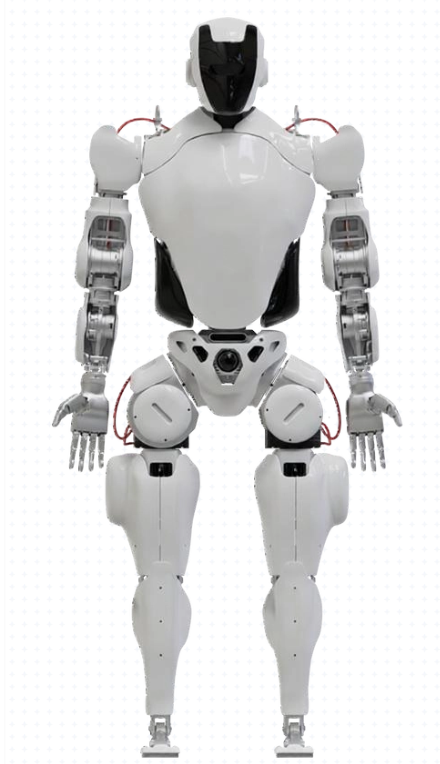
Across the embodied intelligence exhibition area, the central question was no longer whether machines can perform isolated tasks. The more urgent question was how quickly embodied intelligence can move from demonstration to deployment, from laboratory validation to scalable production, and from technical benchmarks to repeatable business models. The exhibits suggested that the answer is being shaped by three forces: technology, scenarios, and industrialization.
- Technology as the Foundation: Giving Artificial Intelligence a Physical Body
At the booth of Dongyi Technology, a biped humanoid robot played badminton with visitors. It handled forehand, backhand, and smashes, responding to a variety of incoming shots. Crowds surrounding the court repeatedly responded with surprise. The robot was described as the world’s first biped humanoid robot capable of autonomously playing badminton with humans in the real world. This is not a minor laboratory demonstration. It requires perception, prediction, balance, motion planning, real-time control, and physical adaptation. In embodied intelligence, these capabilities must operate together in a physical body under uncertain conditions.
Ren Xiaoyu, founder, CEO, and CTO of Dongyi Technology, explained the significance. At 29, he had already been recognized as a deputy senior engineer. A Tsinghua graduate, he previously served as the humanoid robot technology lead at Fourier Intelligence. There he led the development of the GR-1 humanoid robot and, according to the company, achieved the first domestic implementation of reinforcement learning Sim-to-Real technology in motion control for a large-size humanoid robot. That background reflects the deepening talent pool behind embodied intelligence. It also shows how quickly expertise from one generation of robots can flow into new ventures.
After founding Dongyi Technology in September 2024, Ren Xiaoyu proposed a philosophy that differs from the mainstream approach: “Robot for AI.” In the common “AI for Robot” model, artificial intelligence is placed into an already existing robot body. The alternative is to first define what kind of body intelligence needs, and then design the physical body accordingly. In other words, embodied intelligence should not be treated as software added to hardware. The body, sensors, actuators, and control architecture should be shaped by the requirements of intelligence itself. This debate is central to the field. It affects how robots are designed, how they learn, how they move, and how they will ultimately perform in human environments.
The badminton demonstration illustrates why this matters. A robot that plays badminton must continuously estimate the trajectory of the shuttlecock, adjust its posture, generate rapid movements, recover balance, and respond to unpredictable human behavior. These are not simple pre-programmed motions. They require a tight loop among perception, learning, prediction, and action. For embodied intelligence, such tasks are more than entertainment. They are stress tests for real-world autonomy. A robot that can handle a fast-changing physical game may also be better prepared for dynamic tasks in factories, warehouses, hospitals, and homes.
The technology-driven path represented by Dongyi Technology is one part of the embodied intelligence landscape. It emphasizes core capabilities: robot bodies, motion control, learning algorithms, and autonomous interaction. But technology alone does not guarantee commercial success. The fair also showed that scenario-driven companies are pursuing a different route, one that starts from specific user needs and works backward into hardware and software design.
- Scenarios as the Key: Opening the Door to Commercial Deployment
If Dongyi Technology represents a technology-driven path, Shenzhen Digital Huaxia and Zhipingfang demonstrated a scenario-driven path. At the Digital Huaxia exhibition area, three humanoid robots were displayed side by side: Xialan R03, Xiaqi, and Xingxingxia. Each represented a different approach to embodied intelligence and user interaction.
Xialan R03 uses bionic silicone facial skin. Its face carries more than 40 degrees of freedom and can precisely present more than 30 composite expressions. This level of facial articulation is intended to make interaction more natural. In embodied intelligence, communication is not limited to speech. Facial expression, gaze, posture, and timing all contribute to whether a person trusts and understands a robot. A machine that can produce nuanced expressions may be better suited to service roles where emotional signals matter.
Xingxingxia supports switching between biped walking and wheeled movement. It can perform high-level motions such as side flips and ethnic dances. This flexibility points to a practical design choice. Bipedal movement offers human-like mobility and the ability to navigate stairs or uneven spaces, while wheeled movement can provide stability and efficiency on flat surfaces. A robot that can switch between modes may be more adaptable across different environments. The ability to perform dynamic movements also demonstrates control capability, but the commercial value lies in selecting the right mode for the right task.
Jia Kaichao, product marketing manager at Digital Huaxia, said that most robots on the market can only complete basic actions and find it difficult to take on real business. The company’s core differentiation lies in two self-developed underlying systems. One is the Juhao 2.0 embodied intelligence interaction platform. It features a unique fast-slow brain dual-brain coordination mechanism. The fast brain handles real-time multimodal interaction. The slow brain carries emotional computing and long-term memory. Together, they are designed to understand user emotions and achieve genuinely empathetic human-robot interaction.
This dual-brain concept reflects a broader trend in embodied intelligence. Real-time reaction and long-term understanding are different computational problems. A robot may need to respond immediately to a gesture, a voice, or a change in the physical environment. At the same time, it may need to remember past interactions, build a model of the user, and adapt its behavior over time. Separating these functions can make the system more manageable and more capable. It also moves robots beyond simple command-response cycles toward relationships that feel more continuous and context-aware.
Jia Kaichao defined 2026 as the “first year of large-scale commercial deployment scenarios for humanoid robots.” From the perspectives of geographic location, platform, and industry cycle, he described participation in the China International SME Fair as a combination of multiple favorable factors. The Guangdong-Hong Kong-Macao Greater Bay Area has a mature supporting supply chain for motors, reducers, and batteries. As a result, Digital Huaxia’s complete machines can be assembled and produced locally. This regional advantage is important for embodied intelligence. A robot is not only an algorithm or a software product. It is a complex physical system that depends on components, manufacturing, testing, logistics, and after-sales service. Proximity to suppliers can shorten development cycles, reduce costs, and speed up iteration.
The scenario-driven approach does not ignore technology. Rather, it places technology in the service of identifiable use cases. A robot that can express emotions may be valuable in reception, education, healthcare support, or retail. A robot that can switch between walking and wheeling may be useful in campuses, malls, factories, or public facilities. The question is not whether a robot can perform a single impressive action. The question is whether it can perform useful work reliably, repeatedly, and affordably in a specific environment.
- Mass Production Breakthrough: Accelerating Industrialization
Shenzhen-based Leju Robotics presented another path: industrialization. The company brought Kuavo, described as the world’s first 5G-A humanoid robot. Its series of full-size humanoid robots has a domestic content rate of 95 percent for core components. This makes it one of the most industrialized humanoid robot products in China. The significance of a high domestic content rate goes beyond national pride. It indicates that key parts of the embodied intelligence supply chain are being localized, which can improve resilience, reduce dependence on external suppliers, and support faster iteration.
Kuavo has appeared at major events. It was part of the “Beijing 8 Minutes” presentation at the Pyeongchang Winter Olympics. It operated in the ice and snow field of the Asian Winter Games at minus 20 degrees Celsius. In 2025, it served as a 5G-A torchbearer at the National Games. These appearances demonstrate visibility and reliability under different conditions. For embodied intelligence, public events are not only marketing moments. They are tests of stability, mobility, and operational readiness in complex environments.
The most notable development is Leju’s industrialization progress. Leju and Dongfang Precision jointly built China’s first 10,000-unit-level humanoid robot automated production line. The line has been put into large-scale manufacturing. It forms a closed loop described as “Shenzhen R&D and pilot testing plus Foshan manufacturing and mass production.” This model connects research, pilot testing, and volume manufacturing across two neighboring cities in the Greater Bay Area. It reflects the logic of embodied intelligence industrialization: innovation must be paired with production engineering, quality control, and supply chain coordination.
In the first half of this year, Leju’s humanoid robot shipments reached 650 units. That figure is important because it moves the discussion from prototypes to actual volume. The humanoid robot industry has often been characterized by impressive demonstrations and limited deliveries. Shipment numbers, even at an early stage, show that companies are beginning to build production systems, fulfill orders, and place robots into real use. Mass production is not simply about making more units. It requires standardized processes, reliable components, testing routines, and cost reduction. It also requires a market that can absorb the output.
The mass production path does not replace the technology-driven or scenario-driven paths. Instead, it connects them. Advanced motion control and interaction capabilities must be manufacturable. Scenario knowledge must be translated into product specifications. Industrialization provides the bridge. Without it, embodied intelligence remains a collection of demonstrations. With it, embodied intelligence becomes a scalable industry.
| Company or Exhibit Area | Embodied Intelligence Path | Representative Exhibit or Platform | Reported Facts |
|---|---|---|---|
| Dongyi Technology | Technology-driven embodied intelligence | Biped humanoid badminton robot; “Robot for AI” philosophy | World’s first real-world autonomous badminton-playing biped humanoid robot; founder Ren Xiaoyu; founded in September 2024; Ren Xiaoyu was a deputy senior engineer at 29, a Tsinghua graduate, and former humanoid robot technology lead at Fourier Intelligence; led GR-1 development; first domestic implementation of reinforcement learning Sim-to-Real in large-size humanoid robot motion control. |
| Digital Huaxia | Scenario-driven embodied intelligence | Xialan R03, Xiaqi, Xingxingxia; Juhao 2.0 embodied intelligence interaction platform | Three humanoid robots displayed side by side; Xialan R03 uses bionic silicone facial skin, more than 40 degrees of freedom, and more than 30 composite expressions; Xingxingxia switches between biped walking and wheeled movement and can perform side flips and ethnic dances; Juhao 2.0 uses fast-slow brain dual-brain coordination; 2026 defined as first year of large-scale commercial deployment scenarios for humanoid robots; local assembly supported by the Guangdong-Hong Kong-Macao Greater Bay Area supply chain. |
| Zhipingfang | Scenario-driven embodied intelligence | Presented alongside Digital Huaxia as another scenario-driven exhibitor | Joined Digital Huaxia in demonstrating the scenario-driven path for embodied intelligence deployment. |
| Leju Robotics | Industrialization and mass production | Kuavo 5G-A humanoid robot; full-size humanoid robot series | Described as the world’s first 5G-A humanoid robot; core component domestic content rate of 95 percent; appeared at the Pyeongchang Winter Olympics “Beijing 8 Minutes,” the Asian Winter Games at minus 20 degrees Celsius, and the 2025 National Games as a 5G-A torchbearer; jointly built China’s first 10,000-unit-level humanoid robot automated production line with Dongfang Precision; formed a “Shenzhen R&D and pilot testing plus Foshan manufacturing and mass production” closed loop; first-half shipments reached 650 units. |
| Embodied intelligence professional exhibition | Overall industry ecosystem | 15,000 square meters of exhibition space | Nearly 100 industrial chain enterprises and more than 200 typical application scenarios; covered core components, humanoid robot complete machines, AI algorithms, and industry applications; part of the 21st China International SME Fair, held in Guangzhou from September 3 to 6, 2026; more than 2,000 SMEs from more than 40 countries and regions; theme of artificial intelligence empowering SMEs. |
- Supply Chain and Regional Advantages in the Greater Bay Area
The fair made clear that embodied intelligence is not developed in isolation. It depends on a dense ecosystem of component makers, software developers, integrators, manufacturers, and end users. The Guangdong-Hong Kong-Macao Greater Bay Area has become a key location for this ecosystem. Digital Huaxia noted the maturity of local motor, reducer, and battery supply chains. Leju’s production model links Shenzhen and Foshan. Shenzhen provides research, development, and pilot testing. Foshan provides manufacturing and mass production. This division of labor reflects the region’s industrial depth.
For SMEs, such a supply chain can lower barriers to entry. A small company may focus on a specific algorithm, sensor, end effector, or application. It can then work with local partners for components and manufacturing. This modular approach can accelerate innovation and allow more firms to participate in the embodied intelligence value chain. The fair’s embodied intelligence professional exhibition reflected this by covering core components, complete machines, AI algorithms, and industry applications in one space.
The presence of more than 200 typical application scenarios also showed that demand is diversifying. Embodied intelligence is not limited to humanoid robots. It can include mobile robots, robotic arms, service machines, inspection systems, and specialized automation. Humanoid robots attract attention because they resemble humans and can potentially use human tools and environments. But the broader embodied intelligence market includes many form factors. The fair suggested that companies are exploring both general-purpose humanoids and task-specific embodied systems.
For small and medium-sized enterprises, the opportunity may lie in specialization. A company does not need to build every component of a robot. It can focus on one link in the chain: a high-performance joint, a tactile sensor, a vision module, a speech interaction system, an emotional computing layer, a control algorithm, or an industry-specific application. As the ecosystem matures, these specialized suppliers can become essential to larger robot platforms. The fair provided a meeting point for such suppliers and buyers.
- Emotional Interaction and Human-Robot Coexistence
One of the most interesting themes at the fair was the shift from functional interaction to emotional interaction. Digital Huaxia’s Juhao 2.0 platform, with its fast-slow brain mechanism, is an example. The fast brain handles real-time multimodal interaction. The slow brain handles emotional computing and long-term memory. This design aims to understand user emotions and create empathetic human-robot interaction. In embodied intelligence, emotional capability is not a luxury. It can affect adoption in service settings.
A robot in a hospital, school, hotel, or shopping mall may need to recognize when a person is confused, frustrated, happy, or in a hurry. It may need to adjust its tone, pace, expression, and behavior. It may also need to remember previous interactions so that it does not treat every encounter as the first. These capabilities require more than language models. They require perception of facial expression, voice, gesture, and context. They also require a physical presence that can signal attention and responsiveness.
Embodied intelligence therefore brings together multiple fields: computer vision, natural language processing, speech recognition, affective computing, motion control, mechanical design, and human-computer interaction. The challenge is integration. A robot may perform well in one modality but fail when these modalities must work together in real time. The fair showed that companies are approaching this integration from different angles. Some focus on the body and movement. Some focus on interaction and emotion. Some focus on manufacturing and deployment. The most successful solutions are likely to combine these strengths.
The idea of human-robot coexistence also raises practical questions. Robots must operate safely around people. They must respect personal space. They must behave predictably. They must be robust to unexpected events. They must be easy to maintain and repair. These are not only technical issues. They are design, standards, and service issues. The fair’s display of robots walking, swinging rackets, smiling, and carrying objects showed that these machines are leaving the laboratory. But deployment at scale will require continuous improvement in reliability and usability.
- From Static Exhibits to Real Productivity
At the embodied intelligence professional exhibition hall, humanoid robots walked, swung rackets, smiled, and carried objects. Their movements attracted large numbers of buyers and visitors. The significance is not only visual. These robots are no longer static displays. They are beginning to enter shopping malls, factories, hospitals, and campuses as real productivity tools. This transition is the central story of embodied intelligence today.
In factories, embodied intelligence can support material handling, inspection, assembly, and logistics. In hospitals, it can assist with reception, guidance, delivery, and patient support. In campuses, it can provide information, patrol, and interact with students. In shopping malls, it can welcome customers, provide directions, and collect feedback. These scenarios are varied, but they share a common requirement: the robot must operate in a human-centered environment. It must perceive people, avoid obstacles, understand instructions, and act appropriately.
The companies at the fair are young. Most were founded only three to five years ago. Yet they have already achieved globally leading technical indicators and business models in their respective niches. This speed reflects the broader acceleration of AI and robotics. Advances in machine learning, simulation, computing hardware, sensors, and actuators have lowered barriers. At the same time, demand for automation and intelligent services is growing. The result is a wave of new entrants that combine deep technical expertise with agile development.
For SMEs, this environment offers both opportunity and pressure. The opportunity is to enter a rapidly growing field and specialize in a high-value segment. The pressure is to move quickly, manage costs, and find real customers. The fair’s theme, artificial intelligence empowering small and medium-sized enterprises, captured this dual reality. AI can help SMEs improve products, optimize operations, and create new services. But SMEs must also navigate complex supply chains, standards, and market expectations. Embodied intelligence is a demanding field, but it also offers a platform for focused innovation.
- Implications for SMEs and the Broader Economy
The 21st China International SME Fair brought together more than 2,000 small and medium-sized enterprises from more than 40 countries and regions. The embodied intelligence professional exhibition was one part of this larger event, but it illustrated how AI can reshape the competitive landscape. In the past, advanced robotics was often associated with large corporations and well-funded laboratories. Today, smaller companies can develop specialized components, algorithms, and applications. They can collaborate with manufacturers and integrators. They can serve niche markets that are too small for large firms but still valuable.
This shift has implications for employment, productivity, and industrial policy. Embodied intelligence can automate dangerous, repetitive, or physically demanding tasks. It can augment human workers with new capabilities. It can improve efficiency in logistics, manufacturing, healthcare, and services. At the same time, it raises questions about skills, safety, and social acceptance. The fair did not provide final answers, but it showed that the technology is advancing quickly and that commercial deployment is beginning.
For SMEs, the most practical path may be to identify a specific problem and build an embodied intelligence solution around it. A general-purpose humanoid robot is extremely difficult to build and commercialize. A specialized robot or module that solves a clear problem may be more achievable. The exhibits at the fair reflected this diversity. Some companies focused on complete humanoid robots. Others focused on interaction platforms, facial expression, mobility modes, or production lines. The value chain is broad enough to support many participants.
Governments and industry groups can support this development by encouraging standards, testing platforms, and shared infrastructure. They can also help connect component suppliers with robot makers and end users. The Greater Bay Area’s supply chain is an example of how regional coordination can support embodied intelligence. Shenzhen’s research and pilot testing capacity, combined with Foshan’s manufacturing strength, creates a practical route from design to volume production. Similar clusters may emerge in other regions as the industry grows.
- The Meaning of Embodied Intelligence for Artificial Intelligence
Embodied intelligence is often described as AI with a body. But the phrase means more than placing software inside a machine. It means that intelligence is shaped by interaction with the physical world. A system that can see, move, touch, and act must deal with uncertainty, noise, gravity, friction, and human unpredictability. These constraints are not obstacles to intelligence. They are part of what makes intelligence useful. A robot that can adapt to a changing environment is demonstrating a different kind of capability from a system that only processes text or images.
At the fair, this idea appeared in different forms. A badminton-playing robot must predict the trajectory of a fast-moving object. A humanoid with facial expressions must coordinate many small actuators to communicate emotion. A mass-produced robot must survive real-world use and maintenance. Each case shows that embodied intelligence is a systems challenge. It cannot be reduced to a single algorithm or component.
- Component and Algorithm Innovation Across the Chain
The embodied intelligence professional exhibition covered core components, humanoid robot complete machines, AI algorithms, and industry applications. This coverage reflects the structure of the industry. Core components include motors, reducers, sensors, batteries, controllers, and end effectors. Complete machines integrate these parts into a robot body. AI algorithms provide perception, planning, control, and interaction. Industry applications connect the technology to specific workflows and customer needs.
Innovation can occur at any link. A new actuator may improve efficiency and safety. A new sensor may enable better manipulation. A new algorithm may improve balance or navigation. A new application may reveal a market that was previously overlooked. For SMEs, this distributed innovation model is encouraging. A company does not need to master the entire robot. It can become a leader in one critical area. The fair brought these areas together in one place, making it easier for partners to find each other.
- Data, Simulation, and Real-World Learning
Reinforcement learning and simulation play an important role in embodied intelligence. The Sim-to-Real approach mentioned by Dongyi Technology is an example. In simulation, a robot can practice millions of movements without physical risk. The challenge is transferring that learning to the real world, where conditions are noisy and unpredictable. Success in this transfer is a major technical milestone. It allows robots to learn complex skills more quickly and to adapt to new tasks.
Real-world data is equally important. Every interaction with a human, every grasp, every walk, and every recovery from a stumble can provide information. Companies that can collect and use this data effectively may improve their robots faster. However, data collection also raises questions about privacy, security, and ownership. In service environments, robots may capture images, voices, and behavioral patterns. Clear rules and transparent practices will be necessary for public acceptance.
- Safety, Standards, and Trust
As humanoid robots enter shared spaces, safety becomes a central requirement. A robot that walks near people must avoid collisions. A robot that carries objects must handle weight and balance. A robot that interacts emotionally must avoid causing distress or misunderstanding. These requirements call for standards, testing, and certification. They also call for design that makes robot behavior predictable and understandable.
Trust is not only a technical issue. It is also social and psychological. People may accept a robot more readily if it communicates clearly, respects personal space, and behaves consistently. The expressive capabilities shown by Digital Huaxia’s Xialan R03 point in this direction. Facial expressions and emotional computing can help users interpret a robot’s state and intention. But they must be accurate and appropriate. A robot that smiles at the wrong time can undermine trust. A robot that remembers a user’s preferences can strengthen it.
- Commercial Models and Customer Adoption
The fair showed that commercial models are still evolving. Some companies sell complete robots. Others provide platforms, components, or services. Some target large events and public demonstrations. Others focus on factories, hospitals, schools, or retail. The diversity of approaches is a sign of an early market. No single model has yet dominated.
Customer adoption will depend on clear return on investment. A robot must save time, reduce cost, improve safety, or create new value. In some cases, the value is direct, such as moving materials in a warehouse. In other cases, the value is indirect, such as improving customer experience or collecting data. SMEs may be early adopters because they are flexible and can adapt workflows. They may also be cautious because budgets are limited. The fair allowed buyers and sellers to compare solutions and discuss requirements.
- Humanoid Form Factor and Specialized Robots
Humanoid robots attract the most attention because they resemble people. A humanoid form can allow a robot to use human tools, climb stairs, and operate in environments designed for humans. But it is not always the best form. A wheeled robot may be more stable and efficient on flat floors. A robotic arm may be better for precise assembly. A specialized machine may be cheaper and more reliable for a single task.
Embodied intelligence does not require a humanoid shape. It requires a body that fits the task. The badminton-playing robot is humanoid because the task involves human-like movement and racket use. The facial expression robot is humanoid because interaction benefits from a face. The mass-produced Kuavo is humanoid because Leju is pursuing general-purpose capability and public visibility. Other applications may use different forms. The fair’s coverage of core components and industry applications suggests that the ecosystem is broad enough to support many embodiments.
- International Participation and Collaboration
The China International SME Fair included more than 2,000 small and medium-sized enterprises from more than 40 countries and regions. This international participation is important for embodied intelligence. The technology depends on global supply chains, research collaboration, and standards. Companies from different countries can contribute components, software, and market knowledge. International exhibitions create opportunities for partnerships and learning.
At the same time, competition is intensifying. Companies are racing to improve performance, reduce costs, and secure customers. The fair showed that Chinese companies are active across the embodied intelligence chain, from core components to complete humanoid robots. It also showed that young companies can move quickly. The next few years will likely see consolidation, specialization, and the emergence of clearer market leaders. But the field is still open enough for new entrants with strong ideas.
- What Comes Next for Embodied Intelligence
The fair suggested that the next phase of embodied intelligence will be defined by three transitions. The first is from demonstration to reliability. A robot that can play badminton or perform a side flip is impressive. A robot that can work eight hours a day without failure is commercially valuable. Reliability requires rigorous testing, robust components, and continuous software improvement.
The second transition is from single-task performance to multi-scenario adaptability. A robot may be designed for one environment, but customers often expect flexibility. Platforms that can switch between walking and wheeled movement, or that can handle multiple interaction modes, may have an advantage. Modular design and reusable software stacks can help companies adapt more quickly.
The third transition is from isolated products to integrated systems. Embodied intelligence is not just a robot. It includes cloud services, data management, remote monitoring, maintenance, and application software. It also includes integration with existing workflows and IT systems. Companies that can provide complete solutions, or that can partner effectively within an ecosystem, are more likely to succeed.
These transitions will not happen overnight. The companies at the fair are still young, and the market is still forming. But the direction is clear. Embodied intelligence is moving from academic research and media attention toward industrial practice. The presence of nearly 100 enterprises across the industrial chain and more than 200 typical application scenarios at the fair showed that the ecosystem is broadening. Core components, humanoid robot complete machines, AI algorithms, and industry applications are being developed in parallel.
The badminton-playing robot from Dongyi Technology, the expressive humanoid robots from Digital Huaxia, the dual-brain interaction platform, and the mass production line from Leju Robotics all point to the same conclusion. Embodied intelligence is no longer a distant concept. It is being tested, manufactured, and deployed. The question is no longer whether it will arrive. The question is how fast it will become reliable, affordable, and useful in everyday life.
- Conclusion: The Road Ahead
For small and medium-sized enterprises, the fair offered a clear message. Artificial intelligence can empower businesses, but it must be connected to real needs. Embodied intelligence can give AI a body, but that body must be designed for specific tasks. Scenarios can open the door to deployment, but technology must be robust enough to support them. Mass production can accelerate industrialization, but it must be matched by market demand. The companies that balance these forces will shape the next stage of embodied intelligence.
As the exhibition closed, the robots on display had already demonstrated a wide range of capabilities. They had walked, responded, smiled, and carried objects. They had shown that embodied intelligence can combine perception, decision-making, and action in physical form. They had also shown that the path to scale runs through supply chains, manufacturing, and real-world deployment. The next chapter will be written not only in laboratories but in factories, hospitals, schools, shopping malls, and the many other environments where embodied intelligence is beginning to find work.
The 21st China International SME Fair demonstrated that embodied intelligence is moving from concept to commercial reality. The embodied intelligence professional exhibition, with 15,000 square meters, nearly 100 chain enterprises, and more than 200 typical application scenarios, provided a comprehensive view of the industry. The exhibits covered core components, humanoid robot complete machines, AI algorithms, and industry applications. They showed that the field is no longer limited to academic research.
Dongyi Technology showed the power of technology-driven innovation. Digital Huaxia and Zhipingfang showed the importance of scenarios. Leju Robotics showed the path to mass production. Together, they illustrated the three pillars of embodied intelligence: advanced technology, clear use cases, and scalable manufacturing. The companies are young, most founded only three to five years ago, but they have already achieved notable technical and commercial progress.
For SMEs, the fair offered both inspiration and a challenge. AI can empower small and medium-sized enterprises, but success requires focus, partnership, and persistence. Embodied intelligence is complex and capital-intensive, but it also offers many opportunities for specialization. The supply chain in the Greater Bay Area, the growing number of application scenarios, and the interest from buyers and visitors all point to an expanding market.
The robots at the fair walked, played badminton, smiled, danced, and carried objects. They were not static exhibits. They were previews of a future in which embodied intelligence becomes part of everyday work and life. That future is not yet fully realized. It will require reliable engineering, sensible regulation, and public trust. But the direction is clear. Embodied intelligence has left the laboratory and entered the exhibition hall, the factory, and the market. The next step is scale.