
At the 2026 China International Big Data Industry Expo, Zeng Hui, Senior Vice President of Beijing Galbot and President of its Culture and Tourism Business Unit, shared his views on the current stage of China’s embodied intelligence industry, the company’s deployment plans in the cultural tourism sector, and the relationship between the token economy and real-scene practical training. The interview took place on August 28 during the expo and touched on how embodied intelligence is moving from laboratory research toward commercial application, how general-purpose robots are being deployed in public cultural tourism spaces, and how operational data can feed back into model iteration.
The discussion offered a clear view of a sector at an inflection point. According to Zeng, the embodied intelligence industry is gradually advancing from laboratory development to batch validation and scaled commercial use. This shift, he said, means that the industry is formally entering a productivity era. The transition is not merely a technical milestone. It also changes how companies design products, how cities adopt automation, and how consumers interact with intelligent machines in everyday environments. In this context, embodied intelligence is no longer only a research topic. It is becoming a general-purpose productivity tool that can be embedded in service, retail, cultural tourism, and other public-facing scenarios.
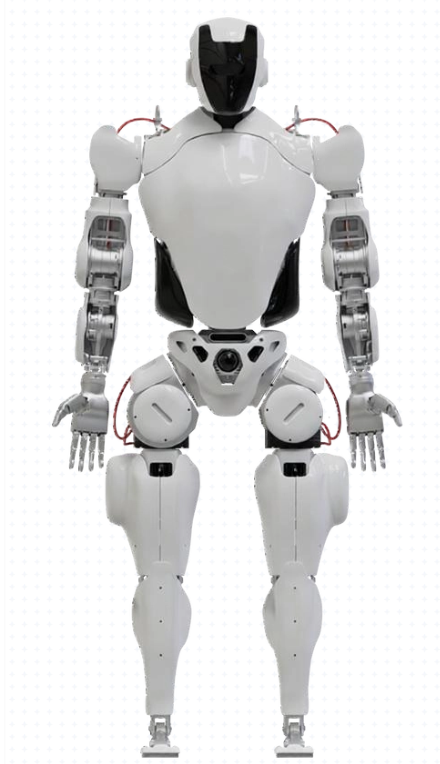
Zeng cited the company’s performance at the second World Robot Games as evidence of this trend. At that event, Beijing Galbot won championships in three high-difficulty scenario competitions: domestic service, catering, and retail supermarket. The company achieved these results through fully autonomous technical capabilities. For the embodied intelligence industry, such outcomes are significant because they demonstrate that robots can operate in complex, practical settings without relying on remote human control. They also show that embodied intelligence is gradually integrating into daily life and becoming a form of general productivity. According to Zeng, this reflects the growing maturity of both software and hardware technologies, and it represents the current development trend of the industry.
| Theme | Key Point |
|---|---|
| Industry stage | Embodied intelligence is moving from laboratory research and development toward batch validation and scaled commercial use. |
| Productivity era | Embodied intelligence is increasingly viewed as a general-purpose productivity tool rather than a laboratory demonstration. |
| Autonomous capability | Fully autonomous technology enabled championship results in domestic service, catering, and retail supermarket scenarios at the second World Robot Games. |
| Core model | The self-developed Galaxy Brain embodied intelligence large model supports cross-scenario, cross-task, and cross-embodiment empowerment. |
| Public platform | The Galaxy Space Capsule robot retail point provides fully autonomous service in an approximately 16-square-meter unit. |
| Guiyang deployment | On 2026 New Year’s Eve, with support from the Guiyang Municipal Bureau of Commerce, the Big Data Bureau, and Guizhou Mobile, the Galaxy Space Capsule was deployed at Qianling Mountain Park, Qingyan Ancient Town, Huaguoyuan, and other top ten core landmarks in Guiyang. |
| Cultural role | The unit also acts as a city culture recommender, interacting with visitors in dialects and English to explain product information and Guizhou local culture. |
| Token frontier | The National Data Administration has called for high-quality datasets, while the Ministry of Industry and Information Technology and the State-owned Assets Supervision and Administration Commission have issued an embodied intelligence and humanoid robot real-scene practical training action plan. |
| New action plan | During the expo’s China-Thailand Digital Economy Exchange Activity, Beijing Galbot will join Gui’an New Area and Guizhou Mobile to release the world’s first embodied intelligence real-scene practical training action plan in the cultural tourism consumption field. |
| Two-way empowerment | Commercial operation supports data collection for model iteration, while scenario-driven deployment supports technology upgrading. |
- Embodied Intelligence Moves from Laboratory Research to Batch Validation
The first major theme of Zeng’s remarks was the changing stage of the embodied intelligence industry. For years, embodied intelligence was often associated with controlled demonstrations, laboratory tests, and carefully staged public appearances. The challenge was not simply to make a robot move. The deeper challenge was to make a robot understand its environment, adapt to unexpected conditions, and complete useful tasks in real settings. That challenge remains difficult, but Zeng’s assessment is that the industry has reached a new phase. Embodied intelligence is no longer confined to the laboratory. It is entering batch validation and scaled commercial use.
This distinction matters. Batch validation means that robots are being tested not only as individual prototypes but also as repeatable products or service units. Scaled commercial use means that the technology is being inserted into actual business processes, where reliability, cost, maintenance, user experience, and operational continuity all matter. When embodied intelligence reaches this stage, the question changes from whether a robot can perform a task once to whether it can perform that task consistently, safely, and economically across many locations and many interactions.
Zeng described this transition as the arrival of a productivity era. In that era, embodied intelligence is not merely a symbol of technological progress. It becomes a practical tool for delivering services, collecting data, supporting retail, and enhancing public experiences. The expo’s broader theme of data empowering thousands of industries aligns with this direction. Data is not only a byproduct of digital platforms. It is also a resource that can improve models, guide operations, and create new forms of value. When embodied intelligence is deployed in physical spaces, it generates real-world interaction data that can be used to refine perception, decision-making, and human-robot interaction.
This is why the productivity era framing is important for understanding the current state of embodied intelligence. The industry is not simply moving toward more advanced robots. It is moving toward robots that work. The difference between a demonstration and a productivity tool lies in repeatability, autonomy, and integration. A robot that can operate autonomously in a retail environment, a cultural tourism site, or a service venue is not just a machine. It is part of an operational system. It must interact with customers, manage inventory, handle payments, communicate information, and respond to changing conditions. Those requirements push embodied intelligence toward higher levels of robustness and adaptability.
- Fully Autonomous Performance and the Significance of the World Robot Games
Zeng pointed to the second World Robot Games as a concrete example of how far embodied intelligence has advanced. Beijing Galbot won championships in three high-difficulty scenario competitions: domestic service, catering, and retail supermarket. These categories are not abstract tests. They reflect tasks that require perception, manipulation, planning, and interaction in environments that resemble everyday life. Domestic service may involve recognizing objects, navigating rooms, and completing household tasks. Catering may involve preparing or serving food, handling utensils, and responding to orders. Retail supermarket scenarios may involve shelf management, product recognition, customer service, and checkout-related operations.
The company’s achievement was based on fully autonomous technical capabilities. That detail is central to the significance of the results. In many robotics demonstrations, human operators may provide remote assistance or intervene when the robot encounters difficulty. Full autonomy means that the robot must rely on its own perception and decision-making systems. It must understand the scene, identify relevant objects, plan actions, and execute them without continuous human control. When a robot can do this across multiple high-difficulty scenarios, it provides evidence that embodied intelligence is becoming more general and more practical.
For the broader embodied intelligence industry, such results are a signal. They suggest that software and hardware technologies are maturing together. Advances in vision, language understanding, motion control, manipulation, and model architecture are converging. The robot is no longer only a mechanical platform. It is an embodied agent that can connect perception, reasoning, and action. That connection is the foundation of embodied intelligence. It allows a robot to interpret a situation and act on it in a way that is useful to humans.
Zeng also emphasized that these capabilities are gradually integrating into daily life. The movement from competition to daily service is not automatic, but it is becoming more feasible. Competitions provide structured challenges. Daily life provides unstructured complexity. A retail kiosk in a park, for example, must deal with weather, crowds, varying customer requests, and unexpected events. A robot that can operate in such an environment must be more than a champion in a controlled arena. It must be a reliable service provider. The fact that companies are now pursuing both competition success and commercial deployment shows how the embodied intelligence sector is maturing.
- The Galaxy Brain Model and Cross-Scenario, Cross-Task, Cross-Embodiment Empowerment
Beijing Galbot’s approach centers on a general-purpose model and a general-purpose robot. Zeng said the company is committed to building a world-leading general large model and general robot. Its self-developed Galaxy Brain embodied intelligence large model can enable cross-scenario, cross-task, and cross-embodiment empowerment. These three dimensions are important for understanding the company’s strategy and for understanding the direction of embodied intelligence more broadly.
Cross-scenario empowerment means that the model can support robots in different environments. A cultural tourism site, a retail store, a domestic setting, and a catering venue are not identical. They have different layouts, objects, rules, and social expectations. A model that can transfer knowledge across scenarios is more scalable than a system designed for a single setting. Cross-task empowerment means that the same underlying intelligence can support multiple tasks. A robot may need to greet visitors, explain products, sell goods, or provide information. These tasks require different skills, but they can share perception and reasoning capabilities. Cross-embodiment empowerment means that the model can be applied to different robot bodies. This is a key step toward general-purpose robotics. If intelligence is tied to one specific hardware platform, scaling becomes difficult. If it can be transferred across embodiments, the software can support a wider range of machines and use cases.
The Galaxy Brain model therefore represents more than a technical component. It is a strategic asset for embodied intelligence. It allows the company to pursue a platform approach rather than a single-product approach. That platform approach is visible in the company’s public-facing products, including the Galaxy Space Capsule robot retail point. The model provides the intelligence layer, while the robot provides the physical embodiment. Together, they create a system that can operate autonomously in commercial and cultural settings.
Zeng also noted that Beijing Galbot became the only designated embodied large-model robot for the CCTV Spring Festival Gala and completed a performance at the event. This fact illustrates the visibility of embodied intelligence in public culture. A Spring Festival Gala performance is not the same as a commercial service deployment, but it demonstrates public interest and symbolic importance. It also shows that embodied intelligence is entering mainstream cultural spaces. The movement from stage performance to retail kiosk, from entertainment to service, reflects the broader trajectory of the industry. The same underlying technologies that enable a robot to perform can also enable it to work.
- Data Empowerment and the Token Economy as a New Path for Value Release
The expo’s focus on token-related frontier directions provided another layer to the discussion. Zeng noted that the National Data Administration has proposed building high-quality datasets. In addition, the Ministry of Industry and Information Technology and the State-owned Assets Supervision and Administration Commission have issued an embodied intelligence and humanoid robot real-scene practical training action plan. These policy directions are significant because they connect data policy with robotics development. They signal that embodied intelligence is not only a hardware and algorithm challenge. It is also a data challenge.
High-quality datasets are essential for embodied intelligence. Unlike purely digital artificial intelligence, embodied intelligence must learn from physical interaction. It must understand space, objects, motion, human behavior, and task execution. This kind of learning requires data that captures real-world conditions. A dataset collected in a laboratory may not reflect the complexity of a public park or a busy retail environment. A dataset collected from one robot may not transfer easily to another. A dataset that lacks diversity may produce models that fail when conditions change. Therefore, real-scene practical training is a critical step for improving embodied intelligence.
The token economy, in this context, can be understood as a framework for organizing, valuing, and exchanging data-related units in a digital economy. The expo’s attention to tokens reflects a broader interest in how data elements can be transformed into economic value. When embodied intelligence systems operate in the real world, they generate data continuously. They see scenes, hear interactions, process requests, and make decisions. That data can be used to improve models, optimize operations, and develop new services. However, the value of that data depends on its quality, structure, and usability. High-quality datasets are therefore not just technical inputs. They are economic assets.
For embodied intelligence, the connection between token-related data value and real-scene practical training is direct. A robot deployed in a cultural tourism setting can collect data that reflects actual visitor behavior, language use, product preferences, and environmental conditions. That data can then be used to refine the model. The refined model can improve the robot’s performance, which in turn supports better commercial operation. This creates a cycle in which deployment generates data, data improves intelligence, and improved intelligence supports further deployment. In that cycle, embodied intelligence becomes both a consumer of data and a producer of data.
- The Galaxy Space Capsule as an Embodied Intelligence Retail Platform
Beijing Galbot brought its star product, the Galaxy Space Capsule robot retail point, to the expo. The unit has an area of approximately 16 square meters. It is served by the company’s self-developed robot, which provides fully autonomous service. The capsule can sell multiple categories of goods, including snacks, beverages, coffee, and cultural creative ice cream. This range of products is important because it shows that the platform is not limited to a single retail category. It can support convenience goods, prepared beverages, and cultural merchandise. That flexibility makes it suitable for different locations and different visitor groups.
The Galaxy Space Capsule is not simply a vending machine. It is an embodied intelligence retail platform. The robot inside the capsule must recognize products, interact with customers, process orders, and complete transactions. It must also operate within a physical environment that includes shelves, displays, payment systems, and customer movement. The capsule format provides a controlled but public-facing space. It allows the robot to operate autonomously while remaining accessible to consumers. This combination of autonomy and accessibility is central to the product’s value proposition.
For the cultural tourism sector, the capsule offers several advantages. It can operate in locations where traditional retail may be difficult to staff. It can provide consistent service across multiple sites. It can adapt its product mix to local demand. It can also serve as a point of interaction between visitors and technology. In a park, an ancient town, or a commercial district, the capsule can become both a service point and an attraction. Visitors may approach it out of curiosity, but they can also use it for practical purchases. That dual role—service and experience—is one reason embodied intelligence is relevant to cultural tourism.
The capsule also demonstrates how embodied intelligence can be packaged for commercial deployment. A general-purpose model may be powerful, but commercial adoption requires a product that can be installed, operated, and maintained at scale. The Galaxy Space Capsule provides a standardized unit that can be placed in different locations. It combines the intelligence of the robot with the practicality of a retail kiosk. This kind of integration is essential for moving embodied intelligence from technical achievement to business solution.
- Guiyang Deployment and the Robot as a City Culture Recommender
Zeng introduced the deployment of the Galaxy Space Capsule in Guiyang. On 2026 New Year’s Eve, with support from the Guiyang Municipal Bureau of Commerce, the Big Data Bureau, and Guizhou Mobile, the capsule was deployed at Qianling Mountain Park, Qingyan Ancient Town, Huaguoyuan, and other top ten core landmarks in Guiyang. This deployment is significant because it places embodied intelligence in high-visibility public spaces. These are not isolated test sites. They are cultural, commercial, and tourism destinations that attract local residents and visitors.
The capsule not only provides autonomous retail service. It also acts as a city culture recommender. It can interact with visitors in dialects and English, explaining product information and Guizhou local culture. This function expands the role of the robot beyond transaction. The robot becomes a communication channel. It can introduce visitors to local culture, recommend products with cultural significance, and create a more engaging experience. In this way, the capsule supports both smart retail and city cultural tourism promotion.
The dual value of the deployment is important. Smart retail focuses on efficiency, availability, and convenience. Cultural tourism promotion focuses on storytelling, identity, and visitor experience. By combining these functions, the Galaxy Space Capsule shows how embodied intelligence can serve multiple goals at once. A visitor may buy a drink, but the interaction may also provide information about a local landmark or a cultural tradition. The robot can adapt its language and content to the visitor. It can use dialect to create familiarity or English to serve international visitors. This kind of multimodal, context-aware interaction is a natural application of embodied intelligence.
The Guiyang deployment also reflects a collaborative model. Support came from municipal commerce and big data authorities as well as a major telecommunications operator. This suggests that embodied intelligence deployment is not only a company-level activity. It involves public institutions, infrastructure providers, and local stakeholders. Cultural tourism sites require coordination across many parties. A robot retail point must fit into the site’s rules, visitor flow, and operational schedule. It must also connect to digital networks, payment systems, and data platforms. The Guiyang deployment therefore provides a practical example of how embodied intelligence can be integrated into a city’s cultural tourism ecosystem.
- A World-First Real-Scene Practical Training Plan for Cultural Tourism Consumption
Zeng also outlined a new initiative linked to the expo. During the China-Thailand Digital Economy Exchange Activity at the expo, Beijing Galbot will join Gui’an New Area and Guizhou Mobile to release the world’s first embodied intelligence real-scene practical training action plan in the cultural tourism consumption field. This initiative builds on the commercial operation of the Galaxy Space Capsule at core landmarks across the province. The plan is designed to use those operational sites as real-scene training environments for embodied intelligence.
The significance of this plan lies in its focus on real-scene practical training. Many embodied intelligence models are trained in simulated environments or controlled laboratories. Simulation is valuable because it is safe, repeatable, and scalable. However, simulation cannot fully capture the complexity of the real world. Real scenes include unpredictable human behavior, changing weather, noise, crowding, and irregular layouts. They also include cultural and linguistic nuances that are difficult to simulate. By deploying robots in actual cultural tourism consumption scenarios, the plan can collect data that reflects real conditions.
The cultural tourism consumption field is particularly suitable for this kind of training. Visitors come from different places and speak different languages. They have different preferences and expectations. They interact with products, information, and environments in varied ways. A robot operating in this field must handle questions, recommendations, transactions, and cultural explanations. It must understand not only words but also context. It must recognize when a visitor is curious, hurried, confused, or ready to buy. These interactions generate rich data for embodied intelligence.
The plan also connects commercial operation with model iteration. The Galaxy Space Capsule is already operating in commercial settings. That means it is not a temporary experiment. It is part of a real service environment. The data it collects is therefore grounded in actual usage. This is a key advantage for embodied intelligence development. Models trained on real operational data are more likely to perform well when deployed in similar conditions. At the same time, the operational requirements of a commercial site push the technology to improve. The robot must be reliable, safe, and user-friendly. Those requirements drive engineering and algorithmic progress.
- Commercial Operation and Model Training as Two-Way Empowerment
Zeng described the relationship between commercial operation and model training as a form of two-way empowerment. On one side, commercial operation provides the scenario, the users, and the data. On the other side, model training improves the robot’s capabilities, which enhances the commercial operation. This creates a positive loop. The more the robot operates, the more data it can collect. The more data it collects, the better the model can become. The better the model becomes, the more valuable the commercial operation can be.
This loop is central to the future of embodied intelligence. In many technology fields, there is a gap between research and deployment. Research produces promising results, but deployment reveals practical challenges. The two-way empowerment model narrows that gap. Research is informed by real-world data, and deployment benefits from continuous model improvement. The result is a faster cycle of innovation and adoption.
For cultural tourism, the loop has additional value. Cultural tourism is experience-driven. Visitors expect more than efficient transactions. They expect engagement, information, and memorable interactions. An embodied intelligence system that can improve its communication over time can provide a better experience. It can learn which explanations are most effective, which products attract interest, and which interaction styles are most appropriate for different visitor groups. This kind of learning is not only about efficiency. It is also about quality of service.
At the same time, commercial operation imposes discipline on model development. A laboratory model may be evaluated on benchmark tasks. A commercial robot is evaluated by customers, operators, and site managers. It must work consistently over long hours. It must handle exceptions. It must be maintainable. It must fit into existing workflows. These practical requirements help prioritize improvements that matter in real use. They also provide clear feedback on what works and what does not. In this sense, commercial operation is not separate from research. It is part of the research and development process.
- Policy Direction and the Growth of Embodied Intelligence in Public Scenarios
The policy context described by Zeng is important for understanding why real-scene practical training is gaining attention. The National Data Administration’s call to build high-quality datasets reflects a broader recognition that data quality determines the value of artificial intelligence systems. For embodied intelligence, data quality includes not only accuracy but also diversity, relevance, and contextual richness. A high-quality dataset for embodied intelligence must capture the physical and social complexity of real environments. It must include different objects, tasks, languages, and interaction patterns. It must also respect privacy, security, and regulatory requirements.
The action plan issued by the Ministry of Industry and Information Technology and the State-owned Assets Supervision and Administration Commission focuses on embodied intelligence and humanoid robot real-scene practical training. This policy direction encourages the testing and deployment of robots in real environments. It recognizes that laboratory validation is not enough. Real-scene training is necessary to move the industry forward. It also signals that the government sees embodied intelligence as a strategic technology with broad economic and social implications.
Public-facing scenarios such as cultural tourism are natural candidates for this kind of development. They are visible, diverse, and interactive. They also have clear service needs. Robots can provide information, sell products, guide visitors, and support operations. At the same time, public scenarios present challenges. They must be safe. They must be accessible. They must respect cultural norms. They must handle crowds and unpredictable behavior. These challenges make public scenarios valuable for embodied intelligence research. Solving them requires advances in perception, planning, natural language interaction, and human-robot collaboration.
The Guiyang deployment and the planned real-scene practical training action plan therefore fit into a larger policy and industry trend. They bring together commercial operation, public cultural spaces, data collection, and model iteration. They also demonstrate how embodied intelligence can be linked to local economic development and cultural promotion. In Guiyang, the robot is not only a technology demonstration. It is a service point, a data collection platform, and a cultural communicator. That combination gives the deployment a broader significance.
- Implications for Cultural Tourism and Smart Retail
The cultural tourism sector is undergoing a digital transformation. Visitors increasingly expect personalized information, seamless services, and engaging experiences. Smart retail is part of this transformation. Automated kiosks, mobile payments, and digital guides have become common in many destinations. Embodied intelligence adds a new dimension to these developments. It allows the service point to perceive, communicate, and adapt. It can respond to visitors in natural language and adjust its behavior based on context.
The Galaxy Space Capsule illustrates this potential. It is a retail point, but it is also an interactive agent. It can sell snacks, beverages, coffee, and cultural creative ice cream. It can explain product information and local culture. It can use dialect and English. These capabilities make it more than an automated store. It becomes a point of contact between technology and culture. For tourists, that contact can be informative and memorable. For site operators, it can increase service availability and collect useful data. For the technology provider, it can provide real-world training data and operational experience.
Smart retail in cultural tourism has specific requirements. Products may be tied to local identity. A cultural creative ice cream, for example, may reflect a landmark or a tradition. Visitors may want to know the story behind the product. An embodied intelligence system can provide that story. It can also recommend products based on visitor interest. This kind of interaction combines commerce with cultural interpretation. It can enhance the visitor experience while supporting local cultural promotion.
At the same time, operators must consider practical issues. The robot must be reliable in outdoor or semi-outdoor environments. It must handle peak visitor periods. It must maintain product quality. It must comply with health and safety regulations. It must protect user privacy. These practical considerations are part of the real-scene training process. They are also part of the value of deploying embodied intelligence in actual commercial settings. The challenges reveal what researchers and engineers need to solve next.
- The Road Ahead for Embodied Intelligence in Public-Facing Deployment
Looking ahead, the trajectory described by Zeng suggests that embodied intelligence will continue to expand in public-facing deployment. The industry is moving from isolated demonstrations to batch validation and scaled commercial use. Companies are building general-purpose models that can support multiple scenarios, tasks, and robot bodies. Products such as the Galaxy Space Capsule are packaging those models into practical service units. Cities and cultural tourism sites are providing real environments for testing and data collection. Policy directions are encouraging high-quality datasets and real-scene practical training.
This trajectory does not mean that all challenges are solved. Embodied intelligence still faces significant technical and operational hurdles. Robots must become more robust, more adaptable, and more affordable. They must interact safely with people. They must handle exceptions and unexpected situations. They must protect data and respect privacy. They must be integrated into existing workflows and business models. These challenges require continued collaboration among technology companies, public authorities, infrastructure providers, and site operators.
Nevertheless, the direction is clear. The productivity era of embodied intelligence is beginning. The token frontier and the focus on data element value provide a broader economic context. Real-scene practical training provides a method for improving models with real-world data. Commercial operation provides a sustainable path for deployment. Cultural tourism provides a rich and visible domain for interaction. In this context, embodied intelligence is not only a technological ambition. It is a practical approach to delivering services, creating value, and enhancing public experiences.
The Guiyang deployment and the planned action plan in the cultural tourism consumption field illustrate how these elements can come together. A robot retail point in a public landmark is both a commercial service and a data collection platform. It serves visitors while learning from them. It promotes local culture while improving its own communication. It operates autonomously while generating insights for model iteration. This two-way empowerment between commercial operation and model training is a defining feature of the next stage of embodied intelligence.
As the 2026 China International Big Data Industry Expo continues to highlight data empowerment and token-related innovation, the case of embodied intelligence in cultural tourism offers a concrete example of how data, robotics, and public experience can intersect. The deployment of the Galaxy Space Capsule in Guiyang, the planned real-scene practical training action plan, and the company’s broader work on general-purpose models and robots all point in the same direction. Embodied intelligence is moving into everyday life. It is becoming a general productivity tool. It is opening new scenarios for cultural tourism, smart retail, and public service. The coming years will show how quickly these scenarios can scale, how deeply they can learn from real-world data, and how broadly they can benefit cities, visitors, and the embodied intelligence industry itself.
- Key Takeaways from the Interview
- Embodied intelligence is advancing from laboratory research to batch validation and scaled commercial use.
- Fully autonomous performance in domestic service, catering, and retail supermarket scenarios at the second World Robot Games demonstrates the growing maturity of embodied intelligence.
- The Galaxy Brain embodied intelligence large model supports cross-scenario, cross-task, and cross-embodiment empowerment.
- The Galaxy Space Capsule is an approximately 16-square-meter robot retail point that provides fully autonomous service and sells snacks, beverages, coffee, and cultural creative ice cream.
- In Guiyang, the Galaxy Space Capsule was deployed on 2026 New Year’s Eve at Qianling Mountain Park, Qingyan Ancient Town, Huaguoyuan, and other top ten core landmarks with support from the Guiyang Municipal Bureau of Commerce, the Big Data Bureau, and Guizhou Mobile.
- The capsule acts as a city culture recommender, interacting in dialects and English to explain product information and Guizhou local culture.
- The National Data Administration has called for high-quality datasets, and the Ministry of Industry and Information Technology and the State-owned Assets Supervision and Administration Commission have issued an embodied intelligence and humanoid robot real-scene practical training action plan.
- During the expo’s China-Thailand Digital Economy Exchange Activity, Beijing Galbot will join Gui’an New Area and Guizhou Mobile to release the world’s first embodied intelligence real-scene practical training action plan in the cultural tourism consumption field.
- Commercial operation and model training are designed to empower each other, with deployment generating data and data improving embodied intelligence.