
At the 2026 China International Industry Fair (CIIF), the most telling change was not a single launch, a single prototype, or a single theatrical demonstration. It was the way robots behaved. Compared with the previous year, when machines with camera-rich “eyes” still looked clumsy while attempting simple grasping tasks, the robots on display in 2026 moved with visibly greater flexibility, faster response, and a stronger sense of context. The humanoid robot, once treated mainly as a traffic-driving exhibit, appeared increasingly as a serious candidate for real work. Embodied intelligence, the combination of a physical body with perception, reasoning, and task decomposition, moved closer to the center of the industrial agenda.
The shift was evident across the exhibition halls. RoboSpec, a Singapore-based startup founded in February 2026, brought a robot to CIIF for its global debut. A staff member said on October 12 that the robot’s grasping speed was already fast and comparable to human speed. The explanation was straightforward: more computing power and more algorithm teams are joining the field, giving robots stronger “brains” and allowing terminal devices to behave more flexibly. The humanoid robot is no longer only a platform for motion display. It is becoming a testbed for perception, decision-making, and generalizable operation.
JAKA Robotics, a leading player in the general intelligent robot sector, showcased a wheeled humanoid robot that autonomously moved boxes within a fixed area. Chang Li, vice president of the company, said customer scenarios are far less tidy and far more complex than a showroom. Compared with earlier collaborative robots that relied on programming, embodied intelligence with both a brain and a hardware body can generalize its operating ability, learn in real work scenarios, train, and evolve. In her words, the robot now has a sense of what to do: it can understand instructions and quickly form a task decomposition in its “brain.” That description captures the central promise of the humanoid robot and the wider embodied intelligence wave. The machine is not merely repeating a path. It is beginning to interpret a situation.
The fair also provided a platform for the release of the 2026 China General Intelligent Robot Industry Development White Paper. The White Paper described intelligent robot manufacturers as the main force of industrial development, with core capabilities in body design, motion control, and scenario delivery. It also identified a structural convergence: traditional industrial robot makers, collaborative robot makers, biomimetic robot makers, and emerging humanoid robot manufacturers have now assembled as four camps. Together, they form a diversified supply base for industrial deployment. The humanoid robot is one expression of this convergence, but it is not an isolated category. It sits inside a broader contest over embodied intelligence, industrial flexibility, and the depth of real-world application.
-
From “Can It Move” to “Can It Understand the Job”
The contrast with the previous CIIF was sharp. In the earlier show, many robots were celebrated for having “eyes” and for attempting to grasp objects in public demonstrations. The performances were important because they showed that perception had entered the robot body. But they also revealed how far the machines remained from useful industrial work. In 2026, the conversation changed. Robots were judged less by whether they could complete a staged trick and more by whether they could understand a task, adapt to a messy environment, and remain useful across changing conditions. The humanoid robot became part of that conversation rather than a separate spectacle.
The White Paper’s emphasis on unstructured scenarios helps explain why. Future industrial and service environments will not always resemble a clean exhibition booth. They will contain variation, uncertainty, and tasks that cannot be fully scripted in advance. In such settings, embodied intelligence is expected to become increasingly important. A robot must perceive the scene, understand the instruction, break the task into steps, and adjust when the environment changes. That is a different standard from traditional automation, which excels in standardized, high-speed, high-efficiency operations but can struggle when the task or layout changes. The humanoid robot is attractive precisely because its human-like form factor may allow it to operate in environments designed for people, although the fair also showed that wheeled platforms, dual-arm systems, and collaborative arms remain highly relevant.
JAKA Robotics’ exhibit illustrated this transition. The company started from collaborative robots and has been extending toward embodied intelligence. At CIIF 2026, it displayed more than 30 robot systems, and about 60 percent of them were embodied intelligent robots. The wheeled humanoid robot moving boxes was not presented as a distant concept but as part of a broader push into industrial and other diversified scenarios. The company’s message was clear: the humanoid robot and other embodied intelligent platforms are moving from demonstration toward deployment, even if the deployment is still staged and carefully bounded.
RoboSpec’s global debut added another signal. The startup is young, founded only in February 2026, but its presence at CIIF showed how quickly new entrants can join the embodied intelligence race. The company’s robot demonstrated fast grasping, and its staff attributed progress to the growing supply of computing power and algorithm talent. That combination matters. A humanoid robot needs more than joints and actuators. It needs perception models, control algorithms, simulation, data, and software platforms that can translate intent into motion. The fair suggested that these layers are maturing together, even as commercialization remains uneven.
The language used by executives was notably practical. Rather than promising a sudden replacement of industrial automation, they described convergence. Traditional industrial robots remain superior in standardized tasks where speed, repeatability, and efficiency are paramount. Embodied intelligence is more likely to enter non-standard scenarios where flexibility and adaptation matter. The humanoid robot may become one important form, but the broader category of embodied intelligence includes collaborative robots, mobile manipulators, dual-arm systems, and specialized machines. The contest is therefore not simply about building a humanoid robot. It is about building a body that can learn, reason, and deliver value in the messy middle ground between fixed automation and open-ended human work.
-
The Four Camps Redraw the Supply Map
The White Paper’s four-camp framework provides a useful map of the competitive landscape. The first camp consists of traditional industrial robot manufacturers, represented by companies such as Estun, EFORT, and Inovance. These firms are described as the founders of China’s industrial robot industry. They bring industrial scenario accumulation and customer resources. As general intelligent technologies rise, they are pursuing product upgrades in two directions. One direction is to add perception modules and intelligent decision systems to traditional industrial robots, improving intelligence in single-task scenarios such as welding, grinding, and gluing. The other direction is to launch intelligent collaborative robots and humanoid robot products, broadening the general intelligent product portfolio. In this sense, traditional industrial robot makers act as a bridge between conventional industrial automation and the general intelligence era.
The second camp consists of collaborative robot manufacturers, represented by JAKA Robotics, Rokae, and Dobot. These companies grew rapidly through the collaborative robot track and are now accelerating along dual paths of intelligence and humanoid development. Collaborative robots are characterized by human-machine coexistence, flexible deployment, and force sensing. These features are highly consistent with the technical path of general intelligent robots, giving collaborative robot makers a natural first-mover advantage in upgrading to intelligent collaborative robots. Head enterprises are also extending into the humanoid robot field. The logic is not that every collaborative robot will become a humanoid robot. Rather, the capabilities developed in collaborative robotics, including safe interaction, force control, and flexible deployment, can be reused in embodied intelligence systems.
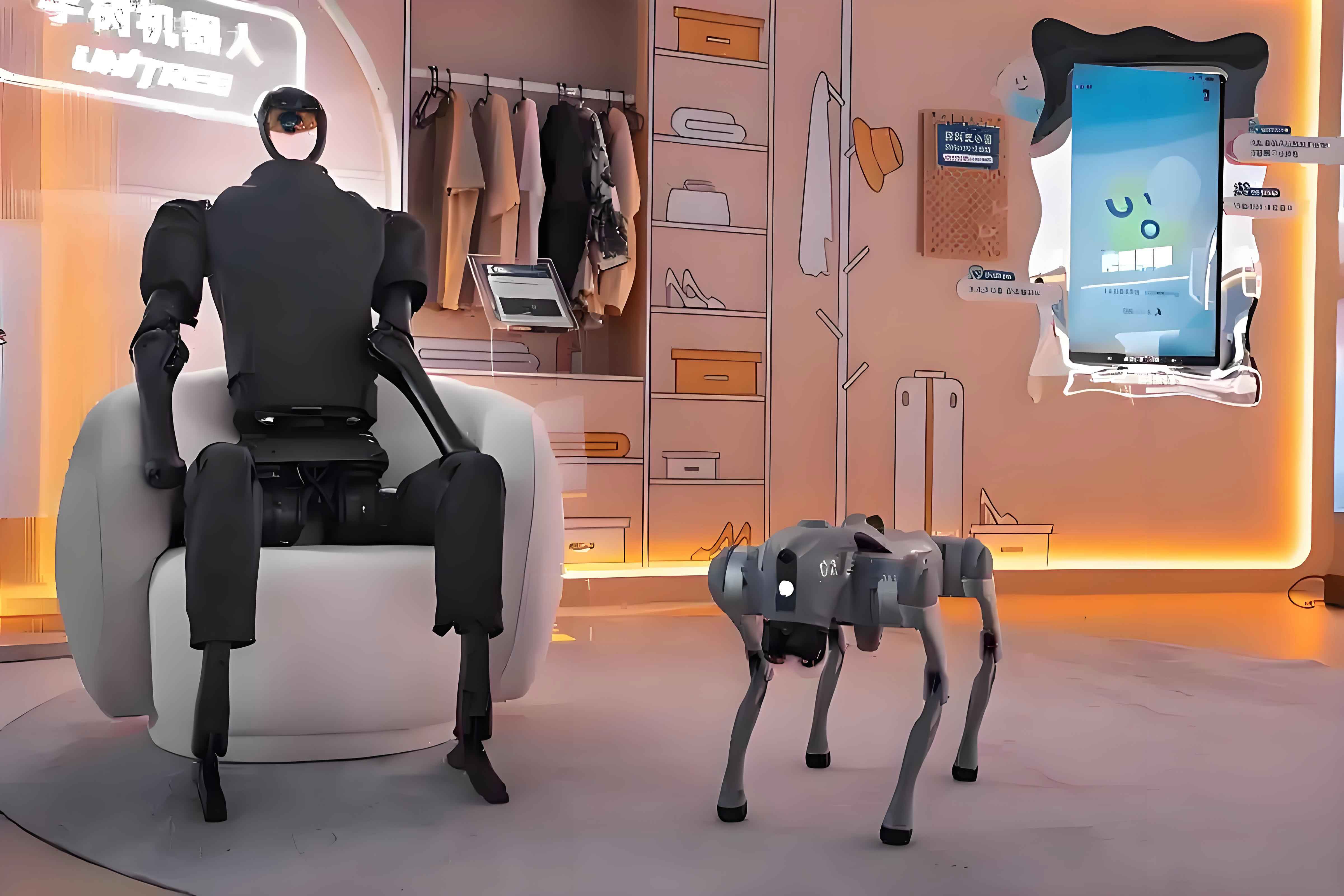
The third camp is made up of biomimetic robot manufacturers, represented by Unitree Robotics and Deep Robotics. These firms began with quadruped robots and legged motion control. Through breakthroughs in motion control, power systems, and biomimetic structural design, they became leading players in the legged robot track. As the general intelligence era arrives, they are using their core advantages in motion control to expand product boundaries horizontally. Their core competitiveness lies in deep self-research in motion control algorithms and hardware, cost-effective products, and fast technical iteration. They are described as an important force in pushing humanoid and quadruped robots from the laboratory toward industrialization. The humanoid robot is a natural extension of this motion-control expertise, but the biomimetic camp also shows that legged locomotion and embodied intelligence can develop through multiple body forms.
The fourth camp consists of emerging humanoid robot startups. With the explosion of large models and embodied intelligence technologies, a large number of new entrepreneurial companies have entered the humanoid robot track, making this camp one of the most active forces in industrial innovation. These companies bring new ideas, new talent, and new approaches to product definition. They may not have the industrial customer base of traditional robot makers or the collaborative robot experience of established players, but they can move quickly and experiment aggressively. The humanoid robot has become a focal point for this camp because it combines hardware, software, perception, and interaction in a single platform that can attract talent, capital, and public attention.
Four camps shaping embodied intelligence at CIIF 2026 Camp Representative players cited Core capabilities cited Direction described Traditional industrial robot makers Estun, EFORT, Inovance Industrial scenario accumulation, customer resources, body design, motion control, scenario delivery Add perception modules and intelligent decision systems to welding, grinding, and gluing; launch intelligent collaborative robots and humanoid robot products; bridge traditional industrial automation and general intelligence Collaborative robot makers JAKA Robotics, Rokae, Dobot Human-machine coexistence, flexible deployment, force sensing, collaborative robot track experience Upgrade to intelligent collaborative robots; extend into the humanoid robot field through dual paths of intelligence and humanoid development Biomimetic robot makers Unitree Robotics, Deep Robotics Quadruped robots, legged motion control, power systems, biomimetic structural design, deep self-research Expand product boundaries horizontally; push humanoid and quadruped robots from the laboratory toward industrialization Emerging humanoid robot startups New entrepreneurial companies cited in the White Paper Large models, embodied intelligence, rapid innovation, flexible product definition Enter the humanoid robot track; become one of the most active forces in industrial innovation The table matters because it shows that the humanoid robot is not emerging from a single lineage. It is being shaped by industrial automation incumbents, collaborative robot specialists, biomimetic motion-control firms, and new startups at the same time. Each camp brings a different strength. Traditional industrial robot makers bring customers and scenario knowledge. Collaborative robot makers bring safe interaction and flexible deployment. Biomimetic robot makers bring legged locomotion and motion-control depth. Emerging humanoid robot startups bring speed, experimentation, and new software-centric thinking. The result is a diverse supply landscape in which the humanoid robot is one important product category within a larger embodied intelligence ecosystem.
-
Industrial Robot Incumbents Add Flexibility and Intelligence
Traditional industrial robot and collaborative robot makers are accelerating their extension into intelligent industrial robots. The competitive pressure is real, but the strategic logic is also clear. Hua Zenan, a senior engineer at a foreign-funded traditional industrial robot enterprise, said embodied intelligence needs to increase speed and efficiency, while industrial robots need to become more flexible, ensuring safety while achieving high speed and high efficiency. In standardized work scenarios, industrial robots still mean faster speed and higher efficiency. In a growing number of non-standard scenarios, however, embodied intelligence is more suitable for flexible manufacturing and richer scenarios. The two are now gradually merging and intersecting. Collaborative robots, positioned between traditional industrial robots and embodied intelligence, have become a focus for the company this year.
That description helps explain why the humanoid robot is being discussed alongside conventional industrial robots rather than in opposition to them. A factory does not need every task to be performed by a humanoid robot. Many tasks are best served by high-speed, highly repeatable machines. But when the product mix changes, when the line must be reconfigured, or when the task requires interaction with unstructured objects, embodied intelligence becomes more attractive. The humanoid robot may be one way to bring that flexibility into environments designed for human workers, while wheeled humanoid platforms and dual-arm collaborative systems may be more practical in the near term.
JAKA Robotics’ CIIF exhibit reflected this layered approach. The company showed more than 30 robot systems, with about 60 percent classified as embodied intelligent robots. That ratio is significant because it suggests that embodied intelligence is no longer a side project for a collaborative robot maker. It is becoming a substantial part of the product portfolio. The wheeled humanoid robot moving boxes demonstrated autonomous operation within a fixed area, but the broader message was about deployment across industrial and other diversified scenarios. The humanoid robot is being positioned as one node in a larger network of intelligent machines.
Delta, described as an automation veteran, exhibited an embodied intelligent dual-arm collaboration solution for the first time. The solution uses Delta’s AI robot control software platform as its core, builds a real-time 3D environment model, performs dynamic obstacle avoidance, and allows the robot to learn tasks autonomously through multiple data types such as language and images. Its application target is also clear: complex scenarios such as AI server assembly, where production is characterized by low volume, high mix, and multiple processes at a single station. The goal is to improve line-change flexibility and multi-task adaptability. This is not a humanoid robot in the strict sense, but it belongs to the same embodied intelligence family. It shows how perception, language input, 3D modeling, and dynamic planning are being combined to make automation more flexible.
The White Paper’s description of traditional industrial robot makers fits this trend. These companies are adding perception modules and intelligent decision systems to conventional robots, improving intelligence in single-task scenarios such as welding, grinding, and gluing. At the same time, they are launching intelligent collaborative robots and humanoid robot products to broaden their general intelligent product types. The humanoid robot therefore becomes both a product and a symbol: a product that can address new scenarios, and a symbol of the industry’s move from fixed automation toward general intelligence. The bridge is not built overnight. It is being assembled through incremental upgrades, new product lines, and partnerships across software and hardware.
The fair also made clear that efficiency remains a non-negotiable industrial requirement. Embodied intelligence cannot succeed merely by being flexible. It must also be productive, safe, and reliable. The humanoid robot must operate in real environments where downtime is costly and mistakes can be dangerous. That is why the convergence between industrial robots and embodied intelligence is likely to be gradual. Standardized tasks will continue to use specialized machines. Non-standard tasks will increasingly use intelligent systems that can perceive, plan, and adapt. The humanoid robot will compete and collaborate within that spectrum, not replace the entire spectrum at once.
-
Collaborative Robot Leaders Pursue Twin Paths of Intelligence and Humanoid Development
The collaborative robot camp has a particularly important role in the humanoid robot story. Companies such as JAKA Robotics, Rokae, and Dobot grew through the collaborative robot track and completed their initial accumulation in that market. They are now accelerating toward intelligence and humanoid development along two paths. The first path is to upgrade collaborative robots into intelligent collaborative robots with perception, reasoning, and task-level autonomy. The second path is to extend into humanoid robot products. These paths are related but not identical. Intelligent collaborative robots can deliver near-term value in industrial settings, while humanoid robot platforms can explore longer-term opportunities in more human-centered environments.
The technical fit is strong. Collaborative robots are designed for human-machine coexistence, flexible deployment, and force sensing. These capabilities are highly consistent with the technical direction of general intelligent robots. A collaborative robot already has to operate safely near people, adapt to changing layouts, and respond to force feedback. When perception and decision-making are added, it can become more autonomous. When that capability is transferred to a humanoid robot, it can support more complex interaction and manipulation. The humanoid robot is therefore not a random pivot for collaborative robot makers. It is an extension of capabilities they have already developed.
Chang Li of JAKA Robotics offered an important caution. She said embodied intelligence is the product the market will need next, but the space for industrial automation is huge and far from saturated. Traditional industrial robots and collaborative robots still have demand and remain highly matched to standardized industrial scenarios. In the trend from collaborative robots to embodied intelligence, human-machine collaboration is an irreversible necessity. This view tempers the excitement around the humanoid robot. The humanoid robot will not make every other robot obsolete. Instead, it will occupy part of a expanding landscape in which different forms of automation coexist.
That coexistence is already visible in product strategy. Collaborative robot makers are not abandoning their core products. They are adding intelligence to them while exploring humanoid robot forms. The humanoid robot serves as a platform for integrating perception, mobility, manipulation, and interaction. It also attracts attention and investment. But the industrial customer still needs reliable machines that can be deployed, maintained, and integrated into existing lines. The challenge for collaborative robot leaders is to pursue the humanoid robot opportunity without losing the disciplined engineering and scenario focus that made their original businesses successful.
The White Paper’s account supports this dual-path interpretation. It states that collaborative robot manufacturers have a natural first-mover advantage in upgrading to intelligent collaborative robots because their technology path is highly compatible with general intelligent robots. It also notes that head enterprises are extending into the humanoid robot field. The humanoid robot is thus both a technological frontier and a competitive signal. For collaborative robot makers, it demonstrates ambition and attracts talent. For customers, it offers a glimpse of a future in which robots can handle more varied tasks. For the industry, it creates a bridge between proven collaborative automation and more general embodied intelligence.
-
AI-Driven Automation Means Workload Reduction, Not Simply Fewer People
The rise of embodied intelligence and the humanoid robot has raised questions about employment and the purpose of automation. Liu Wen, head of industrial automation technology architecture and process industry at Schneider Electric, offered a clear framing. AI-driven industrial automation is not simply about reducing people, he said. It is about reducing volume, meaning reducing workload. On one hand, it frees people from repetitive labor and dangerous scenarios, allowing production personnel to move to more valuable roles. On the other hand, it reduces accident rates and improves the stability and quality of manufacturing. This framing is important because it shifts the debate from headcount alone to the quality of work and the reliability of production.
The humanoid robot fits into this framing when it is used to take on tasks that are dirty, dangerous, repetitive, or physically demanding. In industrial settings, the value of a humanoid robot is not that it looks like a person. The value is that it may be able to use human-oriented tools, move through human-designed spaces, and perform tasks that are difficult to automate with fixed machinery. At the same time, the humanoid robot can support human workers by handling repetitive operations and allowing people to focus on judgment, maintenance, quality control, and process improvement. The fair’s emphasis on human-machine collaboration rather than simple replacement reflects this more nuanced view.
The humanoid robot also raises new requirements for safety and reliability. If a humanoid robot is to work alongside people, it must understand human presence, avoid collisions, and respond appropriately to unexpected events. The collaborative robot camp has experience in these areas, which is one reason why collaborative robot makers are well positioned to contribute to humanoid robot development. The industrial robot camp brings speed and precision. The biomimetic camp brings mobility and motion control. The startup camp brings new software and AI approaches. The humanoid robot becomes a meeting point for these capabilities, but it also becomes a test of whether they can be integrated safely and economically.
Liu Wen’s distinction between reducing people and reducing workload also points to a broader productivity agenda. The goal is not to create a factory without humans. The goal is to create a factory where humans and machines each do what they do best. The humanoid robot can take on physical repetition and dangerous tasks, while human workers take on oversight, exception handling, and continuous improvement. Embodied intelligence can support this division of labor by making machines more adaptable and easier to instruct. The humanoid robot is therefore part of a productivity story, not only a technology story.
The fair demonstrated that this productivity story is still in its early chapters. Many humanoid robot exhibits remained bounded, staged, or experimental. But the direction was clear. The humanoid robot is being evaluated less as a spectacle and more as a potential contributor to industrial work. That shift in evaluation is itself a milestone. It means the conversation is moving from whether the humanoid robot can be built to whether it can be used responsibly, safely, and productively.
-
Biomimetic Players and New Entrants Widen the Field
The biomimetic camp and new entrants are expanding the boundaries of the humanoid robot and embodied intelligence landscape. At the previous CIIF, many exhibitors brought humanoid robots that could sing and dance, using performance to attract attention. In 2026, the atmosphere changed. Humanoid robots were no longer only performers. They were being embedded by mature industrial players into more realistic test scenarios. The humanoid robot was invited into the industrial ecosystem, not merely placed on a stage.
Schneider Electric’s booth offered one example. It featured a dexterous hand from DexRobot, an embodied intelligence company incubated by Shanghai Artificial Intelligence Laboratory. Visitors could play rock-paper-scissors with the hand. The game was entertaining, but the underlying test was serious: the hand had to recognize unfamiliar gestures in real time and respond dexterously. The two companies signed a cooperation agreement to leverage their respective strengths in robot technology, industrial automation, and industrial scenarios to explore embodied intelligence technology innovation and application. In the future, they plan to conduct innovative exploration around industrial large models, edge intelligence, and digital twins, promoting the transition of related technologies from research results to industrial applications. The humanoid robot benefits from this kind of collaboration because dexterous manipulation is one of its most difficult technical challenges.
RoboSpec displayed a flexible sorting robot that was still in the research and testing stage. The company itself described it as a “version 0.5” that was not yet mature. Alongside it, Franka Robotics, part of Agile Robots and known for force-controlled collaborative robotic arms, showed a dual-arm mobile research platform. These exhibits were not presented as finished commercial products. They were windows into the development process. The humanoid robot and embodied intelligence fields are still experimental in many areas, and the willingness to show unfinished work is a sign of how quickly the technology is evolving.
The White Paper described biomimetic robot manufacturers as important players in the move from laboratory to industrialization. Unitree Robotics and Deep Robotics are cited as representatives. They started with quadruped robots and legged motion control, and they have achieved technical breakthroughs in motion control, power systems, and biomimetic structural design. As the general intelligence era arrives, they are relying on their core technical advantages in motion control to expand product boundaries horizontally. Their core competitiveness lies in deep self-research in motion control algorithms and hardware, cost-effective products, and fast technical iteration. They are an important force in pushing humanoid and quadruped robots from the laboratory toward industrialization. The humanoid robot is a natural extension of their legged robotics expertise, but it is also a demanding one because manipulation, perception, and interaction add new layers of complexity.
At the CIIF opening ceremony’s in-depth dialogue session, Wang Xingxing, founder of Unitree Robotics, said the critical point for the embodied intelligence industry could arrive within one or two years. He also said that for robots to achieve large-scale application, the problems of generalization and efficiency must be solved, but these problems will be addressed in the coming years. This view captures the mood of the fair. The humanoid robot is no longer a distant dream, but it is also not yet a mature mass-market product. The industry is moving from technical feasibility toward deployment feasibility. The humanoid robot will be judged by whether it can generalize across tasks and whether it can operate efficiently enough to justify its cost.
New entrants are central to this phase. With the explosion of large models and embodied intelligence technologies, a large number of emerging startups have entered the humanoid robot track. They are described as the most active force in industrial innovation. These companies may focus on whole humanoid robot platforms, dexterous hands, control software, perception systems, or specialized components. Their presence increases competition and accelerates experimentation. The humanoid robot ecosystem is becoming more layered, with established industrial players, collaborative robot makers, biomimetic firms, and startups all contributing different pieces. The result is a richer but more fragmented landscape in which partnerships and integration capabilities will matter as much as individual breakthroughs.
-
The Second Half Tests the Depth of Deployment
The competition in embodied intelligence has moved from “can it be made” to “can it be used.” That transition defines the second half of the humanoid robot story. At CIIF 2026, the exhibits showed that the technology is becoming more flexible, more perceptive, and more capable of understanding instructions. The humanoid robot can now be presented as part of a task-oriented system rather than a standalone marvel. But the fair also showed that deployment remains the hard part. Real customer scenarios are less tidy and more complex than any showroom. They contain variation, interruptions, safety requirements, maintenance needs, and economic constraints. The humanoid robot must prove itself in that environment.
The White Paper’s four-camp framework suggests that no single camp has all the answers. Traditional industrial robot makers bring scenario knowledge and customer relationships. Collaborative robot makers bring safe interaction and flexible deployment. Biomimetic robot makers bring motion control and hardware depth. Emerging humanoid robot startups bring rapid innovation and new AI approaches. The humanoid robot is the product of their convergence, but it is also a test of their ability to collaborate. The companies that can integrate perception, motion control, manipulation, software, and industrial know-how will be best positioned to deliver value. The humanoid robot will not succeed as an isolated hardware product. It will succeed as part of an ecosystem.
The fair also made clear that human-machine collaboration is likely to remain the organizing principle. Chang Li of JAKA Robotics described human-machine collaboration as an irreversible necessity. Liu Wen of Schneider Electric described AI-driven automation as a way to reduce workload and free people for more valuable roles. Wang Xingxing of Unitree Robotics described the coming years as a period when generalization and efficiency problems will be addressed. These perspectives point in the same direction. The humanoid robot is not simply a replacement for human labor. It is a new kind of industrial tool that must be integrated into human workflows, safety systems, and business processes.
The depth of deployment will be measured in several ways. One measure is whether the humanoid robot can operate in non-standard scenarios without constant reprogramming. Another is whether it can learn from real work and improve over time. A third is whether it can be maintained and supported at acceptable cost. A fourth is whether it can work safely alongside people. The fair offered early evidence on all these fronts, but it did not offer final answers. The humanoid robot remains a work in progress. The important change is that the work is now oriented toward use, not only demonstration.
The industrial automation space is huge and far from saturated. Traditional industrial robots and collaborative robots will continue to serve standardized scenarios with speed and efficiency. Embodied intelligence will expand into non-standard scenarios where flexibility and adaptation matter. The humanoid robot will occupy part of that expansion, especially where human-like form and interaction are advantageous. But the humanoid robot will also compete with wheeled platforms, dual-arm systems, mobile manipulators, and other embodied intelligence forms. The winning solutions will be those that deliver the right capability at the right cost for the right task.
In that sense, CIIF 2026 was less a finish line than a checkpoint. The humanoid robot has become more flexible, more perceptive, and more integrated into industrial experimentation. The four camps have assembled. The supply chain is diversifying. The language of deployment has replaced the language of spectacle. The next phase will be determined by depth: how deeply the humanoid robot can enter real workflows, how reliably it can operate, how safely it can collaborate, and how clearly it can demonstrate value. The humanoid robot has moved from the edge of the show floor toward the center of the industrial conversation. The remaining question is how far it can go once the lights of the exhibition hall give way to the demands of everyday work.