
HUIZHOU, September 28, 2026 – The Huizhou Future Era Robot 6S Integrated Empowerment Center officially opened to the public on September 24 at the Huizhou Olympic Sports Center, presenting a large-scale, hands-on robot experience platform that combines industry services, technology experiences, and science and innovation study programs. The center is designed to serve the Guangdong-Hong Kong-Macao Greater Bay Area and to help close the “last mile” between humanoid robot technology and real-world application. With more than 500 robot products on display, including humanoid robot models, quadruped robotic dogs, industrial robotic arms, commercial service robots, and bionic robots, the center has quickly become a new public destination for visitors who want to see, touch, and operate advanced robots rather than simply view them behind glass.
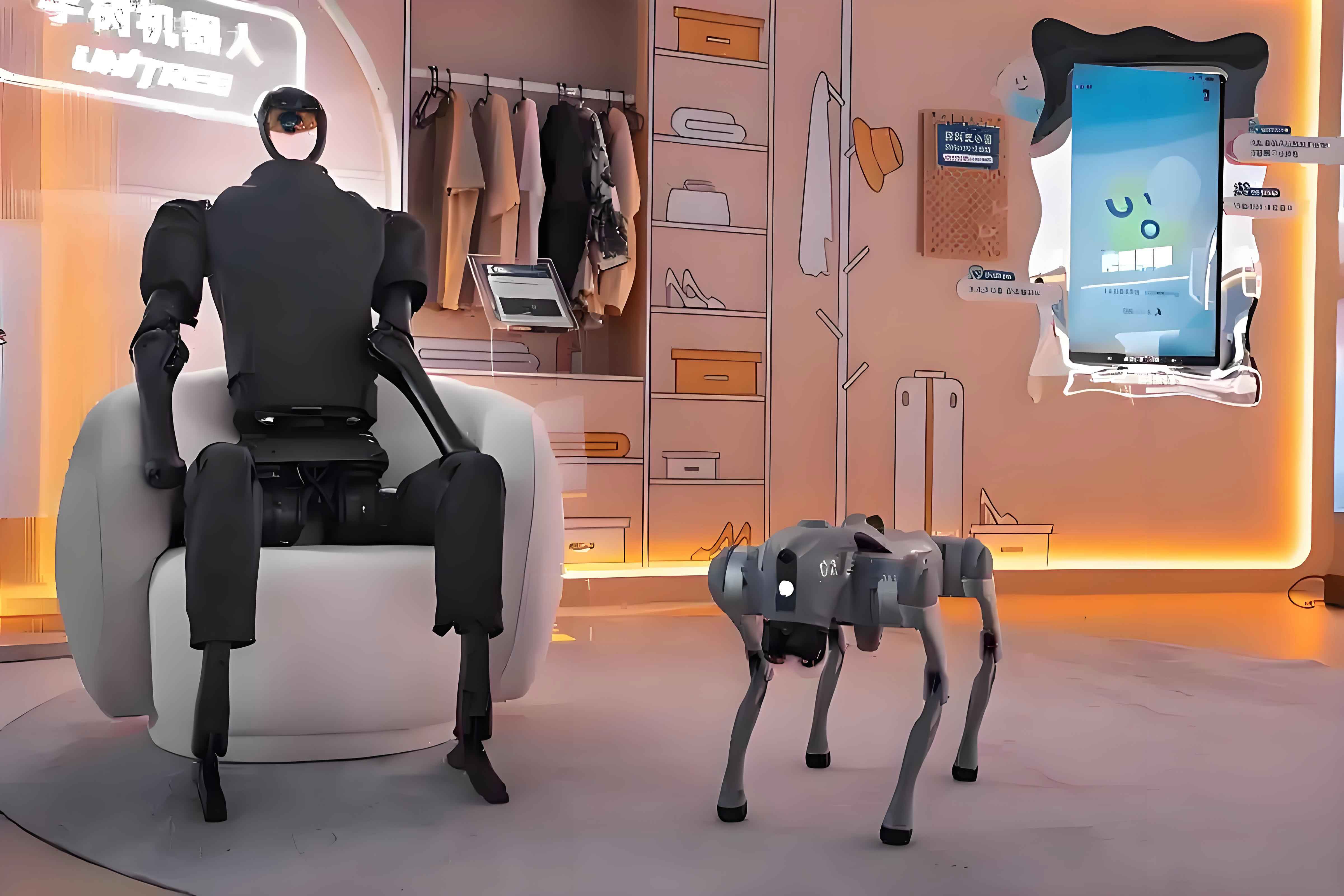
The opening day drew families, young people, local residents, and technology enthusiasts. At the entrance, two tall Transformer-style figures stood on either side, creating an immediate sense of technological spectacle. Inside the exhibition hall, visitors entered a diverse robot world filled with humanoid robot demonstrations, robotic dog performances, mechanical arms, bionic robots, and interactive service scenarios. The atmosphere was lively and accessible, with children moving from one demonstration area to another and adults examining how humanoid robot technology, robotic dog mobility, and commercial service robot applications are beginning to enter everyday life.
- New Experience: Humanoid Robot Combat, Robotic Dog Interaction, and a Hands-On Robot World
The indoor exhibition area covers 3,000 square meters and is organized into six functional sections: a humanoid robot performance area, a quadruped special robotic dog experience area, an industrial intelligent equipment exhibition area, a commercial service robot exhibition area, a science and innovation practice area, and a Huizhou intelligent manufacturing exhibition area. Each section gives visitors a different entry point into the robot ecosystem. The humanoid robot performance area draws attention with dynamic combat-style movements, while the robotic dog experience area invites children and adults to interact with quadruped robots that can roll, stand upright, stretch, and respond to human gestures. The industrial and commercial sections show how robotic systems can support manufacturing, service, education, and daily life.
In the life service robot display area, screens presented robots preparing food, grilling, operating dishwashers, playing chess with children, and joining older people in table games. These scenes illustrated how commercial service robots and humanoid robot platforms may support household assistance, entertainment, care, and hospitality in the future. In the robot combat area, three tall humanoid robot fighters punched, kicked, and held combat poses, demonstrating balance, coordination, and motion control. Nearby, a robot band played guitar, bass, and drums under colorful lights, creating an energetic show that merged entertainment with robotics. The combination of humanoid robot performance, robotic dog interaction, and service robot demonstrations gave visitors a broad view of how robots can be designed for both practical tasks and engaging public experiences.
At the robotic dog experience area, a young boy crouched on the floor and watched with fascination as a robotic dog rolled over and stood upright. When he waved and greeted the robot, the robotic dog moved forward and gently placed its head under his hand, making the child laugh. The moment captured the center’s core purpose: to let the public experience robots directly and to turn curiosity into understanding. Visitors gathered around the robotic dog performances, taking photos and asking questions about how the machines sense their surroundings, maintain balance, and respond to commands.
“I know robots are already used in many areas, and technology is developing very quickly, but this is the first time I have experienced them at such a close distance. It feels very new,” said Guo, a local resident who visited the center and said she planned to bring her child for a more detailed experience. Her response reflected a common view among opening-day visitors: the center does not merely display robots as static exhibits. It creates an environment where the public can watch a humanoid robot move, see a robotic dog react, and begin to understand how robotic systems are assembled, controlled, and applied.
The opening-day program also highlighted the educational value of direct contact with robots. Children were able to observe how a humanoid robot maintains balance during combat-style movements, how a quadruped robotic dog adjusts its posture, and how a robot band synchronizes sound and motion. For families, the center offered an introduction to robotics that was visual, physical, and memorable. For schools and young learners, it suggested a pathway toward systematic science and innovation study programs, practical training, and robot competitions. The humanoid robot thus served not only as a spectacle but also as a gateway to learning about mechanics, electronics, control systems, artificial intelligence, and integrated engineering.
- New Highlight: A 6S Whole-Life-Cycle Service Model for Humanoid Robot Adoption
Yi Huiji, general manager of the Huizhou Future Era Robot 6S Integrated Empowerment Center, said the center brings together more than 100 varieties and more than 500 robot products from leading domestic robot brands, including Zhongqing, Unitree, UBTECH, and AgiBot. The product matrix covers humanoid robot platforms, quadruped robotic dogs, industrial robotic arms, and commercial service robots. The center is positioned as both a public science venue and an industry service platform. It integrates display experience, whole-machine sales, maintenance and leasing, solution customization, science and innovation study tours, and shared space. For enterprises, it offers robot selection, scenario deployment, and secondary development support. For schools and young people, it provides systematic science and innovation study tours and practical training courses. For the general public, it offers an accessible way to understand how humanoid robot technology and other robotic systems are moving from laboratories and exhibition halls into real operations.
The center’s most distinctive feature is its 6S whole-life-cycle service model for robots. This model breaks away from the traditional technology museum approach, which often relies on static display and passive viewing. Instead, the center emphasizes the transition from “watching robots” to “using robots.” Visitors can not only observe a humanoid robot perform difficult movements and bionic interaction demonstrations but also take part in immersive operation experiences. Signature equipment open to visitors includes the Zhongqing T800 humanoid robot, quadruped robotic dogs, a robot coffee workstation, and an AI diagnostic interaction demonstration. These exhibits show that humanoid robot technology is not limited to performance; it can be connected to service workflows, public education, commercial operations, and industry testing.
The 6S model also reflects a practical understanding of how robots enter the market. A humanoid robot or robotic dog purchase is not a one-time transaction. It involves selection, deployment, customization, maintenance, leasing, training, and continuous support. The center’s combination of display, sales, maintenance, leasing, customization, study tours, and shared space creates a full-service environment for potential adopters. Enterprises can compare humanoid robot models, test robotic dog platforms, evaluate industrial robotic arms, and discuss commercial service robot scenarios in one location. Schools can arrange study visits and practical courses. The public can experience the technology in a setting that is engaging but also grounded in real product capabilities. The result is a platform that supports both market education and industrial collaboration.
| Category | Details |
|---|---|
| Indoor exhibition area | 3,000 square meters |
| Functional zones | Humanoid robot performance area; quadruped special robotic dog experience area; industrial intelligent equipment exhibition area; commercial service robot exhibition area; science and innovation practice area; Huizhou intelligent manufacturing exhibition area |
| Brands represented | Zhongqing, Unitree, UBTECH, AgiBot, and other leading domestic robot brands |
| Product variety | More than 100 varieties and more than 500 robot products |
| Product matrix | Humanoid robot, quadruped robotic dog, industrial robotic arm, and commercial service robot categories |
| Core services | Display experience, whole-machine sales, maintenance and leasing, solution customization, science and innovation study tours, and shared space |
| Signature equipment | Zhongqing T800 humanoid robot, quadruped robotic dog, robot coffee workstation, AI diagnostic interaction demonstration |
The table above summarizes the center’s publicly announced scale and service structure. It shows why the center is described as an integrated empowerment platform rather than a conventional showroom. The humanoid robot performance area and the quadruped robotic dog experience area attract public attention, while the industrial intelligent equipment exhibition area and commercial service robot exhibition area connect that attention to practical business conversations. The science and innovation practice area and the Huizhou intelligent manufacturing exhibition area link robotics to education, local industry, and technology transfer. Together, these sections create a complete visitor journey from curiosity to understanding, and from understanding to potential adoption.
- Public Access and Education: From Watching a Humanoid Robot to Using a Humanoid Robot
The center plans to organize regular public open days, robot performances, and public-interest science classes. It will also develop study practice bases and cooperate with local primary and secondary schools and colleges to carry out science and innovation teaching, robot competitions, and teacher training. These activities are intended to make the humanoid robot and other robotic platforms part of a structured learning pathway rather than a one-time spectacle. Students can learn how a humanoid robot is controlled, how a robotic dog maintains stability, how sensors provide feedback, and how software connects perception to action. The center’s hands-on environment gives learners the chance to see these principles in motion and to understand the engineering behind the demonstrations.
For schools, the center offers a possible bridge between classroom theory and real technology. A visit can introduce students to humanoid robot design, robotic dog locomotion, industrial robotic arm applications, and commercial service robot scenarios. Practical courses can build on that experience through programming exercises, simple control tasks, and team-based problem solving. Robot competitions and teacher training can further extend the center’s educational role. The focus on science and innovation study tours also aligns with the broader goal of cultivating interest in artificial intelligence, robotics, and advanced manufacturing among young people. The humanoid robot, with its recognizable human-like form, can serve as an effective entry point for deeper study of mechanics, electronics, and intelligent systems.
The center’s educational approach is closely connected to its public access mission. Open days and public science classes allow families to encounter humanoid robot technology in an accessible setting. Robot performances draw crowds, but the center’s value lies in what happens after the performance: visitors can ask questions, observe components, and try operating selected equipment. This combination of entertainment and education helps demystify humanoid robot technology. It also supports the development of a local talent pipeline by introducing young people to career paths in robotics, automation, artificial intelligence, and intelligent manufacturing. The humanoid robot becomes a visible symbol of a larger industrial and educational ecosystem.
- Industrial Integration: A Window for Humanoid Robot Deployment and Local Manufacturing
The center is designed to support enterprises with robot selection, scenario deployment, and secondary development. This is particularly important for humanoid robot adoption, because many organizations are interested in the technology but need help identifying suitable use cases, evaluating hardware and software capabilities, and planning maintenance and upgrade paths. The 6S service model addresses these needs by combining product display with sales, leasing, maintenance, customization, and shared space. An enterprise can visit the center, compare humanoid robot platforms, examine robotic dog mobility, review industrial robotic arm options, and discuss commercial service robot applications with technical teams. The center can then support solution customization and secondary development, helping to move a demonstration toward a pilot and a pilot toward deployment.
The center also provides a space for technology validation, product testing, and business exchange. It plans to introduce more domestic advanced robot products and to build a communication space for enterprises to test and verify technologies. This function is especially relevant to humanoid robot development, where real-world environments can be complex and variable. A humanoid robot may need to operate in a service setting, a factory, a school, or a public venue. Each environment places different demands on perception, mobility, safety, and interaction. By connecting robot brands, local enterprises, schools, and industry partners, the center can help gather feedback and identify practical improvements. The result is a more efficient path from product demonstration to application refinement.
The center’s location in Huizhou and its connection to local manufacturing also strengthen its industrial role. Huizhou has an established manufacturing base and a growing focus on artificial intelligence and robotics. The center can serve as a display window for local intelligent manufacturing and as a meeting point for upstream and downstream resources. Humanoid robot platforms, robotic dogs, industrial robotic arms, and commercial service robots all depend on components, software, integration services, and maintenance support. By bringing these elements into one platform, the center can encourage collaboration among robot brands, component suppliers, software developers, system integrators, and end users. It can also help local companies understand how humanoid robot technology might complement their existing production and service capabilities.
The “last mile” of robot application is often not about the robot alone. It is about matching technology to a specific task, adapting software and workflows, training staff, and ensuring reliable maintenance. The center’s 6S model directly addresses these practical steps. Display experience creates awareness. Whole-machine sales provide a procurement path. Maintenance and leasing reduce adoption barriers. Solution customization connects technology to use cases. Science and innovation study tours build future talent. Shared space supports collaboration and experimentation. For humanoid robot adoption, this integrated approach is particularly valuable because the technology is still evolving and users need ongoing support. The center offers a structured environment for learning, testing, and deciding how to move forward.
- New Plan: Huicheng District Builds an Artificial Intelligence Industry Belt and a Humanoid Robot Ecosystem
Artificial intelligence and robotics are important tracks in future industrial competition. Huicheng District is treating artificial intelligence and the robotics industry as a core driver for manufacturing transformation and upgrading and for accelerating the cultivation of new quality productive forces. The district is advancing the development of an artificial intelligence industry belt along an axis that includes Tian’an Digital City, Xinlikang Lechuanghui, Readers Cultural and Creative Park, and the Huizhou Olympic Sports Center. This spatial plan is intended to strengthen the scale of the district’s intelligent manufacturing industry, increase innovation activity, and expand application scenarios. The opening of the Huizhou Future Era Robot 6S Integrated Empowerment Center adds a visible public and industrial node to this broader effort.
To date, Huicheng District has cultivated more than 50 artificial intelligence-related enterprises. These companies cover core equipment and component manufacturing, computing power, data models and service applications, and model system development and application. The district has also established three OPC communities, namely Xiongtao, Jiangbei, and Tian’an, and is gradually building an artificial intelligence industry chain that connects algorithms, data, software, and applications. Within this framework, the center can serve as a showcase for local intelligent manufacturing enterprises, a venue for business matching, and a platform for public technology education. It can also support the humanoid robot ecosystem by connecting robot brands with local suppliers, software developers, and potential users.
The center is expected to become a distinctive card for Huicheng’s robot industry. Its combination of humanoid robot performances, robotic dog experiences, industrial equipment displays, commercial service robot demonstrations, and science and innovation study programs gives the district a public-facing technology landmark. At the same time, its enterprise services and technology validation functions support the more practical work of industrial upgrading. The center can help local companies see how humanoid robot technology, robotic dog platforms, and commercial service robots might fit into their operations. It can also help robot brands understand local market needs and identify partnership opportunities. In this way, the center contributes to both public awareness and industrial development.
The district’s artificial intelligence industry belt is not only a physical planning concept. It is also a framework for connecting research, application, talent, and business services. The Huizhou Olympic Sports Center location gives the robot center a high-visibility public venue, while nearby digital and creative parks provide a broader innovation environment. By linking these nodes, Huicheng District aims to create a concentrated ecosystem for artificial intelligence and robotics. The humanoid robot can serve as a flagship category within that ecosystem, attracting public interest and demonstrating the district’s ambition in advanced technology. The center’s regular open days, robot performances, and study programs can further strengthen the connection between the industry belt and the wider community.
- Humanoid Robot Application Scenarios and the 6S Service Logic
The center’s exhibition layout reflects a broad view of humanoid robot application scenarios. In public performance, a humanoid robot can demonstrate movement, balance, and interaction. In education, a humanoid robot can support programming lessons, robotics clubs, and competition training. In commercial service, a humanoid robot can be used for reception, guided interaction, and entertainment. In industrial settings, humanoid robot platforms may be explored for flexible tasks that require mobility and human-like operation. In daily life, commercial service robots and humanoid robot assistants may support food preparation, household tasks, and companionship. The center does not present these scenarios as distant visions alone. It uses working exhibits, interactive demonstrations, and product displays to show what is already possible and what is being developed.
The 6S service logic is important because humanoid robot adoption requires more than a product demonstration. A potential user needs to understand the robot’s capabilities, limitations, maintenance requirements, software environment, and integration options. The center’s display experience helps users see the humanoid robot in action. Whole-machine sales provide a clear commercial pathway. Maintenance and leasing offer flexibility for organizations that want to test humanoid robot applications before committing to a full purchase. Solution customization connects the robot to specific workflows. Science and innovation study tours build awareness and skills among future users. Shared space supports collaboration among enterprises, schools, and technology providers. Together, these services create a lifecycle approach that can reduce uncertainty and support long-term adoption.
For robot brands, the center offers a public stage and an industry contact point. A humanoid robot brand can demonstrate its latest model, gather user feedback, and meet potential partners. A robotic dog brand can show mobility and interaction in a crowded public environment. An industrial robotic arm supplier can connect with local manufacturers. A commercial service robot provider can test service scenarios and discuss customization needs. The center’s shared space and business exchange functions can help brands coordinate with local partners and explore new applications. The presence of multiple robot categories in one location also encourages cross-category learning. A humanoid robot demonstration may inspire a commercial service robot application, while a robotic dog interaction may suggest new possibilities for education or public engagement.
The center’s focus on humanoid robot experiences also has symbolic value. The humanoid robot is one of the most visible representations of artificial intelligence and advanced robotics. It attracts public attention and raises questions about the future of work, service, education, and daily life. By allowing visitors to see and operate humanoid robot systems, the center helps move the public conversation beyond imagination and toward understanding. Visitors can observe how a humanoid robot moves, how it responds, and what kind of support it requires. This direct experience can build more realistic expectations and a stronger foundation for informed adoption. It can also inspire young people to pursue careers in robotics and artificial intelligence.
- Greater Bay Area Positioning and Future Development
The Huizhou Future Era Robot 6S Integrated Empowerment Center is positioned to serve the Guangdong-Hong Kong-Macao Greater Bay Area. Its combination of industry services, technology experience, and science and innovation study programs makes it a platform for both public engagement and business collaboration. The center can support robot brands seeking market access, enterprises seeking automation and service solutions, schools seeking practical technology education, and families seeking accessible science experiences. By bringing these groups together, it can help build a local robotics community and strengthen the region’s artificial intelligence ecosystem. The humanoid robot is a central part of this positioning because it combines high public interest with significant technical and commercial potential.
In the future, the center plans to continue introducing more domestic advanced robot products and to expand its role as a technology validation and product testing space. It will maintain regular public open days, robot performances, and public science classes. It will develop study practice bases and cooperate with local schools and colleges on science and innovation teaching, robot competitions, and teacher training. It will also rely on Huizhou’s industrial advantages to connect upstream and downstream resources and promote the transformation of intelligent technology achievements. These plans are consistent with the center’s broader goal of becoming a demonstration window for the Greater Bay Area robot industry and a new science and innovation landmark for young people. The humanoid robot will remain a key attraction and a key test case for how public experience can support industrial development.
The center’s development also reflects a wider trend in robotics: the shift from isolated demonstrations to integrated service ecosystems. A humanoid robot performance can draw a crowd, but long-term value depends on maintenance, customization, training, and application support. A robotic dog experience can create excitement, but commercial success depends on identifying repeatable use cases and reliable service models. A commercial service robot display can show possibility, but adoption depends on workflow integration and cost-effectiveness. The 6S model addresses these realities by combining public experience with enterprise services. It treats the robot as a product, a platform, and a service relationship. This approach is well suited to the evolving humanoid robot market, where technology, user expectations, and business models are developing together.
For Huizhou and Huicheng District, the center adds a new dimension to the local innovation landscape. It is not only a venue for viewing robots. It is a place where humanoid robot technology can meet public audiences, students, enterprises, and industry partners. It supports the district’s artificial intelligence industry belt by providing a visible landmark and a practical service platform. It supports local manufacturing by connecting robot brands with suppliers and users. It supports education by offering hands-on science and innovation experiences. It supports public understanding by making complex technology accessible. These functions reinforce one another and create a foundation for sustained development.
- Conclusion: A Platform for Humanoid Robot Experience, Adoption, and Industrial Collaboration
The opening of the Huizhou Future Era Robot 6S Integrated Empowerment Center marks a significant step in the public and industrial development of robotics in Huizhou and the Greater Bay Area. With 3,000 square meters of indoor exhibition space, six functional zones, more than 100 product varieties, more than 500 robot products, and a 6S whole-life-cycle service model, the center offers a comprehensive environment for humanoid robot experience, robotic dog interaction, industrial equipment display, commercial service robot demonstration, and science and innovation education. It allows visitors to move from watching a humanoid robot to understanding how a humanoid robot works, and from understanding to exploring how robots can be used in real scenarios.
For the public, the center provides an accessible and engaging introduction to advanced robotics. For students and schools, it offers a platform for practical learning, robot competitions, and teacher training. For enterprises, it provides robot selection, scenario deployment, secondary development, maintenance, leasing, and business exchange services. For robot brands, it creates a public stage and an industry contact point. For Huicheng District, it supports the artificial intelligence industry belt and adds a distinctive technology landmark. For the wider region, it strengthens the connection between robotics technology, manufacturing, education, and public experience. The humanoid robot stands at the center of this effort as a symbol of innovation, a focus of public curiosity, and a practical platform for future application.
As the center continues to host public open days, robot performances, science classes, study programs, and industry exchanges, its role is expected to expand. It will continue to introduce advanced robot products, support technology validation, and promote collaboration across the robotics ecosystem. The combination of public experience and industrial service gives the center a dual identity: it is a destination for families and young learners, and it is a working platform for enterprises and technology providers. This dual identity is central to its mission of closing the last mile between humanoid robot technology and real-world application. The Huizhou Future Era Robot 6S Integrated Empowerment Center thus represents both a showcase for the current state of robotics and a foundation for the next stage of humanoid robot development in the Greater Bay Area.