
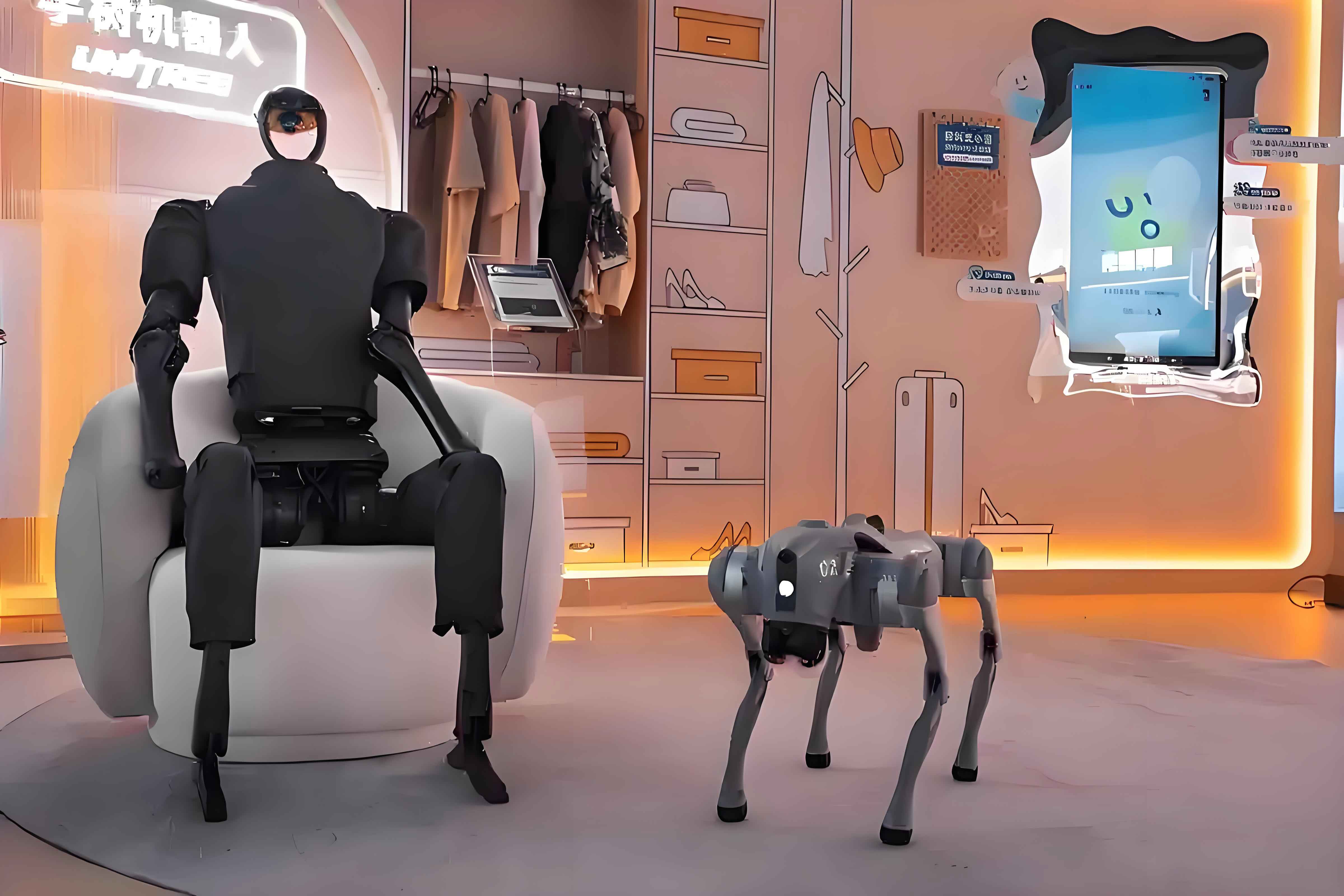
The legal status of humanoid robots has become one of the most foundational and contested issues in contemporary legal scholarship. As embodied artificial intelligence advances, humanoid robots are no longer confined to pre-programmed industrial tasks; they increasingly operate in unstructured social environments, exhibit a degree of autonomous decision-making, and interact with humans in emotionally meaningful ways. This transformation raises a pressing question: can a humanoid robot be recognized as a legal person? In this article, I argue that although current humanoid robots do not satisfy the ethical pathway to legal personhood—because they lack genuine consciousness and reason—they can and should be granted a limited legal personality through the interest-based pathway, primarily as responsible legal subjects. This limited status serves to balance industry innovation with individual safety without undermining human-centered legal and ethical frameworks.
The debate over the legal personality of humanoid robots has produced three main schools of thought: affirmation, negation, and compromise. Proponents of affirmation contend that nothing in legal theory or practice categorically bars humanoid robots from becoming legal persons. They emphasize that granting legal personhood to humanoid robots could resolve the problem of liability gaps caused by unpredictable robot behavior, and as these machines gradually integrate into daily life, recognizing them as legal persons with certain rights aligns with human emotional expectations. Opponents counter from multiple perspectives: humanoid robots lack true rationality and cannot understand the meaning or consequences of their actions, making them incapable of bearing responsibility; moreover, elevating a mere tool to legal personhood would disrupt established legal institutions and weaken the central ethical position of humans, thereby violating anthropocentrism. The compromise school proposes a middle path: endowing humanoid robots with limited legal personality to resolve their legal status dilemma.
Despite the intensity of these debates, existing scholarship often remains fragmented and polarized. Different authors select different criteria—consciousness, rationality, interests, legal rights, duties, responsibility, or anthropocentric values—and argue in isolation. What is missing is a systematic framework that integrates both external and internal factors of law. In my view, the justification for granting legal personality to humanoid robots should follow a multi-factor, conjunctural logic. The external factors comprise ethical elements (such as consciousness and rationality) and interest elements (such as social needs). The internal factor concerns whether the existing legal system can construct a workable rights-and-obligations architecture for the candidate entity. After examining these factors, we must step back and evaluate the anthropocentric implications to ensure that human beings remain the ultimate end of the ethical and legal order.
Analytical Framework for Legal Personhood
To systematically evaluate whether humanoid robots can be legal persons, I first construct an analytical framework based on three levels: ethical external factors, interest-based external factors, and internal legal adaptability. Each level answers a distinct question, as summarized in Table 1.
| Level | Core Question | Primary Criteria | Application to Humanoid Robots |
|---|---|---|---|
| Ethical external | Who qualifies as “human” or “quasi-human” because of intrinsic essence? | Consciousness, rationality | Currently not satisfied; robots lack genuine subjective experience |
| Interest external | Who should be recognized as a legal subject to serve human interests? | Social need, legal confirmation | Satisfied strongly due to liability gaps and industry development needs |
| Internal adaptability | Can the legal system construct rights, duties, and responsibilities for this entity? | Possibility of rights/obligations/responsibility architecture | Partially satisfied; limited responsibility system is feasible |
| Anthropocentric review | Does granting legal personality undermine human centrality? | Human dignity, final end | No, if recognized as means to human ends |
The ethical external element traces the historical expansion of legal subjects. In the past, slaves, women, and non-white people were excluded from legal personhood until society recognized that their “human identity” inherently entitled them to such status. This evolution suggests that the boundary of legal subjects expands when society embraces a more inclusive ethical standard. In the age of artificial intelligence, some scholars propose that “consciousness theory” and “rationality theory” should define what constitutes a “quasi-human.” Descartes’ cogito ergo sum establishes that self-conscious thought presupposes existence. In legal philosophy, consciousness is a necessary, though not sufficient, condition for legal personhood: it grounds the subject’s claim to continued existence and therefore makes the subject an end in itself rather than a pure means. Yet current humanoid robots are not conscious. Their high-level performance—whether playing chess or generating human-like text—does not indicate subjective awareness. Even the most sophisticated large language models and embodied systems lack phenomenal experience. Therefore, the ethical pathway fails for present-day humanoid robots.
Reason is the evolutionary development of consciousness: only when consciousness reaches a certain level can rational decision-making emerge. In legal contexts, rationality implies the ability to understand, control, and reflect upon one’s actions, including emotional and moral considerations. A rational subject can participate in social relations and bear responsibility. Humanoid robots may appear to make “rational” decisions, but this is only formal rationality—the output of preprogrammed algorithms or probabilistic models—not substantive rationality based on autonomous will. Because they lack consciousness, their apparent rationality is not self-originated. Thus, under the ethical route, humanoid robots cannot be legal persons.
The Interest-Based Pathway and Social Necessity
The interest external element examines whether recognizing a non-human entity as a legal person would serve human interests. In Marxist legal theory, law is an instrument for protecting the interests of the ruling class, and the rights of legal subjects are but a codified form of those interests. Historically, the expansion of legal personhood often reflected newly recognized interests of previously excluded human groups. For non-human entities, the classic example is the juristic person (corporation). Corporations were granted legal personality not because they possess consciousness or rationality, but because commercial society required a stable vehicle for capital accumulation and contractual relations. The doctrine of legal fiction enables the creation of such artificial subjects when “social necessity” is sufficiently strong.
The social necessity for granting at least limited legal personality to humanoid robots arises from a regulatory gap. Unlike traditional tools, humanoid robots with a certain level of autonomy can act in ways that are not fully predictable to their owners, users, designers, or manufacturers. In non-industrial environments—homes, hospitals, schools, disaster areas—humanoid robots must process unstructured information and make autonomous decisions. Their behavior may result in harms that cannot be attributed to any human party based on ordinary fault principles. If we force the owner to bear all responsibility, consumers’ willingness to adopt such robots would plummet, stifling industry development. If we force the developer or manufacturer to bear all responsibility, the innovation ecosystem would be over-deterred, because the very autonomy that makes these robots valuable inevitably generates unpredictable outcomes. Neither solution strikes a fair balance between protecting individual rights and promoting technological progress.
Therefore, the interest-based pathway suggests that humanoid robots could be recognized as responsible subjects—not because they deserve intrinsic rights, but because this legal arrangement helps allocate risks and liabilities more fairly while preserving healthy industrial growth. This is analogous to how the limited liability company was created as a legal person to facilitate enterprise. Of course, the analogy is not perfect: corporations act through human agents, whereas humanoid robots act through their own embodied AI. Yet this difference actually strengthens the case for robot responsibility, because it means the robot’s behavior is not reducible to human instructions in many cases.
Internal Legal Adaptability: Rights, Duties, and Responsibility
For a legal subject to exist, the legal system must be able to construct a coherent set of rights, obligations, and liabilities for it. Traditional legal theory holds that a legal subject must possess all three capacities: rights, duties, and legal responsibility. However, I align with scholars who contend that these elements are not necessarily conjunctive in all cases. Some legal subjects may enjoy rights without bearing corresponding duties, and others may bear duties without enjoying rights. In this pluralistic view, complete legal personhood requires all three elements, but limited legal personhood may be based on a subset.
Humanoid robots can plausibly be construed as “responsibility subjects” without being full rights-bearers. The central challenge is: can a robot have means to compensate victims? The objection that robots lack property is real but not insurmountable. Several mechanisms have been proposed, including mandatory liability insurance for humanoid robots and industry compensation funds. For example, the European Parliament once discussed creating “electronic personhood” with a dedicated fund for autonomous robots. Under such a model, each humanoid robot would be registered, and a compulsory insurance policy or contribution to a reserve fund would establish a pool of assets from which compensation can be paid when the robot causes damage. This demonstrates that legal engineering can create property capacity for non-biological entities.
Yet a major philosophical obstacle concerns the retributive dimension of legal liability. In serious cases—e.g., where a robot causes death or severe injury—monetary compensation alone cannot do justice. Criminal law normally imposes imprisonment or other afflictive punishments that presuppose a sentient, rational agent who can appreciate suffering. Humanoid robots lack this capacity. How, then, can they be criminal subjects? The answer lies in a two-tier approach. First, robot responsibility does not exclude human responsibility. In most serious incidents, there will be human fault somewhere: a design defect, a failure to maintain, an unreasonable use, or a lack of safety precautions. In such cases, humans can be held criminally liable under existing principles, while the robot may bear a separate, non-criminal responsibility. Second, for the robot itself, we can apply measures of security rather than punishment. Security measures (e.g., deletion of data, modification of algorithms, mandatory software updates, revocation of operating permits) aim at preventing future harm rather than inflicting retributive pain. These measures satisfy the preventive function of law and are adaptable to the nature of humanoid robots.
Thus, a limited liability regime for humanoid robots can be built around the following principles:
$$ \text{Liability of Humanoid Robot} = \underbrace{\text{Compensation}}_{via insurance/fund} + \underbrace{\text{Preventive Measures}}_{deletion, modification, recall} $$
This approach respects the fact that humanoid robots are not moral agents but recognizes that their autonomous behavior can independently contribute to harmful outcomes. By making the robot itself a formal responsibility holder, the legal system signals that someone—or something—must account for harms produced by autonomous systems, and that neither owners nor developers should automatically bear the entire burden for unpredictable actions that they neither intended nor could foresee.
To clarify the various possible legal arrangements, Table 2 compares how different liability allocation rules affect stakeholders.
| Rule | Owner Liability | Developer/Manufacturer Liability | Robot as Limited Subject |
|---|---|---|---|
| Primary rationale | User benefit and control | Product safety and quality | Autonomy and unpredictable behavior |
| Effect on user adoption | Negative (fear of liability) | Positive in short term, but may reduce product diversity | Positive, as risk is pooled |
| Effect on innovation | Neutral or negative | Negative (over-deterrence) | Positive (clear but fair risk allocation) |
| Fairness to victim | May be unfair if owner has no fault | May be unfair for unpredictable behavior | Allows compensation through insurance pool |
| Complexity of implementation | Low | Low | Medium to high (requires registration and fund) |
The limited legal personality of humanoid robots, as I have argued, should be primarily oriented toward responsibility rather than rights. This is a key distinction from complete legal personhood. A humanoid robot may not have the right to marry, to vote, or to own property in a full sense. Yet the law might still order the robot to pay compensation from an insurance fund or accept a “safety order” to stop operating. This limited status reflects the robot’s position as a “stage-purpose” instrument that ultimately serves human ends.
Anthropocentricity and Human Dignity
Critics often claim that granting any form of legal personality to humanoid robots degrades human exceptionalism and violates the principle that humans are the only ends. I respectfully disagree. Under Kantian ethics, humans are ends in themselves, never means merely. But this does not preclude the legal recognition of non-human intermediaries. The key is that human beings remain the final end; all other entities, however they are legally classified, are means to that final end. When a corporation is treated as a person for contractual purposes, we do not thereby place the corporation above humans. Similarly, when a humanoid robot is treated as a responsibility holder, we do not elevate the robot to human moral status. Rather, we employ a legal fiction to achieve a fair and efficient allocation of risks and responsibilities that ultimately benefits human beings.
In this light, the anthropocentric objection rests on a mistaken reading of “tool” as necessarily excluding any legal subjectivity. While traditional tools have no independent decision-making, humanoid robots have partial autonomy, making them neither mere tools nor full moral agents. They occupy a middle ground that demands a nuanced legal response. Recognizing them as limited subjects is not a concession to their intrinsic worth but a pragmatic measure to prevent harm, facilitate compensation, and encourage responsible innovation. Indeed, anthropocentrism is best served by a legal system that anticipates and manages the risks of new technologies, ensuring that human safety and dignity are protected. A rule that forces innocent owners to bear the unpredictable harms of an autonomous robot may be deeply unfair; a rule that forces developers to bear all such harms may stifle socially valuable innovation. Both extremes undermine human welfare. A limited robot responsibility, supported by insurance funds, balances these concerns and thus reinforces the ultimate human-centric purpose of law.
Moreover, the public’s emotional engagement with humanoid robots deserves consideration. Their human-like form elicits empathy, and treating them with a certain degree of respect can foster a more humane society. However, I must stress that such emotional considerations cannot justify granting full personhood. The law should protect humans from harmful emotional dependencies, and regulations such as the “Humanoid Robot Governance Guidelines” already caution against inappropriate attachment. Instead, legal mechanisms such as trusts can be used to honor human wishes regarding the care of a robot companion, without conferring rights on the robot itself.
Toward a Limited Legal Personhood Model
Having established the theoretical foundations, I now propose a concrete model for recognizing humanoid robots as limited legal persons. This model is based on the following pillars:
- Registration and Identification. Each humanoid robot with autonomous decision-making capabilities should be registered with a unique identifier, linked to its technical specifications and safety certificates.
- Mandatory Insurance and Compensation Fund. Owners or manufacturers (or both) must maintain insurance or contribute to an industry-wide compensation fund, from which third-party victims can be compensated for robot-caused harm. The robot itself is designated as the formal responsible subject for the purpose of fund claims.
- Safety Measures. When a robot demonstrates a dangerous pattern of behavior, competent authorities may issue orders for software updates, behavior modifications, mandatory shutdown, or recall. These measures are directed at the robot as a risk source, not as a morally culpable person.
- Human Liability Remains. The creation of robot liability does not eliminate the conventional liability of manufacturers, developers, owners, and users for their own faults. In cases where human fault contributes to the harm, joint liability is imposed.
- Scope Limitation. The robot’s legal personality is restricted to the sphere of extra-contractual and contractual liability arising from its autonomous actions. It does not confer political rights, family rights, or inheritance rights. Robots cannot vote, marry, or adopt children.
To formalize the liability allocation, let \(H\) denote human fault and \(R\) denote robot autonomy contribution. Damage \(D\) can be expressed as a function of both:
$$ D = f(H, R, E) $$
where \(E\) represents environmental factors. In a simple model, if the total damage is fully attributable to robot autonomy (i.e., \(H=0\)), the robot’s fund covers the loss. If both human fault and robot autonomy contribute, the legal system can apportion liability proportionally:
$$ \lambda_{robot} = \frac{R}{H + R + E}, \quad \lambda_{human} = \frac{H}{H + R + E} $$
$$ \text{Compensation from fund} = \lambda_{robot} \cdot D $$
$$ \text{Compensation from humans} = \lambda_{human} \cdot D $$
In practice, determining the exact contributions may be difficult, but the law can develop presumptions and standards based on technical evidence, analogous to comparative negligence in tort law. The crucial point is that the robot itself can be named as a defendant or as the party responsible for paying compensation from its fund, even though the fund is actually capitalized by premiums paid by humans.
| Feature | Natural Person | Juristic Person (Company) | Humanoid Robot (Proposed Limited Subject) |
|---|---|---|---|
| Consciousness | Yes | No (fiction) | No |
| Can marry | Yes | No | No |
| Owns property | Yes | Yes | Yes (via fund) |
| Can enter contracts | Yes | Yes | Limited, for specified purposes |
| Pays compensation | From own assets | From corporate assets | From insurance/fund |
| Subject to punishment | Imprisonment, fines | Fines, dissolution | Safety measures, no stigma |
| Core purpose | Human dignity | Economic efficiency | Risk management and innovation balance |
This model acknowledges the unique nature of humanoid robots while avoiding the pitfalls of full personhood. It neither claims that robots have independent interests deserving moral consideration nor leaves victims without remedy. It is a pragmatic legal construction that aligns with the developmental trajectory of law, which has historically used legal fictions to adapt to social change.
Conclusion and Future Outlook
In summary, the question of whether humanoid robots can be legal persons must be answered with nuance. I maintain that, under current technology, humanoid robots do not possess the consciousness or substantive rationality required for ethical personhood. However, their autonomous behavior, coupled with their embodied capacity to affect the physical world, creates a legal gap that cannot be adequately addressed solely through the liability of owners or producers. Therefore, I propose granting humanoid robots limited legal personhood as responsibility subjects, supported by mandatory insurance and safety-measure regimes. This approach does not violate anthropocentrism; on the contrary, it serves human welfare by balancing the need for innovation with the need for safety and justice.
The future of humanoid robotics remains open. If technology ever advances to the point of genuine machine consciousness—a prospect I view as both technically distant and ethically dangerous—the legal debate would need to be revisited. But for now, the rational and prudent path is to adopt a limited, responsibility-oriented legal personality for humanoid robots. Legal systems should remain flexible, continuously adapting to technological progress while preserving the centrality of human dignity. As humanoid robots become more integrated into society, the expansion of legal subjectivity will require further theoretical creativity and empirical testing. The law must walk on two legs: technological innovation and ethical-legal governance. By doing so, we can ensure that humanoid robots serve as powerful means for human flourishing while minimizing the risks they pose. Ultimately, the legal treatment of humanoid robots is not merely about machines—it is about what kind of society we want to build, and how we choose to protect the vulnerable, encourage the innovative, and maintain justice.