
The artificial intelligence industry entered a concentrated “super week” as several major industry conferences took place in quick succession and the world’s leading AI computing power company, Nvidia, released better-than-expected financial results. The combination of industrial activity and capital market attention pushed interest in artificial intelligence to a阶段性 high. Wind data showed that the Wind Artificial Intelligence Concept Index rose 1.54 percent on August 27.
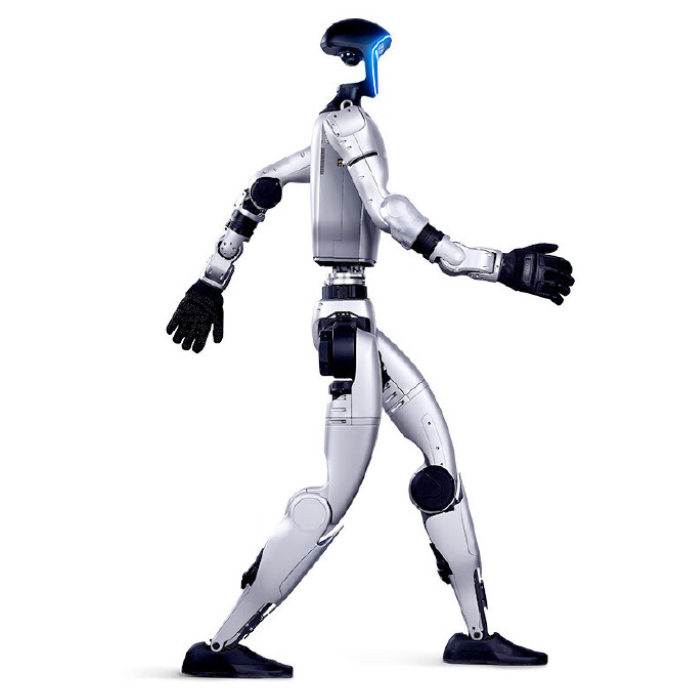
Analysts said the dense flow of industry signals during the week indicated that artificial intelligence is accelerating its descent from the cloud to devices and the edge, while humanoid robots are moving from prototype displays toward mass production and delivery. Against this backdrop, two major industrial chain directions, computing infrastructure and embodied intelligence, are expected to see continued warming in market attention.
-
AI Super Week Brings Conferences, Product Launches, and Earnings into One Spotlight
The artificial intelligence industry is accelerating from the cloud toward devices and the edge, and humanoid robots are simultaneously moving from prototype demonstration toward mass production and delivery. This shift was visible across multiple events, product launches, and financial disclosures that occurred within a short period.
From August 26 to August 28, the 2026 AGIC Shenzhen International General Artificial Intelligence Industry Expo and the GERX Global Embodied Intelligence Robot Industry Expo were held at the Shenzhen International Convention and Exhibition Center. The exhibition area reached 81,000 square meters and attracted 1,012 companies. More than 100 products were presented as global debuts or China debuts. The event highlighted a practical orientation described as “price inquiry, ordering, and batch delivery.” A total of 1,200 mature exhibits were available for batch procurement, and more than 7,000 professional buyers from 30 countries and regions attended to select products.
Xia Zuqian, president of the Shenzhen Artificial Intelligence Industry Association, said in an opening address: “More than 1,200 exhibits, not one is a concept model; all can be inquired for price, ordered, and delivered in batches.”
During the exhibition, SenseTime released the SenseNova U1 Pro multimodal large model. iFlytek’s Spark X1 large model and full terminal matrix made their first complete appearance. Tencent Cloud, Lenovo, Fudan Microelectronics, and other companies concentrated on displaying core technological achievements such as all-domain AI agents and enterprise-level AI servers.
At the same time, the 2026 China International Big Data Industry Expo was held in Guiyang from August 28 to August 30. A total of 372 Chinese and foreign companies confirmed participation. New products such as Huawei’s Atlas 950 SuperPoD supernode system and IsoftStone’s Token factory were scheduled to appear.
In addition, after the U.S. market closed on August 26 local time, Nvidia released its financial results for the second quarter of fiscal year 2027. The report showed that the company achieved total revenue of USD 96.22 billion in the quarter, an increase of 106 percent year over year and 18 percent quarter over quarter, above the market expectation of USD 92.38 billion. Net income reached USD 59.69 billion, an increase of 126 percent year over year. Gross margin was 75.0 percent. The data center business generated revenue of USD 89 billion, an increase of 117 percent year over year and 18 percent quarter over quarter, accounting for 92.5 percent of total revenue. Nvidia’s revenue guidance for the next fiscal quarter was USD 108 billion, plus or minus 2 percent.
From the signals released by the three major events and the financial report of the global AI leader, artificial intelligence is accelerating from the cloud to devices and edge environments. Humanoid robots are advancing from exhibition prototypes toward mass production delivery. Attention on the two major industrial chains, computing infrastructure and embodied intelligence, continues to rise.
Event Dates Location Scale and Participation Key Highlights 2026 AGIC Shenzhen International General Artificial Intelligence Industry Expo and GERX Global Embodied Intelligence Robot Industry Expo August 26 to August 28, 2026 Shenzhen International Convention and Exhibition Center 81,000 square meters; 1,012 companies; more than 100 global debut or China debut products; 1,200 mature exhibits available for batch procurement; more than 7,000 professional buyers from 30 countries and regions Practical orientation toward price inquiry, ordering, and batch delivery; SenseTime SenseNova U1 Pro multimodal large model; iFlytek Spark X1 and full terminal matrix; Tencent Cloud, Lenovo, and Fudan Microelectronics showcase all-domain AI agents and enterprise-level AI servers 2026 China International Big Data Industry Expo August 28 to August 30, 2026 Guiyang 372 Chinese and foreign companies confirmed participation Huawei Atlas 950 SuperPoD supernode system; IsoftStone Token factory Nvidia Fiscal Year 2027 Second Quarter Earnings Release August 26, 2026, after U.S. market close United States Total revenue USD 96.22 billion; net income USD 59.69 billion; gross margin 75.0 percent; data center revenue USD 89 billion; next-quarter revenue guidance USD 108 billion, plus or minus 2 percent Revenue increased 106 percent year over year and 18 percent quarter over quarter; data center revenue increased 117 percent year over year and 18 percent quarter over quarter, representing 92.5 percent of total revenue The convergence of these events is significant because it places embodied intelligence, computing infrastructure, and end-side artificial intelligence within the same investment and industrial narrative. Embodied intelligence is no longer only a laboratory concept or a stage demonstration. The exhibition’s emphasis on batch delivery and actual procurement reflects a broader shift in the embodied intelligence ecosystem toward commercialization. At the same time, Nvidia’s data center revenue underscores that the computing foundation for artificial intelligence remains in a strong expansion phase, even as applications move closer to physical environments.
-
Computing Hardware Earnings Deliver Strong Growth While Software Remains Under Pressure
From the perspective of the A-share interim reporting season, the artificial intelligence industrial chain has shown a clear pattern of divergence. Upstream computing infrastructure has demonstrated strong earnings realization, while the midstream software application sector remains in a dormant period.
On the computing side, benefiting from the expansion of global artificial intelligence capital expenditure, related listed companies have led the market in revenue and net profit growth. In the A-share market, AI server leader Foxconn Industrial Internet achieved first-half revenue of RMB 557.861 billion, an increase of 54.63 percent year over year. It achieved net profit of RMB 23.740 billion, an increase of 95.99 percent year over year. Inspur Information’s recent earnings forecast showed that the company expects first-half attributable net profit of RMB 2.6 billion to RMB 3.1 billion, an increase of 226 percent to 288 percent year over year.
In the optical module direction, Zhongji Innolight achieved first-half revenue of RMB 41.778 billion, an increase of 182.49 percent year over year. It achieved net profit of RMB 13.651 billion, an increase of 241.70 percent year over year. Eoptolink achieved first-half revenue of RMB 20.910 billion, an increase of 100.34 percent year over year. It achieved net profit of RMB 7.529 billion, an increase of 90.98 percent year over year. Sugon achieved first-half revenue of RMB 7.466 billion, an increase of 27.62 percent year over year. It achieved net profit of RMB 0.971 billion, an increase of 33.31 percent year over year. As the global AI computing power bellwether, Nvidia’s second-quarter revenue exceeded market expectations.
Company Reporting Period Revenue Revenue Growth Net Income Net Income Growth Foxconn Industrial Internet First half RMB 557.861 billion 54.63 percent year over year RMB 23.740 billion 95.99 percent year over year Inspur Information First-half forecast Not disclosed in the forecast Not disclosed in the forecast RMB 2.6 billion to RMB 3.1 billion 226 percent to 288 percent year over year Zhongji Innolight First half RMB 41.778 billion 182.49 percent year over year RMB 13.651 billion 241.70 percent year over year Eoptolink First half RMB 20.910 billion 100.34 percent year over year RMB 7.529 billion 90.98 percent year over year Sugon First half RMB 7.466 billion 27.62 percent year over year RMB 0.971 billion 33.31 percent year over year Nvidia Fiscal year 2027 second quarter USD 96.22 billion 106 percent year over year; 18 percent quarter over quarter USD 59.69 billion 126 percent year over year Nvidia data center business Fiscal year 2027 second quarter USD 89 billion 117 percent year over year; 18 percent quarter over quarter Not separately disclosed Not separately disclosed However, in contrast to the heat on the hardware side, the fundamentals of the traditional application software sector remain under pressure. Liu Xuefeng, chief computer industry analyst at GF Securities, said that traditional application software faces weak willingness for downstream enterprises to spend on capital expenditure and a lack of clear signals of accelerated demand improvement. He believes that as general large model capabilities continue to sink, traditional software standardized functions and non-sensitive customer scenarios continue to face the potential risk of replacement by general AI models and value erosion. Medium- and long-term competitive pressure cannot be ignored.
This divergence is important for the broader artificial intelligence narrative. Computing infrastructure companies are currently converting global artificial intelligence investment into revenue and profit at a rapid pace. Optical modules, servers, and high-performance computing equipment are direct beneficiaries of the expansion of artificial intelligence data centers. The strong results from Foxconn Industrial Internet, Inspur Information, Zhongji Innolight, Eoptolink, Sugon, and Nvidia illustrate that the first wave of artificial intelligence commercialization has been concentrated in the physical and hardware layers that support model training and inference.
By contrast, traditional software applications are experiencing a more complicated transition. General large models are absorbing some functions that were previously delivered by standardized software products. In customer scenarios that are not highly sensitive, this substitution pressure may erode the value of traditional software offerings. The result is a market environment in which computing infrastructure and embodied intelligence attract strong attention, while traditional application software must demonstrate new differentiation and defend its value proposition.
Within this environment, embodied intelligence represents a new frontier that could expand the application market for artificial intelligence. If embodied intelligence systems can move from single-task automation to adaptive general intelligence, they may open complex scenarios in industry and other physical environments. That possibility is already shaping investment thinking, even as the near-term earnings leadership remains concentrated in computing hardware.
-
Computing Power Sinking and Embodied Intelligence Become Two Major Investment Themes
Looking ahead, brokerage analysts generally believe that as artificial intelligence moves from “rolling models” into “rolling applications,” attention on the two major industrial chain directions of computing infrastructure and embodied intelligence is expected to continue warming. However, the investment logic has already changed.
Liao Jingchi, chief global strategy research officer at Zhejiang Securities, gave a comprehensive evaluation of 90 points out of 100 for the “physical AI,” or embodied intelligence, theme. He believes that Tao’s Law and physical AI form a deep synergistic relationship in which an underlying computing revolution enables an explosion of upper-layer applications. Physical AI is a key turning point for artificial intelligence as it moves from the virtual world into the physical world. In 2026, the field is moving from technical validation toward commercial landing. In terms of investment strategy, he recommends prioritizing core components and focusing on AI chips, advanced packaging, and core sensors and actuators.
Liu Xuefeng also highlighted investment opportunities in embodied intelligence from the perspective of AI model iteration. He said that Gemini Robotics 2, released by Google DeepMind, achieved a critical leap for robots from single-task automation to adaptive general intelligence. Its greater significance lies in opening up market space for AI applications in complex scenarios such as industrial fields through breakthroughs in embodied intelligence.
On the computing side, the market’s focus is shifting from “single-card computing power” to “system-level Token output efficiency.” Huatai Securities previously defined 2026 as the “first year of domestic supernodes.” With the large-scale deployment of products such as Huawei’s Atlas 950 SuperPoD, the investment logic for computing infrastructure is evolving from hardware procurement toward system-level coordination efficiency.
Investment Mainline Market Signal Core Focus Evidence from the Period Computing infrastructure Nvidia’s data center revenue reached USD 89 billion in the fiscal year 2027 second quarter, up 117 percent year over year and 18 percent quarter over quarter, representing 92.5 percent of total revenue. The company guided next-quarter revenue to USD 108 billion, plus or minus 2 percent. AI servers, optical modules, AI chips, advanced packaging, supernode systems, and system-level Token output efficiency Foxconn Industrial Internet, Inspur Information, Zhongji Innolight, Eoptolink, and Sugon reported strong first-half revenue and net profit growth. Huawei Atlas 950 SuperPoD was highlighted at the China International Big Data Industry Expo. Embodied intelligence The 2026 AGIC Shenzhen International General Artificial Intelligence Industry Expo and GERX Global Embodied Intelligence Robot Industry Expo emphasized price inquiry, ordering, and batch delivery. More than 1,200 mature exhibits were available for batch procurement, and more than 7,000 professional buyers from 30 countries and regions attended. AI chips, advanced packaging, core sensors, actuators, humanoid robots, and adaptive general intelligence for physical environments Xia Zuqian said more than 1,200 exhibits were not concept models and could be inquired for price, ordered, and delivered in batches. Liao Jingchi gave the physical AI, or embodied intelligence, theme a score of 90 out of 100. Liu Xuefeng pointed to Gemini Robotics 2 as a critical leap toward adaptive general intelligence. The two investment mainlines are connected by a common foundation. Embodied intelligence requires powerful computing for training, simulation, inference, and real-time control. Computing infrastructure, in turn, needs new application scenarios to justify continued expansion. If embodied intelligence can scale into manufacturing, logistics, services, and other physical environments, it could become a major source of demand for AI chips, sensors, actuators, advanced packaging, and system-level computing architectures.
At the same time, the market’s understanding of computing infrastructure is becoming more sophisticated. The earlier focus on individual accelerator cards is expanding into a broader consideration of system-level efficiency. The ability to produce Tokens efficiently at the system level, rather than merely maximizing the performance of a single chip, is becoming a central measure of competitive advantage. This shift explains why supernode systems such as Huawei’s Atlas 950 SuperPoD are attracting attention. It also explains why the investment logic is moving from simple hardware procurement toward coordination among computing, networking, storage, software, and applications.
For embodied intelligence, the investment logic is similarly evolving. The earliest phase focused on prototypes, demonstrations, and concept validation. The current phase is increasingly focused on core components, manufacturability, delivery capability, and real-world deployment. The emphasis on batch delivery at the Shenzhen exhibition is a signal that the embodied intelligence supply chain is preparing for larger-scale commercialization. The focus on AI chips, advanced packaging, sensors, and actuators reflects the understanding that embodied intelligence cannot scale without a complete and reliable component ecosystem.
Analysts also point out that the application layer remains uneven. While embodied intelligence and computing infrastructure are attracting capital and attention, traditional application software continues to face pressure from weak downstream capital expenditure willingness and the sinking capabilities of general large models. This creates a more selective investment environment. The market is not simply rewarding all artificial intelligence themes equally. Instead, it is distinguishing between segments with clear earnings realization, such as computing hardware, and segments with long-term optionality, such as embodied intelligence, while remaining cautious about traditional software models that may face substitution risk.
-
Outlook Points to Commercialization, System-Level Efficiency, and Embodied Intelligence Delivery
The current phase of artificial intelligence development is defined by a dual movement. On one side, computing infrastructure continues to expand rapidly, supported by strong data center demand and the global buildout of AI capacity. On the other side, embodied intelligence is moving from demonstration to delivery, creating a new bridge between digital intelligence and physical action.
The events and earnings reports of the week reinforce this dual movement. Nvidia’s results show that the demand for AI computing remains robust. The Shenzhen exhibition shows that embodied intelligence products are being presented with a commercial orientation. The Guiyang big data expo shows that supernode systems and Token production concepts are becoming part of the infrastructure conversation. Together, these signals suggest that artificial intelligence is not only becoming more powerful in the cloud but also more integrated into devices, edge environments, and physical systems.
For market participants, several watchpoints stand out. The first is the pace at which embodied intelligence moves from batch procurement to actual deployment. The exhibition’s 1,200 mature exhibits and more than 7,000 professional buyers provide a visible commercial signal, but the real test will be repeat orders, deployment scale, and productivity gains in end-user scenarios. The second is the continued evolution of computing infrastructure from single-card performance to system-level Token output efficiency. Supernode systems, advanced packaging, optical modules, and AI servers will remain central to this evolution. The third is the competitive pressure on traditional application software. As general large models continue to sink into standardized functions, software companies will need to demonstrate differentiation, domain expertise, and deeper integration with customer workflows.
Within this landscape, embodied intelligence is likely to remain a major theme because it connects artificial intelligence to the physical economy. Embodied intelligence expands the addressable market for AI from digital content and software tasks to robotics, industrial automation, logistics, services, and other physical operations. It also creates demand for a broad set of components, including AI chips, advanced packaging, sensors, and actuators. This is why analysts such as Liao Jingchi prioritize core components and why Liu Xuefeng sees embodied intelligence breakthroughs as a way to open complex industrial application markets.
At the same time, computing infrastructure remains the backbone of the entire artificial intelligence ecosystem. Without continued improvements in computing efficiency, embodied intelligence cannot achieve the real-time performance and scale required for mass deployment. The shift toward system-level coordination efficiency is therefore not only a hardware trend but also a precondition for the next stage of artificial intelligence applications. The supernode concept, Token output efficiency, and large-scale data center expansion are all part of this foundation.
The market’s attention is likely to remain focused on the interaction between these two mainlines. Computing infrastructure provides the capacity for training and inference, while embodied intelligence provides a path for artificial intelligence to act in the physical world. As 2026 progresses, the key question is whether the commercial signals seen in exhibitions, product launches, and earnings reports can translate into sustained orders, deployment, and profitability. The evidence so far indicates that computing hardware is already delivering strong financial results, while embodied intelligence is entering a critical commercialization phase.
In summary, the convergence of earnings season and industry events has placed artificial intelligence at the center of market attention. The data center business of Nvidia exceeded expectations. A-share computing hardware companies reported rapid revenue and profit growth. The Shenzhen exhibition emphasized batch delivery for embodied intelligence. The Guiyang big data expo highlighted supernode and Token factory concepts. The investment narrative is shifting from model competition toward application competition, with computing infrastructure and embodied intelligence as the two major directions. Embodied intelligence is moving from prototypes toward mass production delivery, and computing infrastructure is moving from hardware procurement toward system-level efficiency. These two trends are expected to shape the next phase of artificial intelligence industry development and capital market focus.