
In this comprehensive analysis, I explore the trade patterns, competitiveness, and strategic pathways for China’s industrial robot industry, a sector designated as a priority in the “Made in China 2025” initiative. The development of the China robot industry is pivotal for advancing manufacturing capabilities and achieving industrial powerhouse status. I focus on seven distinct industrial robot product categories classified under the 6-digit Harmonized System (HS) codes, examining export-import dynamics, market shares, pricing, and intra-industry trade to derive insights and propose actionable strategies. The aim is to provide a detailed, data-driven perspective that underscores the evolution and future trajectory of China robot trade on the global stage.
The industrial robot sector, characterized by high technology intensity and monopolistic competition, is dominated by a few advanced economies. For China, understanding its trade structure is essential to identify strengths and weaknesses. I begin by dissecting the trade patterns, followed by a competitiveness assessment using quantitative metrics, and conclude with strategic recommendations to enhance the global positioning of the China robot industry.
Trade Patterns of China’s Industrial Robots
I analyze the trade patterns based on export market distribution, import source concentration, and trade balances. The HS classification groups industrial robots into Chapter 84 and Chapter 85. Chapter 84 includes spraying robots (HS 842489), handling robots (HS 842890), multi-function robots (HS 847950), and IC factory-specific robots (HS 848640). Chapter 85 encompasses resistance welding robots (HS 851521), arc welding robots (HS 851531), and laser welding robots (HS 851580). Data from recent years, particularly 2020, reveals distinct patterns in China robot trade flows.
The export markets for China’s industrial robots exhibit a decentralized structure, indicating a broad global reach. Conversely, import sources are highly concentrated, reflecting dependency on key technology-holding nations. For instance, in 2020, the top five export markets for most robot types accounted for less than 50% of total exports, suggesting diversified demand. In contrast, the top five import sources often contributed over 70-80% of imports, primarily from Japan, Germany, the USA, South Korea, and Singapore. This asymmetry highlights the China robot industry’s role as a global supplier while relying on advanced economies for high-end products.
To illustrate, I present the following tables summarizing the export market distribution and import source countries for Chapter 84 and Chapter 85 robots in 2020. These tables encapsulate the dispersion and concentration trends, providing a clear visual of China robot trade linkages.
| Product Category | HS Code | Top 5 Export Markets (Share %) | Total Export Share (%) | Top 5 Import Sources (Share %) | Total Import Share (%) |
|---|---|---|---|---|---|
| Spraying Robots | 842489 | USA (25.9), Japan (5.46), Germany (4.71), Vietnam (4.10), India (3.94) | 44.11 | Germany (21.16), Japan (19.57), USA (12.24), South Korea (8.26), Denmark (6.64) | 67.87 |
| Handling Robots | 842890 | USA (16.60), Japan (11.88), Vietnam (5.91), Hong Kong (4.72), Australia (3.65) | 42.77 | Japan (28.84), Germany (21.27), South Korea (9.11), Other Asia (8.63), Italy (4.88) | 72.72 |
| Multi-function Robots | 847950 | South Korea (13.18), Hong Kong (9.65), India (7.70), Vietnam (7.03), Japan (6.62) | 44.18 | Japan (70.68), Germany (6.77), France (4.93), Denmark (3.04), South Korea (2.35) | 87.76 |
| IC Factory Robots | 848640 | Hong Kong (29.10), Singapore (23.26), Vietnam (10.83), Other Asia (7.46), Japan (7.15) | 77.79 | South Korea (27.62), Singapore (21.33), Japan (17.40), Other Asia (9.25), Malaysia (4.19) | 80.65 |
| Product Category | HS Code | Top 5 Export Markets (Share %) | Total Export Share (%) | Top 5 Import Sources (Share %) | Total Import Share (%) |
|---|---|---|---|---|---|
| Resistance Welding Robots | 851521 | Vietnam (11.56), India (8.46), Thailand (5.71), Ethiopia (5.38), Uzbekistan (5.33) | 36.44 | Germany (45.85), Japan (19.94), South Korea (10.48), Italy (9.00), Switzerland (5.51) | 90.78 |
| Arc Welding Robots | 851531 | Japan (13.79), India (7.64), Vietnam (5.52), Australia (4.89), Russia (3.87) | 35.72 | Austria (29.37), Germany (19.45), Japan (17.96), USA (11.35), South Korea (4.45) | 83.70 |
| Laser Welding Robots | 851580 | South Korea (15.99), Vietnam (13.13), India (6.60), USA (6.26), Russia (3.68) | 45.66 | Germany (30.20), Japan (25.51), South Korea (15.83), Switzerland (5.14), USA (4.27) | 81.05 |
The trade balance for China’s industrial robots overall shows a persistent deficit, underscoring a net import dependency. However, certain product categories have achieved surpluses, indicating emerging competitiveness in specific segments. From 2016 to 2020, the total trade deficit narrowed slightly, from approximately $2.87 billion to $2.81 billion, while exports grew. At the product level, spraying robots (HS 842489) consistently recorded surpluses, reaching $704.9 million in 2020. Handling robots (HS 842890) and welding robots like arc welding (HS 851531) shifted from deficit to surplus in 2020, reflecting improved China robot capabilities. In contrast, multi-function robots (HS 847950) and IC factory robots (HS 848640) maintained large deficits, highlighting areas where the China robot industry lags in high-tech domains. The trade balance can be expressed as:
$$ TB_i = EX_i – IM_i $$
where \( TB_i \) is the trade balance for product \( i \), \( EX_i \) is export value, and \( IM_i \) is import value. A positive \( TB_i \) indicates a surplus, signaling competitiveness for that China robot product.
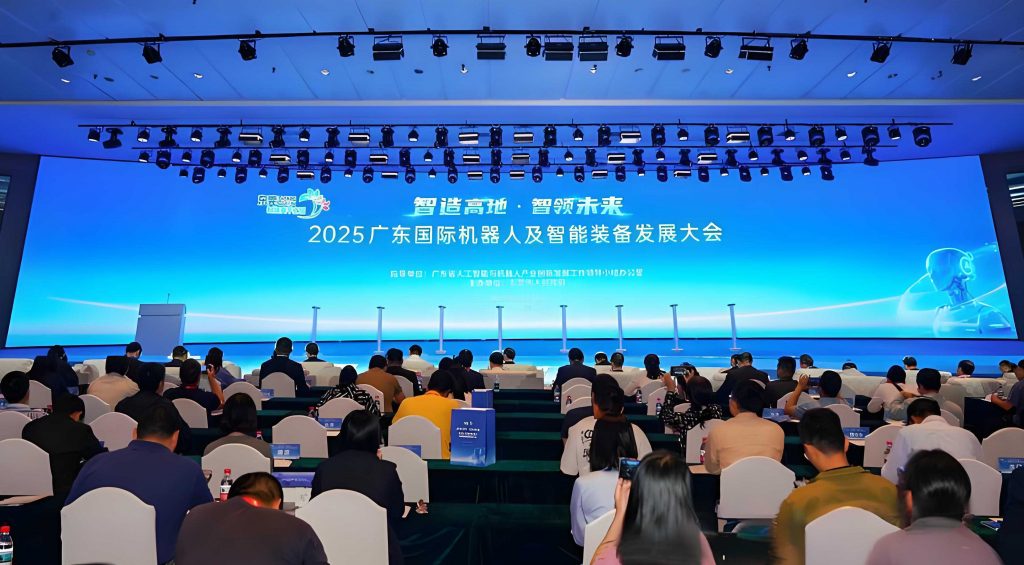
This image visually represents the dynamic landscape of the China robot industry, showcasing its integration into global manufacturing networks. The decentralized export markets and concentrated import sources are emblematic of the China robot trade structure, where diversification in outward flows coexists with reliance on key technological hubs.
Competitiveness Analysis of China’s Industrial Robot Trade
I assess the international competitiveness of China’s industrial robots using metrics such as international market share, average export price, and intra-industry trade degree. These indicators reveal the China robot industry’s position in global value chains and its product quality nuances.
The international market share (MS) measures the proportion of world exports accounted for by China robot products. It is calculated as:
$$ MS_i = \frac{EX_i^{\text{China}}}{EX_i^{\text{World}}} \times 100\% $$
where \( EX_i^{\text{China}} \) is China’s export value for product \( i \), and \( EX_i^{\text{World}} \) is the world export value. Over the past decade, MS values for China robot categories have shown significant variation, with some products achieving leading global ranks. For instance, spraying robots (HS 842489) surged from 15.19% in 2010 to 28.80% in 2020, capturing the top position. Handling robots (HS 842890) rose from 6.56% to 11.17%, securing second place. Conversely, multi-function robots (HS 847950) and IC factory robots (HS 848640) exhibited slower growth, with MS values around 4.94% and 11.62% in 2020, respectively. In Chapter 85, arc welding robots (HS 851531) and laser welding robots (HS 851580) saw remarkable MS increases from 1.85% to 13.01% and from 9.48% to 21.65%, respectively, while resistance welding robots (HS 851521) stagnated near 7.29%. These disparities underscore that the China robot industry excels in certain segments but faces challenges in high-complexity areas.
The average export price reflects the technological content and value-added of China robot products. Comparing China’s prices with those of leading producers like Japan, Germany, and the USA reveals substantial gaps. The average export price \( P_{\text{avg}} \) is defined as:
$$ P_{\text{avg}} = \frac{EX_{\text{value}}}{EX_{\text{quantity}}} $$
where \( EX_{\text{value}} \) is the export value in monetary terms, and \( EX_{\text{quantity}} \) is the export volume in units. Data from 2018 illustrates that China’s export prices are often fractions of those from advanced economies. For example, China’s spraying robots averaged $0.28 per unit, compared to $43.75 for the USA—a disparity exceeding 100-fold. Handling robots from China averaged $0.34 thousand, versus $19.09 thousand for Germany and Japan. Multi-function robots from China averaged $4.39 thousand, while Germany’s averaged $25.61 thousand. IC factory robots showed a 10-fold price difference. Welding robots exhibited similar patterns, with China’s laser welding robots priced at $0.08 thousand versus $17.62 thousand for the USA. These low prices indicate that the China robot industry often competes in low-end markets, relying on cost advantages rather than technological superiority. This pricing strategy, while boosting market penetration, may lead to unsustainable competition and low profitability, hindering the long-term upgrade of the China robot sector.
Intra-industry trade (IIT) degree highlights the extent of two-way trade in similar products, common in monopolistic competition markets like industrial robots. I measure IIT using the Grubel-Lloyd index:
$$ IIT_i = 1 – \frac{|EX_i – IM_i|}{EX_i + IM_i} $$
where \( IIT_i \) ranges from 0 to 1, with higher values indicating greater intra-industry trade. Alternatively, the absolute trade balance share \( A_i \) can be used:
$$ A_i = \frac{|EX_i – IM_i|}{EX_i + IM_i} $$
where smaller \( A_i \) denotes higher IIT. In 2020, the overall IIT degree for China’s seven robot categories was approximately 0.76 (calculated as 1 – 0.24), indicating substantial intra-industry trade. Handling robots had the highest IIT (A ≈ 0.04), while IC factory robots had the lowest (A ≈ 0.70). This suggests that China robot trade involves significant exchange of differentiated products, often characterized by vertical specialization—China exports low-priced variants and imports high-priced, technology-intensive ones from advanced economies. This vertical integration reflects the China robot industry’s role in global supply chains, where it participates in lower-value segments while depending on upstream innovations.
The competitiveness analysis underscores that the China robot industry has achieved notable market share gains but primarily through low-price strategies in less sophisticated segments. Enhancing technological content and moving up the value chain are critical for sustaining competitiveness. The China robot sector must transition from quantity-driven expansion to quality-driven innovation, aligning with the “innovation-driven, quality-first” principle of “Made in China 2025.”
Strategic Development Pathways for China’s Industrial Robot Industry
Based on the trade and competitiveness assessment, I propose strategic directions to bolster the China robot industry. These strategies aim to elevate its global standing, foster innovation, and mitigate dependencies.
Core Component Innovation and Collaborative Ecosystem: The China robot industry must prioritize R&D in key components such as high-precision reducers, servo motors, and advanced controllers. These elements define the core competitiveness and value chain position. I recommend fostering synergistic innovation networks involving enterprises, research institutions, and universities to tackle technical bottlenecks. Collaborative models can accelerate产业链 integration, enabling the China robot sector to progress from assembly to genuine innovation. Government support through sustained funding and policies is essential to de-risk long-term R&D investments, ensuring the China robot industry builds indigenous technological capabilities.
Focused Product Lines and Industrial Clustering: Leveraging comparative advantages, the China robot industry should concentrate on select product lines where it shows potential, such as spraying robots or arc welding robots, to develop specialized expertise. Establishing industrial clusters led by large firms—like Siasun or Guangzhou CNC—supported by agile SMEs can create a competitive ecosystem. Large enterprises can drive brand building and international market penetration, while SMEs focus on niche segments and supply chain support. This clustering approach enhances resource efficiency and innovation diffusion, strengthening the overall China robot manufacturing base.
Emphasis on Intelligent Technologies: Integrating emerging technologies like AI, IoT, and big data into robot systems is crucial for the China robot industry to achieve智能化 breakthroughs. I advocate for focused R&D in next-generation robots that are modular, standardized, and interoperable. By aligning with global trends in smart manufacturing, the China robot sector can develop high-performance systems that command premium prices. Cross-disciplinary collaboration will be key to creating innovative China robot solutions that cater to diverse industrial applications, moving beyond low-end repetitions.
Adherence to International Standards: To navigate non-tariff barriers like technical and environmental regulations, the China robot industry must embrace international standards (e.g., ISO 10218, IEC 61000). Active participation in standard-setting bodies can safeguard China robot exports and ensure compliance with global norms. Additionally, understanding regional requirements—such as CE marking for Europe or GC certification for Gulf states—will facilitate market access. Proactive engagement in green standards can also preempt environmental trade barriers, promoting sustainable China robot production practices.
Dual-Track Talent Development: Cultivating both research-oriented and application-oriented talent is vital for the China robot industry. Elite institutions should train high-level innovators and entrepreneurs, while vocational schools and applied universities can produce skilled technicians through industry-academia partnerships. Initiatives like international exchanges and incentive mechanisms can attract global expertise to the China robot sector. By bridging the talent gap, the China robot industry can sustain its growth momentum and drive technological advancements.
Conclusion
In summary, the China robot industry exhibits dynamic trade patterns with decentralized exports and concentrated imports, reflecting its dual role as a global supplier and technology importer. Competitiveness analysis reveals significant market share gains but underscores challenges related to low export prices and vertical specialization in intra-industry trade. The China robot sector has made strides in certain product categories, yet enhancing technological sophistication remains imperative. Strategic focus on core innovation, targeted product development, smart technology integration, standard compliance, and talent cultivation can propel the China robot industry toward higher value-added activities. As digital transformation and robotic advancements converge, the China robot industry is poised to leverage these opportunities, provided it shifts from cost-based competition to innovation-led growth. This evolution will not only strengthen the China robot trade but also contribute to global manufacturing resilience and advancement.
The future of the China robot industry hinges on continuous adaptation and strategic foresight. By implementing these strategies, the China robot sector can achieve sustainable competitiveness, aligning with national industrial goals and securing a prominent position in the worldwide robotics landscape.