
The “2017 World Robot Conference,” held in Beijing, showcased a dazzling array of technological marvels that left visitors with a profound sense of awe and a glimpse into a rapidly evolving future. The event served as a powerful testament to the global advancement of robotics, with a particularly strong spotlight on the burgeoning capabilities and ambitions of the China robot sector. From news-writing algorithms to surgical assistants, the convergence of artificial intelligence and mechanical engineering is no longer science fiction but a tangible reality reshaping industries and societies. Yet, amidst this excitement, a crucial narrative emerges: the need for strategic, measured development to ensure the China robot industry transitions from a period of explosive growth to one of sustainable, high-quality innovation.
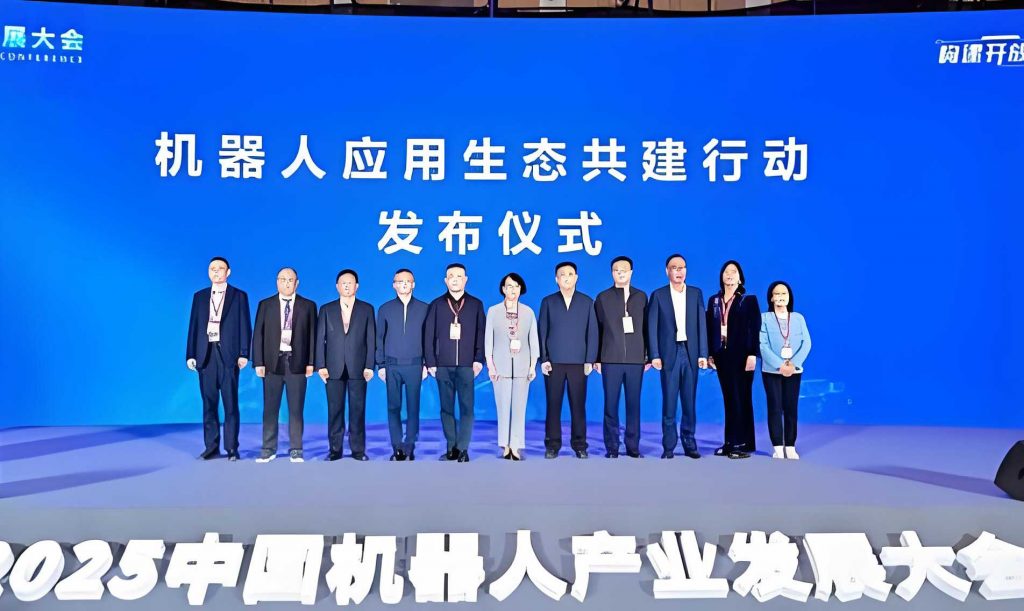
The conference floor was a living exhibition of the China robot ecosystem’s diversity. “Journalist robots” demonstrated the ability to draft coherent news articles within a minute. “Legal advisory robots,” simulating lawyers and judges, reportedly could answer up to 50,000 specialized legal queries. In the realm of construction, robots displayed bricklaying prowess claimed to enable the erection of half a building in a single day. Maritime surveillance robots equipped with advanced sensors highlighted their role in law enforcement. Medical robots showcased sub-millimeter precision in procedures like tumor removal and bone setting. Perhaps most futuristically, brain-controlled robots hinted at a world where intention directly drives machinery, promising new frontiers in assistive technology and human-machine interaction. This collective performance underscored a world in the throes of a robotic “mobilization,” sparking both boundless hope and serious contemplation about the implications for our virtual and physical worlds.
This progress resonates with a strategic vision articulated at the highest levels. As highlighted during the conference, President Xi Jinping, at the 2014 Academician Conference of the Chinese Academy of Sciences and Chinese Academy of Engineering, emphasized the scale of the opportunity and the challenge: “China will become the largest market for robots, but can our technology and manufacturing capabilities meet this competition? We must not only improve the level of China’s robots but also capture as much of the market as possible.” The 2017 conference served as a key progress report, demonstrating that the China robot industry is actively striving to meet this challenge, with notable achievements putting it on the global map.
1. The Current Landscape: Data and Dominance of the China Robot Market
The numerical story of the China robot industry is one of staggering scale and concentrated potential. Industry projections indicate that China’s robot market size was expected to reach $6.3 billion in 2017. A deeper dive into regional clusters reveals even more focused growth. The Beijing-Tianjin-Hebei region, a primary innovation hub, is home to approximately 387 enterprises related to robot development and manufacturing. These companies collectively generate an estimated total output value of 45 billion Chinese Yuan (approximately $6.5 billion based on contemporaneous exchange rates), boasting an average profit margin of around 16%. This concentration of economic activity underscores the region’s pivotal role in the broader China robot narrative.
| Metric | Data | Notes |
|---|---|---|
| National Robot Market Size | $6.3 billion | Projected value for the year |
| Robot Enterprises in Beijing-Tianjin-Hebei | 387 companies | Core cluster for China robot innovation |
| Regional Total Output Value | ¥45 billion (~$6.5bn) | Highlighting economic mass |
| Average Profit Margin | 16% | Indicating sector profitability |
| Service Robot Development (Beijing) | Nationally leading | Especially in AI foundational tech |
Beyond the numbers, qualitative assessments from the conference pointed to significant technical strides. Beijing’s development in service robots and related fundamental artificial intelligence technologies was noted as leading nationally. In critical domains such as humanoid robotics and operating systems, core technologies within the China robot sphere were reported to have reached world-advanced levels. Analysts suggested that a relatively complete innovation chain for intelligent robots is初步 taking shape. A foundational element of this progress is the dense aggregation of elite research institutions in the Beijing-Tianjin-Hebei region, including Tsinghua University, Beihang University, University of Science and Technology Beijing, and the Institute of Automation under the Chinese Academy of Sciences. This fusion of academic excellence and industrial drive is a key engine for the China robot sector.
2. Addressing the Elephant in the Room: Will China Robots Cause an Unemployment Tsunami?
A perennial and global question shadows every discussion on robotic advancement: the threat to human jobs. The China robot expansion is no exception, prompting widespread public and expert debate. However, data and analysis presented during the conference offered a counter-intuitive perspective. Citing international examples, particularly from the United States—a major producer and user of robots—evidence suggested an inverse relationship between robot sales and unemployment rates over a 20-year period: as robot sales increased, unemployment tended to decrease, and vice-versa.
Experts on the China robot scene provided a contextualized interpretation. In 2015, the rate of job substitution by robots in China was estimated at a mere 0.23%, significantly lower than the international average of 0.58%. This led to a compelling, if simplistic, conclusion: at that point, 99.77% of jobs in China were not replaceable by robots. The argument extends beyond mere substitution. The evolution of the China robot industry is expected to catalyze the creation of new types of work and demand for new skills. The concept of an expanding “digital labor force” implies that the workforce of the future, the “new new humans,” will inevitably engage in continuous learning to master new knowledge and keep pace with technological change, potentially mitigating net job losses.
3. Hidden Challenges: Overcapacity and the Core Technology Gap in China Robot Manufacturing
While the outlook appears bright, industry insiders and observers voice significant concerns that demand a “cold” assessment within the “hot” market. A primary risk is the potential for “overcapacity” and low-level, redundant construction even before the industry has fully matured. Warning signs of duplicate investments and homogeneous, low-value-added production in the China robot field have already emerged, drawing high-level regulatory attention.
Celebrating the achievements of China robot must be balanced with a clear-eyed recognition of existing gaps compared to internationally advanced counterparts. The market’s “survival of the fittest” principle is relentless. A critical vulnerability for the China robot industry lies in its core components. The sector faces an awkward situation akin to “industrial hollowing out” in precision reducers, servo motors, and controllers. The reliability and longevity of these domestically produced core parts still require further verification and improvement against global benchmarks. In essence, the challenge is to avoid perpetually manufacturing robots with “intelligent” capabilities and “physical bodies” that lag behind. As one industry expert aptly summarized, past robotic revolutions primarily replaced “human muscle,” whereas the current revolution spearheaded by the China robot drive must focus on cultivating the “smart brain”—the intelligent core.
4. The Investment Conundrum: Patient Capital for the China Robot Journey
The development trajectory of the China robot industry is inextricably linked to capital flows. The innate profit-seeking nature of capital often leads to short-termism. While “angel investment” requires courage, the consensus among experts is that rationality is paramount. The China robot industry is emphatically not a “short, flat, and fast” project. It encompasses a vast array of knowledge domains, intersects with numerous traditional industries, and involves a long investment return cycle.
A proposed division of labor suggests that fundamental research, with its high uncertainty and long horizons, requires substantial and sustained government investment. In contrast, the engineering, commercialization, and market integration phases need active participation from private capital, with engineers and developers proactively engaging with market needs. The lifecycle of disruptive technologies like those in the China robot field often follows a predictable pattern: an initial peak of inflated expectations or “dream stage” driven by technological hype, followed by a “trough of disillusionment” as technical limitations become apparent, and finally, a “slope of enlightenment” leading to a “plateau of productivity” as breakthroughs occur and dreams become reality. The China robot sector is expected to navigate this very cycle.
5. The Ultimate Risk: Control and Ethics in the Age of China Robot Intelligence
Beyond economic and technical challenges, the rise of the China robot ecosystem forces a confrontation with profound ethical and safety questions. The risk of robots operating outside human control, though often relegated to speculative fiction, is a serious concern among experts. While it is a proud assertion that “robots will always be servants of humanity,” doubts persist. Researchers ponder a potential “critical point” or singularity where machine intelligence surpasses that of its human creators, leading to a scenario where artificial intelligence could operate beyond effective human oversight.
The specter of machines “gaining the ability to shape and control the future on their own initiative” is a daunting one. Historical safeguards like Isaac Asimov’s “Three Laws of Robotics,” which begin with “A robot may not injure a human being or, through inaction, allow a human being to come to harm,” are seen as increasingly challenged by modern reality. Although no fully autonomous “killer robots” are confirmed to be deployed on battlefields, major robotic powers are reportedly conducting research in this direction. The potential for robots to become more terrifying than nuclear weapons is a stark warning, underscoring that preventing such outcomes requires not just technical safeguards but also the wisdom and foresight of global policymakers. The development path of the China robot industry will inevitably contribute to this global dialogue and responsibility.
6. Strategic Pathways Forward for the China Robot Industry
Synthesizing the observations from the conference, the future of the China robot industry hinges on several strategic pivots:
- From Imitation to Innovation: Moving beyond assembly and low-end manufacturing to true breakthroughs in core algorithms, software, and high-precision hardware components is non-negotiable for the long-term competitiveness of China robot.
- From Fragmentation to Integration: Fostering deeper collaboration between the robust academic research base in regions like Beijing-Tianjin-Hebei and industrial enterprises can accelerate the translation of patents into products, strengthening the entire China robot innovation chain.
- From Volume to Value: Actively managing industrial policy to discourage redundant, low-value capacity and incentivize high-end, specialized, and application-specific robot development is crucial to avoid a boom-bust cycle in the China robot market.
- From Replacement to Collaboration: Framing the narrative around robots as collaborators that augment human capabilities, rather than mere substitutes, can help guide workforce transition strategies and public acceptance of China robot technologies.
- From Development to Governance: Proactively engaging in the establishment of international standards, safety protocols, and ethical guidelines for robotics and AI will be essential for the sustainable and responsible global integration of China robot solutions.
The “2017 World Robot Conference” was more than a showcase; it was a microcosm of the opportunities and dilemmas facing the global robotics community. For the China robot sector, the event highlighted a trajectory of remarkable growth and growing influence. The impressive displays of robotic capabilities across diverse fields prove that the China robot industry is no longer a peripheral player but a central actor on the world stage. The data from regional clusters like Beijing-Tianjin-Hebei confirms the substantial economic and research momentum behind this rise.
However, the enduring message is one of balanced vigilance. The potential for premature overcapacity, the persistent gap in core component technology, the need for patient and strategic capital, and the profound ethical implications of advanced AI demand serious, continuous reflection. The journey of the China robot industry exemplifies a broader technological truth: every revolution in “muscle” must be matched by a corresponding evolution in “mind”—both in the intelligence of the machines and in the wisdom guiding their development. The future of China robot will be shaped not just by engineering prowess but by strategic foresight, responsible innovation, and a commitment to harnessing technology for inclusive and secure human progress.