
We stand today at the forefront of a global industrial transformation, where automation and intelligent systems are redefining manufacturing paradigms. Among the most pivotal drivers of this change are industrial robots, the new dominant force in manufacturing. The narrative of China robots is no longer one of catching up but of leading and innovating. The journey from dependence to self-sufficiency, and now to global technological leadership in specific domains, epitomizes our collective resolve and engineering prowess. This is our story, a testament to how vision, relentless research, and a commitment to solving real-world industrial challenges propelled an entire sector from nonexistence to global competitiveness.
The genesis of our intelligent mobile robot story is rooted in a pressing national need. In the early 1990s, as China’s automotive industry sought to modernize, a major Chinese automotive manufacturer designed a new final assembly line based on advanced foreign models. A critical component of this system was the Automated Guided Vehicle (AGV), responsible for the dynamic assembly of major components like engines and axles. However, geopolitical constraints of the time prevented the import of this crucial technology. Facing a technological void that threatened to halt a significant industrial project, a research consortium was formed with the mission to achieve what was then considered impossible: creating a domestic AGV system from absolute zero.
There were no blueprints to follow, no prior domestic experience to lean on. The risk was immense, but the imperative to serve national economic development was greater. For over two years, our team embarked on a journey of foundational research. We pored over international technical literature, conducted nearly a thousand experiments, and generated vast datasets. Every subsystem posed a monumental challenge:
- Navigation Mechanism: Developing a reliable method for the vehicle to follow a predefined path.
- Control Architecture & Algorithms: Creating the software logic for movement, precision, and decision-making.
- Tracking System: Engineering the core capability to dynamically track and synchronize with a moving car body on an overhead conveyor.
- System Integration: Ensuring all hardware and software components worked in seamless harmony.
The breakthrough was monumental. The deployed system utilized nine of our intelligent mobile robots across three sub-loop lines. These China robots autonomously transported engines, rear axles, and fuel tanks, precisely aligned themselves underneath the moving chassis, lifted the components into position for manual bolt insertion, and then swiftly returned for the next cycle. The impact was immediate and dramatic: assembly efficiency skyrocketed from a maximum of 50 units per day manually to over 200 units per day. This project did not just automate a process; it validated the potential of domestically developed robotics, marking the definitive end of China’s “zero” status in AGV technology and laying the foundational stone for an entire industry.
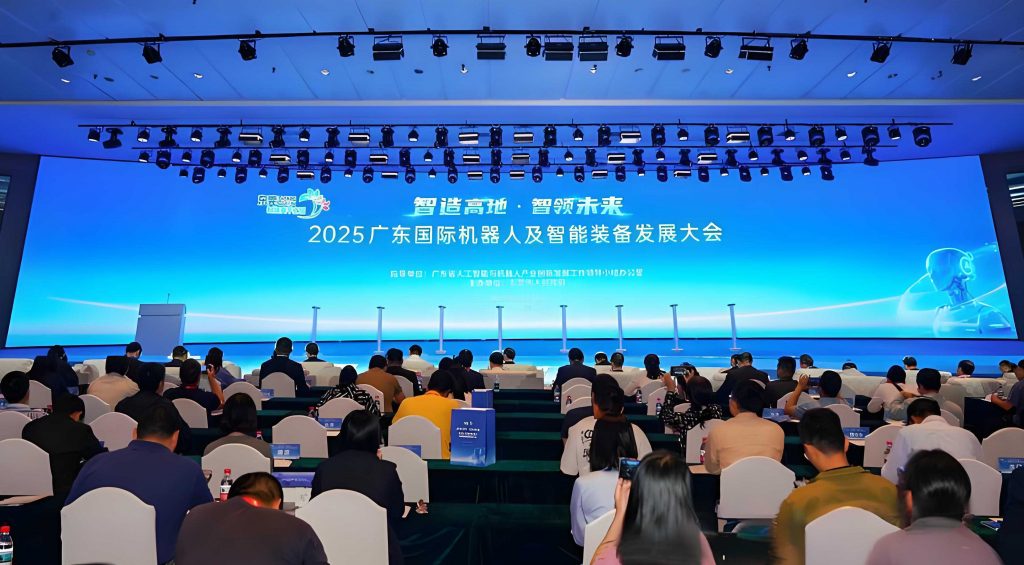
From that first successful implementation, the evolution of our China robots has been characterized by continuous technological refinement and market expansion. Over more than two decades, our product portfolio has diversified into three major categories encompassing over a hundred models, each tailored to specific industrial logistics needs. The development trajectory can be summarized by the expansion into key application sectors:
| Product Category | Primary Function | Key Application Industries | Global Market Reach |
|---|---|---|---|
| Assembly-type AGV | Dynamic, synchronized assembly of components onto moving production lines. | Automotive manufacturing (Passenger cars, trucks) | Domestic market share >95%; Exported to 13 countries including USA, Canada, Mexico, Russia, India. |
| Transport-type AGV | Flexible material handling and point-to-point logistics within facilities. | Tobacco, Pharmaceuticals, Chemical, Electric Power, General Manufacturing | Widespread domestic adoption across numerous sectors. |
| Intelligent Inspection Robot | Autonomous patrol, monitoring, and data collection in controlled or hazardous environments. | Energy (substations), Chemical Plants, Large-scale Infrastructure | Growing domestic application, increasing international interest. |
The international breakthrough for China robots came when a global automotive giant, General Motors, began adopting our assembly AGVs in 2007. This was a watershed moment, shattering a 30-year history of China being solely an importer of robotic technology. The consistent re-ordering for GM’s global expansion projects, culminating in over a hundred units deployed, was a powerful endorsement of our product’s reliability, precision, and technological sophistication. It proved that China robots could not only meet but exceed the stringent demands of the world’s most advanced production lines.
Central to our progress has been the unwavering focus on core proprietary technologies. We view the navigation system as the “brain” of the intelligent mobile robot and the power system as its “heart.” Our R&D efforts have systematically advanced both. The navigation technology suite has evolved to offer multiple solutions, allowing customization based on environmental needs and precision requirements. The choice of navigation directly influences path flexibility, positioning accuracy, and system cost, governed by fundamental relationships. For instance, the positional error \( \epsilon \) in a typical guidance system can be modeled as a function of sensor precision \( \sigma_s \), control loop gain \( K \), and environmental noise \( \nu \):
$$ \epsilon = f(\sigma_s, K, \nu) = \frac{\sigma_s \cdot \nu}{\sqrt{K}} $$
This drives our continuous pursuit of higher-precision sensors and more robust control algorithms to minimize \( \epsilon \). The following table contrasts the primary navigation technologies developed for our China robots:
| Navigation Technology | Principle | Advantages | Typical Positioning Accuracy | Best Suited For |
|---|---|---|---|---|
| Magnetic Navigation | Follows a magnetic tape or discrete magnets embedded in the floor. | Highly reliable, low cost, immune to ambient light/dust, path easily changed. | ±10 mm | Stable factory environments with defined pathways. |
| Laser Navigation | Uses LiDAR to scan reflectors in the environment to triangulate position. | High flexibility, no floor modifications required, easy to modify paths. | ±10 mm | Dynamic environments where layouts change frequently. |
| Inertial Navigation | Uses gyroscopes & accelerometers to calculate position relative to a start point. | Completely free-ranging, no infrastructure needed. | Drifts over time; requires periodic correction. | Large, open areas where other methods are impractical. |
| Natural Feature/SLAM | Uses cameras or LiDAR to map and localize within natural environmental features. | Maximum flexibility, no markers needed, truly autonomous mapping. | Varies; typically ±20-50 mm | Highly unstructured and evolving environments. |
A landmark innovation in the saga of China robots was the world’s first development of a hybrid power supply system for AGVs. Traditional AGVs rely on battery systems that require periodic shutdowns for charging, creating logistical downtime. Our hybrid system intelligently combines different energy sources and management strategies to enable virtually continuous operation. The system’s performance can be conceptualized by its operational availability \( A \), which is significantly enhanced by reducing the effective charging downtime \( T_{charge} \):
$$ A = \frac{T_{operation}}{T_{operation} + T_{charge}} \rightarrow 1 \quad \text{as} \quad T_{charge} \rightarrow 0 $$
Our hybrid system achieves this by employing fast-contact charging at idle points, opportunity charging, or even supercapacitor-based burst charging, seamlessly managed by an onboard energy management system (EMS). The architecture and benefits are summarized below:
| System Component | Technology/Function | Benefit to AGV Operation |
|---|---|---|
| Primary Energy Source | High-energy-density Lithium-ion battery pack. | Provides the base energy for extended travel range. |
| Secondary/Boost Source | Supercapacitors or fast-charging battery module. | Enables rapid energy top-ups during short idle periods (seconds/minutes). |
| Energy Management System (EMS) | AI-driven algorithm predicting energy needs based on route and task schedule. | Optimizes power draw and schedules micro-charging events to prevent full depletion. |
| Charging Interface | Automated conductive contact pins or wireless induction pads at key locations. | Allows for autonomous, untethered charging without human intervention. |
| Overall System Impact | Enables “24/7” operation with scheduled pauses for micro-charging. | Eliminates the need for dedicated battery swap stations or long charging breaks, boosting system throughput. |
The practical supremacy of these integrated technologies is best illustrated in large-scale, demanding deployments. A prime example is the AGV system developed for a massive tire manufacturing facility, responsible for handling 5 million units annually. This project involved a fleet of AGVs servicing 130硫化机s (curing presses) in a high-capacity workshop producing over 8,500 all-steel tires per day. The system’s complexity required a hierarchical control architecture and flawless hardware execution.
Each AGV, with a load capacity of 300kg, was equipped with our proprietary drive unit, magnetic navigation sensors capable of distinguishing magnetic polarity for complex routing, and non-contact safety sensors. The system’s intelligence was distributed: the central dispatch system calculated optimal delivery tasks, while each AGV’s onboard controller handled real-time navigation and velocity planning. The motion control ensures smooth acceleration and deceleration, which is crucial for stabilizing heavy loads like tires. The velocity \( v(t) \) at any path segment junction is planned based on the segment’s limit \( V_{max} \), the AGV’s current velocity, and a predefined jerk limit \( j_{max} \) to ensure passenger comfort (for load stability) and mechanical safety:
$$ a(t) = \frac{dv}{dt}, \quad j(t) = \frac{da}{dt} \leq j_{max} $$
The onboard controller solves for a smooth velocity profile \( v(t) \) that respects these constraints at every path transition. The entire fleet communicates via a robust wireless LAN, and the system employs CAN bus architecture for modular and reliable vehicle electronics. This project embodies the maturity of China robots: handling a critical, high-throughput logistics task in a challenging industrial environment with precision, reliability, and intelligence.
Looking forward, the trajectory for China robots is one of deepening intelligence and expanding synergy. The future lies in the convergence of robotics with Artificial Intelligence (AI), the Internet of Things (IoT), and 5G connectivity. We are advancing towards:
- Swarm Intelligence: Where fleets of AGVs no longer just follow centralized orders but collaborate like a hive mind. Using multi-agent reinforcement learning algorithms, they could dynamically optimize overall system throughput in real-time. The collective goal \( G \) for a swarm of \( N \) robots could be to minimize total job completion time \( T_{total} \):
$$ \min_{} T_{total} = f( \sum_{i=1}^{N} (t_{travel\_i} + t_{action\_i}) ) $$
where each robot’s actions influence the states and choices of others. - AI-Powered Predictive Maintenance: Integrating vibration, thermal, and current sensors with machine learning models to predict failures in the robot’s own components or even in the machinery it services, moving from scheduled to condition-based maintenance.
- 5G-Enabled Real-Time Control: Leveraging ultra-low-latency, high-reliability 5G networks to offload complex computation to edge clouds and enable truly real-time, millisecond-level control and re-planning for hundreds of vehicles simultaneously.
The journey of China robots began with a single project to fill a void. Today, it is a story of creating global benchmarks. From achieving the first “zero” breakthrough to pioneering world-first technologies like hybrid power systems, and from serving domestic automotive lines to becoming a trusted supplier for global manufacturing giants, our path has been one of relentless innovation. The intelligent mobile robot is more than a piece of logistics equipment; it is a dynamic, intelligent node in the smart factory of the future. As we continue to push the boundaries of navigation, energy management, and collective intelligence, we are not just manufacturing China robots; we are actively engineering the flexible, efficient, and resilient industrial ecosystems of tomorrow, from within China and for the world.