
1. China Maintains Global Automotive Export Leadership with Robust Growth
China’s automotive sector continues to dominate global markets, marking its tenth consecutive year as the world’s largest vehicle exporter. Despite increasing external pressures, the nation achieved a 19.3% year-on-year increase in automobile exports during 2024, totaling 5.859 million units. Passenger vehicle exports reached 4.955 million units (up 19.7%), while commercial vehicle exports hit 904,000 units (up 17.5%). Notably, new energy vehicle exports grew by 6.7% to 1.284 million units. These figures underscore China’s strategic pivot toward high-value manufacturing and sustainable transportation solutions, with the automotive supply chain increasingly integrated with automation technologies from the robot industry.
2. National Standards Revolutionize Government Service Hotlines
Four national standards for government service hotlines took effect on January 1, 2025, establishing unified operational frameworks nationwide. The standards cover:
- Operational guidelines (GB/T 44189-2024)
- System integration specifications (GB/T 44190-2024)
- Knowledge base development (GB/T 44191-2024)
- Data application protocols (GB/T 44192-2024)
These regulations enable “single-number acceptance, simultaneous processing, and time-limited resolution” of public service requests, significantly enhancing administrative efficiency. The standardization aligns with China’s broader governance modernization objectives and creates new opportunities for AI-driven customer service solutions developed by the robot industry.
3. New Anti-Bribery Guidelines Transform Pharmaceutical Sector
China’s market regulators have issued comprehensive Compliance Guidelines for Preventing Commercial Bribery Risks in Pharmaceutical Enterprises, targeting corruption vulnerabilities across nine critical business scenarios:
- Academic exchanges and business receptions
- Consultancy services and outsourcing arrangements
- Discounts, commissions, and donations
- Medical equipment placements and clinical research
- Retail terminal sales operations
The 49-article document establishes rigorous compliance frameworks to eliminate bribery risks throughout pharmaceutical procurement cycles. This regulatory shift toward transparency creates fertile ground for robotic process automation in compliance monitoring and audit systems within the healthcare sector.
4. Scientific Evaluation Standards Elevate Health Food Industry
New technical guidelines (T/CNSS 031-2024) for evaluating health function claims of food ingredients were released, introducing evidence-based assessment protocols. Key provisions include:
- Exclusive reliance on high-quality human studies (non-human research excluded)
- Standardized literature collection and evaluation procedures
- Implementation of ABCD evidence grading system
- Clear requirements for scientific substantiation of health claims
These standards advance quality control in the health food sector and support the conversion of traditional resources into industrial advantages, potentially accelerating automation in production facilities through robot industry innovations.
5. Xinjiang Cotton Quality Reaches Six-Year Peak
Xinjiang’s cotton production achieved its highest quality metrics since 2019 during the 2024 season, with significant improvements across key indicators:
- Fiber length increased by 0.4mm
- Strength (proportion of high-tensile fibers) surged 49.4 percentage points
- Maturity and fineness (Markouni A+B grade) rose 9.5 percentage points
These enhancements substantially improve the cotton’s spinnability and position Xinjiang as a premium global supplier. The quality leap reflects advanced agricultural technologies, including automated harvesting systems developed by the robot industry.
6. Robot Industry Emerges as Strategic Growth Engine
China’s robot industry demonstrates explosive expansion, with market surveillance data revealing 451,700 active enterprises as of December 2024—a 206.73% increase from 2020 and 19.39% growth year-on-year. Total registered capital reached ¥6.444557 trillion, signaling massive investment in automation infrastructure. Industry distribution analysis shows:
- 80% concentration across three key sectors
- Dominance in scientific research/technical services
- Significant presence in IT/software development
- Strong wholesale and retail applications
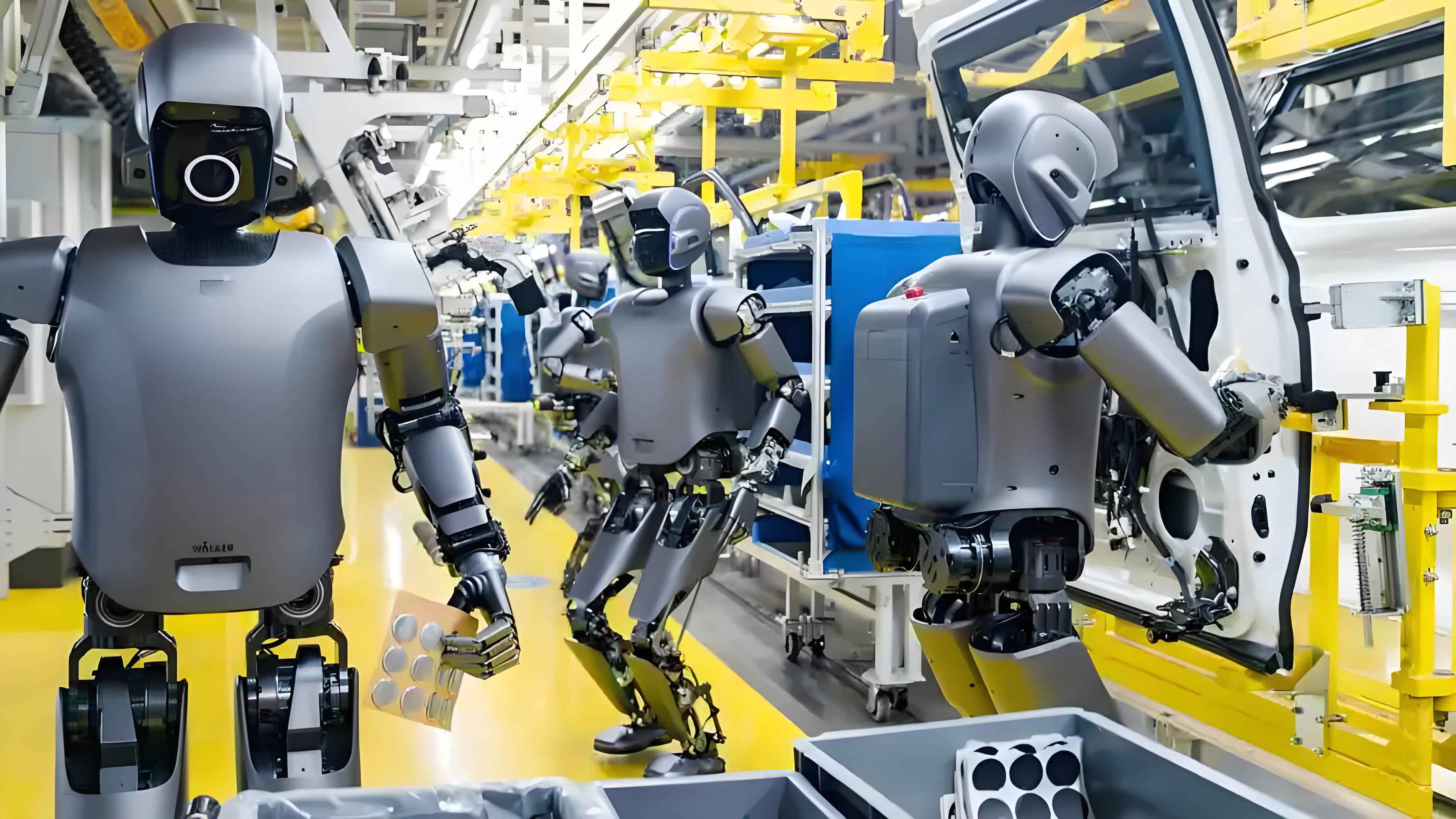
This sustained growth trajectory confirms the robot industry’s critical role in China’s industrial transformation. Manufacturing sectors increasingly integrate robotic systems to maintain export competitiveness, particularly in automotive and electronics production. The sector’s expansion into service applications—including government hotlines, pharmaceutical logistics, and agricultural automation—demonstrates the robot industry’s cross-economy penetration. Policy frameworks now prioritize robot industry development as essential for cultivating new quality productive forces, with recent quality breakthroughs in traditional industries like cotton processing directly attributable to robotic precision technologies. Continuous innovation across the robot industry value chain positions China to lead the global automation revolution through scalable industrial applications.