
As a researcher in robotics, I have always been fascinated by the potential of dexterous robotic hands to extend human capabilities in various fields such as space exploration, hazardous environments, industrial automation, and service robotics. A dexterous robotic hand mimics the human hand in structure and function, enabling flexible, fine-grained grasping and manipulation tasks without the need for frequent end-effector changes. Unlike simple grippers, a dexterous robotic hand offers enhanced flexibility, rich sensory perception, and precise force control. In this work, I present the design and development of a multi-fingered dexterous robotic hand driven by ultrasonic motors, focusing on achieving a compact, lightweight, and high-performance system that approaches the appearance and functionality of the human hand. The core objective is to create a dexterous robotic hand with three fingers and twelve degrees of freedom (DOFs), incorporating mechanisms, sensors, and actuators that enable robust motion, sensing, and control capabilities.
The design of a dexterous robotic hand requires careful consideration of multiple factors, including size, weight, strength, and dexterity. Based on practical requirements and human hand anatomy, I established key design parameters: the overall dimensions should closely resemble the human hand, with each finger having the same number of joints and DOFs as its human counterpart; the joint motion ranges should reference human hand movements; the total mass should not exceed 1.5 kg; each finger should withstand a force of 5 N; sufficient space must be allocated for sensors and motors; and components should be simple and easy to manufacture. These guidelines ensure that the dexterous robotic hand is both functional and feasible for real-world applications.
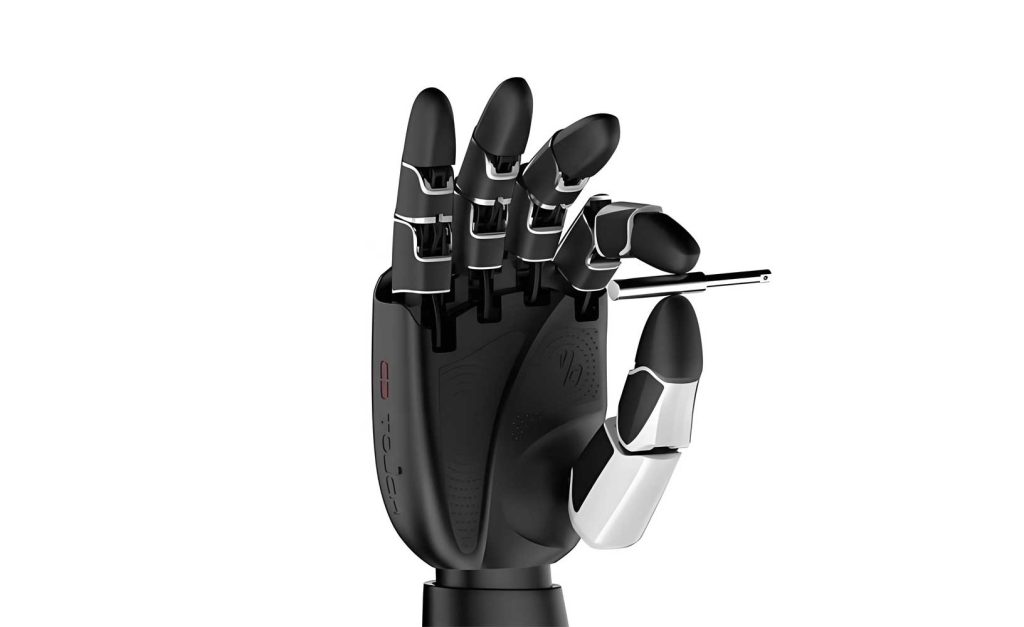
The overall layout of the dexterous robotic hand is inspired by the human hand, consisting of three independent fingers—thumb, index, and middle finger—attached to a palm-like structure. The palm houses the ultrasonic motors, optimizing space utilization and reducing the hand’s volume. This configuration results in a dexterous robotic hand that visually and proportionally resembles a human hand. The palm comprises connection components such as a base plate for the thumb and a palm plate for the index and middle fingers, both featuring mounting holes for finger installation. To monitor motion states, each joint is equipped with an angular displacement sensor, with wiring channels预留 in the palm for cable routing. This design emphasizes compactness and integration, key aspects for a practical dexterous robotic hand.
In terms of finger mechanism design, the dexterous robotic hand replicates the human hand’s joint architecture but with simplifications for practicality. Each finger has four joints and four DOFs, totaling twelve DOFs across the three fingers. The index and middle fingers mirror human fingers in joint count and movement types, featuring distal, proximal, and metacarpal segments with屈曲 (flexion) and侧摆 (abduction/adduction) motions. The thumb, however, is adapted from the human thumb’s five DOFs to four DOFs by eliminating侧摆 at the metacarpal segment, retaining flexion at the distal and proximal segments, and combining flexion and内收-外展 (adduction/abduction) at the metacarpal segment. This simplification maintains essential functionality while reducing complexity. The finger segment lengths follow a human-like ratio of approximately 1:1.35:2 for distal, proximal, and metacarpal segments, resulting in thumb, index, and middle finger lengths of 155 mm, 200 mm, and 210 mm, respectively. Key dimensions are summarized in Table 1.
| Finger Type | Length (mm) | Max Width (mm) | Min Width (mm) | DOFs | Joint Types |
|---|---|---|---|---|---|
| Thumb | 155 | 30 | 20 | 4 | Distal Flexion, Proximal Flexion, Metacarpal Flexion, Metacarpal Adduction/Abduction |
| Index Finger | 200 | 29 | 24 | 4 | Distal Interphalangeal Flexion, Proximal Interphalangeal Flexion, Metacarpophalangeal Flexion, Metacarpophalangeal Abduction/Adduction |
| Middle Finger | 210 | 29 | 24 | 4 | Same as Index Finger |
To achieve precise control of this dexterous robotic hand, accurate position feedback is essential. I selected the SV01A rotary position sensor from Murata Manufacturing due to its ultra-thin profile (2.1 mm height), small size, and light weight, making it ideal for integration into finger joints. This sensor has a total resistance of 10 kΩ, a maximum output of 5 V, and an effective rotation angle of 333.3°. Within its linear range of approximately ±160° around the 50% voltage ratio point, the output voltage varies linearly with the angle. The relationship can be expressed mathematically to facilitate calibration and control. Let \( V \) be the output voltage in volts, and \( \theta \) be the angular displacement in degrees. The linear relationship is defined as:
$$ \theta = 120 \times (V – 1.5) $$
This equation holds when the sensor is positioned such that 0° corresponds to 1.5 V output. The linearity ensures reliable feedback for joint control in the dexterous robotic hand. Beyond ±160°, the sensor operates non-linearly, so installation must ensure operation within this range. The sensor’s characteristics are summarized in Table 2, highlighting its suitability for a compact dexterous robotic hand.
| Parameter | Value |
|---|---|
| Height | 2.1 mm |
| Total Resistance | 10 kΩ |
| Maximum Output Voltage | 5 V |
| Effective Rotation Angle | 333.3° |
| Linear Range | ±160° around 50% voltage ratio |
| Linear Equation | \( \theta = 120 \times (V – 1.5) \) |
The drive system is a critical component that dictates the performance of the dexterous robotic hand. After evaluating various actuation methods—such as electric, hydraulic, pneumatic, shape memory alloy, and novel drives like piezoelectric ceramics—I chose ultrasonic motors for their superior attributes. Traditional electromagnetic motors often require gearboxes for减速, adding complexity, mass, and backlash issues. In contrast, ultrasonic motors offer high torque at low speeds, compact size, quick response, low noise, and simple construction, making them ideal for a dexterous robotic hand with space constraints. Specifically, I employed TRUM-30 type ultrasonic motors, each with a stator diameter of 30 mm, rated torque of 0.05 N·m, peak torque of 0.15–0.20 N·m, maximum speed of 250 rpm, and a mass of only 40 g. Twelve such motors are used to drive the twelve DOFs of the dexterous robotic hand. Their small size allows embedding within the palm, contributing to a total hand mass under 1 kg. The advantages of ultrasonic motors over electromagnetic ones can be quantified through performance metrics. For instance, the torque density \( \tau_d \) (torque per unit mass) and response time \( t_r \) are key indicators. Let \( T \) be the torque, \( m \) the mass, and \( \omega \) the angular velocity. For the TRUM-30 motor:
$$ \tau_d = \frac{T}{m} = \frac{0.05 \, \text{N·m}}{0.04 \, \text{kg}} = 1.25 \, \text{N·m/kg} $$
This high torque density enables powerful actuation in a lightweight package for the dexterous robotic hand. Additionally, the dynamic response can be modeled using a second-order system equation, where the motor’s behavior approximates:
$$ J \frac{d^2\theta}{dt^2} + B \frac{d\theta}{dt} + K\theta = T_m $$
Here, \( J \) is the moment of inertia, \( B \) is the damping coefficient, \( K \) is the stiffness, and \( T_m \) is the motor torque. Ultrasonic motors typically exhibit low \( J \) and high \( K \), leading to fast settling times and precise positioning crucial for a dexterous robotic hand.
The transmission system converts the rotary motion of ultrasonic motors into finger joint movements. Given space limitations and the need for lightweight design, I adopted a tendon-driven approach using elastic lines and pulleys. This method provides compact force transmission while allowing motors to be mounted proximally in the palm. For the index and middle fingers, the mechanical structure involves four ultrasonic motors per finger, mounted on the metacarpal body. Motors 1, 2, and 3 are on the侧面, and motor 4 is on the正面. Tendons route through pulleys to drive distal interphalangeal (DIP), proximal interphalangeal (PIP), metacarpophalangeal flexion (MCP1), and metacarpophalangeal abduction/adduction (MCP2) joints. Similarly, the thumb uses four motors for its four DOFs, with motors embedded in the metacarpal segment and base. The tendon paths ensure efficient torque transmission with minimal friction. To analyze the force transmission, consider a simplified tendon model. Let \( F_t \) be the tendon tension, \( r_p \) the pulley radius, and \( \tau_j \) the joint torque. The relationship is:
$$ \tau_j = F_t \times r_p $$
For a dexterous robotic hand with multiple tendons, the net joint torque \( \tau_{net} \) can be expressed as a sum over \( n \) tendons:
$$ \tau_{net} = \sum_{i=1}^{n} F_{t,i} \times r_{p,i} $$
This model helps optimize pulley sizes and tendon routing to achieve desired forces at the fingertips. Each joint incorporates an SV01A sensor for closed-loop control. The transmission design parameters are summarized in Table 3, illustrating the配置 for the dexterous robotic hand.
| Finger | Joint | Actuator (Motor) | Transmission Method | Pulley Radius (mm) | Function |
|---|---|---|---|---|---|
| Index/Middle | DIP | Ultrasonic Motor 1 | Tendon via Idler Pulley | 5 | Distal Flexion |
| PIP | Ultrasonic Motor 2 | Tendon via Idler Pulley | 5 | Proximal Flexion | |
| MCP1 | Ultrasonic Motor 3 | Direct Tendon Drive | 6 | Metacarpophalangeal Flexion | |
| MCP2 | Ultrasonic Motor 4 | Direct Tendon Drive | 6 | Metacarpophalangeal Abduction/Adduction | |
| Thumb | Distal Joint | Ultrasonic Motor 5 | Tendon Drive | 5 | Tip Flexion |
| Proximal Joint | Ultrasonic Motor 6 | Tendon Drive | 5 | Metacarpophalangeal Flexion | |
| Metacarpal Joint 1 | Ultrasonic Motor 7 | Tendon via L-shaped Bracket | 7 | 侧摆 (Abduction/Adduction) | |
| Metacarpal Joint 2 | Ultrasonic Motor 8 | Tendon via Base | 7 | 内收-外展 (Adduction/Abduction) |
To validate the design of this dexterous robotic hand, I conducted experiments focusing on hardware testing, software integration, and position control. A master-slave control platform was established, where a master device (e.g., a data glove or joystick) commands the slave dexterous robotic hand. The index finger was used as a test case to evaluate positional accuracy. The master provided desired fingertip poses, while the slave hand’s actual poses were measured using forward kinematics based on sensor feedback. The error between master and slave positions was analyzed to assess control performance. Let \( \mathbf{p}_m = (x_m, y_m) \) be the master fingertip position in a 2D plane (simplified for analysis), and \( \mathbf{p}_s = (x_s, y_s) \) be the slave fingertip position. The absolute error \( \mathbf{e} \) and relative error \( \mathbf{e}_r \) are computed as:
$$ \mathbf{e} = (|x_s – x_m|, |y_s – y_m|) $$
$$ \mathbf{e}_r = \left( \frac{|x_s – x_m|}{x_m} \times 100\%, \frac{|y_s – y_m|}{y_m} \times 100\% \right) $$
Experimental results from multiple trials are presented in Table 4. The data shows small absolute and relative errors, indicating that the dexterous robotic hand can accurately track desired trajectories. This demonstrates the feasibility of the ultrasonic motor-driven design and the effectiveness of the control system. The errors may arise from factors like tendon elasticity, sensor noise, or model inaccuracies, but they remain within acceptable limits for grasping tasks. Further analysis could involve dynamic modeling to minimize errors. For instance, the system dynamics can be described by:
$$ \mathbf{M}(\boldsymbol{\theta}) \ddot{\boldsymbol{\theta}} + \mathbf{C}(\boldsymbol{\theta}, \dot{\boldsymbol{\theta}}) + \mathbf{G}(\boldsymbol{\theta}) = \boldsymbol{\tau} – \mathbf{J}^T \mathbf{F}_{ext} $$
where \( \mathbf{M} \) is the inertia matrix, \( \mathbf{C} \) represents Coriolis and centrifugal forces, \( \mathbf{G} \) is the gravity vector, \( \boldsymbol{\theta} \) is the joint angle vector, \( \boldsymbol{\tau} \) is the joint torque vector, \( \mathbf{J} \) is the Jacobian matrix, and \( \mathbf{F}_{ext} \) is the external force. Optimizing control algorithms based on this model can enhance the dexterous robotic hand’s performance.
| Master Fingertip Pose (mm) | Slave Fingertip Pose (mm) | Absolute Error (mm) | Relative Error (%) |
|---|---|---|---|
| (133.67, -26.82) | (134.69, -29.05) | (1.02, 2.23) | (0.7, 8.3) |
| (128.47, -40.38) | (126.37, -42.69) | (2.10, 2.31) | (1.6, 5.7) |
| (117.93, -54.15) | (119.94, -52.75) | (2.01, 1.40) | (1.7, 2.5) |
| (104.60, -65.24) | (107.71, -63.97) | (3.11, 1.27) | (3.0, 1.9) |
| (90.80, -70.40) | (91.60, -70.74) | (0.80, 0.34) | (0.9, 0.5) |
In conclusion, the design of this ultrasonic motor-driven multi-fingered dexterous robotic hand represents a significant step toward creating human-like manipulators. By integrating compact ultrasonic motors, tendon transmission, and precise sensors, I have developed a dexterous robotic hand that balances size, weight, and functionality. Experimental validation through master-slave control confirms the design’s rationality and feasibility, with position errors within practical bounds. However, challenges remain, such as further miniaturization, increasing the number of fingers and DOFs to match the human hand’s full dexterity, and enhancing sensory capabilities for advanced manipulation. Future work could explore adaptive control algorithms, improved materials for tendons, and integration of tactile sensors to enrich the dexterous robotic hand’s perception. The potential applications are vast, from robotic surgery to disaster response, where a dexterous robotic hand can perform delicate tasks in lieu of humans. Continued research and innovation will undoubtedly push the boundaries of what a dexterous robotic hand can achieve, ultimately bridging the gap between human and machine dexterity.
To further elaborate on the technical aspects, let’s delve into the kinematics and dynamics of the dexterous robotic hand. The forward kinematics for each finger can be derived using the Denavit-Hartenberg (DH) parameters. For a finger with \( n \) joints, the homogeneous transformation matrix \( \mathbf{T}_i^{i-1} \) from joint \( i-1 \) to joint \( i \) is given by:
$$ \mathbf{T}_i^{i-1} = \begin{bmatrix}
\cos\theta_i & -\sin\theta_i \cos\alpha_i & \sin\theta_i \sin\alpha_i & a_i \cos\theta_i \\
\sin\theta_i & \cos\theta_i \cos\alpha_i & -\cos\theta_i \sin\alpha_i & a_i \sin\theta_i \\
0 & \sin\alpha_i & \cos\alpha_i & d_i \\
0 & 0 & 0 & 1
\end{bmatrix} $$
Here, \( \theta_i \) is the joint angle, \( \alpha_i \) is the twist angle, \( a_i \) is the link length, and \( d_i \) is the link offset. For the dexterous robotic hand, these parameters vary per finger and joint. The fingertip position \( \mathbf{p} \) relative to the palm base is computed as:
$$ \mathbf{p} = \mathbf{T}_1^0 \mathbf{T}_2^1 \cdots \mathbf{T}_n^{n-1} \mathbf{p}_0 $$
where \( \mathbf{p}_0 \) is the fingertip offset. This model is essential for control and simulation of the dexterous robotic hand.
Regarding force analysis, the grasp stability of the dexterous robotic hand can be evaluated using the grasp matrix \( \mathbf{G} \). For a multi-fingered grasp, the net wrench \( \mathbf{w} \) applied to an object is related to the contact forces \( \mathbf{f}_c \) by:
$$ \mathbf{w} = \mathbf{G} \mathbf{f}_c $$
Optimizing \( \mathbf{f}_c \) ensures stable grasping without slippage, a key requirement for a dexterous robotic hand. Additionally, the ultrasonic motor’s efficiency \( \eta \) can be expressed as:
$$ \eta = \frac{P_{out}}{P_{in}} = \frac{\tau \omega}{V I} $$
where \( P_{out} \) is mechanical power output, \( P_{in} \) is electrical power input, \( V \) is voltage, and \( I \) is current. High efficiency contributes to the dexterous robotic hand’s energy economy.
In summary, this dexterous robotic hand design leverages advanced actuation and transmission to achieve human-like performance. Through rigorous analysis and testing, I have demonstrated its potential as a versatile tool for robotics. The journey toward a fully biomimetic dexterous robotic hand continues, with ongoing improvements in materials, control, and integration promising even greater capabilities in the future.