
GUIYANG, August 30, 2026 — During the 2026 China International Big Data Industry Expo, held in Guiyang, Zeng Hui, senior vice president of Beijing Galaxy General Robot and president of its Culture and Tourism Business Unit, outlined the current stage of the domestic embodied intelligence industry, the company’s landing solutions in the culture and tourism track, and the relationship between the token economy and real-scene training. The interview took place on August 28, at a time when the expo’s theme of data empowering all industries is converging with the rapid commercialization of embodied intelligence.
Zeng said the embodied intelligence industry is gradually moving from laboratory research and development toward batch validation and large-scale commercial use. In his view, the sector has formally entered a productivity era. This transition is not simply a technical milestone. It reflects a broader shift in which embodied intelligence is being tested not only by controlled experiments but by real operational environments, real customer interactions, and real commercial requirements. The movement from prototype to deployment is redefining how embodied intelligence is evaluated, funded, and scaled.
He pointed to the Second World Robot Games as an important demonstration of this shift. At that event, Galaxy General won championships in three high-difficulty scenario competitions covering housekeeping, catering, and retail supermarkets. The company achieved these results through fully autonomous technological capabilities. For Zeng, those victories are evidence that embodied intelligence is gradually integrating into daily life and becoming a form of general productivity. They also reflect the increasing maturity of both software and hardware technologies, which he described as a defining trend of the industry today.
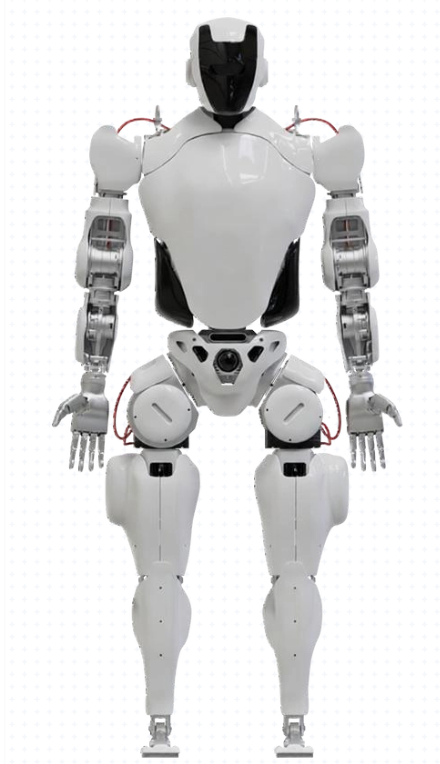
Zeng said Galaxy General is committed to building a world-leading general large model and general robot. The company’s self-developed Galaxy Star Brain embodied intelligence large model is designed to enable cross-scenario, cross-task, and cross-embodiment empowerment. That technical foundation has helped Galaxy General become the only designated embodied large-model robot for the CCTV Spring Festival Gala, where it completed a performance. The recognition illustrates how embodied intelligence can move beyond industrial testing into highly visible public settings, where reliability, interaction, and real-time performance are essential.
According to Zeng, the data empowerment philosophy practiced at the 2026 China International Big Data Industry Expo is highly consistent with both the direction of the productivity era and the company’s development philosophy. The alignment, he suggested, demonstrates the integration of technology and commercialization. In this view, data is not a secondary byproduct of embodied intelligence deployment. It is a core input that helps embodied intelligence systems understand environments, improve decision-making, and adapt to new tasks.
The interview also focused on the culture and tourism sector, where Galaxy General is advancing a practical deployment model. The company brought its flagship product, the Galaxy Space Cabin robot retail point, to the expo. The cabin covers an area of about 16 square meters and uses the company’s self-developed robot to provide fully autonomous services. It can sell multiple categories of goods, including snacks, beverages, coffee, and cultural creative ice cream. The product is designed to combine embodied intelligence with retail operations in public-facing cultural and tourism environments.
Zeng introduced the deployment history of the Galaxy Space Cabin in Guiyang. On New Year’s Eve 2026, with support from the Guiyang Municipal Commerce Bureau, the Guiyang Municipal Big Data Bureau, and China Mobile Guizhou, the Galaxy Space Cabin was deployed at Qianling Mountain Park, Qingyan Ancient Town, Huaguoyuan, and other top ten core landmarks in Guiyang. The deployment placed embodied intelligence directly into some of the city’s most recognizable cultural and tourism locations, allowing the technology to serve visitors in high-traffic public spaces.
The cabin is not limited to autonomous sales. It also serves as a city cultural recommendation officer. Through interactions in dialects and English, it can explain product information and Guizhou local culture to visitors. This dual function creates value in two directions: it supports smart retail operations and it contributes to city cultural tourism promotion. For embodied intelligence, this is a meaningful expansion because the system must handle not only transactions but also communication, cultural context, and visitor engagement.
Regarding the token frontier highlighted by the expo, Zeng said the National Data Administration has proposed building high-quality datasets. In addition, the Ministry of Industry and Information Technology and the State-owned Assets Supervision and Administration Commission have released an action plan for real-scene training of embodied intelligence and humanoid robots. These policy directions, he said, point the way forward for the industry. They also connect the development of embodied intelligence with the broader effort to treat data as a production factor and to release its value across sectors.
Galaxy General plans to use its Guizhou deployment scenarios as a foundation for the next phase. At the expo’s China-Thailand Digital Economy Exchange Event, the company will join with Guian New Area and China Mobile Guizhou to release the world’s first embodied intelligence real-scene training action plan in the culture and tourism consumption field. The plan will leverage the commercial operation of the Galaxy Space Cabin at core landmarks across the province. Through that operation, the company can simultaneously collect data for model iteration, using scenarios to pull technological upgrading and achieving two-way empowerment between commercial operations and model training.
- Embodied Intelligence Enters the Productivity Era Through Batch Validation and Commercial Deployment
The movement from laboratory research to batch validation is a critical threshold for embodied intelligence. In a laboratory, an embodied intelligence system may perform well under controlled conditions, with stable lighting, predictable objects, and limited human interference. In commercial deployment, the same system must cope with changing weather, crowds, unexpected obstacles, noisy environments, and continuous operational demands. Zeng’s assessment that the industry is entering a productivity era reflects the fact that embodied intelligence is now being judged by its ability to deliver reliable work in such conditions.
Batch validation is an intermediate but essential stage. It allows companies to test whether an embodied intelligence system can be reproduced, maintained, and operated across multiple locations. Large-scale commercial use then raises the bar further. It requires not only technical performance but also cost control, service consistency, data management, and customer acceptance. The Galaxy General experience at the Second World Robot Games, where fully autonomous capabilities won championships in housekeeping, catering, and retail supermarket scenarios, is presented as evidence that embodied intelligence is becoming more capable across diverse tasks. Those scenarios are not isolated demonstrations. They represent categories of work that require perception, planning, manipulation, and interaction, all of which are central to embodied intelligence.
- Galaxy Star Brain and the Push for Cross-Scenario, Cross-Task, and Cross-Embodiment Empowerment
Galaxy General’s stated goal is to build a world-leading general large model and general robot. The company’s self-developed Galaxy Star Brain embodied intelligence large model is positioned as a core technology that can empower systems across scenarios, tasks, and embodiments. This ambition addresses one of the central challenges of embodied intelligence: the difficulty of transferring learned capabilities from one environment or robot body to another. A model that can operate across scenarios and tasks is more valuable because it can be adapted to new commercial settings without being rebuilt from the beginning.
The designation of Galaxy General as the only designated embodied large-model robot for the CCTV Spring Festival Gala is a public-facing validation of this approach. The Spring Festival Gala is a demanding live event with a massive audience, and a performance there requires embodied intelligence to function under intense conditions. The appearance of an embodied intelligence system in such a setting signals that the technology is no longer confined to laboratories or behind-the-scenes trials. It is entering cultural moments and public consciousness.
Zeng connected this achievement to the expo’s broader theme. The 2026 China International Big Data Industry Expo emphasizes data empowering all industries. For Galaxy General, that theme matches the company’s own view that embodied intelligence must be integrated with data ecosystems and commercial applications. Technology and commercialization are not separate tracks. They reinforce each other when embodied intelligence is deployed in real settings and improved through feedback.
- Culture and Tourism as a Practical Arena for Embodied Intelligence
Culture and tourism offer a distinctive arena for embodied intelligence because they combine public interaction, service delivery, and cultural communication. The Galaxy Space Cabin robot retail point is an example of this combination. The cabin covers about 16 square meters and provides fully autonomous services through a self-developed robot. It sells snacks, beverages, coffee, and cultural creative ice cream. These are everyday retail functions, but they take place in cultural and tourism landmarks where visitors expect convenience, novelty, and information.
For embodied intelligence, a culture and tourism setting is both an opportunity and a test. The opportunity lies in the diversity of interaction. Visitors may ask questions, seek recommendations, or expect service in different languages and dialects. The test lies in the unpredictability of public spaces. An embodied intelligence system must recognize products, manage inventory, interact politely, and operate continuously while surrounded by movement and changing conditions. The Galaxy Space Cabin is designed to meet those demands through autonomous operation.
By placing embodied intelligence in a retail cabin, Galaxy General is also creating a compact and controllable deployment format. The cabin is small enough to be installed in multiple locations, yet substantial enough to provide a complete service experience. This format can help embodied intelligence transition from one-off demonstrations to repeatable commercial units. It also gives the company a way to gather operational experience across different landmarks and visitor profiles.
- Galaxy Space Cabin Deployment Across Guiyang’s Core Landmarks
The deployment of the Galaxy Space Cabin in Guiyang began on New Year’s Eve 2026. With support from the Guiyang Municipal Commerce Bureau, the Guiyang Municipal Big Data Bureau, and China Mobile Guizhou, the cabin was placed at Qianling Mountain Park, Qingyan Ancient Town, Huaguoyuan, and other top ten core landmarks in Guiyang. This deployment is significant because it places embodied intelligence in locations that are central to the city’s cultural and tourism identity.
Each landmark brings a different set of conditions. A park, an ancient town, and a major urban area may differ in visitor flow, environmental layout, and cultural expectations. For embodied intelligence, operating across such locations requires adaptability. The cabin must function as a retail point, an information interface, and a cultural ambassador. The support of municipal commerce and big data authorities, along with a major telecommunications operator, also indicates that the deployment is connected to broader urban data and service infrastructure.
The selection of top ten core landmarks gives the project a citywide footprint. Instead of a single pilot in one location, the deployment reaches multiple high-profile sites. This approach can accelerate learning because the embodied intelligence system encounters a wider range of interactions. It can also make the technology more visible to residents and tourists, helping to normalize the presence of embodied intelligence in daily public life.
Area Details from the Interview Industry stage Embodied intelligence is moving from laboratory research and development to batch validation and large-scale commercial use; the sector is entering a productivity era. Competitive proof At the Second World Robot Games, Galaxy General won championships in housekeeping, catering, and retail supermarket scenarios using fully autonomous technology. Core technology The Galaxy Star Brain embodied intelligence large model supports cross-scenario, cross-task, and cross-embodiment empowerment. Public recognition Galaxy General was the only designated embodied large-model robot for the CCTV Spring Festival Gala and completed a performance there. Culture and tourism product The Galaxy Space Cabin robot retail point covers about 16 square meters and provides fully autonomous service. Goods offered Snacks, beverages, coffee, and cultural creative ice cream. Guiyang deployment On New Year’s Eve 2026, with support from the Guiyang Municipal Commerce Bureau, the Guiyang Municipal Big Data Bureau, and China Mobile Guizhou, the cabin was deployed at Qianling Mountain Park, Qingyan Ancient Town, Huaguoyuan, and other top ten core landmarks. Visitor interaction The cabin acts as a city cultural recommendation officer, using dialects and English to explain product information and Guizhou local culture. Policy alignment The National Data Administration proposed high-quality datasets; the Ministry of Industry and Information Technology and the State-owned Assets Supervision and Administration Commission released a real-scene training action plan for embodied intelligence and humanoid robots. New action plan At the expo’s China-Thailand Digital Economy Exchange Event, Galaxy General will join Guian New Area and China Mobile Guizhou to release the world’s first embodied intelligence real-scene training action plan in culture and tourism consumption. Data and model loop Commercial operation of the cabin supports data collection for model iteration, using scenarios to drive technological upgrading and creating two-way empowerment between commercial operations and model training. - The Cabin as a City Cultural Recommendation Officer
The role of the Galaxy Space Cabin goes beyond selling goods. It also acts as a city cultural recommendation officer. Through dialect and English interactions, the cabin can explain product information and Guizhou local culture to visitors. This function turns an embodied intelligence system into a point of cultural exchange. For tourists, the cabin can provide both a service and a connection to the place they are visiting. For the city, it can extend cultural promotion into everyday retail moments.
This dual role has implications for embodied intelligence design. A system that only processes transactions needs to recognize products and complete payments. A system that also communicates culture must handle language variation, conversational context, and local knowledge. It must be able to present information in a way that is understandable and engaging. The cabin’s use of dialects and English suggests that embodied intelligence is being adapted to diverse audiences rather than relying on a single standard interaction pattern.
By combining smart retail with cultural tourism promotion, the Galaxy Space Cabin demonstrates a model in which embodied intelligence creates multiple forms of value. Commercial value comes from sales and service efficiency. Cultural value comes from interpretation, recommendation, and engagement. Data value comes from the interactions and transactions that can support future model improvement. These dimensions are connected through the same deployment.
- Tokens, High-Quality Datasets, and the Policy Direction for Embodied Intelligence
The 2026 China International Big Data Industry Expo places attention on tokens as a frontier direction for releasing the value of data elements. In this context, Zeng noted that the National Data Administration has proposed building high-quality datasets. The Ministry of Industry and Information Technology and the State-owned Assets Supervision and Administration Commission have also released an action plan for real-scene training of embodied intelligence and humanoid robots. These developments provide policy guidance for companies working on embodied intelligence and humanoid robotics.
High-quality datasets are especially important for embodied intelligence because such systems learn from interaction with the physical world. Unlike purely digital models, embodied intelligence must understand space, objects, motion, and human behavior. Real-scene training can supply the kinds of data that are difficult to generate in simulation alone. It can capture the messiness of actual environments, including unexpected movements, varied lighting, and spontaneous human communication. The policy emphasis on real-scene training therefore aligns with the practical needs of embodied intelligence development.
For Galaxy General, the Guizhou deployment provides a setting where policy direction and commercial activity can meet. The Galaxy Space Cabin operates in real cultural and tourism locations. It interacts with real visitors. It handles real products and transactions. Those conditions can generate data that supports model iteration. The expo’s focus on tokens and data value provides a broader framework for understanding why such deployments matter beyond their immediate commercial function.
- A World-First Real-Scene Training Action Plan in Culture and Tourism Consumption
During the expo, Galaxy General will participate in the China-Thailand Digital Economy Exchange Event. Together with Guian New Area and China Mobile Guizhou, the company will release the world’s first embodied intelligence real-scene training action plan in the culture and tourism consumption field. The plan is designed to build on the commercial operation of the Galaxy Space Cabin at core landmarks across the province.
The phrase “real-scene training” is significant for embodied intelligence. It indicates that training will not be limited to abstract datasets or simulated environments. Instead, it will draw on actual operations in cultural and tourism consumption settings. The cabin’s daily service, visitor interactions, and product handling can provide a continuous stream of experience. That experience can be used to refine the Galaxy Star Brain embodied intelligence large model and to improve the robot’s ability to operate in similar or new scenarios.
The involvement of Guian New Area and China Mobile Guizhou suggests a collaborative approach that connects local development, digital infrastructure, and advanced robotics. The action plan is positioned as a first in the culture and tourism consumption field. Its value will depend on how effectively it turns real-scene operations into usable data and how effectively that data feeds back into embodied intelligence performance.
- Commercial Operations and Model Training as a Two-Way Empowerment Loop
Zeng described the relationship between commercial operation and model training as a two-way empowerment loop. On one side, the Galaxy Space Cabin operates in commercial settings and serves visitors. On the other side, the data generated through those operations can be collected and used for model iteration. The loop is driven by scenarios: real deployment reveals what the embodied intelligence system can and cannot do, and those findings guide technological upgrading.
This approach treats commercial deployment as more than a way to generate revenue. It is also a learning environment for embodied intelligence. Every interaction can provide information about customer preferences, environmental conditions, or operational challenges. When aggregated and processed properly, such information can help improve the model. The improved model can then support better commercial performance, which in turn creates more opportunities for data collection and learning.
The two-way loop is important because it aligns business incentives with technical progress. A company that operates embodied intelligence in real settings has a direct interest in making the system more reliable and capable. At the same time, the operational setting provides the raw material for improvement. This creates a cycle in which commercial success and model advancement reinforce each other. For embodied intelligence, such cycles are likely to be essential for scaling beyond isolated pilots.
- Policy Alignment, Data Value, and the Expansion of Embodied Intelligence
The policy environment described by Zeng reflects a growing recognition that embodied intelligence and humanoid robotics require real-world training and high-quality data. The National Data Administration’s call to build high-quality datasets connects data governance with artificial intelligence development. The action plan from the Ministry of Industry and Information Technology and the State-owned Assets Supervision and Administration Commission focuses on real-scene training for embodied intelligence and humanoid robots. Together, these directions support the idea that embodied intelligence should be developed through practical deployment and continuous data feedback.
The 2026 China International Big Data Industry Expo’s emphasis on tokens and data elements adds another layer. Tokens are a way to represent and process information. When connected to embodied intelligence, tokens can help models handle sequences of perception, language, and action. The expo’s focus on releasing the value of data elements suggests that data will be treated as a resource that can be shared, traded, and used to improve services. For embodied intelligence, this means that real-scene data from deployments such as the Galaxy Space Cabin could become part of a broader data ecosystem.
Galaxy General’s activities in Guizhou show how policy alignment can translate into concrete projects. The company is not only presenting a product. It is also proposing a training action plan and describing a data loop. This combination of technology, policy, and commercial operation reflects the direction in which embodied intelligence is moving. The focus is shifting from whether a robot can perform a task in a demonstration to whether an embodied intelligence system can operate reliably, generate useful data, and improve over time.
- Outlook: Embodied Intelligence as General Productivity in Daily Life
Zeng’s remarks present a vision in which embodied intelligence becomes a general productivity tool. The championships at the Second World Robot Games, the Galaxy Star Brain model, the CCTV Spring Festival Gala appearance, and the Galaxy Space Cabin deployment in Guiyang are all steps toward that vision. Each represents a different kind of validation: competitive performance, technical breadth, public reliability, and commercial service. Together, they illustrate how embodied intelligence can move across contexts and create value in multiple forms.
In culture and tourism, the Galaxy Space Cabin shows how embodied intelligence can serve visitors while also collecting data and promoting local culture. The cabin’s ability to sell goods, interact in dialects and English, and explain Guizhou local culture makes it a multifunctional platform. It is a retail point, a cultural recommendation officer, and a data collection node. This multifunctional nature is likely to characterize future embodied intelligence deployments, where a single system performs several roles simultaneously.
The planned real-scene training action plan in culture and tourism consumption extends this logic. By linking commercial operations at core landmarks with model iteration, Galaxy General aims to create a continuous improvement cycle. The approach uses scenarios to pull technological upgrading rather than relying only on laboratory development. If successful, it can demonstrate how embodied intelligence and humanoid robotics can be trained, validated, and scaled through real-world use.
As the 2026 China International Big Data Industry Expo continues to highlight data empowerment and tokens, the case of Galaxy General in Guizhou offers a concrete example of how embodied intelligence connects to the broader data economy. The company’s deployment across Guiyang’s top ten core landmarks, its collaboration with local authorities and China Mobile Guizhou, and its upcoming action plan with Guian New Area all point to a future in which embodied intelligence is embedded in daily services, cultural experiences, and urban life. The path from laboratory validation to commercial scale is still unfolding, but the direction is increasingly clear: embodied intelligence is becoming part of the practical infrastructure of the real world.