
At the World Robot Conference in August 2026, the central question was no longer whether embodied intelligence would move from laboratory prototypes into everyday life, but when it would reach the critical point that many in the industry call the “ChatGPT moment.” That moment, as described by researchers and executives, is not a single product launch or a single model release. It is a convergence of model capability, physical-world alignment, data scale, post-training tools, business-model evolution, and real industrial demand. Industry leaders offered quantitative definitions, time forecasts, technical diagnoses, investment commitments, and deployment examples. The road from vision to reality remains difficult, but the direction has become clearer.
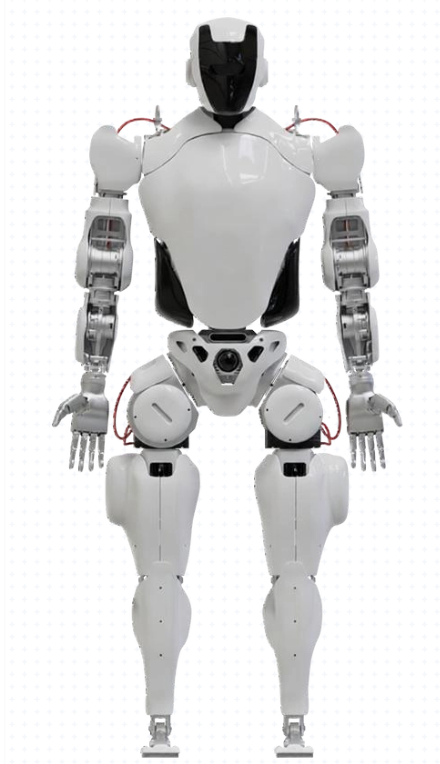
China’s 15th Five-Year Plan outline lists embodied intelligence as one of the future industries. That policy signal reflects a broader recognition that embodied intelligence is not merely an extension of software artificial intelligence. It is an attempt to connect digital reasoning with physical action. Embodied intelligence systems must perceive, decide, and execute in environments that are uncertain, dynamic, and governed by friction, deformation, gravity, and contact. The gap between a model that can describe a task and a robot that can complete it reliably remains the central challenge.
The World Robot Conference in August 2026 brought together some of the most prominent voices in the field. Wang Xingxing, founder of Unitree Robotics, described a measurable threshold for the embodied intelligence “ChatGPT moment.” Wang He, founder and chief technology officer of Galbot and a researcher at Peking University, described a two-stage path from general capability to democratic deployment. Chen Jianyu, founder and chief executive officer of Robot Era, described the shift from demonstrations to normalized industrial applications. Zeng Guang, chief executive officer of Zhongke Yungu, described the value equation that must be satisfied before embodied intelligence robots can create sustainable industrial value. Together, these perspectives show that embodied intelligence is moving from a research narrative to an engineering, commercial, and industrial agenda.
1. Defining the Embodied Intelligence “ChatGPT Moment”
The phrase “ChatGPT moment” has become shorthand for the point at which embodied intelligence becomes broadly useful, rather than narrowly impressive. In the view of Unitree Robotics founder Wang Xingxing, that point can be quantified. He defines it as a threshold at which, in 80 percent of unfamiliar scenarios, a robot can autonomously complete about 80 percent of tasks using only voice or text instructions. This “two 80 percent” definition is important because it focuses on unfamiliar environments and autonomous task completion, not on rehearsed demonstrations in controlled settings. It is also a key marker of the transition from a specialized tool to a general intelligent agent.
Wang He, founder and chief technology officer of Galbot and a researcher at Peking University, offers a complementary definition. In his view, the embodied intelligence “ChatGPT moment” is not only about a model reaching 70 to 80 percent success on general tasks. It is also about enabling ordinary people to fine-tune that model with minimal effort so that it performs nearly perfectly in a specific scenario. This includes two progressive stages. First, base capability must reach 70 to 80 percent success on common tasks, proving that the model has general foundational ability. Second, democratized deployment must become possible, so that non-specialists can use simple post-training to lift a 70 to 80 percent base model into a scenario-specific model with close to 100 percent success.
This definition matters for the entire embodied intelligence ecosystem. A robot that works only when engineers tune it for weeks is not yet a general product. A robot that can be adapted by a factory technician, a logistics supervisor, or a service worker with minimal training is much closer to the embodied intelligence “ChatGPT moment.” The threshold is therefore not only technical. It is also organizational and economic. Embodied intelligence must become usable by people who are not robotics experts.
2. Timeline: When Will Embodied Intelligence Arrive?
The timing of the embodied intelligence “ChatGPT moment” remains uncertain, but the terms of the debate have changed. Wang Xingxing of Unitree Robotics estimates that the arrival could be as fast as 2 to 3 years, or as slow as 5 to 10 years. This window reflects both the rapid progress in models and data and the stubborn difficulty of physical-world execution. The industry is no longer asking whether the moment will occur. It is focused on when it will occur and what must be solved first.
Wang He of Galbot offers a more specific forecast. Based on the scale effects of current data accumulation and continued breakthroughs in post-training technology, he suggests that the critical point may arrive in 2028. Once embodied intelligence reaches its “ChatGPT moment,” he argues, the scale of deployment and the speed of promotion will make a qualitative leap. Humanoid robots will move from pilot projects to large-scale commercial deployment. By the end of the 15th Five-Year Plan, Galbot expects to achieve the deployment of several hundred thousand humanoid robots across industries. That would mark a turning point toward multi-scenario and multi-form applications. Wheeled chassis, bipedal walking, and dexterous hand operation would all move toward a diversified future driven by real demand.
Humanoid robots are widely viewed as the best form of embodied intelligence because they combine artificial intelligence with robotic bodies in a deeply integrated way. They are not the only form, but they concentrate many of the hardest problems: locomotion, manipulation, perception, planning, and human-robot interaction. If humanoid robots can cross the “two 80 percent” threshold, the implications for embodied intelligence more broadly will be profound.
3. The Hardest Problem: Aligning AI With the Physical World
The largest obstacle between the current state of embodied intelligence and its “ChatGPT moment” is the alignment problem between artificial intelligence and the physical world. Wang Xingxing describes this as the “last centimeter” problem. The phrase captures a simple but stubborn reality. An AI model can understand a macro task such as “pick up the cup.” The overall execution path may be roughly correct. But in the final few centimeters of physical contact, the problem becomes severe. The model may lack real-time perception and accurate modeling of friction, deformation, and other physical laws. A tiny initial error can be amplified dramatically during physical contact. The closed loop of perception, decision, and execution breaks down in the real world, and success rates collapse.
In other words, AI can plan what to do, but it cannot precisely perceive how to do it. A fundamental gap remains between digital logic and physical laws. This gap is not only a matter of better sensors or faster actuators. It is a matter of representation, learning, and control. Embodied intelligence must model not only objects and goals but also contact dynamics, material properties, and the continuous feedback between action and environment. The physical world does not pause while a model computes. It responds immediately, and those responses determine whether a task succeeds or fails.
To address this problem, Wang Xingxing proposes building a robot “self-evolution” system. The core idea is to let robots continuously learn and adapt in complex and changing real-world environments, much as humans do, rather than merely completing preset actions in fixed scenarios. Self-evolution is viewed as a key technical path for crossing the “two 80 percent” threshold and achieving large-scale commercial application. This is not only a conceptual direction. According to Unitree Robotics’ IPO prospectus and listing announcement, the company plans to invest RMB 2.022 billion, about 48.1 percent of the proposed fundraising total, in an “intelligent robot model research and development project.” The project is intended to build core technologies for the robot “brain” and “cerebellum,” providing a research and development foundation for self-evolution.
3.1 How the Self-Evolution Loop Works
The core operating logic of the self-evolution system is a complete closed loop. First, an AI large model automatically retrieves and learns from the latest papers and open-source solutions. It then writes control code for the robot based on what it has learned. Next, the new code is first validated in a virtual simulation environment. After that, it is deployed to a real robot for operational testing. Finally, AI and humans jointly score the execution results and feed the evaluation back to the AI, driving optimization and iteration. Through repeated cycles of research, coding, testing, and feedback, the robot can achieve self-evolution.
This loop is important for embodied intelligence because it addresses the data bottleneck. Real-world robot data is expensive to collect, and every new scenario introduces new variations. A self-evolution system can generate hypotheses, test them, and refine behavior without requiring every improvement to be manually engineered. It can also help bridge the gap between simulation and reality. Simulation can provide scale, speed, and safety. Real-world testing can provide contact, friction, and unexpected disturbances. The feedback loop combines both.
3.2 Brain and Cerebellum: The Soul of Embodied Intelligence
The large-scale popularization of embodied intelligence robots depends on model-driven generalization. That, in turn, depends on breakthroughs in two core systems: the “brain” and the “cerebellum.” These systems constitute the robot’s intelligent soul and are a key part of the entire embodied intelligence industry. Wang He of Galbot puts it directly: the brain and cerebellum are the soul of humanoid robots and the core part of the embodied intelligence industry.
Based on this idea, Galbot has achieved milestone breakthroughs in two dimensions: whole-body motion control and dexterous hand fine operation. It has also built a complete technology roadmap toward generalization using a dual-engine framework described as “world action model plus general cerebellum.” In embodied intelligence, the brain is often associated with high-level reasoning, task understanding, and planning. The cerebellum is often associated with motion control, coordination, balance, and precise execution. The integration of the two is essential. A robot may understand a task but fail to execute it smoothly. It may also move beautifully but lack the intelligence to decide what to do next. Embodied intelligence requires both.
4. Business Model Shift: From Hardware to Physical World Tokens
The embodied intelligence industry is evolving along a path described as improvement of intelligent generality, iteration of business models, and migration of the value center. As intelligence moves from a single scenario to multiple scenarios and cross-task capability, the core business model is expected to shift from whole-machine sales to physical world token sales. The value center will also shift from the whole machine to intelligence itself.
Gross margin changes clearly reflect this trend. At the current whole-machine sales stage, gross margin is about 40 to 60 percent. At the solution subscription stage, it drops to about 20 percent. At the token sales stage, the whole machine may even turn to negative gross margin. This may seem counterintuitive, but it reflects an important logic. More terminals mean more token consumption. The model capability pulls industrial upgrading. In this model, the value is not primarily in the hardware. It is in the intelligence that interprets the physical world, plans actions, and generates useful outcomes.
For embodied intelligence, this transition raises important questions. Who owns the model? Who controls the data? How are tokens priced? How are safety and reliability guaranteed? How does value flow between hardware makers, model developers, and industrial customers? The answers will shape the commercial landscape of embodied intelligence as much as any technical breakthrough.
5. Industrial Manufacturing: The Main Battlefield for Embodied Intelligence at Scale
Embodied intelligence is an intelligent system that can understand the physical world and interact with it. It is a key variable that allows robots to move from “understanding the world” to “changing the world.” At present, embodied intelligence technology is being rapidly applied across industries, releasing trillion-level industrial potential and becoming an important engine for a new form of intelligent economy. The industrial pull of embodied intelligence is strong, driving both production quality and consumption upgrading.
Chen Jianyu, founder and chief executive officer of Robot Era, said that from this year onward, the embodied intelligence industry has begun to enter a commercialization inflection point. Its business-to-business users already cover more than ten cities. In various logistics and industrial scenarios, these users are conducting normalized applications, not just demonstrations. This shift from demonstration to normal operation is a critical sign of maturity. It means that embodied intelligence is beginning to be evaluated not only by whether it can perform a task once, but by whether it can perform reliably, repeatedly, and economically over time.
Experts at the conference noted that industrial scenarios have broad coverage and rich types. Automotive and electronics industries, in particular, are large in scale, diverse in scenarios, and highly replicable. They are therefore the main battlefield for large-scale application of embodied intelligence. At present, industrial manufacturing as a whole is transitioning from pilot validation to small-scale commercial use. On one hand, general operation scenarios are accelerating validation. Manufacturing contains many cross-industry, highly replicable operations, such as loading and unloading, appearance inspection, and equipment inspection. These have become the first cuts for industrial deployment of embodied intelligence. To date, nearly ten mainstream automakers, including Xiaomi, BYD, SAIC, and FAW, have conducted deployment validation of embodied intelligence on actual production lines. These validations cover general scenarios such as material handling and loading and unloading. On the other hand, specific operation scenarios already have single-point demonstrations. Qianxun Intelligent Robot, for example, performs new energy power battery function tests on the CATL production line. It can precisely insert battery connectors and detect wire harness connection status.
5.1 The Value Equation for Industrial Embodied Intelligence
Judging the value of industrial embodied intelligence robots usually requires weighing benefits and costs. Zeng Guang, chief executive officer of Zhongke Yungu, said that only when sustainable benefits exceed total lifecycle costs can embodied intelligence robots truly create sustainable value. This is a crucial point. A robot that is technically impressive but too expensive to maintain, too slow to deploy, or too fragile in real conditions will not achieve large-scale adoption. The value equation must include hardware cost, software cost, integration cost, maintenance, downtime, energy use, and the value of improved quality or reduced labor. Embodied intelligence must compete not only with other robots but also with existing automation and human labor.
Zeng Guang also described the path from concept to reality in industrial scenarios as requiring self-perception, self-decision, and self-evolution. These capabilities map onto three layers of artificial intelligence in embodied intelligence. Physical AI solves the problem of “how to make it.” Its core is to let the robot understand physical laws and execute actions accurately. This corresponds to the underlying ability of body and environment interaction in embodied intelligence. Body AI solves the problem of “how to understand.” It connects concepts, relationships, attributes, and rules between the physical world and the digital world, achieving semantic interoperability and cross-system alignment. This corresponds to the core link of perceiving and understanding the environment in embodied intelligence. Agent AI solves the problem of “what should be done.” It decomposes and plans tasks. This corresponds to the top-level ability of autonomous decision-making and planning in embodied intelligence.
Together, these layers show that embodied intelligence in industry is not a single model or a single robot. It is an integrated system. Physical AI gives the robot contact and control. Body AI gives the robot meaning and context. Agent AI gives the robot purpose and planning. An industrial embodied intelligence system must align all three layers with the constraints of a real production environment.
6. From Laboratory to Real World: What Comes Next
The World Robot Conference in August 2026 made one thing clear. Embodied intelligence is standing at the threshold of moving from the laboratory to the real world. The “ChatGPT moment” for embodied intelligence is not a single event. It is a convergence of model capability, physical-world alignment, self-evolution, data scale, post-training tools, business models, and industrial demand. The industry has moved from discussing whether the moment will happen to focusing on when it will happen and what must be solved first.
The remaining questions are difficult but concrete. Can models master physical laws at the last centimeter? Can self-evolution loops operate safely and reliably in open environments? Can post-training become simple enough for non-specialists to adapt embodied intelligence systems to their own scenarios? Can token-based business models create sustainable economics? Can industrial deployments expand from single-point demonstrations to normalized operations across many factories and logistics centers? These questions define the next phase of embodied intelligence.
What is already visible is a shift in expectations. Embodied intelligence is no longer only a research topic. It is becoming an industrial strategy, an investment target, and a commercial race. The “two 80 percent” definition gives the field a measurable goal. The 2028 forecast gives the field a possible timeline. The last-centimeter problem gives the field a technical focus. The self-evolution loop gives the field a method. The brain and cerebellum architecture gives the field a system design. The industrial manufacturing battlefield gives the field a first market. The business-model shift gives the field an economic logic. Together, these elements form a roadmap for embodied intelligence as it seeks to align with the physical world.
| Theme | Key figure or organization | Judgment or data |
|---|---|---|
| Definition of the embodied intelligence “ChatGPT moment” | Wang Xingxing, Unitree Robotics | In 80 percent of unfamiliar scenarios, a robot can autonomously complete about 80 percent of tasks using only voice or text instructions. |
| Definition of the embodied intelligence “ChatGPT moment” | Wang He, Galbot and Peking University | A base model reaches 70 to 80 percent success on general tasks, and non-specialists can use minimal post-training to reach near 100 percent success in specific scenarios. |
| Timeline | Wang Xingxing, Unitree Robotics | The moment could arrive in 2 to 3 years at the fastest, or 5 to 10 years at the slowest. |
| Timeline | Wang He, Galbot and Peking University | The critical point may arrive in 2028. By the end of the 15th Five-Year Plan, several hundred thousand humanoid robots may be deployed across industries. |
| Main bottleneck | Wang Xingxing, Unitree Robotics | The “last centimeter” alignment problem between AI and the physical world, including friction, deformation, real-time perception, and error amplification during contact. |
| Breakthrough direction | Wang Xingxing, Unitree Robotics | A self-evolution system built on a research, coding, testing, and feedback loop. |
| Investment commitment | Unitree Robotics | RMB 2.022 billion, about 48.1 percent of the proposed fundraising total, for an intelligent robot model research and development project focused on the robot brain and cerebellum. |
| System architecture | Wang He, Galbot | A dual-engine framework described as “world action model plus general cerebellum.” |
| Business model evolution | Embodied intelligence industry | Whole-machine sales have gross margin of about 40 to 60 percent. Solution subscription drops to about 20 percent. Token sales may turn whole-machine gross margin negative because more terminals mean more token consumption. |
| Industrial commercialization | Chen Jianyu, Robot Era | Business-to-business users cover more than ten cities. Logistics and industrial scenarios are conducting normalized applications, not just demonstrations. |
| Industrial validation | Xiaomi, BYD, SAIC, FAW and nearly ten mainstream automakers | Deployment validation of embodied intelligence on actual production lines, covering material handling, loading and unloading, and other general scenarios. |
| Industrial demonstration | Qianxun Intelligent Robot | On the CATL production line, the system performs new energy power battery function tests, precisely inserts battery connectors, and detects wire harness connection status. |
| Value principle | Zeng Guang, Zhongke Yungu | Sustainable benefits must exceed total lifecycle costs for embodied intelligence robots to create sustainable value. |
| Industrial AI layers | Zeng Guang, Zhongke Yungu | Physical AI addresses how to make it. Body AI addresses how to understand. Agent AI addresses what should be done. |
The future of embodied intelligence will not be decided by a single breakthrough. It will be decided by the ability of the field to integrate models, bodies, data, feedback, safety, and economics. The World Robot Conference in August 2026 showed that the industry has a clearer definition of success, a more specific timeline, a sharper understanding of the bottleneck, and a growing set of industrial entry points. Embodied intelligence is still far from easy. But the path from laboratory to real world is becoming more visible. The coming years will determine whether the “ChatGPT moment” for embodied intelligence remains a forecast or becomes a turning point in how robots understand and change the physical world.