
As a researcher in the field of artificial intelligence and law, I have observed that the embodiment of intelligence represents a pivotal shift in AI development. This transition from virtual code-based environments to the complex physical world endows systems like humanoid robots with enhanced capabilities in perception, interaction, decision-making, and control. However, this evolution is underpinned by extensive data processing activities, which inherently introduce significant data security risks. In this article, I will explore these risks through the lens of humanoid robot development and application, and argue for a refined criminal law framework to address them. The proliferation of humanoid robots exemplifies the move toward embodied intelligence, where data security becomes a critical concern for both technological advancement and societal safety.
The concept of embodied intelligence, often referred to as “embodied cognition,” posits that cognitive abilities are shaped by physical interactions with the environment. This theory has driven the creation of humanoid robots—machines designed to mimic human physiology and behavior, thereby achieving advanced functionalities in real-world scenarios. From industrial automation to personal assistance, humanoid robots are becoming integral to various sectors, but their reliance on vast and diverse datasets exposes them to dual data security risks: data control security risks and data utilization security risks. I will delve into how these risks manifest and why a proactive criminal law approach is essential. The humanoid robot, as a prime example of embodied intelligence, serves as a focal point for understanding the interplay between data and security in AI systems.
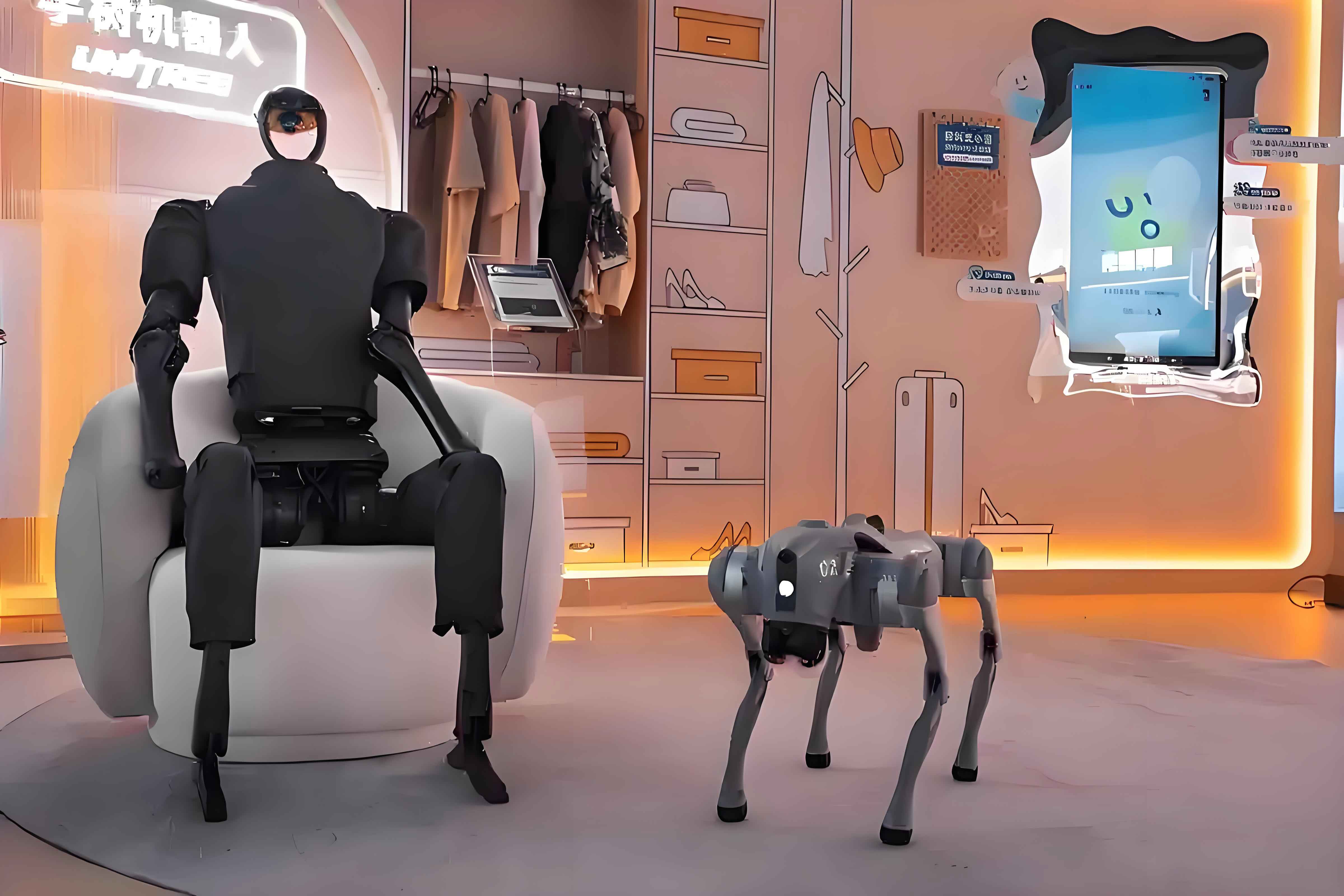
In recent years, the development of humanoid robots has accelerated, fueled by technological breakthroughs and policy support. These robots, equipped with multi-modal sensors and advanced algorithms, require massive datasets for training and operation. For instance, pre-training large models for humanoid robots involves terabytes of data, including text, images, audio, and video, to enable tasks like object recognition, natural language processing, and motor control. This data dependency creates vulnerabilities, as breaches or misuse can lead to severe consequences. I have analyzed numerous cases, such as data leaks in AI platforms, highlighting the urgency of securing embodied intelligence systems. The humanoid robot industry, while promising, must navigate these data security challenges to ensure sustainable growth.
To systematically address these risks, I propose a classification and grading mechanism for data security. Data classification involves categorizing data based on attributes like content and source, while data grading assesses the potential harm from security breaches. For humanoid robots, data can be classified into personal information and non-personal information, with further grading into general data, important data, and core data based on impact severity. This approach aligns with frameworks like China’s Data Security Law, which emphasizes tiered protection. Below is a table summarizing the data classification and grading for embodied intelligence systems, particularly focusing on humanoid robots:
| Data Type | Description | Security Level | Examples in Humanoid Robots |
|---|---|---|---|
| Personal Information | Data that identifies or relates to individuals | High (sensitive), Medium (general) | Biometric data (e.g., facial recognition), health records from medical humanoid robots |
| Important Data | Data that, if compromised, threatens national security or public interest | High | Operational data from industrial humanoid robots, training datasets for critical AI models |
| Core Data | Data essential for national sovereignty or critical infrastructure | Very High | Proprietary algorithms for military humanoid robots, cross-border data flows |
| General Data | Non-sensitive data with minimal impact if breached | Low | Routine logging data from domestic humanoid robots, non-identifiable sensor data |
This classification aids in tailoring security measures, but it also informs criminal law responses. I argue that criminal law should incorporate these distinctions to enhance data protection. For personal information, risks span the entire data lifecycle, from collection to destruction. The humanoid robot ecosystem, involving data collection during interactions, is prone to leaks, tampering, and abuse. To model this risk, I propose a simple formula for data security risk assessment in humanoid robots: $$ R = P \times I $$ where \( R \) represents the total risk, \( P \) is the probability of a security breach (e.g., due to system vulnerabilities in a humanoid robot), and \( I \) is the impact severity (e.g., based on data grading). This formula underscores the need for dynamic risk management, as humanoid robots operate in unpredictable environments.
Regarding data control security risks, these involve threats to data confidentiality, integrity, and availability. In humanoid robots, external attacks or internal failures can lead to data leaks or corruption. For example, a hacker might exploit a flaw in a humanoid robot’s communication network to steal training data, compromising its learning capabilities. Criminal law currently addresses such issues through offenses like illegal access to computer systems, but gaps remain. I suggest that legislation should criminalize negligent disclosure of personal information and illegal tampering or destruction of data. Specifically, for humanoid robots, where data integrity is crucial for safe operation, adding these crimes would close loopholes. A table comparing existing and proposed criminal offenses for data control security in humanoid robots is provided below:
| Offense Type | Current Criminal Law Coverage | Proposed Enhancements for Humanoid Robots |
|---|---|---|
| Data Leakage | Intentional leaks are covered under personal information crimes | Criminalize negligent leaks, especially from humanoid robot service providers |
| Data Tampering | Limited coverage under computer crime statutes | Explicitly criminalize tampering of personal and important data in humanoid robot systems |
| Data Destruction | Addressed indirectly via property damage laws | Include data destruction as a standalone offense for critical humanoid robot data |
Moving to data utilization security risks, these pertain to the misuse of data during processing, such as unauthorized analysis or algorithmic bias. Humanoid robots, through machine learning, often aggregate and analyze personal data to improve performance, but this can lead to privacy violations or discriminatory outcomes. For instance, a humanoid robot used in healthcare might infer sensitive health conditions without consent, raising ethical and legal concerns. I advocate for criminalizing data abuse behaviors, including the illegal use of personal information for profiling or manipulation. The humanoid robot’s ability to learn from data necessitates strict controls to prevent harm. To quantify this, consider a risk model for data utilization: $$ U = D \times A $$ where \( U \) is the utilization risk, \( D \) is the data sensitivity (e.g., from the grading table), and \( A \) is the algorithmic complexity (e.g., higher for advanced humanoid robot AI). This highlights how humanoid robots, with sophisticated algorithms, amplify data utilization risks.
In response, criminal law should adopt a graded protection strategy. For important data in humanoid robot applications, such as industrial trade secrets or national security information, I propose adding new offenses: illegal possession of important data and illegal sale or provision of important data. These would complement existing crimes like illegal data acquisition, creating a comprehensive framework. The threshold for incrimination should be adjusted based on data grading; for example, lower quantity standards for important data breaches. This aligns with the principle of proportionality in criminal law, ensuring that humanoid robot data risks are managed without stifling innovation. Below is a formula for determining criminal liability thresholds: $$ T = \frac{C}{L} $$ where \( T \) is the threshold (e.g., number of data items for prosecution), \( C \) is the data category (e.g., personal vs. important), and \( L \) is the security level (from grading). For humanoid robots, this means stricter thresholds for high-level data.
Beyond external threats, internal accountability is crucial. Humanoid robot service providers—those who develop, deploy, or maintain these systems—occupy a guarantor position for data security. As a guarantor, they have a duty to act to prevent data breaches. I base this on the legal theory of “Garantenstellung” (guarantor status), where control over a risk source entails responsibility. In the context of humanoid robots, service providers control the data lifecycle and system vulnerabilities, making them primary actors for risk mitigation. Their failure to fulfill data security obligations, such as implementing safeguards or responding to incidents, can constitute criminal omission. To assess this, I apply a two-step test: first, evaluating the possibility of action (could the provider have acted?), and second, the possibility of avoiding the result (would action have prevented the harm?). For humanoid robots, this involves technical and managerial feasibility.
Let’s formalize this with a decision model for criminal omission by humanoid robot service providers: $$ O = \begin{cases} \text{Liable} & \text{if } A_p > 0 \text{ and } R_a > 0.8 \\ \text{Not Liable} & \text{otherwise} \end{cases} $$ where \( O \) is the omission liability outcome, \( A_p \) is the action possibility (a binary or scaled measure of the provider’s capacity to act, e.g., based on resources available for a humanoid robot system), and \( R_a \) is the result avoidance possibility (the probability that action would have prevented the data security incident, with a threshold near certainty, say >0.8). This model emphasizes that providers are only culpable if they could have acted and their action would likely have avoided the harm, preventing over-criminalization in the fast-evolving humanoid robot sector.
To illustrate, consider a case where a humanoid robot service provider neglects to patch a known software vulnerability, leading to a data breach. If the provider had the technical means to patch it (high \( A_p \)) and patching would have almost certainly prevented the breach (high \( R_a \)), then criminal omission liability applies. Otherwise, factors like unavoidable risks in humanoid robot AI might exonerate them. This balances accountability with innovation incentives. The humanoid robot industry relies on continuous improvement, and criminal law must avoid creating disincentives for experimentation.
In practice, implementing these criminal law measures requires interdisciplinary collaboration. Regulators, technologists, and legal experts must work together to define standards for humanoid robot data security. For example, certification programs could ensure that service providers meet baseline security requirements, reducing negligence risks. I have participated in discussions where frameworks like the EU AI Act are adapted for humanoid robots, emphasizing data protection by design. By integrating criminal law with such frameworks, we can create a robust safety net. The humanoid robot, as a symbol of embodied intelligence, benefits from this holistic approach, fostering trust and adoption.
In conclusion, the rise of embodied intelligence, epitomized by humanoid robots, brings unprecedented data security challenges. Through my analysis, I have shown that data control and utilization risks demand a tailored criminal law response, incorporating classification and grading principles. By criminalizing negligent and abusive data behaviors, and by holding humanoid robot service providers accountable for omissions, we can mitigate risks while promoting technological progress. The humanoid robot is not just a machine; it is a data-intensive entity that requires vigilant protection. As we advance into an era of ubiquitous humanoid robots, a proactive and balanced criminal law framework will be essential to safeguard our digital and physical worlds. I urge policymakers to consider these insights, ensuring that humanoid robots evolve as forces for good, secure from data-related harms.