
On August 19, Unitree Technology formally listed on the STAR Market, settling the question of which company would become the first humanoid robots stock on the A-share market. The IPO process moved from acceptance to approval in only 73 days, setting the fastest review record since the STAR Market pre-review mechanism was implemented. On the first day of trading, the opening price rose 629 percent, making it the highest first-day opening gain among new shares during the year. The market used its most direct language to confirm the weight of the humanoid robots sector. For investors, policymakers, engineers, and industrial planners, the listing is not merely a financial event. It is a signal that humanoid robots are moving from laboratories, pilot lines, and demonstration halls into the center of capital markets, public policy, and industrial strategy.
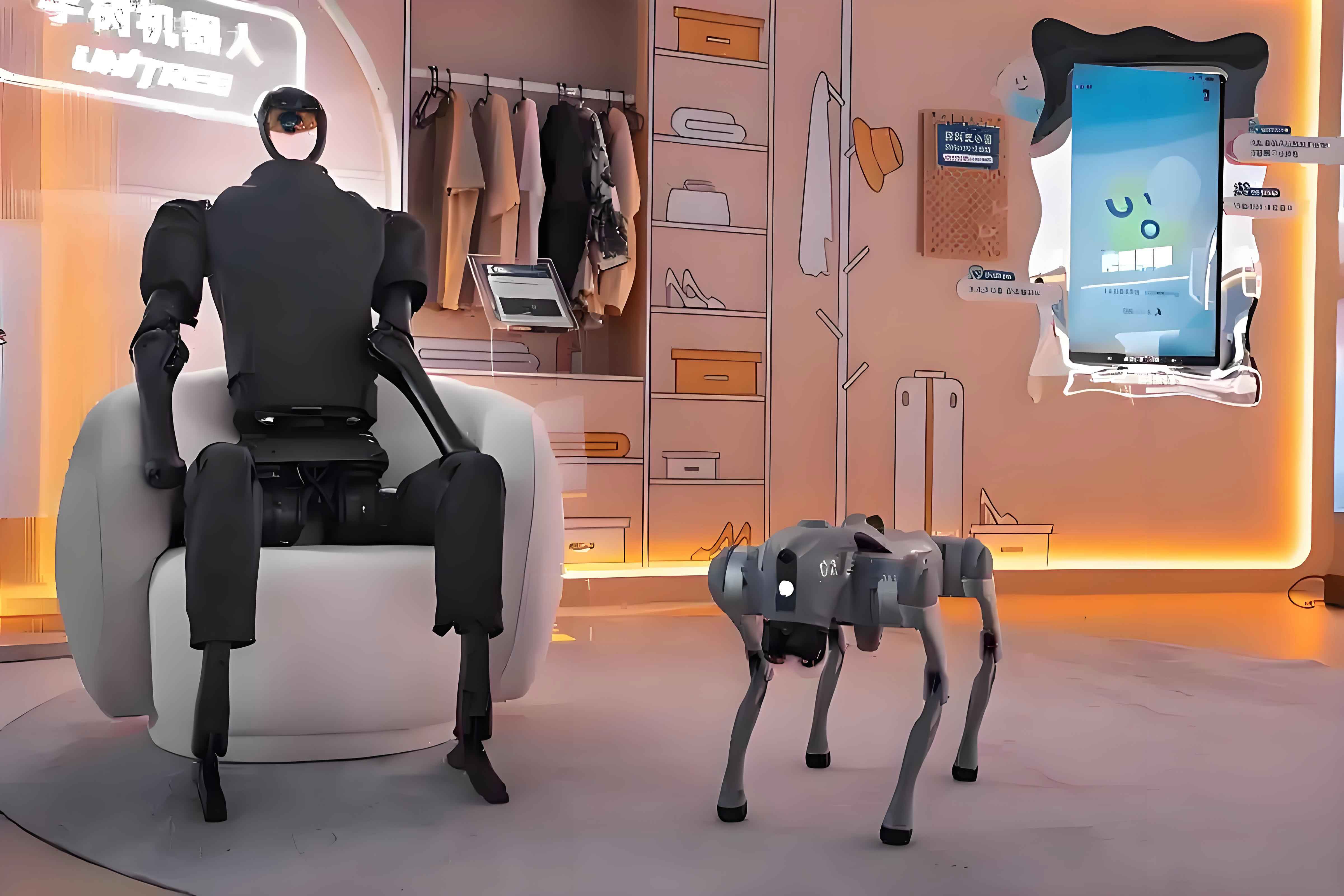
For those who have followed the humanoid robots industry for years, the moment deserves both celebration and caution. The celebration is easy to understand. A company focused on humanoid robots has reached a major public market. Supply chains are maturing. Components are improving. Investors are paying attention. The caution is equally important. The humanoid robots sector is not won by a single listing, nor by a single opening-day surge. The decisive question is whether humanoid robots can become genuinely useful machines that understand the physical world, make decisions on their own, and adapt to unfamiliar situations. That question leads directly to the intelligence layer, the so-called brain of embodied intelligence. Without that brain, even the most advanced humanoid robots body remains a controlled puppet rather than an autonomous worker or companion.
The distinction matters because humanoid robots are often discussed as if they were a hardware race alone. That view is incomplete. Hardware is necessary, but it is not sufficient. A humanoid robots platform may have elegant joints, powerful actuators, sensitive hands, and sophisticated sensors. Yet if it cannot interpret a messy room, respond to an unexpected obstacle, or transfer a learned task from one context to another, its practical value remains limited. The market may reward a humanoid robots company for its early momentum, but the long-term industrial value will be determined by the quality of its embodied intelligence. That is why the current phase of humanoid robots development should be understood as a race to build both a capable body and a capable brain.
- Market Debut Confirms the Strategic Weight of Humanoid Robots
The listing of Unitree Technology on the STAR Market gives the humanoid robots sector a new reference point. It shows that public markets are willing to assign significant value to companies that can credibly pursue humanoid robots. It also shows that the review process for such companies can move quickly when the strategic direction is clear. The 73-day path from acceptance to approval is not simply an administrative detail. It reflects a broader recognition that humanoid robots may become a general-purpose technology platform, much like the automobile, the smartphone, or the industrial robot before it. The 629 percent opening gain on the first trading day is not simply a speculative statistic. It reflects intense demand for exposure to the humanoid robots theme and a belief that the sector may produce durable leaders.
At the same time, a public listing does not resolve the hard technical problems facing humanoid robots. It provides capital, visibility, and accountability. It does not automatically provide a world model, a robust autonomy stack, or a data flywheel. The listing can accelerate hiring, research, and commercialization. It can also create expectations that outpace technical reality. For the humanoid robots industry, the healthiest outcome is not a short period of market euphoria. The healthiest outcome is a long period of disciplined investment in the capabilities that make humanoid robots genuinely useful. Capital should support the brain as much as it supports the body.
The strategic weight of humanoid robots also extends beyond any single company. A successful humanoid robots ecosystem requires suppliers, software developers, data platforms, testing grounds, safety standards, and application partners. It requires universities and vocational schools to train a workforce capable of building, deploying, and maintaining humanoid robots. It requires governments to consider how humanoid robots will enter factories, warehouses, hospitals, nursing homes, and households. The market debut of one humanoid robots company is therefore best understood as an opening signal, not a final verdict. It tells the world that the humanoid robots era is being taken seriously. It does not tell the world that the humanoid robots era has already been won.
For policymakers, the listing also raises a question about industrial sovereignty. If humanoid robots become a major platform for labor, services, and data collection, then the locations where humanoid robots are trained, deployed, and governed will matter enormously. Countries and cities that host humanoid robots deployments will accumulate operational data, engineering knowledge, and regulatory experience. Those assets can become self-reinforcing. A city that attracts humanoid robots companies may also attract talent, capital, and suppliers. A region that opens real-world scenarios for humanoid robots may generate the data needed to improve them. The market debut therefore has spatial and strategic implications, not only financial ones.
- The Hardware Body of Humanoid Robots Is Approaching Maturity
The progress of the humanoid robots hardware supply chain should not be underestimated. From reducers and servo motors to dexterous hands, the Yangtze River Delta region has built a dense and competitive industrial base. This base can drive costs down and accelerate iteration. It can respond quickly to design changes. It can support rapid prototyping and scale-up. The rise of Unitree Technology is a concentrated expression of these hardware advantages. It demonstrates that the humanoid robots body is no longer a distant fantasy. It is becoming an engineering product with supply chains, cost curves, and manufacturing pathways.
This hardware progress is essential for humanoid robots. Without reliable actuators, humanoid robots cannot move safely. Without precision reducers, humanoid robots cannot control force and position accurately. Without dexterous hands, humanoid robots cannot manipulate objects in human-centered environments. Without compact sensors and power systems, humanoid robots cannot operate for useful periods. The body of humanoid robots is the platform on which intelligence must run. A weak body limits the intelligence that can be expressed. A strong body expands the range of tasks that humanoid robots can attempt.
Yet hardware maturity alone does not make humanoid robots intelligent. A humanoid robots platform can be mechanically excellent and still fail in a real kitchen, a cluttered warehouse, or a busy hospital corridor. The reason is that the physical world is open, dynamic, and uncertain. Objects move. Lighting changes. People behave unpredictably. Surfaces vary. Tasks have hidden constraints. A humanoid robots system must perceive, reason, plan, and act in real time. That requires more than motors and sensors. It requires a brain that can model the world and make decisions under uncertainty. The hardware body of humanoid robots may be approaching maturity, but the intelligence layer remains the defining challenge.
Selected Signals and Gaps for Humanoid Robots Dimension Current Position Implication for Humanoid Robots Capital market Unitree Technology listed on the STAR Market on August 19; the IPO moved from acceptance to approval in 73 days; the first-day opening gain was 629 percent Confirms investor attention and the strategic weight of humanoid robots Hardware supply chain The Yangtze River Delta supply chain spans reducers, servo motors, and dexterous hands; it offers cost and iteration advantages Strengthens the body of humanoid robots but does not by itself deliver autonomy Brain and world model The embodied intelligence brain based on world models remains a prominent shortfall and a value high ground Determines whether humanoid robots can understand the physical world, decide independently, and generalize Data flywheel Intelligent driving benefits from large fleets of production vehicles returning real-world data; humanoid robots lack a comparable loop Creates a chicken-and-egg problem for humanoid robots training and deployment Shanghai advantages Complete industrial categories, rich application scenarios, and early data-element reform Can help convert shortfalls into strengths for humanoid robots The table above summarizes the central tension. Humanoid robots are gaining capital and hardware strength, but the intelligence layer and the data engine behind it remain underdeveloped. This tension is not a reason to dismiss the sector. It is a reason to focus on the right bottlenecks. If humanoid robots are treated only as a hardware manufacturing opportunity, the result may be impressive machines with limited autonomy. If humanoid robots are treated as a full-stack intelligence challenge, the result may be a new platform industry. The difference between those two outcomes will be determined by how seriously the ecosystem invests in the brain of humanoid robots.
- The Missing Brain Is the Real Bottleneck for Humanoid Robots
The humanoid robots body is becoming more capable, but the humanoid robots brain is still far from complete. This is the most important gap in the current landscape. The brain of embodied intelligence is not a conventional software application. It is an autonomous intelligent operating system based on world models. It must allow humanoid robots to understand physical space, interpret objects and events, predict the consequences of actions, and choose behaviors that achieve goals. It must allow humanoid robots to learn from experience and transfer knowledge across tasks. It must allow humanoid robots to operate in environments that were never fully specified in advance. This is a different order of difficulty from building a robot that can walk on a stage or repeat a scripted motion.
When observers say that humanoid robots need a brain, they are not speaking metaphorically. They are describing a technical stack that includes perception, representation, planning, control, memory, and learning. For humanoid robots, these functions must be integrated in a body that moves through the same physical world as people. The brain must connect vision, language, touch, proprioception, and action. It must convert high-level instructions into low-level motor commands. It must update its internal model as the world changes. It must recognize when a plan is failing and generate alternatives. These capabilities are what separate a remotely controlled humanoid robots platform from an autonomous humanoid robots worker.
The current shortfall is not a sign that progress is impossible. It is a sign that the hard work is still ahead. The humanoid robots sector has made remarkable advances in locomotion, balance, manipulation, and hardware integration. Those advances create a foundation. But the intelligence layer is where the value high ground lies. A company that solves the brain of humanoid robots will not only sell robots. It will define the operating system for a new class of machines. It will shape how humanoid robots are trained, updated, governed, and deployed. It will capture a position that is difficult to displace because it improves with data, usage, and ecosystem feedback.
The absence of a mature brain also limits the commercial reach of humanoid robots. In controlled environments, humanoid robots can perform repetitive tasks with engineering support. In open environments, they struggle. A factory may tolerate fixed motions and structured layouts, but even factories contain variability, exceptions, and human co-workers. A nursing home is far more complex. A household is more complex still. Humanoid robots must eventually enter these spaces if they are to achieve their promised scale. That will require a brain that can handle ambiguity, learn from demonstration, and adapt to individual needs. The missing brain is therefore not an academic problem. It is the central commercial and strategic problem for humanoid robots.
- Real-World Data and the Chicken-and-Egg Problem for Humanoid Robots
Humanoid robots face a deep data problem. Intelligence emerges from large-scale data, and machines learn to operate in open, dynamic, and uncertain environments through autonomous perception and decision-making. This is the same underlying logic that has driven progress in intelligent driving. Intelligent driving systems improved because large fleets of production vehicles drove on real roads day and night and returned data. That data supported perception, prediction, planning, and simulation. It created a flywheel. More vehicles produced more data. More data produced better models. Better models produced safer and more capable driving systems. The flywheel then attracted more investment, more vehicles, and more data.
Humanoid robots do not yet have a comparable data flywheel. There is no equivalent of millions of humanoid robots operating in real environments and returning diverse physical interaction data. This creates a chicken-and-egg problem. Training the brain of humanoid robots requires massive real-world scenario data. That data can only be generated when humanoid robots actually work in real environments. But if humanoid robots do not have a sufficiently smart brain, they cannot enter real environments at scale. If they cannot enter real environments at scale, they cannot generate the data needed to improve the brain. The cycle is difficult to start, and it is difficult to accelerate once started. Solving this cycle is one of the most important tasks for the humanoid robots industry.
The problem is not only about quantity. It is also about quality, diversity, and structure. Humanoid robots need data about manipulation, locomotion, human interaction, object affordances, task sequencing, failure recovery, and safety. They need data from factories, warehouses, hospitals, nursing homes, kitchens, and public spaces. They need data that captures not only successful actions but also near misses, corrections, and unexpected events. They need data that can be used to train world models that generalize beyond the exact conditions in which the data was collected. This is why the humanoid robots data challenge is so much harder than simply collecting video or motion capture. It requires physical interaction, embodiment, and real consequences.
The international dimension adds urgency. Major global companies are already paying attention to this gap. Some overseas enterprises are using industrial scenarios in developing countries to accumulate physical interaction data. This means the competition for humanoid robots data is not only a technical race. It is also a question of data sovereignty and strategic autonomy. If one region provides the scenarios, the workforce, and the operational context while another region captures the data and builds the brain, the division of labor may become unfavorable. Hardware leadership can be lost if the intelligence layer and the data flywheel are controlled elsewhere. For humanoid robots, data is not a secondary input. It is a core strategic asset.
This is why the humanoid robots sector needs deliberate institutional design. Market forces alone may not solve the chicken-and-egg problem quickly enough. Companies may be unwilling to share data. They may lack safe testing grounds. They may face legal uncertainty about data collection, ownership, and transfer. They may struggle to justify deploying early humanoid robots into real scenarios when the return on investment is uncertain. Public policy can help reduce these frictions. It can create shared training grounds. It can clarify data rights. It can support standards. It can encourage early adoption in fields where social value and industrial learning align. The goal is not to replace the market. The goal is to help the humanoid robots data flywheel begin to turn.
- Shanghai’s Institutional Toolbox for Humanoid Robots
Shanghai is in a distinctive position to address the humanoid robots brain and data challenge. The city has complete industrial categories. It has rich application scenarios. It has early experience with data-element reform. These are not abstract advantages. They are practical capabilities that can be used to convert shortfalls into strengths. A city with diverse industries can offer humanoid robots a wide range of tasks and environments. A city with strong logistics, advanced manufacturing, healthcare, and elderly care can provide realistic settings for humanoid robots to learn and improve. A city with data institutions can experiment with the rules needed for safe, compliant, and tradable physical interaction data.
The humanoid robots opportunity in Shanghai is therefore not limited to building more robots. It is about building the conditions in which humanoid robots can become smarter. That requires collaboration among government, enterprises, research institutions, and public service providers. It requires test beds where humanoid robots can interact with real objects and real people under controlled conditions. It requires data infrastructure that can capture, label, store, and govern operational data. It requires standards for safety, liability, and interoperability. It requires talent that understands both artificial intelligence and physical systems. Shanghai can use its institutional capacity to connect these elements into a coherent humanoid robots ecosystem.
The city also has a bridge to intelligent driving. The technical evolution of humanoid robots is closely related to intelligent driving. Both aim to let machines perceive and decide autonomously in the real world. Both depend on algorithms, computing power, and engineering systems. Both require simulation, data pipelines, and safety validation. China’s accumulated capabilities in intelligent driving can serve as a rare foundation for the humanoid robots brain. The migration from wheels to dual feet is not trivial. It involves different dynamics, different sensors, and different safety requirements. But the underlying stack has important overlaps. If Shanghai can connect its intelligent connected vehicle strengths with its humanoid robots ambitions, it can accelerate the development of embodied intelligence.
This connection should be understood as a strategic advantage. Intelligent driving companies have experience with large-scale data collection, model training, simulation, and regulatory engagement. They have learned how to manage complex software and hardware systems. They have built teams that understand perception, planning, and control. Those capabilities can be redirected or extended toward humanoid robots. The reverse is also true. Advances in humanoid robots manipulation, world models, and embodied learning can feed back into intelligent driving and broader robotics. A collaborative ecosystem can create spillovers that neither sector would achieve alone. For humanoid robots, Shanghai can be a place where the brain is not invented from scratch but assembled from adjacent strengths.
- Three Recommendations for the Humanoid Robots Window
The humanoid robots sector is in a window of opportunity. Capital is attentive. Hardware is improving. Public awareness is rising. But windows close. To seize the moment, the ecosystem needs coordinated action. The following three recommendations focus on scenarios, data, and collaborative innovation. They are not merely industrial policy proposals. They are practical steps to help humanoid robots become more capable, more trusted, and more widely deployed.
- Open Scenarios Through Institutional Supply
The first recommendation is to use institutional supply to open real-world scenarios for humanoid robots. Government should take the lead in systematically opening application scenarios in advanced manufacturing, modern logistics, and elderly care. These are areas where humanoid robots can create value and where real-world data can be generated. Advanced manufacturing offers structured tasks, repeatable processes, and measurable performance. Modern logistics offers movement, sorting, loading, and coordination challenges. Elderly care offers human interaction, assistance, monitoring, and service tasks. Each domain can contribute different types of data and different engineering lessons for humanoid robots.
Opening scenarios is not the same as simply announcing pilot projects. It requires coordination. It requires shared data training grounds and pilot bases that multiple companies can use. It requires safety rules, insurance arrangements, and clear responsibilities. It requires a pipeline from demonstration to evaluation to procurement. If every company builds its own isolated test environment, the humanoid robots sector will fragment. If scenarios are shared, the data can be aggregated, the lessons can be compared, and the rate of improvement can increase. A shared humanoid robots training ground can become a public good that attracts companies, researchers, and talent.
The goal is to let humanoid robots learn by working. Real-world operation is not a final step after all research is complete. It is part of the research process. Humanoid robots must encounter real friction, real variability, and real human needs. They must fail safely and learn from failure. They must be evaluated on practical tasks, not only on benchmark performances. By opening scenarios, policymakers can help humanoid robots move from controlled demonstrations to continuous learning. That is how scattered scenarios can become concentrated data sources for the humanoid robots brain.
- Activate Data Through Data-Element Reform
The second recommendation is to activate data through data-element reform. Shanghai has a first-mover advantage through the Shanghai Data Exchange and the practice of data asset accounting. This advantage can be extended to physical world operation data. Humanoid robots generate data through movement, manipulation, and interaction. That data is valuable for training world models, improving safety, and developing new applications. But it is also sensitive. It may reveal information about workplaces, patients, households, or public spaces. A workable system must therefore balance innovation, privacy, security, and sovereignty.
The humanoid robots sector needs clear mechanisms for compliant collection, rights confirmation, and circulation of physical world operation data. Enterprises should be able to collect data without excessive legal uncertainty. They should be able to use data across teams and projects. They should be able to trade data under agreed rules. At the same time, individuals and organizations should be protected. Data sovereignty should remain firmly in domestic hands. This is not a contradiction. It is a design challenge. Rules can enable trusted data sharing while preventing uncontrolled extraction. Standards can make data interoperable while preserving privacy. Auditing can build confidence while allowing innovation.
For humanoid robots, data reform is not only about commercial exchange. It is about building a national and regional asset. If physical interaction data is collected, structured, and governed well, it can support many humanoid robots companies. It can reduce the cost of training. It can improve safety. It can attract international collaboration on fair terms. If data is fragmented, locked in silos, or poorly governed, the humanoid robots brain will develop more slowly. Data-element reform can therefore be a decisive enabler for humanoid robots. It can turn real-world experience into a shared foundation for intelligence.
- Connect Intelligent Driving and Humanoid Robots Through Collaborative Innovation
The third recommendation is to connect intelligent driving and humanoid robots through collaborative innovation. The two fields share a deep technical lineage. Both seek to let machines perceive and decide autonomously in the real world. Both rely on algorithms, computing power, and engineering systems. Both benefit from simulation, data pipelines, and safety validation. Shanghai already has strengths in intelligent connected vehicles. Those strengths can become a springboard for the humanoid robots brain. The migration from wheels to dual feet is difficult, but it is more feasible when the underlying capabilities are already present.
Collaboration should be practical. It should open channels for algorithms, computing power, and talent to move between intelligent driving and humanoid robots companies. It should encourage the transfer of vision-language-action models and vehicle-grade chips into embodied intelligence. It should support joint projects that test perception, planning, and control across both domains. It should create shared benchmarks and safety frameworks. It should not treat intelligent driving and humanoid robots as separate silos. The more the two ecosystems interact, the faster the humanoid robots brain can mature.
The reverse flow also matters. Humanoid robots research can generate advances in manipulation, world models, and physical reasoning that benefit intelligent driving and other robotics fields. A humanoid robots platform that learns to handle a cluttered room may develop representations useful for autonomous vehicles navigating complex streets. A humanoid robots system that learns to collaborate with people may inform human-machine interaction in vehicles. A humanoid robots data pipeline that captures physical interaction may inspire new approaches to simulation and validation. Collaborative innovation is therefore not a one-way transfer. It is a mutual reinforcement that can strengthen the entire embodied intelligence ecosystem.
- Open Scenarios Through Institutional Supply
- The Starting Point, Not the Finish Line for Humanoid Robots
The first humanoid robots stock on the A-share market is a starting point, not a finish line. When the excitement of the capital market settles, the real competition will begin. The competition will not be decided solely by the number of humanoid robots prototypes, the elegance of their gait, or the speed of their motors. It will be decided by whether humanoid robots can understand the world, act autonomously, and perform useful labor. That requires a brain. It requires data. It requires institutions that allow humanoid robots to learn in real environments while protecting safety, privacy, and sovereignty. The humanoid robots race is therefore a race of intelligence, data, and governance.
For Shanghai, the opportunity is clear. If the city can move early on scenario opening, data circulation, and institutional innovation, it can help humanoid robots cross the gap between hardware strength and intelligence strength. It can create a virtuous cycle in which humanoid robots enter real scenarios, generate real data, improve their brains, and become capable of more scenarios. That cycle would benefit not only one industry but also the city and the country. It would build capacity in advanced manufacturing, logistics, healthcare, elderly care, and public services. It would create new skills, new companies, and new forms of productivity. It would position the region as a place where humanoid robots are not only built but also taught to be smart.
The humanoid robots sector still faces deep uncertainties. The technology is difficult. The data problem is hard. The safety and liability questions are unresolved. The business models are not yet mature. The international competition is intensifying. None of these challenges should be ignored. But they should not lead to paralysis. The right response is disciplined experimentation. Open scenarios. Shared training grounds. Clear data rules. Cross-sector talent mobility. Joint research between intelligent driving and humanoid robots. These steps can be taken now. They can reduce the cost of learning and increase the speed of improvement. They can help humanoid robots move from impressive demonstrations to reliable usefulness.
The market has already shown that humanoid robots can capture the imagination of investors. The next task is to show that humanoid robots can capture the trust of workers, patients, caregivers, and ordinary people. That trust will not come from a single listing. It will come from thousands of safe, useful, and understandable interactions. It will come from humanoid robots that can work alongside people without constant supervision. It will come from humanoid robots that can adapt to new tasks and new environments. It will come from humanoid robots that are governed by clear rules and supported by robust data institutions. The future of humanoid robots depends on building that foundation.
In the end, the value of the humanoid robots industry will be measured by what these machines can do in the real world. A robot that can walk is impressive. A robot that can think, learn, and work is transformative. The shift from body to brain is the central challenge of the humanoid robots era. The companies, cities, and countries that solve it first will shape the next generation of intelligent machines. The humanoid robots market debut is a signal that the starting gun has fired. The race ahead is longer, harder, and more important. It is a race to make humanoid robots stand steadily, think clearly, and serve society wisely.