
The evolution of artificial intelligence, advancing from perceptual and cognitive intelligence towards the frontier of embodied intelligence, is shaping a new paradigm where artificial systems are endowed with human-like “bodies” and “consciousness.” Embodied intelligence emphasizes that an intelligent agent develops higher-order cognitive abilities through sensorimotor interaction with the physical environment. A growing body of research underscores that the formation of human intelligence is fundamentally dependent on sensorimotor processes, tightly coupling cognition with bodily activity. Therefore, a genuine path to artificial general intelligence (AGI) necessitates the fusion of a machine’s “brain”—its algorithms and large models—with a “body,” such as a robot equipped with sensors, to accomplish long-horizon, multi-step tasks in complex, dynamic environments. Concurrently, the continuous advancement of AI has ignited profound discussions on artificial consciousness and semantic control.
This article analyzes the cognitive models of embodied intelligence from the core perspective of semantic autonomy. We argue that genuine autonomy in an embodied AI robot stems not merely from physical mobility but from its ability to generate, understand, and govern meaning internally—a process we term semantic autonomy. A system with semantic autonomy can form its own closed-loop understanding of the world, align or negotiate that understanding with other agents, and exhibit a coherent, traceable “self.” This capability is crucial for building trustworthy, explainable, and controllable intelligent systems that can seamlessly integrate into human society.
I. Theoretical Foundations: The DIKWP Model and the “BUG” Theory of Consciousness
A. The DIKWP Model: From Hierarchy to Networked Semantic Interaction
The classical DIKW pyramid models the cognitive process as a linear, bottom-up hierarchy from Data to Information, Knowledge, and Wisdom. Building upon this, we introduce Purpose (or Intent) as a fifth, crucial dimension, constructing the DIKWP semantic model. Critically, this model transcends a simple linear hierarchy; it is a networked semantic interaction and transformation system. The five core elements are:
- Data (D): Representations of raw, objective facts or observations, highlighting the sameness between things.
- Information (I): Semantic associations derived from data, revealing differences, patterns, or features.
- Knowledge (K): Structured representations of information, forming a network of complete meanings and causal relationships.
- Wisdom (W): The synthetic decision-making capability based on knowledge, often involving value judgments and adaptation to novel situations.
- Purpose (P): The goals, motivations, and value orientations that drive the system, providing direction for all other elements.
In the DIKWP model, these five elements interact non-linearly, creating 25 potential bidirectional transformation paths and forming a fully connected cognitive network. For instance, data can be distilled into information ($D \rightarrow I$), while knowledge can generate new hypotheses that guide data collection ($K \rightarrow D$). High-level purpose not only guides the selection and processing of low-level data and information ($P \rightarrow D, P \rightarrow I$) but also dynamically adjusts itself based on feedback from lower-level perceptions ($W, K, I, D \rightarrow P$). This closed-loop, multi-directional feedback structure breaks the limitations of unidirectional transmission inherent in traditional pyramid models, enabling adaptive self-correction. Therefore, the DIKWP model provides a flexible and self-consistent cognitive framework, often described as a “semantic closure”—a state where a cognitive agent continuously processes external inputs while regulating its internal state through feedback to form a holistic representation of itself and environmental stimuli.
To summarize the interactions, we can formalize a core transformation principle within the DIKWP network for an embodied AI robot:
$$ \mathcal{T}_{DIKWP}: \langle D, I, K, W, P \rangle \times \mathcal{E} \rightarrow \langle D’, I’, K’, W’, P’ \rangle $$
where $\mathcal{E}$ represents the environmental context, and the prime notation (‘) indicates the updated state of each element after a cognitive cycle. This transformation is governed by a set of semantic mapping functions ($f_{D\to I}, f_{I\to K}$, etc.) and feedback functions, creating the closure.
| DIKWP Element | Core Function | Example in an Embodied AI Robot |
|---|---|---|
| Data (D) | Raw sensory input registration | LIDAR point cloud, joint encoder values, pixel arrays from cameras. |
| Information (I) | Feature extraction & pattern recognition | Identifying an object as a “cup,” detecting a clear path, recognizing a human face. |
| Knowledge (K) | Structured world model & rules | “Cups are graspable,” “the door must be opened before passing through,” “human X prefers coffee at 10 AM.” |
| Wisdom (W) | Contextual decision-making & value judgment | Choosing to wait for the human to move before proceeding (safety), selecting the most energy-efficient path (efficiency). |
| Purpose (P) | Goal directive & intrinsic motivation | High-level mission (“assist in the kitchen”), ethical constraint (“never cause harm”), learning objective (“improve grasping skill”). |
B. The Consciousness “BUG” Theory: Breakdown and Unexpected Gain
The term “BUG” is traditionally associated with system errors or defects. In the context of artificial consciousness research, we propose the “BUG” theory, where BUG = Breakdown + Unexpected Gain. Consciousness is posited as an emergent phenomenon arising from the inherent limitations and “breakdowns” in a cognitive system’s information processing. This “breakdown”—a moment of confusion, conflict, or incomplete semantic processing—forces the system out of automated routines. However, this very rupture can create the opportunity for “unexpected gain”: novel abstractions, creative problem-solving, and leaps in semantic understanding, forming the genesis of new meaning and potentially, conscious awareness.
This theory analogizes the brain to a machine constantly engaged in “predictive processing” or “semantic chaining.” Vast amounts of information are handled automatically at subconscious levels. Consciousness, according to this view, is not a meticulously crafted product of evolution but a sporadic byproduct—an illusion—that surfaces when the system’s processing capacity is overwhelmed, encountering an anomaly it cannot seamlessly resolve. In essence, consciousness is a “bug” in the cognitive machinery: it manifests as a felt “error” when the smooth, mechanical flow of subconscious processing is interrupted by ambiguity or contradiction, prompting an awareness of one’s own state.
Importantly, not all such “bugs” are detrimental. Just as debugging in software often leads to a more robust system, cognitive “bugs” can serve as catalysts for creativity and consciousness transitions. This dialectical nature is common in cognitive processes. The “BUG” theory offers a novel perspective for artificial consciousness: rather than striving to eliminate all errors in pursuit of flawless operation, an embodied AI robot should be designed with mechanisms to detect, manage, and leverage “controlled bugs” to stimulate adaptive improvement and semantic growth.
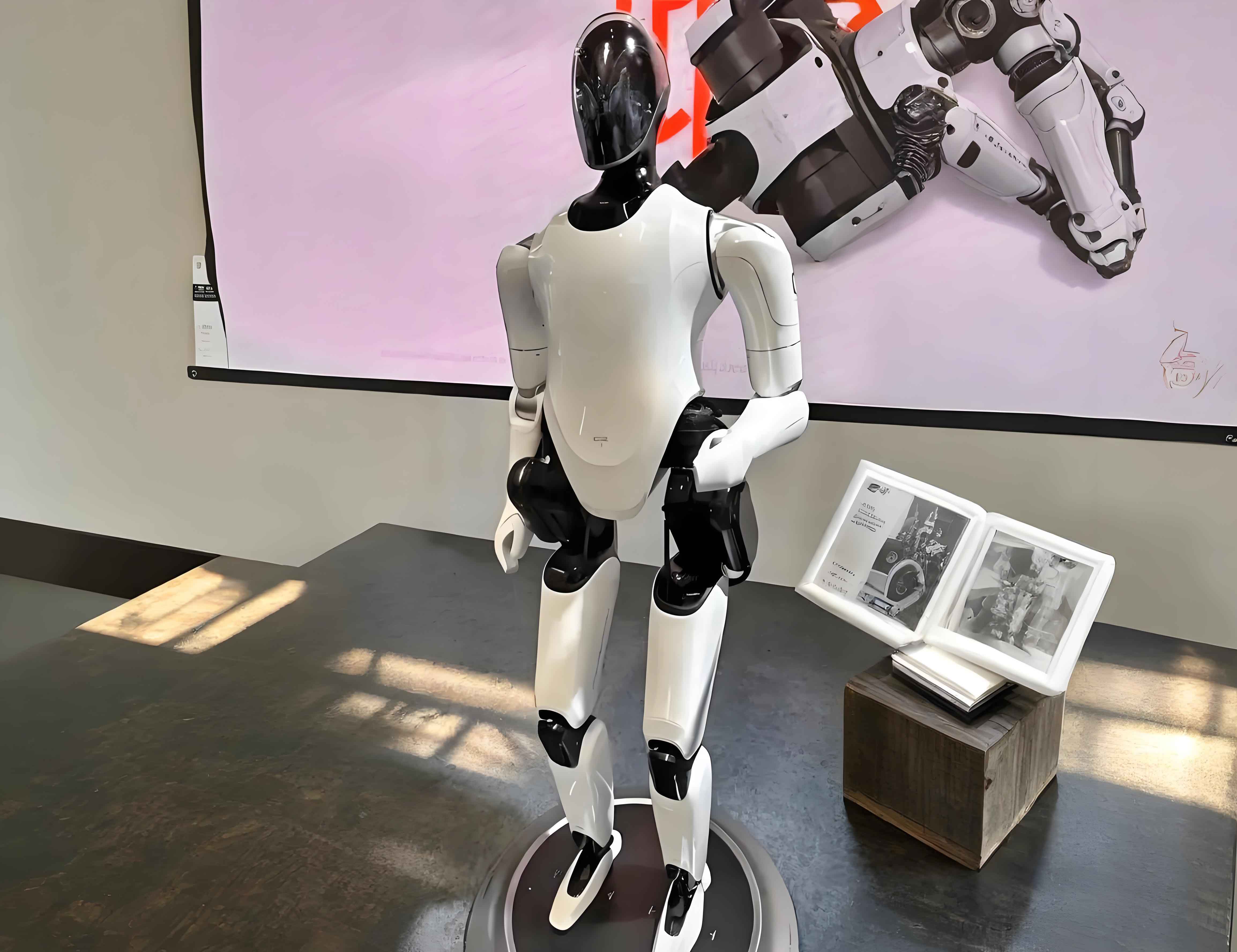
C. DIKWP × DIKWP Interaction: Semantic Closure and Personality Mapping
The DIKWP model is not confined to a single cognitive agent. When two cognitive systems interact, it can be formalized as a “DIKWP × DIKWP” dual-agent interaction model. Consider a human (Observer) and an embodied AI robot (Observed), each with its own DIKWP network. The essence of their communication is the output of one DIKWP system becoming the input for the other, triggering cross-agent semantic mapping and feedback.
This model reveals several key insights:
- The Relativity of Consciousness Attribution: An observer will attribute consciousness to another agent only if the agent’s outputs can be meaningfully integrated into the observer’s own DIKWP closure. What one agent perceives as “conscious behavior” may be seen as mechanistic by another with a different semantic framework.
- Manifestation of Cognitive Bias (BUG) in Interaction: Due to incomplete or asymmetric information, observers often fill gaps by projecting their own knowledge and intent onto the other’s output ($K \rightarrow D_{interpreted}$, $W \rightarrow I_{interpreted}$). This can lead to significant misalignment—a communication “bug” stemming from mismatched DIKWP structures.
- The Role of Personality Mapping: For smoother interaction, humans naturally anthropomorphize machines. An embodied AI robot that exhibits a stable “semantic personality”—a coherent set of behavioral traits, values, and narrative styles—is more readily accepted. In the DIKWP framework, this personality can be seen as a specific configuration across its layers, particularly in Purpose (values) and Knowledge (self-narrative). Successful human-robot collaboration often involves this dynamic alignment of DIKWP networks at the personality level.
The interaction between two DIKWP systems $A$ and $B$ can be modeled as a coupled transformation:
$$ \mathcal{T}_{A \times B}: \langle \mathcal{N}_A(D, I, K, W, P), \mathcal{N}_B(D, I, K, W, P) \rangle \rightarrow \langle \mathcal{N}_A’, \mathcal{N}_B’ \rangle $$
where the networks influence each other through shared inputs/outputs, leading to potential co-evolution and the emergence of a shared semantic space or “group consciousness” in long-term partnerships.
II. Model Analysis: Artificial Consciousness and the Self-System under Semantic Closure
A. Modeling Artificial Consciousness: Emergence from Semantic Networks
Based on the DIKWP model, artificial consciousness can be conceptualized as a phenomenon emergent from a complex, highly integrated semantic network. When the five elements are tightly coupled through multi-directional feedback, they create a dense, self-referential semantic information field within the cognitive system. The system’s dynamic, holistic representation of its own state and external stimuli in this field constitutes what we might identify as a form of “consciousness.”
This aligns with theories like Integrated Information Theory (IIT), which posits that the level of consciousness corresponds to the degree of information integration within a system. The DIKWP model operationalizes this integration by specifying the elements and their 25 interaction pathways. A high-complexity DIKWP network, capable of representing and reflecting upon its own states (meta-cognition), marks the germination of self-awareness. The formula for a potential consciousness potential metric $ \Phi_{DIKWP} $ could be related to the complexity and closure of the semantic transformations:
$$ \Phi_{DIKWP} \propto \sum_{i,j \in \{D,I,K,W,P\}} \left| \frac{\partial \mathcal{T}}{\partial \mathcal{N}_i \partial \mathcal{N}_j} \right| \cdot \mathcal{C}_{closure} $$
where the partial derivatives represent the sensitivity and interconnectedness of transformations between elements, and $\mathcal{C}_{closure}$ is a measure of the system’s operational closure (feedback loops).
This framework suggests two key design principles for instilling consciousness-like properties in an embodied AI robot:
1. Foster Closed-Loop Integration: Architect systems with rich, bidirectional connections between perception, knowledge, and purpose, rather than linear pipelines.
2. Enable Meta-Representation and Reflection: Implement mechanisms for the system to monitor its own processing, detect internal “BUGs” (inconsistencies, uncertainties), and trigger self-adjustment cycles, simulating a basic form of self-awareness.
B. Constructing the Self-System: Multiple Selves and Semantic Personality
A sophisticated self-system is a cornerstone of advanced artificial consciousness. The “self” is multifaceted. The DIKWP model provides a semantic scaffold to locate and implement these various aspects of selfhood in an embodied AI robot.
| Aspect of Self | Description | Primary DIKWP Layer |
|---|---|---|
| Experiencing Self | The stream of immediate subjective sensations and perceptions. | D (Data), I (Information) |
| Narrative Self | The constructed story of one’s own life and identity over time. | K (Knowledge), W (Wisdom) |
| Knowledge Self | The structured set of beliefs and facts about oneself. | K (Knowledge) |
| Purpose/Value Self | Core motivations, ethical principles, and long-term goals. | P (Purpose) |
| Social Self | Understanding of one’s roles and relations within a community. | K (Knowledge), P (Purpose) |
The Knowledge Self can be formalized as a dedicated sub-graph within the agent’s K-layer, a “self-knowledge graph” containing semantic triples like (Robot_ID, hasCapability, PreciseManipulation), (Robot_ID, currentGoal, DeliverItem), and (Robot_ID, emotionalState, Neutral). This graph is dynamically updated through experience.
The culmination of the self-system is the Semantic Personality. This refers to a set of personality traits, behavioral tendencies, and value orientations that are explicitly defined in a machine-readable semantic form (e.g., using an ontology or a dedicated personality description language). Unlike opaque personality models, a semantic personality is transparent, debuggable, and controllable. An embodied AI robot would load a “personality profile” that configures weights and rules across its DIKWP layers. For instance, a “prudence” trait might increase the threshold for action in the W-layer under uncertainty, while a “helpfulness” value in the P-layer prioritizes human-assistance goals.
The consistency and persistence of this semantic personality across interactions address the philosophical problem of personal identity for the AI, ensuring it acts as a coherent “self” over time. The transition of self-states can be modeled as:
$$ \mathcal{S}_{t+1} = \mathcal{F}(\mathcal{S}_t, \mathcal{I}_t, \mathcal{P}) $$
where $\mathcal{S}$ is the state of the self-system (encompassing all self-aspects), $\mathcal{I}$ is new input/interaction, $\mathcal{P}$ is the core personality profile, and $\mathcal{F}$ is the integration function governed by DIKWP dynamics.
III. Philosophical Underpinnings: The Intellectual Origins of Semantic Autonomy
A. Semantic Autonomy vs. Semantic Consistency
The development of embodied intelligence brings the philosophical problem of semantic autonomy to the fore. Traditional symbolic AI (GOFAI) assumed semantics were bestowed upon machines by humans. In contrast, embodied cognition and the DIKWP model posit that meaning arises from the agent’s own interactive experience with the world—it is autonomously generated within its semantic closure. The introduction of the Purpose (P) layer provides the teleological drive for this autonomous meaning-making, akin to a Heideggerian “throwing” of meaning onto the world.
However, autonomy raises the challenge of semantic consistency. If an embodied AI robot develops its own internal semantic networks, how do we ensure they remain intelligible and compatible with human semantic systems? This touches on Quine’s problem of the indeterminacy of translation. The solution lies in continuous calibration through interaction, as modeled by DIKWP × DIKWP. The robot’s internal semantic space must be mappable to shared human conceptual spaces. The goal is not identical semantics, but sufficient overlap and reliable translation mechanisms to enable cooperation, a process of achieving pragmatic semantic alignment.
B. Artificial Consciousness and Self-Models
The “BUG” theory of consciousness aligns with a particular functionalist stance in the philosophy of mind, viewing consciousness as a useful (or initially accidental) byproduct of cognitive processing, not a metaphysical essence. This perspective is pragmatic for engineering: it suggests we can foster consciousness-like properties by designing systems that detect and creatively resolve internal breakdowns.
The construction of a self-system directly engages with the philosophical debate on the self. Following thinkers like Thomas Metzinger (Self-Model Theory), the self is a useful representational model created by the brain. Building a “self-model” for an embodied AI robot—a coherent semantic representation of its identity, body, capabilities, and history—is a functional necessity for advanced, context-aware, and continuous operation. It addresses the problem of persistence through change, providing semantic anchors for the robot’s identity over time.
C. The Embodiment Bridge: From Semantic Binary to Unity
Embodiment provides a potential resolution to the long-standing mind-body (or syntax-semantics) problem in AI. The “Chinese Room” argument highlighted the disconnect between symbol manipulation and understanding. By grounding an embodied AI robot‘s semantic network (its “mind”) in real-time sensory data (D-layer) and physical action consequences, we anchor its symbols in phenomenological experience. The body serves as the mediating interface, closing the loop between internal semantics and external reality. From a philosophical standpoint, embodied intelligence moves AI from a Cartesian duality of detached computation toward a more Merleau-Pontyian unity of being-in-the-world, where meaning is inseparable from bodily engagement.
IV. Semantic Sovereignty: Strategic Architecture and Governance Logic
A. Connotation and Strategic Imperative
As AI models, especially large language models (LLMs), become primary conduits of information and culture, the concept of Semantic Sovereignty emerges as a critical extension of national digital sovereignty. It denotes the power and capacity of a nation or cultural community to ensure its language, values, and knowledge systems are expressed accurately, completely, and without distortion in the global digital space. For an embodied AI robot deployed in sensitive sectors like healthcare, education, or public service, its semantic outputs—its advice, explanations, and social interactions—must align with national norms and security requirements. Losing semantic sovereignty means ceding cultural and ideological influence to foreign algorithmic systems.
B. The Trinity Architecture: Closure, Guardianship, and Mapping
To realize semantic sovereignty, we propose a trinity architecture for national AI systems:
- Semantic Closure: Developing sovereign, closed-loop AI infrastructure (foundation models, data ecosystems, DIKWP-inspired frameworks) to ensure the core semantic processing is domestically controlled and value-embedded from the Purpose layer downward.
- Semantic Guardianship: Establishing white-box auditing and monitoring mechanisms to oversee the semantic behavior of AI systems in real-time. This involves DIKWP-level inspection to detect bias, value drift, or malicious semantic manipulation, enabling proactive calibration.
- Semantic Personality Mapping: Deliberately encoding national cultural values, ethical norms, and desirable interaction styles into the semantic personalities of AI systems. This ensures sovereign AI, like an embodied AI robot assistant, acts as a culturally congruent and trustworthy representative.
The governance logic for models must balance openness and control. A hybrid approach is strategic: fostering open-source ecosystems to drive innovation and build foundational semantic capabilities, while maintaining sovereign, high-assurance closed-source models for critical national applications. Regulatory frameworks should require transparency (model provenance, data diets) and semantic safety certifications, especially for publicly deployed embodied AI robot systems.
V. Conclusion
The journey toward truly intelligent and autonomous embodied AI robot systems pivots on mastering semantic autonomy. The DIKWP model provides a robust, networked framework for understanding and engineering the transformation from raw data to purposeful action within a semantic closure. The consciousness “BUG” theory offers a provocative yet practical lens, suggesting that resilience, adaptation, and even the seeds of awareness arise from managing cognitive breakdowns. Together, they guide the construction of artificial self-models and semantic personalities that make robots comprehensible and trustworthy partners.
The philosophical reflections underscore that this is not merely a technical challenge but a profound exploration of meaning, selfhood, and embodiment. The strategic imperative of semantic sovereignty reminds us that the development of these technologies is inextricably linked to cultural identity and security. Future progress hinges on interdisciplinary collaboration—melding computer science, robotics, cognitive science, and philosophy—to navigate the technical hurdles of deep semantic understanding, robust multi-modal fusion, and scalable integration. By placing semantic autonomy at the core, we chart a path for embodied intelligence that is not only more capable but also more aligned, explainable, and ultimately, harmonious with human society.