
The performance of industrial robotic manipulators is intrinsically linked to the precision and reliability of their core drive components. Among these, the rotary vector reducer stands as a critical element, directly influencing the accuracy, repeatability, and dynamic response of the robot’s end-effector. While parameters like transmission error, stiffness, and backlash are commonly scrutinized, a comprehensive evaluation must also encompass other vital indicators such as no-load friction torque, running-in behavior, positioning accuracy, and mechanical efficiency. This article, from my perspective as a researcher utilizing a dedicated test platform, presents a detailed experimental investigation into these key parameters for a specific rotary vector reducer model. The study aims to monitor these parameters in real-time, analyze their behavior under varying operational conditions, and benchmark the performance against established standards and comparable products.
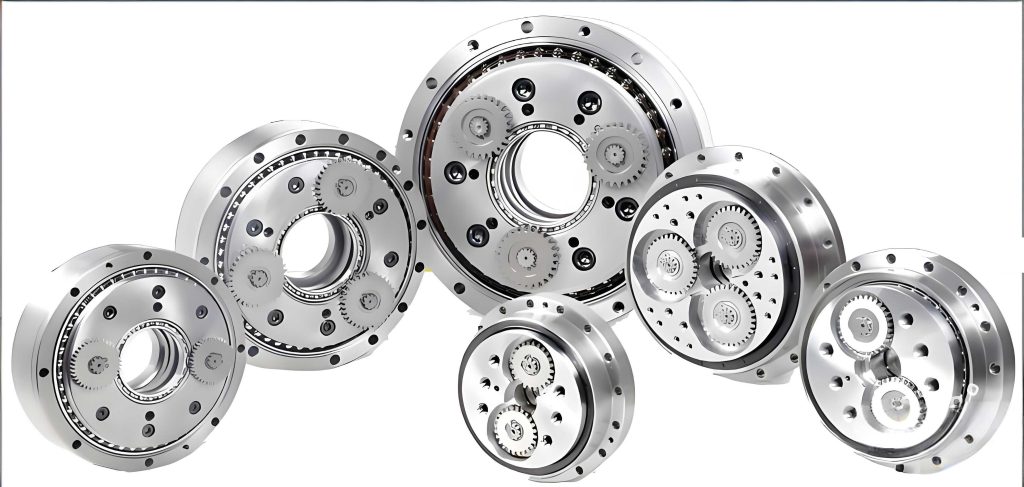
The rotary vector reducer is a two-stage precision reduction device. The first stage consists of a planetary gear train with involute spur gears, and the second stage employs a cycloidal pin-wheel mechanism. This unique combination provides high reduction ratios, compact size, high torsional stiffness, and excellent shock resistance. In the tested configuration with a reduction ratio (i) of 121, motion is transmitted from the input sun gear to the planetary gears, then to the crankshafts, which drive the cycloidal discs. The interaction between the oscillating cycloidal discs and the stationary pin ring generates the final output rotation at the casing side. This complex yet highly efficient kinematic chain is what necessitates rigorous performance validation.
The experimental investigation was conducted on a comprehensive precision reducer test platform. The system integrates a drive motor, high-precision torque and angle sensors on both the input and output sides, the unit under test (the rotary vector reducer), a loading mechanism (comprising a speed increaser and a load motor for efficiency tests), and a central control/data acquisition system. The specific hardware configuration was tailored for each test type, ensuring accurate isolation and measurement of the desired parameters. The core performance indicators targeted in this analysis are defined as follows:
- No-load Friction Torque: The torque required at the input shaft to overcome internal frictional losses when the output shaft is freely rotating (unloaded) at a constant speed. It is a direct measure of the mechanical losses within the rotary vector reducer assembly.
- No-load Running-in: The process of operating the newly assembled rotary vector reducer under no-load conditions to gradually wear down surface asperities on mating components, improve contact conditions, and stabilize performance before full-load operation.
- Positioning Accuracy: The maximum deviation between the actual angular position of the output shaft and its theoretical position (based on the input shaft rotation and reduction ratio) when the reducer is moved to a commanded position. It reflects the kinematic precision of the rotary vector reducer.
- Mechanical Efficiency (η): The ratio of output power to input power, representing the effectiveness of power transmission through the rotary vector reducer. It is calculated using the measured input and output torques and the known speed ratio.
Experimental Test Scheme and Data Acquisition
The test procedures were designed to systematically evaluate each parameter. For the no-load friction torque test, the output flange was disengaged from any load. The input was then driven through a speed ramp from 0 to 2000 rpm, with data recorded at stable intervals (300, 600, 900, 1200, 1500, 1800 rpm). The torque measured at the input sensor under these steady-state, no-load conditions represents the friction torque. The running-in test involved a programmed sequence of alternating rotations at specified low speeds (50, 100 rpm) and durations to gently seat the components. Positioning accuracy was assessed by commanding the input to rotate the output through a series of precise angular increments (e.g., 24° steps for a full 360° rotation) and measuring the actual output position using the high-resolution encoder; this was repeated with multiple reversals to capture bidirectional accuracy. Finally, mechanical efficiency was tested under both loaded and unloaded conditions. For loaded efficiency, a controlled torque was applied at the output via the load motor while the input was driven at constant speeds (100, 200, 300 rpm). Input and output torque and speed were recorded simultaneously to calculate efficiency using the fundamental relationship:
$$ η = \frac{P_{out}}{P_{in}} = \frac{T_{out} \cdot ω_{out}}{T_{in} \cdot ω_{in}} = \frac{T_{out}}{T_{in} \cdot i} $$
where \( T_{in} \) and \( T_{out} \) are the input and output torques, \( ω_{in} \) and \( ω_{out} \) are the input and output angular speeds, and \( i \) is the fixed reduction ratio of the rotary vector reducer.
Analysis of No-Load Friction Torque Characteristics
The no-load friction torque test reveals the inherent mechanical losses within the rotary vector reducer. The measured data, plotted against input speed, shows a non-linear relationship, particularly in the lower speed range, indicative of mixed lubrication regimes often associated with the Stribeck effect. The friction torque increases with speed but begins to stabilize at higher rotational velocities. A key finding is the relatively low magnitude of the friction torque. For instance, at 800 rpm input speed, the measured friction torque was approximately 0.20 N·m. This value is significantly lower than the 0.75 N·m reported for some other domestic models of rotary vector reducers under similar conditions. The peak friction torque observed during the entire speed ramp was only 0.30 N·m. This superior performance suggests refined manufacturing tolerances, high-quality bearing selection, and effective lubrication in the tested rotary vector reducer, all contributing to minimized parasitic losses.
The trend can be summarized by the following representative data points extracted from the test curve:
| Input Speed (rpm) | No-load Friction Torque (N·m) |
|---|---|
| 300 | 0.10 |
| 600 | 0.16 |
| 900 | 0.21 |
| 1200 | 0.25 |
| 1500 | 0.28 |
| 1800 | 0.30 |
Assessment of No-Load Running-in Performance
The running-in process is crucial for stabilizing the performance and extending the service life of a rotary vector reducer. The test monitored the input torque required to maintain the prescribed low-speed alternating motion. The data shows an initial stabilization period where the torque exhibits minor fluctuations. The maximum torque recorded during the entire running-in procedure was 0.39 N·m. After approximately 290 seconds of operation, the torque signal stabilized, indicating that the initial wear-in of mating surfaces (gear teeth, cycloid disc profiles, bearing races) was largely complete. A smooth and low-magnitude running-in curve, as observed, suggests good initial gear mesh alignment, proper pre-loading of bearings, and effective lubrication from the start. This favorable running-in behavior for the rotary vector reducer predicts higher operational stability, reduced wear rate during its service life, and consistent long-term performance, which are critical for industrial robotic applications demanding reliability over thousands of hours.
Evaluation of Positioning Accuracy and Repeatability
Positioning accuracy is paramount for tasks requiring high precision. The test involved moving the output to 15 predefined positions over 360°. The results, including forward, reverse, and bidirectional accuracy metrics, are presented below. The analysis focuses on key metrics defined by standards such as GB/T 17421.2: Positioning Accuracy (the maximum deviation from the mean position), Repeatability (the dispersion around the mean position), and Reverse Error (the difference in approach to the same point from opposite directions).
| Performance Metric | Forward Direction (arcsec) | Reverse Direction (arcsec) | Bidirectional (arcsec) |
|---|---|---|---|
| Positioning Accuracy | 30.0 | 32.1 | 53.1 |
| Repeatability | 8.5 | 5.9 | 27.9 |
| Systematic Positioning Error | 28.3 | 29.0 | 50.5 |
| Reverse Error | – | – | 25.3 |
The performance of the tested rotary vector reducer is exceptional. With a bidirectional positioning accuracy of 53.1 arcseconds and repeatability under 30 arcseconds, it not only comfortably meets typical national standards but also surpasses the published performance of many domestic and international counterparts, including leading Japanese brands like Teijin, which often specify values in the range of 33-35 arcseconds for forward/reverse and higher for bidirectional accuracy. This level of precision in a rotary vector reducer directly translates to lower path deviation and higher absolute positioning accuracy for the entire robotic arm.
Comprehensive Analysis of Mechanical Efficiency
The mechanical efficiency of a rotary vector reducer is a critical economic and performance indicator, affecting the required motor size, energy consumption, and heat generation. Tests were conducted under both loaded and no-load conditions to characterize efficiency across the operational envelope.
Loaded Efficiency
Under applied output torque, the efficiency of the rotary vector reducer was measured at three constant input speeds: 100, 200, and 300 rpm. The results clearly show that efficiency increases with both input speed and applied load, eventually plateauing at a high value. This is characteristic of precision gearing, where constant loss components (like seal friction) become less significant relative to the transmitted power as load increases. The tested unit demonstrated remarkably high efficiency, reaching over 91% at 300 rpm and near-rated load. This is substantially higher than the typical ~65% efficiency reported for some other models, highlighting the advanced design and manufacturing quality of this specific rotary vector reducer. The data is summarized in the table below, and the trend is visualized in the subsequent efficiency-load curves.
| Input Speed (rpm) | Input Torque (N·m) | Output Torque (N·m) | Mechanical Efficiency (%) |
|---|---|---|---|
| 100 | 2.344 | 244.3 | 86.1 |
| 100 | 3.900 | 404.2 | 85.6 |
| 200 | 1.805 | 194.2 | 88.9 |
| 200 | 3.651 | 398.2 | 90.1 |
| 300 | 1.830 | 197.3 | 89.1 |
| 300 | 3.664 | 404.8 | 91.3 |
The efficiency (η) as a function of output torque (\(T_{out}\)) at different speeds (n) can be empirically described by a saturating trend:
$$ η(T_{out}, n) ≈ η_{max}(n) \cdot (1 – e^{-k(n) \cdot T_{out}}) $$
where \(η_{max}(n)\) is the maximum attainable efficiency at speed \(n\), and \(k(n)\) is a speed-dependent constant governing the rate of increase.
No-Load Efficiency
When the output is completely unloaded, the measured “efficiency” is essentially a measure of the ratio of the theoretical output torque (based on the very small measured input torque and the large reduction ratio) to the near-zero actual output torque. This value is highly sensitive at very low loads. The data shows that as the input speed increases from a very low 10 rpm to 100 rpm, this calculated no-load efficiency rises dramatically from around 52% to 98%. This primarily reflects the nature of the calculation at extreme low torque rather than true transmission efficiency. However, the very low input torque values (e.g., 0.06 N·m at 100 rpm) required to drive the unloaded rotary vector reducer reaffirm the minimal friction losses previously identified in the dedicated friction torque test.
| Input Speed (rpm) | Input Torque (N·m) | Theoretical Output Torque (N·m)* | Calculated No-load “Efficiency” (%) |
|---|---|---|---|
| 10 | 0.186 | 11.8 | 52.6 |
| 50 | 0.112 | 11.9 | 87.7 |
| 100 | 0.060 | 11.8 | 98.0 |
*Theoretical output torque is \(T_{in} \times i\), where i=121. Actual output torque is ~0 N·m.
Conclusion
This detailed experimental study provides a comprehensive performance profile of a modern rotary vector reducer based on the systematic testing of four key parameters: no-load friction torque, running-in behavior, positioning accuracy, and mechanical efficiency. The results demonstrate that the subject rotary vector reducer exhibits superior characteristics. Its extremely low no-load friction torque indicates refined internal mechanics and low parasitic losses. The stable and well-behaved running-in process suggests robust assembly and preparation for long-term service. Most notably, its positioning accuracy rivals or exceeds that of leading international products, which is a critical achievement for high-precision robotic applications. Furthermore, its loaded mechanical efficiency above 90% signifies excellent power transmission economics and thermal management potential. In summary, the performance of this rotary vector reducer across all tested metrics not only complies with stringent national standards but also positions it competitively against global benchmarks. This analysis underscores the importance of a multi-parameter testing regimen for a complete evaluation of rotary vector reducer quality and provides a reference framework for performance assessment in both manufacturing and research contexts.