
From my perspective as an industry observer, the evolution of China robots represents a transformative shift in the global automation landscape. China has firmly established itself as the world’s largest market for industrial robots, and the narrative of China robots is one of resilience, innovation, and rapid market capture. In 2019, while the global industrial robot market contracted by nearly 6%, the sales of China robots demonstrated notable fortitude, declining by only 2.1%. This relative stability underscores the underlying strength and adaptive capacity of the ecosystem surrounding China robots.
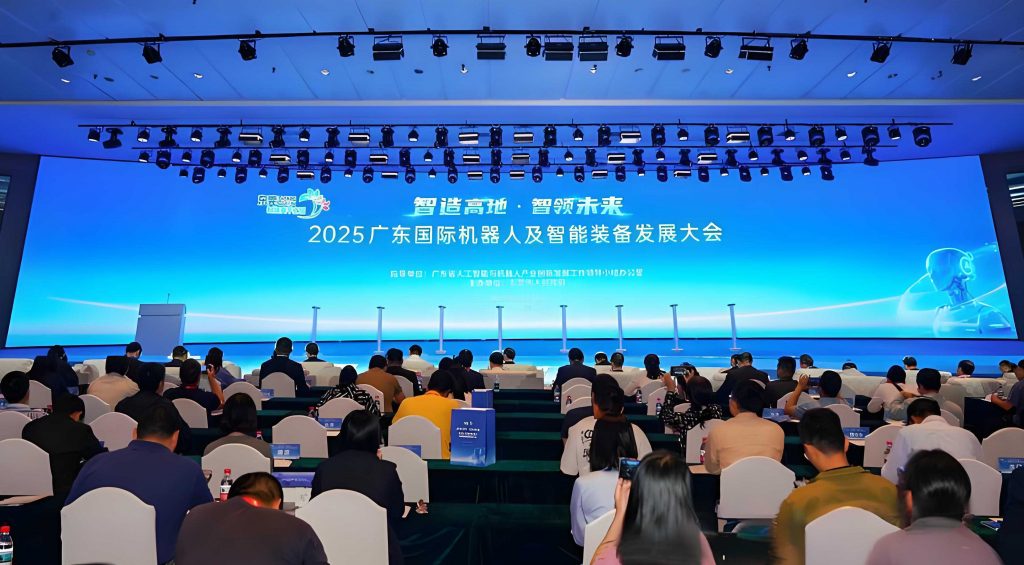
I have closely monitored the segmentation within this broad market, and it is in niches like Autonomous Mobile Robots (AMRs) that China robots have made particularly striking advances. The AMR sector, encompassing robots that navigate independently using technologies like SLAM, saw Chinese enterprises enter almost in lockstep with international players. This simultaneity meant the initial technological gap was minimal, and the inherent local advantages—such as deep customer intimacy and agile response to specific logistical needs—have propelled China robots to a commanding position. Current analyses suggest that China robots now claim approximately 90% of the domestic AMR market, a dominance that is reshaping competitive dynamics.
| Market Metric | Value | Interpretation for China Robots |
|---|---|---|
| Aggregate Sales by Top 10 Domestic Manufacturers | 2,930 units | Indicates high market concentration among key players of China robots. |
| Collective Market Share of Top 10 | 66.6% | Highlights the leading role of core China robots providers. |
| Estimated Overall Domestic Manufacturer Share | ~90% | Underscores the market supremacy achieved by China robots in this segment. |
The growth trajectory of AMRs, a critical vector for China robots, can be quantitatively modeled. In 2019, the total mobile robot market in China was valued at RMB 26 billion, with the AMR subset constituting roughly RMB 7.85 billion. This translates to an AMR market share, \( s_{2019} \), of:
$$ s_{2019} = \frac{7.85}{26} \approx 0.302 $$
Projections indicate this share for China robots will rise to 48% (\( s_{2025} = 0.48 \)) by 2025. The implied annualized growth rate of the AMR share, \( g_s \), over the six-year period can be derived from the standard CAGR formula:
$$ g_s = \left( \frac{s_{2025}}{s_{2019}} \right)^{\frac{1}{6}} – 1 = \left( \frac{0.48}{0.302} \right)^{\frac{1}{6}} – 1 \approx 0.076 $$
This 7.6% annual growth in share points to an accelerating integration of AMR solutions powered by China robots into material handling workflows.
Another segment where I have witnessed the remarkable ascent of China robots is collaborative robotics. Designed for safe interaction with human workers, these robots have seen explosive adoption. In 2019, sales of collaborative robots in China reached 8,200 units, creating a market size of RMB 10.7 billion. The historical growth has been staggering; over the five years preceding 2019, the market for collaborative China robots expanded at a compound annual growth rate (CAGR) of 53%. Even in 2019, the sales growth rate was a robust 29%, significantly outpacing the broader industrial robot market and highlighting the vibrant demand for versatile China robots.
| Indicator | 2019 Data | Trend and Implication |
|---|---|---|
| Sales Volume | 8,200 units | Rapid expansion of deployment for China robots. |
| Market Size | RMB 10.7 billion | Sustained value creation despite falling unit prices for China robots. |
| Year-on-Year Sales Growth (2019) | 29% | Demonstrates the high growth momentum of China robots in this niche. |
| CAGR (2014-2019) | 53% | Exceptional historical momentum for the adoption of China robots. |
| Share within Total Industrial Robot Sales | 5.36% | Growing influence of China robots in the overall automation mix. |
The increasing prominence of collaborative China robots within the total industrial robot fleet is a key metric. Their share rose from 4.04% in 2018 to 5.36% in 2019, a positive increment \( \Delta \) of 1.32 percentage points. This rise can be expressed as:
$$ \text{Share}_{2019} = \text{Share}_{2018} + \Delta = 4.04\% + 1.32\% = 5.36\% $$
Forecasts suggest this share for China robots will exceed 6.5% in the near term, indicating continued upward integration. The growth dynamics can be partially explained by the solution-oriented approach of domestic providers. From my analysis, end-users frequently seek not just a robot but a tailored solution, requiring secondary development. The agility of China robots companies in facilitating this customization provides a distinct competitive edge over larger foreign entities, whose product modification cycles are often longer and more rigid.
My examination extends to other critical robot categories. In the realms of SCARA (Selective Compliance Assembly Robot Arm) and parallel robots, China robots are asserting themselves powerfully. While global leaders retain top positions in brand recognition, the market shares captured by domestic manufacturers are substantial. Specifically, in 2019, China robots accounted for 39% of the SCARA market and a remarkable 75% of the parallel robot market. This signifies that China robots are not only competing in new domains but are also making deep inroads into established, precision-driven segments.
| Robot Type | Domestic Share (China Robots) | Primary Applications |
|---|---|---|
| SCARA Robots | 39% | High-speed, precision assembly in electronics and manufacturing. |
| Parallel (Delta) Robots | 75% | High-speed pick-and-place, packaging, and sorting operations. |
The competitive pricing of China robots in these segments acts as a significant market enabler. The overall price trend for industrial robots, including collaborative models, has been downward for several years. This environment, which some might view as challenging, actually serves as a catalyst for innovation among China robots. The concept of “cost-driven innovation” emerges clearly: as prices fall, only those enterprises committed to genuine research and development and efficient operations can maintain profitability and grow. This dynamic rewards the innovative spirit often found within the ecosystem of China robots. The price decline \( \Delta P \) over time \( t \) can be linked to innovation investment \( I(t) \). A simplistic model suggests that the rate of cost reduction incentivizes innovation:
$$ \frac{dI}{dt} = \alpha \cdot \left| \frac{dP}{dt} \right| $$
where \( \alpha \) is a positive constant. This relationship seems to hold true for many developers of China robots, where pressure on margins has accelerated breakthroughs in core component design and system integration.
A pivotal area I have tracked is the upstream value chain. Historically, core components like precision reducers, servo motors, and controllers were dominated by foreign suppliers, which constrained the profitability and strategic flexibility of China robots. However, this scenario is undergoing a profound change. Domestic component manufacturers have made significant strides, and for many applications—especially in material handling and general-purpose automation—the performance of locally sourced parts is now entirely adequate. This localization reduces costs, mitigates supply chain risks, and enhances the overall value proposition of China robots. The improving cost-performance ratio \( \rho \) can be represented as a function of domestic content \( d \) and total cost \( C \):
$$ \rho(d) = \frac{\text{Performance}(d)}{C(d)} $$
where \( \rho(d) \) has been increasing for China robots as \( d \) rises and \( C(d) \) decreases due to localized production.
The technological foundations enabling the rise of China robots, particularly in AMRs, are worth elaborating. Advancements in simultaneous localization and mapping (SLAM) algorithms, both laser-based and vision-based, have been crucial. Chinese firms have adeptly leveraged and improved upon these open and evolving technologies. The navigation accuracy of an AMR, a key performance indicator for China robots, can be quantified by the error between its estimated pose \( \hat{x}_t \) and its true pose \( x_t \) over a trajectory. A common measure is the Root Mean Square Error (RMSE):
$$ \text{RMSE} = \sqrt{ \frac{1}{N} \sum_{t=1}^{N} \| \hat{x}_t – x_t \|^2 } $$
The engineering teams behind China robots have successfully driven this error metric down to levels competitive with global benchmarks, enabling reliable autonomous operation in complex environments.
From my viewpoint, the strategic consolidation of the industrial chain is another hallmark of the maturation of China robots. Several leading enterprises have pursued vertical integration or formed strategic alliances, encompassing everything from core component development and robot本体 manufacturing to system integration and after-sales service. This holistic control over the产业链 enhances responsiveness, ensures quality consistency, and allows for the creation of optimized, cost-effective solutions that are highly attractive to the domestic market. This integrated approach is a key structural advantage for many providers of China robots.
The market drivers for the proliferation of China robots are multifaceted. Government policies advocating for智能制造 (smart manufacturing), persistent increases in labor costs, and the relentless pursuit of operational efficiency across sectors like electronics, automotive, logistics, and food & beverage create a sustained demand pull. The return on investment (ROI) calculus for adopting China robots has become increasingly favorable. The ROI over a time horizon \( T \) can be modeled as:
$$ \text{ROI}(T) = \frac{ \sum_{t=1}^{T} (B_t – C_t) }{I_0} $$
where \( I_0 \) is the initial investment in China robots, \( B_t \) are the annual benefits (labor savings, yield improvement, etc.), and \( C_t \) are the annual operating costs. The declining upfront cost \( I_0 \) for solutions built around China robots significantly shortens the payback period, accelerating adoption.
| Industry Sector | Typical Applications | Growth Driver for China Robots |
|---|---|---|
| Electronics Manufacturing | PCB assembly, SMT, testing, precision dispensing. | Miniaturization, high-mix production, need for consistent quality. |
| Automotive & Parts | Welding, painting, assembly, part handling. | Transition to electric vehicles, need for flexible production lines. |
| Logistics & E-commerce | Warehouse sorting, palletizing, AMR-based goods-to-person. | Explosive growth of e-commerce, demand for 24/7 operation. |
| General Manufacturing | Machine tending, polishing, packaging, inspection. | Labor shortage, need for lifting heavy loads in unsafe environments. |
Looking forward, the innovation pathway for China robots appears robust. Beyond hardware, there is increasing integration of artificial intelligence and machine learning for predictive maintenance, adaptive control, and enhanced perception. The convergence of 5G connectivity with China robots opens possibilities for cloud-based control and real-time data analytics from fleets of robots. This digital layer will further augment the capabilities and value of China robots. The future market size \( M_{t} \) for various segments of China robots can be projected using growth models. For instance, a simple exponential growth model for a segment like collaborative robots could be:
$$ M_{t} = M_{0} \cdot e^{rt} $$
where \( M_{0} \) is the initial market size (e.g., RMB 10.7 billion in 2019), \( r \) is the growth rate, and \( t \) is time. Even with a moderating \( r \), the absolute growth for China robots remains substantial.
In my assessment, the journey of China robots is a compelling case study in industrial catch-up and innovation. Starting from a position of relative latency in traditional heavy-duty robotics, China robots have strategically focused on agile, emerging segments where flexibility, cost-effectiveness, and local adaptation are paramount. The results, as evidenced by dominant shares in AMRs and collaborative robots and strong showings in SCARA and parallel robots, speak for themselves. The ongoing localization of core components and the deepening of产业链 integration fortify this position. As global automation needs evolve towards more flexible, scalable, and interconnected systems, I am convinced that China robots are not merely participants but are increasingly shaping the future trajectory of the robotics industry worldwide.