
When I look at the global landscape of robotics, I see a profound shift taking place. The humanoid robot, once confined to science fiction and laboratory experiments, has now become the most fiercely contested frontier in technology and industry. In my view, the humanoid robot is not merely another product category; it is the ultimate embodiment of embodied artificial intelligence, and it represents one of the most significant overtaking opportunities for any nation or region that dares to lead. As I examine the trajectory from the first humanoid robot in 1969 to today’s explosion of generative AI, I am convinced that the humanoid robot will reshape manufacturing, services, healthcare, and even our daily social interactions. In this article, I will share my analysis of what defines the humanoid robot, how China’s humanoid robot industry is evolving, how different regions within China are positioning themselves, and what critical actions we must take to strengthen the humanoid robot ecosystem.
The term humanoid robot refers to a robot that mimics the form and behavior of a human being. It combines advanced robotics with artificial intelligence to achieve a highly realistic appearance and strong human-robot interaction capabilities. More importantly, the humanoid robot is widely regarded as the best carrier of embodied intelligence. Unlike traditional industrial robots that operate in structured environments, the humanoid robot is designed to work in human-centric spaces, using human-like limbs, sensors, and cognitive capabilities. The potential of the humanoid robot is enormous. According to industry forecasts, the market size for humanoid robots in China will reach approximately 2.7 billion RMB in 2024, 10.4 billion RMB in 2026, and 75 billion RMB in 2029, accounting for 32.7% of the global total. By 2035, the market size could reach 300 billion RMB. Globally, the humanoid robot market is projected to grow from 1.8 billion USD in 2023 to 13.8 billion USD by 2028. These figures underscore the urgency of investing in the humanoid robot now.
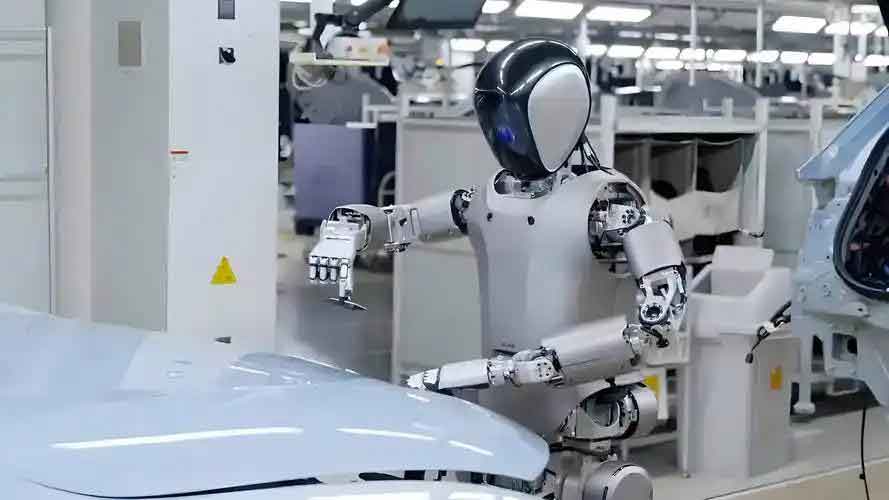
Defining the Humanoid Robot: The Ultimate Embodied Intelligence
To understand why the humanoid robot matters, I need to clarify its structure and functions. A humanoid robot is not simply a human-shaped shell with motors. It is a complex integration of mechanical design, motion control, artificial intelligence, sensor fusion, and cognitive computing. The core technical challenge of the humanoid robot is to simulate the human process of “perception-cognition-decision-execution.” In practical terms, this requires three main subsystems: the “brain,” the “cerebellum,” and the “body.”
The “brain” of the humanoid robot is responsible for high-level reasoning, logical decision-making, planning, and natural language communication. It enables the humanoid robot to interact with other intelligent agents and the environment. The “cerebellum” primarily handles multimodal perception—vision, touch, auditory signals—and coordinates the body to perform complex tasks. The “body” is the physical hardware, including actuators, sensors, and end-effectors, that executes actions. The seamless orchestration of these three subsystems determines the intelligence and agility of the humanoid robot.
From the perspective of the industrial chain, the humanoid robot ecosystem consists of three major segments: upstream core components, midstream robot bodies, and downstream application scenarios. The core components of the humanoid robot include reducers, servo motors, controllers, and sensors. These components account for a significant share of the total cost and directly determine the performance and reliability of the humanoid robot. For instance, high-precision reducers are essential for the joint movements of the humanoid robot, while advanced sensors allow the humanoid robot to perceive its surroundings and interact safely with humans.
Let me formalize the system architecture of a humanoid robot using a simple mathematical representation. Suppose the overall intelligence level $I$ of a humanoid robot is a function of three factors: cognitive capability $C$, perceptual capability $P$, and motor capability $M$. Then we can write:
$$I = f(C, P, M)$$
where each capability itself depends on hardware and software components. For example, the cognitive capability $C$ depends on the algorithms and models of the AI system, the perceptual capability $P$ depends on the sensor suite and perception algorithms, and the motor capability $M$ depends on the actuators, reducers, and control algorithms. The performance of a humanoid robot can be further quantified by a composite score:
$$R = \alpha \cdot C + \beta \cdot P + \gamma \cdot M$$
with $\alpha + \beta + \gamma = 1$ representing the relative importance of each module depending on the application. For a service-oriented humanoid robot, we might set $\alpha$ higher; for a manufacturing-oriented humanoid robot, $\gamma$ might dominate. This simple model illustrates why no single breakthrough in AI hardware alone can guarantee a superior humanoid robot; every subsystem must evolve in tandem.
Global Competitive Landscape of Humanoid Robots
When I compare the humanoid robot development across major economies, I see that Europe, the United States, and Japan have long held advantages in artificial intelligence, perception technologies, and robotics know-how. These regions have mature industrial ecosystems for the humanoid robot. However, the landscape is shifting rapidly. In recent years, China has made remarkable progress in core components, ontology design, and system integration. A wave of innovative enterprises—such as UBTech, Fourier Intelligence, Unitree, and many others—have pushed the boundaries of what the humanoid robot can achieve.
According to a patent analysis report published by People’s Daily Online, as of the end of May 2023, China ranks first in the world in the number of humanoid robot patent applications, surpassing the United States, Japan, Europe, and South Korea. This is a significant achievement. However, when I look more deeply at the quality of patents, a more nuanced picture emerges. The patent concentration in China is only 20%–30%, compared to about 80% in Japan and around 50% in the United States, Europe, and South Korea. This means that the Chinese humanoid robot landscape is highly competitive and still evolving, with many players entering the field. While this fuels innovation, it also implies that core technology leadership remains fragmented.
Table 1 below summarizes the distribution of humanoid robot patent applications by applicant type in selected regions, providing insight into the innovation structure.
| Region | Enterprises | Universities & Research Institutes | Others |
|---|---|---|---|
| China | 56.3% | 38.1% | 5.7% |
| Japan | 93.3% | 4.0% | 2.7% |
| United States | 89.8% | 5.9% | 4.3% |
| South Korea | 72.4% | 22.9% | 4.8% |
The data reveal a structural difference. In Japan, the United States, and South Korea, enterprises dominate the patent landscape, indicating that commercialization and industrial application lead the way. In China, universities and research institutions hold a much larger share—38.1%—highlighting the important role of academic research but also hinting at a potential gap in industry-driven innovation. Furthermore, in terms of high-value invention patents, the United States, Japan, and South Korea have over 90% of their patents classified as high-value, while Europe maintains over 80%. In contrast, China’s figure is only between 60% and 70%. This suggests that although China produces a high volume of humanoid robot patents, the core technological ownership is not yet sufficiently strong in high-value areas.
Another critical dimension is the length and breadth of the industrial chain. Compared with Europe, the United States, and Japan, China still faces challenges in high-end chips—such as computing chips, driver chips, and motion control chips—and in certain sensors like LiDAR and depth cameras. In addition, humanoid robot algorithms and models, as well as the integration of software and hardware, require further improvement. The technology patents in China are often dominated by key patents and general patents, with a relatively narrow technical layout. This means that even though the humanoid robot has become a national priority, there remains a risk of being constrained by foreign patent pools in the most critical areas.
Nevertheless, I remain optimistic. The pace of progress in the Chinese humanoid robot industry is unlike anything I have seen. In October 2023, the Ministry of Industry and Information Technology issued the “Guiding Opinions on Innovative Development of Humanoid Robots,” setting the goals that by 2025 the initial innovation system for the humanoid robot will be established, and by 2027 the technological innovation capability of the humanoid robot will be significantly enhanced. Provinces and municipalities have responded with their own innovation centers for humanoid robots, accelerating breakthroughs in key technologies.
China’s Regional Humanoid Robot Development Landscape
One of the most fascinating aspects of China’s humanoid robot industry is its regional concentration. The Beijing-Tianjin-Hebei region, the Yangtze River Delta, and the Guangdong-Hong Kong-Macao Greater Bay Area are the three highlands of China’s robotics industry, and they have naturally become the first movers in the humanoid robot sector. Each region has its own strengths, and together they form a complementary ecosystem that is accelerating the deployment of humanoid robots. Let me walk through each region in detail.
The Beijing-Tianjin-Hebei Region: Innovation Hub of Humanoid Robots
In the Beijing-Tianjin-Hebei region, Beijing serves as the core driver of humanoid robot innovation. The region is endowed with world-class universities and research institutes, including Tsinghua University, Beijing Institute of Technology, Beihang University, and the Institute of Automation of the Chinese Academy of Sciences. These institutions have long been at the forefront of intelligent robotics research. Beijing has also established a specialized humanoid robot innovation center, and it hosts numerous humanoid robot manufacturers such as Xiaomi, Galaxy General Robotics, Xingdong Jiyuan, and others. The region also features key component suppliers like Instrans Robotics, Zhitong Technology, and Qingde Chuangneng, covering motors, reducers, and integrated control systems.
Tianjin and Hebei complement Beijing with their own specialized robotics clusters. Tianjin has formed agglomerations in underwater drones and industrial unmanned aerial vehicles. Hebei leads the national market share for special robots and mobile robots. During the 2023 Beijing-Tianjin-Hebei Industrial Chain Supply Chain Conference, the three provinces jointly released a six-major cross-regional industrial chain map, which explicitly includes the robot industry chain. The emphasis is on breaking through core components, supporting components and algorithm modules, robot bodies, and system integration, with the goal of building an internationally competitive cluster. For the humanoid robot, this regional cooperation is essential because it combines Beijing’s innovation strength with the manufacturing capabilities of Tianjin and Hebei.
The Yangtze River Delta: Complete Humanoid Robot Ecosystem
The Yangtze River Delta, with Shanghai as its core, has the most complete humanoid robot industry ecosystem in China. Shanghai is home to numerous R&D institutions, including the Intelligent Robotics Institute of Fudan University, the Yuanzhi Robotics Institute of Shanghai Jiao Tong University, and the Robotics and Artificial Intelligence Institute of Tongji University. It also hosts leading humanoid robot body manufacturers such as Fourier Intelligence, AGIBOT, DARFON Robot, and Kepler Robot. In addition, core component enterprises like Buke Technology and Mingshu Motor provide crucial upstream support. In May 2024, Shanghai established a national-level public platform for humanoid robots—the Shanghai Humanoid Robot Innovation Center—co-founded by the national government and the local government. This platform is expected to play a pivotal role in collaborative research and standardization of the humanoid robot.
Jiangsu province has also emerged as a strong player in the humanoid robot sector. It has developed a range of independent intellectual property products for humanoid robots, covering humanoid robots, service robots, and special robots. Nanjing, Wuxi, and Suzhou have become leading development zones. For instance, Leju Robot Technology in Suzhou released an open-source HarmonyOS humanoid robot named “Kuafu,” capable of jumping and adapting to multi-terrain walking. Wuxi has initiated the UBTECH Industrial Embodied Intelligent Robot Industrial Park and the Youchi Intelligent Headquarters project. Moreover, Wuxi has formed a humanoid robot core components industry alliance with 12 enterprises, enabling coordinated cooperation from R&D to manufacturing to market.
Zhejiang province demonstrates strong capabilities in core components such as precision reducers, servo motors, and drivers. It is also home to innovative forces like Unitree Robotics, Zhejiang University, and Zhijiang Laboratory. Zhejiang University has developed four generations of the “Wukong” humanoid robot since 2006. Dongzi Technology (Ningbo) has developed a small humanoid robot named BRUCE, which has achieved small-batch shipments in higher education and vocational training. Unitree Robotics launched the H1, a full-size general-purpose humanoid robot that can run, and is regarded as one of the highest-performing robots of its class globally.
Anhui province has also built a respectable foundation in the humanoid robot field. It has 11 university research teams and 21 industrial chain enterprises related to humanoid robots. Anhui has strengths in the “brain,” “cerebellum,” and “body” of the humanoid robot. The Jianghuai Frontier Technology Innovation Center recently received approvals for the Anhui Provincial Key Laboratory of Humanoid Robots and the Anhui Provincial Industrial Innovation Center of Humanoid Robots. The center’s self-developed “Qijiang No.1” humanoid robot is planned to debut in August 2024.
The Yangtze River Delta’s advantage lies in its balanced development. Not only does it have excellent research and component supply, but it also has a large market demand for humanoid robots from manufacturing and service industries. The region is known for its electronics and manufacturing base, which is ideal for iterative testing and deployment of humanoid robots.
The Guangdong-Hong Kong-Macao Greater Bay Area: Supply Chain and Control Technology Leader
In the Guangdong-Hong Kong-Macao Greater Bay Area, Shenzhen stands out as the center of gravity for humanoid robot development. The Greater Bay Area is a critical global supply chain hub for humanoid robots, particularly in control systems and servo technology. The region also benefits from a vibrant financial ecosystem that supports innovation. Shenzhen has gathered a large number of core component enterprises, including Inovance Technology, Leadshine Technology, Orbbec, Dazhi Transmission, Tongchuan Technology, and Googol Technology, covering reducers, motors, controllers, and sensors. It is also home to many local humanoid robot manufacturers such as UBTech, Pd Dynamics, and Leju Robotics. With the presence of academic institutions like the Shenzhen Institute of Artificial Intelligence and Robotics, the Shenzhen Intelligent Robotics Institute, and the CAS Shenzhen Institute of Advanced Technology, the region has a strong technology base. Many humanoid robot products have been launched in Shenzhen, including UBTech Walker X, Leju Kuafu, Pd Dynamics CL-1, and Daiom Sparky1.
Dongguan, with its robust manufacturing infrastructure, has become another important node. Huawei has established a humanoid robot company in Dongguan. Guangdong Tianzhai Robot Co., Ltd. has taken the lead in launching a general-purpose humanoid robot platform with a humanoid spine function and a full-body humanoid robot with 64 degrees of freedom.
The unique strength of the Greater Bay Area lies in its integration of electronics supply chain, precision manufacturing, and fast-moving entrepreneurial culture. This makes it particularly effective at turning humanoid robot prototypes into mass-producible products. The presence of major consumer electronics and automotive companies also provides a ready ecosystem for humanoid robot components and manufacturing technologies.
Table 2 summarizes the regional characteristics of China’s humanoid robot industry.
| Region | Core Driver | Key Strengths | Representative Entities |
|---|---|---|---|
| Beijing-Tianjin-Hebei | Beijing | Innovation resources, R&D, special robots | Tsinghua University, Xiaomi, Galaxy General Robotics |
| Yangtze River Delta | Shanghai | Complete industrial chain, both components and ontology | Fourier, AGIBOT, Zhejiang University, Unitree |
| Guangdong-Hong Kong-Macao | Shenzhen | Control and servo technology, supply chain, finance | UBTech, Inovance, Huawei (Dongguan) |
The Overtaking Opportunity: Why the Humanoid Robot Is Different
When I think about the term “overtaking opportunity,” I am reminded of how China leveraged the transition from traditional vehicles to electric vehicles (EVs) to become a global leader. The humanoid robot represents a similar, if not greater, opportunity. The reason is that the humanoid robot is still in its early phase of industrialization, and the global standards and technology trajectories have not yet been locked in. This provides a rare window for latecomers to leapfrog established players.
Moreover, the humanoid robot benefits from China’s strengths in several adjacent domains. The first is the manufacturing ecosystem. China has the world’s most comprehensive supply chain for electronic components, electric motors, batteries, and precision machining—all of which are essential for building the humanoid robot. The second is the AI software ecosystem. With the rise of generative AI and large language models, China has developed competitive capabilities in AI algorithms and model training. The third is the massive market for applications. From elderly care and service robots to industrial manufacturing and logistics, the demand for humanoid robots in China is immense. This demand-driven approach can accelerate the iteration and commercialization of the humanoid robot.
To quantify this overtaking opportunity, I can model the competitive growth of the humanoid robot market. Let $G(t)$ be the market growth rate of a country’s humanoid robot industry at time $t$. The rate depends on several factors, including technology readiness $T$, manufacturing capacity $M$, capital investment $K$, and policy support $P$:
$$G(t) = \eta \cdot T^\alpha \cdot M^\beta \cdot K^\gamma \cdot P^\delta$$
with $\eta$ a positive constant and $\alpha + \beta + \gamma + \delta = 1$. For China, the high values of $M$ and $P$ could compensate for lower $T$ in some core technologies, thereby producing a strong overall growth rate. For example, even if technology readiness $T$ in high-end chips is lower than in Japan or the United States, the large manufacturing capability $M$ and robust policy support $P$ could lead to a faster market expansion. This is the essence of the overtaking opportunity.
However, I must also be realistic about the challenges. The humanoid robot is not a simple replication of the EV story. The complexity of bipedal locomotion, dexterous manipulation, and human-robot interaction is far higher than that of automotive systems. Moreover, the current generation of humanoid robots remains expensive and limited in functionality. Many robots are still in demonstration rather than mass production. Yet, the exponential progress in artificial intelligence and simulation technologies is lowering these barriers. In 2024, generative AI has become an essential tool for training humanoid robot policies, enabling robots to learn tasks in simulation and transfer them to the real world more efficiently.
One key area where China can accelerate is in the standardization of the humanoid robot. International standards are the commanding heights of technological competition. Today, a complete set of international standards for the humanoid robot does not yet exist. A Chinese-led standard for legged robots, proposed by the Zhijiang Laboratory, has already been approved for development. This is a promising start. To strengthen our global position, we must actively engage with major international standards organizations and work on humanoid robot standardization, promoting the coordinated formulation of national, industry, and group standards. International alignment will help Chinese humanoid robot products enter global markets faster.
Key Actions to Strengthen the Humanoid Robot Ecosystem
Based on my analysis, I believe there are four paramount areas where we need to take decisive action to ensure the leader position in the humanoid robot race.
1. Enhancing International Standards Leadership
The humanoid robot field is desperately in need of universal standards for interfaces, safety, data formats, and performance evaluation. If we fail to participate in setting these standards, we risk becoming perpetual followers. Therefore, I recommend that we:
- Deepen cooperation with international standardization organizations such as ISO and IEC on humanoid robot related topics.
- Actively lead or co-lead the creation of international standards for humanoid robot safety, communication protocols, and testing methods.
- Establish a multi-level standard framework that includes national standards, industry standards, and group standards for humanoid robots.
- Encourage Chinese enterprises to join international standardization committees and contribute their technical expertise.
By doing so, we can influence the future direction of humanoid robot technology and ensure that our intellectual property is embedded in the global standard, just as our telecom equipment makers have done in 5G. The humanoid robot is a perfect area to replicate that success.
2. Strengthening Core Technology Development
We need to focus on the bottlenecks in humanoid robot technologies. These include advanced algorithms and models for embodied intelligence, high-end chips (computing chips, driver chips, and motion control chips), high-performance sensors (LiDAR, depth cameras, high-resolution tactile sensors), and highly integrated actuators. A possible approach is to launch major national R&D programs specifically for the humanoid robot. This could include a “bidding to lead” (揭榜挂帅) mechanism that encourages companies and research institutes to tackle the most difficult problems. Additionally, we should promote the formation of innovation consortia that combine leading enterprises, universities, and research institutes, similar to what has been done in the semiconductor industry but with more agile incentives.
We can define a core technology priority matrix for the humanoid robot. Let each technology area be evaluated by two parameters: importance $I_t$ and current gap $G_t$ (with higher gap meaning more backward). The priority score $S_t$ is:
$$S_t = I_t \cdot G_t$$
Technologies with the highest $S_t$ should receive the most R&D funding and policy attention. For example, if embodied intelligence algorithms have both high importance and high gap, then $S_t$ is high. In our planning, we can allocate resources proportionally to these scores.
3. Optimizing the Innovation System Structure
The current patent data clearly show that Chinese universities and research institutions contribute a larger share of humanoid robot patents than their counterparts in Japan or the United States. While this is not inherently bad, it suggests that the translation of basic research into commercial products could be improved. We need to strengthen the role of enterprises as the primary innovators in humanoid robot development. This can be achieved by:
- Encouraging industry-led research collaboration where enterprises define the problem statements and universities participate in solving them.
- Creating specialized technology transfer offices for humanoid robot intellectual property, with professional staff and funding.
- Introducing tax incentives and subsidies for enterprises that invest in humanoid robot R&D and file patents in core technology areas.
- Fostering the growth of “patient capital” and venture capital that understands the long development cycle of the humanoid robot. Since humanoid robot development requires sustained investment without immediate returns, we need more tolerant and long-term-minded investors.
We should also emphasize the utilization of humanoid robot products in real-world applications. The more scenarios we open up—manufacturing, security, logistics, eldercare, and household services—the faster we can iterate and improve the humanoid robot. Policy instruments such as public procurement, pilot zones, and regulatory sandboxes can be used to accelerate the safe deployment of humanoid robots.
4. Promoting the Focused Regional Development
Our regional distribution is a strong asset. Instead of spreading resources too thin across the country, we should foster each region’s comparative advantage. The Beijing-Tianjin-Hebei region should focus on fundamental research and advanced R&D for the humanoid robot, leveraging its strong university network. The Yangtze River Delta should focus on complete industrial chain integration, from components to complete robots, and also on mass manufacturing and market development. The Guangdong-Hong Kong-Macao Greater Bay Area should focus on control systems, servo technology, and rapid commercialization through its flexible supply chain and finance ecosystem.
Table 3 provides a roadmap for regional division of labor in humanoid robot development.
| Region | Primary Focus | Key Goals for Humanoid Robot |
|---|---|---|
| Beijing-Tianjin-Hebei | Fundamental research, core algorithms | Build global innovation hub for humanoid robot technology |
| Yangtze River Delta | Complete ecosystem, production scale | Lead in humanoid robot manufacturing and integration |
| Guangdong-Hong Kong-Macao | Supply chain, control, financing | Accelerate humanoid robot commercialization and export |
In addition, I encourage the creation of cross-regional alliances for the humanoid robot. The Beijing-Tianjin-Hebei and Yangtze River Delta and Greater Bay Area can share testbeds, data, and standards. The government can facilitate the flow of capital, talent, and data among these regions for humanoid robot development.
The Role of AI and Simulation in the Humanoid Robot
No discussion of the humanoid robot is complete without acknowledging the transformative role of generative AI and simulation. In the past, developing a humanoid robot required months or even years of hand-coded control policies. Today, we can train humanoid robot policies in virtual environments and transfer them to the physical robot using sim-to-real techniques. This dramatically reduces development time and cost. For example, the latest reinforcement learning frameworks have enabled humanoid robots to learn walking, running, and even complex manipulation tasks with fewer hardware iterations.
Let me describe this mathematically. Suppose we have a humanoid robot with state $s_t$ and action $a_t$ at time $t$. The goal of the controller is to maximize the cumulative reward:
$$J(\theta) = \mathbb{E}_{\tau \sim \pi_\theta} \left[ \sum_{t=0}^{T} \gamma^t r(s_t, a_t) \right]$$
where $\pi_\theta$ is the policy parameterized by $\theta$, $r$ is the reward function, $\gamma$ is the discount factor, and $\tau$ is the trajectory. In simulation, we can generate massive amounts of experience to optimize $\theta$, and then we can fine-tune the policy on the real humanoid robot. This is one of the most exciting developments in humanoid robot research. It also means that the most important differentiator for a humanoid robot may no longer be hardware alone but the data and algorithms that fuel its policy.
In China, we have advantages in simulation and AI, but we still need more open-source datasets and standardized simulation platforms specifically designed for the humanoid robot. I strongly recommend building a national humanoid robot data platform that collects and annotates motion data, interaction data, and environmental data. This platform could be used by all developers to train and test humanoid robot models. Sharing data across regional hubs would be a game changer.
Challenges and Risks in the Humanoid Robot Journey
Despite the enormous potential, I must address several challenges and risks associated with the humanoid robot. The first is cost. Currently, a single high-performance humanoid robot can cost more than a luxury car. The sophisticated sensors, high-torque actuators, and powerful computing units make mass adoption difficult. We need cost reduction through volume production, improved supply chains, and innovative material science. The second challenge is reliability and safety. The humanoid robot must work safely around humans, which requires robust perception, fail-safe mechanisms, and strict safety standards. There have been instances of humanoid robots falling and causing damage, so until safety is guaranteed, wide deployment will be limited.
The third challenge is public acceptance. Some people fear that humanoid robots will take away jobs or cause privacy issues. We need to communicate the benefits of the humanoid robot—performing dangerous tasks, assisting the elderly, and augmenting human abilities—rather than framing it purely as a replacement for human workers. The fourth challenge is ethical and legal. As humanoid robots become more autonomous, questions of liability and accountability arise. If a humanoid robot causes harm, who is responsible? These are questions that require policy responses and not just technical solutions.
Finally, there is the risk of fragmentation in the Chinese humanoid robot ecosystem. With so many players and regional initiatives, we may lack interoperability and critical mass. To avoid this, I propose a coordinated national humanoid robot roadmap that sets priorities for technologies, applications, and standards. The government can act as a conductor, while enterprises remain the main actors.
The Future of the Humanoid Robot: From Laboratory to Mass Market
Where will the humanoid robot be in the next decade? My prediction is that by 2027, we will see humanoid robots being deployed in hundreds of factories in China, performing tasks such as material handling, assembly, and inspection. By 2030, humanoid robots will appear in public places like airports, hospitals, and shopping malls, serving as guides, assistants, and care providers. By 2035, the humanoid robot might enter the household market, helping with chores and caring for the elderly. The market size will reach hundreds of billions of RMB, and the supply chain will be globalized but deeply rooted in China.
The speed of this progression will depend on several factors: breaking the cost curve, achieving safe and reliable autonomy, and building trust among consumers. I often compare the humanoid robot with the electric vehicle in terms of market adoption. The growth curve of the humanoid robot may follow an S-curve, with a slow start, a rapid takeoff, and finally a plateau. The takeoff point will likely occur when the total cost of ownership of a humanoid robot becomes lower than that of a human worker for repetitive or dangerous tasks. Let me model this condition:
$$C_r(t) < C_h(t)$$
where $C_r(t)$ is the annualized cost of employing a humanoid robot at time $t$, and $C_h(t)$ is the annualized cost of employing a human worker for the same task. When this inequality holds for a substantial number of tasks, the humanoid robot will enter the mass adoption phase. We can express $C_r(t)$ as:
$$C_r(t) = \frac{C_{capex}(t)}{Y(t)} + C_{opex}(t)$$
where $C_{capex}$ is the purchase price, $Y$ is the useful life in years, and $C_{opex}$ includes maintenance, energy, and software subscription fees. The historical price decline rate of robotic components suggests that $C_r(t)$ will continue to decrease rapidly in the coming years.
China has a unique advantage in accelerating this timeline because of its large-scale manufacturing capacity and aggressive supply chain optimization. We are already seeing the price of certain humanoid robot components fall faster than expected. In addition, China’s application scenarios—such as aging population, massive e-commerce logistics, and enormous manufacturing workforce—create a strong pull for humanoid robot adoption.
Policy Recommendations for the Humanoid Robot Era
To ensure that the humanoid robot truly becomes an overtaking opportunity, I would like to lay out a set of concrete policy recommendations.
First: Build a National Humanoid Robot Innovation Ecosystem
I recommend the creation of a national-level humanoid robot innovation center that connects the current regional centers. This center should coordinate research on common challenges—such as bipedal locomotion, dexterous manipulation, and embodied cognition—and disseminate best practices. It should also maintain a public national database of humanoid robot components and suppliers, enabling companies to quickly source parts.
Second: Implement a “Humanoid Robot +” Application Initiative
In the same way that the “Internet +” and “AI +” initiatives expanded the market, a “Humanoid Robot +” initiative can accelerate adoption. We can start with government-led demonstration projects in public services, including hospitals, schools, and senior care centers. These demonstrations will generate real-world data and user feedback that can guide product improvements.
Third: Provide Long-Term Financial Support
The humanoid robot industry requires patient capital. The government can set up a national humanoid robot industry investment fund, with a time horizon of 10 years or more, to invest in startups and key component suppliers. In addition, we should offer subsidies for enterprise R&D expenditures and tax deductions for humanoid robot-related patents.
Fourth: Strengthen Talent Development
Humanoid robots require interdisciplinary talent in mechanical engineering, computer science, artificial intelligence, materials science, and interaction design. We need to establish dedicated humanoid robot programs in universities, offering courses on legged locomotion, robot learning, and human-robot interaction. We should also create platforms for international talent exchange, attracting top researchers in the humanoid robot field.
Fifth: Engage in International Cooperation
Although we are in a competitive race, the humanoid robot industry benefits from global collaboration. I propose that China host an international humanoid robot summit, where researchers and companies from around the world can share findings. We can also collaborate with other countries on safety standards and ethical guidelines for humanoid robots. This will not only raise our global profile but also contribute to a healthy international ecosystem.
Conclusion: Seize the Overtaking Opportunity in the Humanoid Robot
In conclusion, I firmly believe that the humanoid robot is one of the most promising and important technological frontiers of our time. It is not a distant dream but an emerging reality that is accelerating with each passing year. The humanoid robot combines the best of robotics, AI, and human-centered design. For China, the humanoid robot is a unique overtaking opportunity because our manufacturing scale, our AI talent pool, and our enormous application market are all aligned. We have already achieved the world’s largest number of humanoid robot patents, and we have established strong regional clusters in Beijing, the Yangtze River Delta, and the Greater Bay Area. Yet, we still face gaps in core components, high-value patents, and international standards.
The next decade will decide the global leadership in the humanoid robot. If we concentrate on strengthening innovation, optimizing the industry structure, advancing standardization, and accelerating application, I am confident that China will not only match the advanced capabilities of Europe, the United States, and Japan, but also surpass them in many dimensions. The humanoid robot will become a symbol of a new era—an era where machines and humans collaborate seamlessly, where technology serves humanity in its most literal form. For all of us, the time to act is now. Let us embrace the humanoid robot and steer this race toward a future that we can be proud of.