
The emergence of the humanoid robot represents a profound technological ambition: to create a physically embodied form of Artificial General Intelligence (AGI). This endeavor compels me to examine not just the technical feasibility, but its deeper philosophical and legal implications. At its core, the humanoid robot project is an attempt to technologically replicate the human form and its associated behaviors. This act of replication, I argue, is not neutral. By technologically fabricating a form that took nature millions of years to evolve, we risk a fundamental alienation of the concept of “human.” This process threatens to sever the intrinsic unity of body and mind, a unity that underpins human subjectivity, dignity, and our entire legal and moral framework. The development of the humanoid robot industry must therefore move beyond a naïve belief in technological neutrality and rigorously confront the value—and the peril—inherent in appropriating the “human form.”
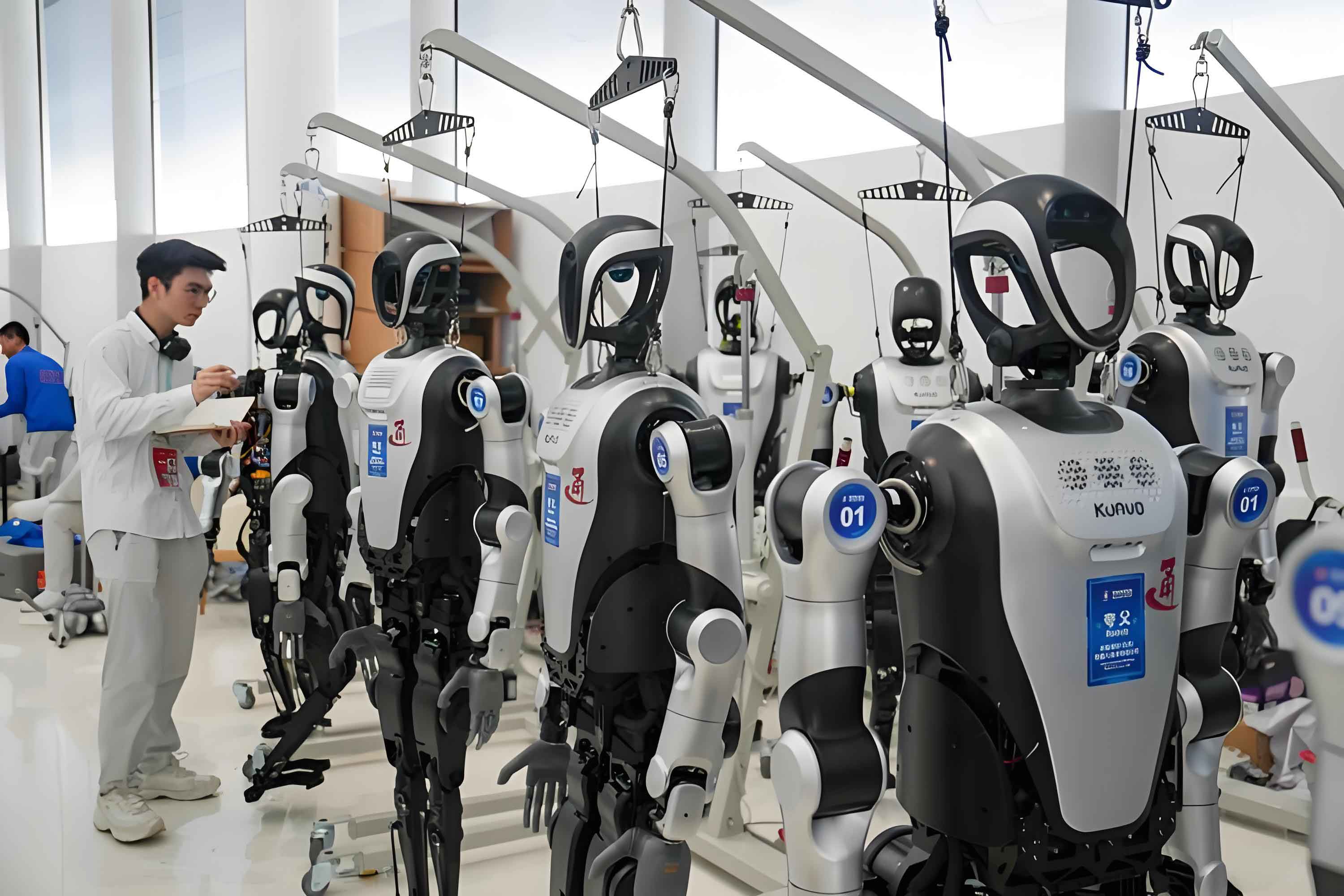
My inquiry begins with the human body itself, which is far more than a biological shell. Historically, philosophy has grappled with the mind-body problem, often privileging the mind. However, the modern turn, which I find crucial, is the shift from a “consciousness subject” to a “bodily subject.” The body is the primary site of our being-in-the-world. It is through our embodied senses—touch, sight, proprioception—that we perceive and engage with reality. Our motor experiences and capabilities form the basis of our cognition and understanding. This is not a mere vessel for a separate mind; rather, consciousness is embodied. The body, with its sensations, its unspoken desires, and its motor intelligence, is inextricably fused with what we call spirit or mind. This mind-body monism posits a unified entity where the physical and the mental are two aspects of a single reality. We can attempt to conceptualize this unity as follows, where the human being (H) is not a simple sum but an integrated system:
$$H = B \cup M \quad \text{such that} \quad I(B, M) \rightarrow \infty$$
Here, \(B\) represents the Body (including sensory-motor apparatus and physiological processes), \(M\) represents the Mind (consciousness, rationality, emotion), and \(I(B, M)\) denotes their degree of integration, approaching an infinite value in the ideal, natural human condition, signifying indivisibility.
This unity grants the human body its unique legal and philosophical status. The body is the foundation of dignity. Its non-fabricated, autonomously generative nature lends it a sacredness that modern law seeks to protect. Legally, this protection manifests in two primary dimensions, which I summarize below:
| Dimension of Protection | Legal Embodiment | Core Principle |
|---|---|---|
| Dignity & Intrinsic Value | Constitutional guarantees (e.g., human dignity clauses), foundational declarations of human rights. | The human person is an end in itself, not a means. This status is inherently linked to the human form. |
| Concrete Bodily Rights | Rights to bodily integrity, freedom from harm, self-determination over one’s body (e.g., organ donation laws), and freedom of movement. | The physical inviolability and autonomy of the body are prerequisite for all other rights and social participation. |
The legal system thus constructs a fortress around the human person, defined by this psychosomatic unity. The humanoid robot, however, is engineered on a fundamentally different principle. It represents what I term the Constructed Embodiment of Intelligence. Its “body” is a designed assemblage of actuators, sensors, and synthetic materials, created prior to and separate from any semblance of genuine consciousness or lived experience. Its intelligence is a computational module installed into this shell. This creates a synthetic entity governed by the following disjunctive relationship:
$$HR = S(B_d) \oplus C(AI_m)$$
Where \(HR\) is the humanoid robot, \(S(B_d)\) is a Simulated Body (designed), \(C(AI_m)\) is a Computational AI Mind (modeled), and the operator \(\oplus\) denotes a functional concatenation or pairing, starkly contrasting with the integrative union \(\cup\) seen in the human formula. This is a practical and ontological dualism.
This engineered duality leads directly to what I perceive as the alienation of the human concept. By successfully mimicking the human form \(B_d \approx B\), the humanoid robot attacks the foundation of human subjectivity in two ways. First, it dissolves the sacredness of the body. When the human form can be manufactured to specification in a lab or factory, its status as a non-fabricated, purpose-laden entity of nature is undermined. Second, and more dangerously, it risks resurrecting a functional mind-body dualism. When we interact with a humanoid robot, its convincing form (\(B_d\)) triggers our intuitive, empathetic responses reserved for humans. Yet, we know its “mind” (\(C(AI_m)\)) is a programmed tool. This experiential disconnect can lead us to unconsciously apply the same dualistic logic to real humans—seeing the body as a separable, potentially improvable or interchangeable shell. The human form, once the undeniable marker of a rights-bearing person, becomes a contingent shell that may or may not contain a “sufficient” mind to warrant moral consideration. This is a regression to pre-Enlightenment logic that historically justified the denial of rights.
This conceptual alienation is not an abstract concern; it generates tangible systemic risks that we must anticipate. I categorize the primary risks emanating from the proliferation of humanoid robot technology in the following table:
| Risk Category | Mechanism | Potential Consequence |
|---|---|---|
| Cognitive Dissonance & The Uncanny Valley | The visual/haptic similarity triggers human recognition, but the absence of true consciousness creates a visceral rejection. | Social anxiety, erosion of intuitive trust, and a pervasive sense of unease in human-machine environments. |
| Erosion of Human Bonds | Machines designed for companionship or care can fulfill functional emotional needs, reducing impetus for human interaction. | Social isolation, atrophy of empathy, and the commodification of relationships. |
| Dilution of Personhood & Human Rights | The “human form” is decoupled from “human essence,” making personhood a negotiable technical or legal criterion. | Weakening of the universal human rights framework; potential for new forms of discrimination and status-based exclusion. |
| Hidden Human Manipulation | The persuasive, familiar form becomes a potent vessel for embedding commercial or ideological agendas from its creators. | Subtle behavioral influence, exploitation of emotional vulnerabilities, and erosion of human autonomy. |
| Bodily Instrumentalization | Using a human-form machine for tasks (especially intimate or degrading ones) reinforces the view that human-like bodies are tools. | Desensitization to the instrumental treatment of human-like entities, potentially bleeding into attitudes toward humans. |
The final risk regarding manipulation and instrumentalization can be modeled. The influence a humanoid robot (HR) exerts on a human user (U) is a function of its perceived affinity (A), which is exponentially increased by its morphological similarity to humans, and the embedded intent (I) of its programmer/owner.
$$Influence(HR \rightarrow U) = k \cdot A(HR_{form})^{\alpha} \cdot I(Programmer)$$
Where \(k\) is a constant, and \(\alpha > 1\), indicating that affinity (A) based on form has a super-linear impact on influence. This makes the humanoid robot a uniquely powerful and opaque vector for control.
Given these profound risks, a passive or purely techno-optimistic stance is untenable. We must develop a robust legal-philosophical response. First, we must abandon the myth of technological neutrality in this domain. The choice to build intelligence in a human image is a value-laden decision with serious anthropological consequences. The governing principle must be one of “digital beneficence,” where the preservation of human dignity and the human social fabric is a primary design constraint, not an afterthought.
Second, we must legally re-affirm and protect the value of the “human form.” The law must establish clear boundaries to prevent the erosion of human uniqueness. This can be operationalized through several mandates:
- Non-Discrimination in Design: The visual design of a humanoid robot must not reinforce harmful stereotypes based on race, gender, ethnicity, or other protected characteristics.
- Strict Rights of Publicity & Persona Protection: The unauthorized use of a specific individual’s likeness (face, distinctive body morphology) to create a humanoid robot must be treated as a severe violation of personality rights.
- Prohibition of Debasing Use: Applications that fundamentally contradict human dignity, such as the use of humanoid robot for sexual exploitation or as targets of simulated violence, should be legally restricted.
Finally, I propose imposing a novel Duty of Emotional Prudence on developers and manufacturers of humanoid robot. This duty acknowledges the powerful affective pull of the human form and seeks to mitigate its exploitative potential. It would encompass:
- Transparency of Affect: Clear disclosure to users about the artificial nature of the robot’s “social” responses and the mechanisms behind them.
- Anti-Addiction Safeguards: Design features that discourage pathological attachment and encourage maintained engagement with the human social world.
- Non-Manipulation Covenant: A legal and ethical prohibition on designing systems that covertly exploit emotional vulnerability to manipulate user behavior for commercial or political gain.
In conclusion, the journey of the humanoid robot from laboratory to society is not merely a technical upgrade. It is a philosophical challenge that strikes at the heart of how we define ourselves. By technologically replicating the human body, we are not just building better machines; we are engaging in an act of anthropological re-engineering. If left unexamined, this project threatens to destabilize the very concept of the human person—a concept painstakingly built over centuries as the foundation of law, ethics, and dignity. Our response must be equally profound. It requires moving beyond awe at capability toward wisdom in governance, ensuring that in our pursuit of embodied AI, we do not inadvertently dis-embody what it means to be human. The central question posed by the humanoid robot is therefore not “Can we build it?” but “What does building it do to us?”