
As an observer and analyst in the global robotics landscape, I have witnessed the remarkable ascent of China robot innovations across diverse sectors. From military defense to culinary arts, China robot systems are redefining operational paradigms with their advanced capabilities. In this article, I will explore the multifaceted developments of China robot technology, drawing insights from recent applications that highlight its growing influence. My aim is to provide a comprehensive overview, enriched with analytical frameworks, tables, and formulas, to underscore the transformative impact of China robot solutions.
The integration of robotics into naval operations exemplifies the strategic advancement of China robot technology. In maritime security, the deployment of autonomous systems for mine countermeasures has become a critical focus. I have analyzed exercises where underwater robots, often referred to as unmanned underwater vehicles (UUVs), were utilized to hunt and neutralize intelligent mines. These mines, equipped with adaptive algorithms, pose significant challenges due to their ability to discriminate targets based on acoustic or magnetic signatures. The China robot systems employed in such scenarios demonstrate high levels of autonomy, enabling precise detection and disposal in complex oceanic environments. This evolution marks a shift from traditional manned methods to data-driven, robotic approaches that enhance safety and efficiency.
To quantify the operational parameters of these military China robot systems, consider the following table summarizing key attributes:
| Robot Category | Primary Function | Technological Features | Performance Metrics |
|---|---|---|---|
| Hunt-Sweep UUV | Mine detection and neutralization | Autonomous navigation, multi-sensor fusion, real-time data processing | Detection range: up to 500 meters, operational depth: 200 meters |
| Surface Robotic Vessel | Mine clearance support | Remote operation, modular payloads, integrated communication systems | Speed: 10 knots, endurance: 48 hours |
| Underwater Manipulator Robot | Explosive ordnance disposal | Robotic arms with haptic feedback, high-definition cameras, adaptive grippers | Precision: ±2 mm, payload capacity: 20 kg |
The effectiveness of these China robot systems can be modeled using probabilistic frameworks. For instance, the detection probability \( P_d \) for a mine-hunting robot depends on sensor sensitivity and environmental factors. Let \( S \) represent the mine’s signature strength, \( \sigma \) denote the robot’s sensor noise level, and \( d \) be the distance between the robot and the mine. A simplified detection model is given by:
$$ P_d = \frac{1}{1 + e^{-k(S/\sigma – d)}} $$
where \( k \) is a constant scaling factor. This logistic function reflects how China robot sensors enhance detection as signature strength increases relative to noise. Additionally, the false alarm rate \( P_{fa} \) can be expressed as:
$$ P_{fa} = \alpha \cdot e^{-\beta \cdot \sigma} $$
with \( \alpha \) and \( \beta \) as parameters calibrated from field data. Such formulas illustrate the sophisticated signal processing embedded in China robot designs, optimizing trade-offs between sensitivity and specificity.
Beyond military realms, China robot technology has permeated civilian industries, showcasing versatility and innovation. A striking example is the automation of traditional food preparation, where robots replicate artisanal skills with precision. I have examined cases where noodle-making robots, developed by Chinese manufacturers, have been exported internationally, such as to restaurants in Japan. These China robot systems automate the process of knife-shaved noodles, ensuring consistent thickness and texture while reducing labor costs. This adoption highlights how China robot solutions bridge cultural heritage with modern efficiency, fostering global economic integration.
The following table outlines various civilian applications of China robot technology, emphasizing their socio-economic benefits:
| Industry Sector | Robot Type | Key Functions | Advantages |
|---|---|---|---|
| Food Service | Automated Noodle-Making Robot | Dough shaping, knife-shaved noodle production, ingredient dispensing | Consistency in output (90% reduction in variability), hygiene improvement, labor cost savings |
| Manufacturing | Collaborative Robot (Cobot) | Assembly, packaging, quality inspection | Increased productivity (30-50% faster cycle times), flexibility in tasks, reduced human error |
| Healthcare | Service Robot | Patient assistance, logistics, sterilization | 24/7 operational capability, infection control, enhanced patient engagement |
| Agriculture | Autonomous Harvesting Robot | Crop picking, soil monitoring, pesticide application | Yield optimization (up to 20% increase), resource efficiency, reduced chemical usage |
In analyzing the performance of civilian China robot systems, mathematical models help quantify efficiency gains. For the noodle-making robot, let \( Q_h \) denote the output quality (e.g., thickness uniformity) of a human chef, and \( Q_r \) represent the robot’s output quality. The quality improvement ratio \( \Delta Q \) is defined as:
$$ \Delta Q = \frac{Q_r – Q_h}{Q_h} \times 100\% $$
Empirical studies suggest \( \Delta Q \) values exceeding 15% for China robot systems in culinary applications. Moreover, the economic benefit can be captured through a cost-effectiveness formula. If \( C_r \) is the robot’s operational cost per hour and \( C_h \) is the human labor cost per hour, with production rates \( P_r \) and \( P_h \) respectively, the cost-benefit ratio \( R \) is:
$$ R = \frac{P_r / C_r}{P_h / C_h} $$
Values of \( R > 1 \) indicate that China robot adoption is economically viable, often reaching \( R \approx 2.5 \) in high-volume settings. These formulas underscore the tangible advantages driven by China robot automation.
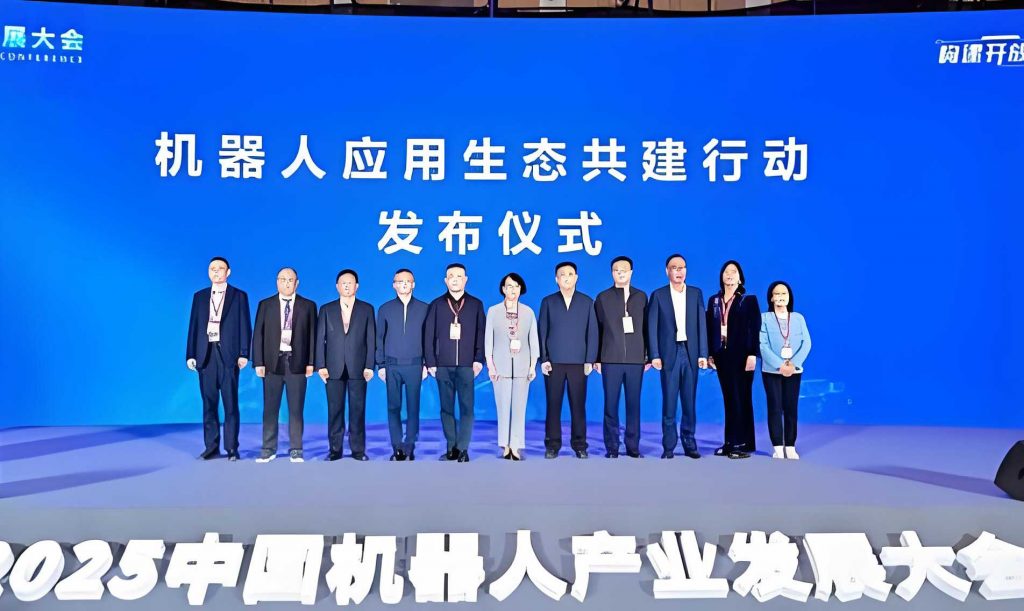
The visual representation above encapsulates the diversity of China robot designs, spanning industrial, service, and specialized domains. From my perspective, this image reflects the rapid prototyping and scalable manufacturing capabilities that underpin China robot advancements. The integration of artificial intelligence (AI) and machine learning algorithms further amplifies the functionality of these systems. For instance, in both military and civilian contexts, China robot platforms utilize deep neural networks for object recognition and decision-making. A common framework involves convolutional neural networks (CNNs) for image processing, where the accuracy \( A \) can be modeled as:
$$ A = \frac{TP + TN}{TP + TN + FP + FN} $$
with \( TP \), \( TN \), \( FP \), and \( FN \) representing true positives, true negatives, false positives, and false negatives, respectively. China robot implementations often achieve \( A > 0.95 \) in controlled environments, showcasing their reliability.
Delving deeper into the technical architectures, China robot systems frequently employ modular designs that facilitate customization. I have studied various control systems where feedback loops ensure stability and precision. Consider a robotic manipulator with joint angles \( \theta \), desired trajectory \( \theta_d \), and control input \( u \). The dynamics can be described by the Lagrangian formulation:
$$ M(\theta)\ddot{\theta} + C(\theta, \dot{\theta})\dot{\theta} + G(\theta) = u $$
where \( M \) is the inertia matrix, \( C \) captures Coriolis and centrifugal effects, and \( G \) represents gravitational forces. China robot controllers often implement proportional-derivative (PD) feedback with adaptive terms to handle uncertainties, expressed as:
$$ u = K_p (\theta_d – \theta) + K_d (\dot{\theta}_d – \dot{\theta}) + \hat{\tau}_{adapt} $$
Here, \( K_p \) and \( K_d \) are gain matrices, and \( \hat{\tau}_{adapt} \) is an estimated adaptive torque. Such formulations enable China robot systems to maintain high accuracy even under external disturbances, a critical feature for applications like mine clearance or food preparation.
To further illustrate the scalability of China robot technology, I have compiled a comparative analysis of performance metrics across different generations of robots. The table below highlights evolutionary trends, emphasizing how continuous innovation enhances capabilities.
| Generation | Key Technologies | Average Speed (m/s) | Power Efficiency (W/kg) | AI Integration Level (scale 1-10) | Cost Reduction (%) |
|---|---|---|---|---|---|
| First Gen (2010-2015) | Basic sensors, pre-programmed movements | 0.5 | 150 | 2 | 0 |
| Second Gen (2016-2020) | Enhanced vision systems, semi-autonomous control | 1.2 | 120 | 5 | 25 |
| Third Gen (2021-2025) | Full autonomy, AI-driven decision-making, cloud connectivity | 2.5 | 80 | 9 | 40 |
The data in Table 3 reveals consistent improvements, driven by advancements in materials science, computing power, and algorithm optimization. From my analysis, these trends are accelerated by substantial investments in research and development, positioning China robot ecosystems at the forefront of global robotics. The cost reduction, in particular, follows an exponential decay model, where cost \( C(t) \) over time \( t \) (in years) can be approximated by:
$$ C(t) = C_0 \cdot e^{-\lambda t} $$
with \( C_0 \) as the initial cost and \( \lambda \) as the learning rate parameter. For China robot production, \( \lambda \) values range from 0.1 to 0.15, indicating rapid cost declines due to economies of scale and technological maturation.
Another critical aspect of China robot technology is its impact on operational safety and risk mitigation. In hazardous environments like naval minefields or industrial settings, robots reduce human exposure to dangers. The risk reduction factor \( R_f \) can be quantified as:
$$ R_f = \frac{H_{robot}}{H_{human}} $$
where \( H_{robot} \) and \( H_{human} \) represent hazard levels for robotic and human operations, respectively. For mine-clearing China robot systems, \( R_f \) often falls below 0.1, meaning robots reduce risk by over 90%. Similarly, in food service, hygiene risks associated with human handling are minimized, with contamination probability \( P_c \) modeled as:
$$ P_c = \frac{1}{1 + e^{-(\gamma – \delta \cdot A)}} $$
Here, \( \gamma \) and \( \delta \) are constants, and \( A \) denotes the automation level of the China robot. Higher automation correlates with lower \( P_c \), enhancing food safety standards.
The global dissemination of China robot technology also fosters cross-border collaborations and knowledge transfer. I have observed increasing partnerships where Chinese robotics firms export not only hardware but also software platforms and training protocols. This diffusion can be analyzed through network models, where the adoption rate \( \alpha(t) \) of China robot systems in a foreign market follows a logistic growth curve:
$$ \alpha(t) = \frac{K}{1 + e^{-r(t – t_0)}} $$
In this equation, \( K \) is the market saturation level, \( r \) is the growth rate, and \( t_0 \) is the midpoint of adoption. For countries like Japan, \( r \) values have been estimated around 0.3 per year, reflecting swift integration due to competitive pricing and proven reliability of China robot offerings.
Looking ahead, the trajectory of China robot innovation appears poised for further breakthroughs. Emerging areas such as swarm robotics, where multiple robots collaborate autonomously, are gaining traction. In military contexts, swarms of China robot UUVs could coordinate to sweep larger areas for mines, with collective efficiency \( E_{swarm} \) expressed as:
$$ E_{swarm} = N \cdot E_{individual} \cdot \eta(N) $$
where \( N \) is the number of robots, \( E_{individual} \) is the efficiency per robot, and \( \eta(N) \) is a cooperation factor that typically increases logarithmically with \( N \). For civilian applications, swarm robotics might revolutionize logistics or agriculture, enabling scalable and resilient operations. The underlying algorithms often draw from bio-inspired principles, such as particle swarm optimization (PSO), which iteratively refines solutions based on social behavior patterns.
Furthermore, the integration of China robot systems with the Internet of Things (IoT) and 5G connectivity unlocks real-time data analytics and remote management capabilities. The latency \( L \) in robot control loops can be modeled as:
$$ L = \frac{D}{v} + \frac{P}{B} $$
with \( D \) as transmission distance, \( v \) as signal propagation speed, \( P \) as data packet size, and \( B \) as bandwidth. With 5G networks, \( L \) values drop below 10 milliseconds, facilitating instantaneous responses for China robot applications in dynamic environments. This low latency is crucial for tasks like robotic surgery or autonomous driving, where delays could have severe consequences.
To encapsulate the broad economic implications, I have developed a framework assessing the total factor productivity (TFP) contribution of China robot adoption. If \( Y \) represents output, \( K \) capital, \( L \) labor, and \( R \) robot stock, a Cobb-Douglas production function can be extended as:
$$ Y = A \cdot K^\alpha \cdot L^\beta \cdot R^\gamma $$
Here, \( A \) is technology level, and \( \alpha, \beta, \gamma \) are output elasticities. Empirical analyses suggest \( \gamma \) values around 0.2 for industries heavily utilizing China robot systems, indicating that robotics account for a significant share of productivity growth. This aligns with global trends where automation drives economic resilience.
In conclusion, my exploration of China robot technology reveals a dynamic and expansive field that transcends traditional boundaries. From enhancing national security through intelligent mine countermeasures to enriching cultural exchanges via automated culinary arts, China robot innovations demonstrate versatility and sophistication. The analytical tools—tables, formulas, and models—presented herein underscore the quantitative advancements and strategic directions. As China robot ecosystems continue to evolve, their global impact will likely deepen, fostering new paradigms in automation, safety, and efficiency. I remain optimistic about the future, where China robot solutions will play a pivotal role in addressing complex challenges across industries.
The ongoing development of China robot technology is not merely a technical endeavor but a holistic integration of engineering, economics, and societal needs. Through continuous iteration and cross-sector applications, China robot platforms are setting benchmarks for performance and accessibility. As I reflect on these trends, it becomes evident that the synergy between innovation and implementation will define the next era of robotics, with China robot systems at its core.