
Digital technology is reshaping the way local cultures are produced, circulated, experienced, and remembered. In museums, tourism districts, online platforms, and urban public spaces, virtual avatars and embodied intelligence are no longer treated as simple technical tools. They are becoming new cultural subjects, new narrative carriers, and new memory anchors. The rise of embodied intelligence is especially significant because it moves digital communication beyond the flat screen and toward physical presence, sensory interaction, and collective emotional response. At the same time, virtual avatars continue to expand the reach of local culture through lightweight, scalable, and personalized digital interaction. Together, virtual avatars and embodied intelligence are creating a new ecology in which human users, intelligent agents, cultural symbols, and local identities interact in more complex ways.
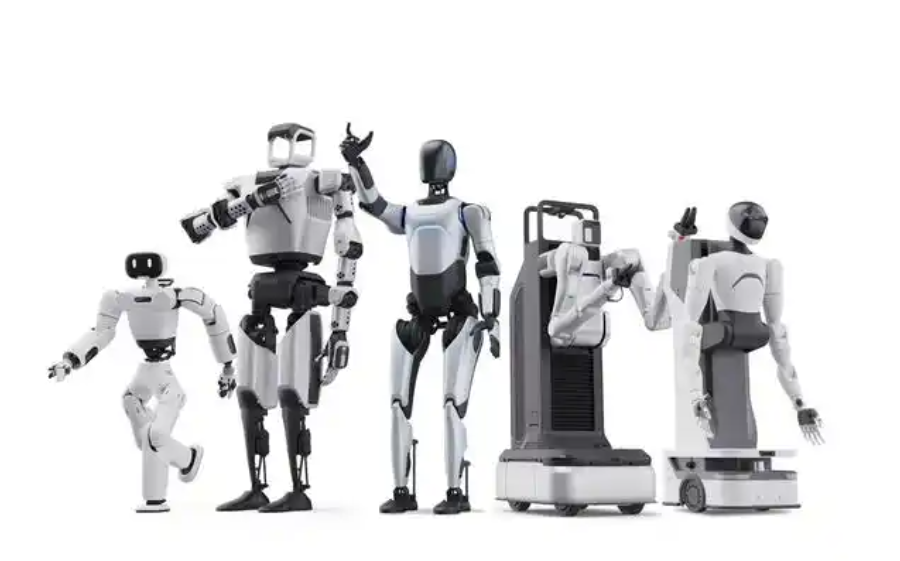
This emerging ecology is particularly visible in regional cultural communication. Local heritage, dialect, folklore, industrial memory, and urban character have traditionally depended on physical sites, face-to-face interpretation, printed materials, or broadcast media. Those channels remain important, but they often struggle to reach younger audiences, adapt to fragmented media habits, or create sustained emotional engagement. Virtual avatars and embodied intelligence offer a different pathway. They can transform static cultural resources into interactive subjects, give local stories a recognizable voice and body, and connect cultural meaning with immersive experiences. The key question is not whether digital technology can be applied to local culture, but how different intelligent carriers encode, translate, and communicate local cultural meaning.
In this context, two cases from Liaoning Province provide useful evidence. The first is the AI2.0 intelligent agent matrix launched by the Liaoning Provincial Museum in July 2025. The second is Xiong Beibei, an embodied intelligence created by Dalian Botao Technology and unveiled in May 2022 at Xiong Dong Street in Dalian. One case relies on virtual avatars and polyphonic digital narration. The other relies on a physical, large-scale embodied intelligence and a more unified narrative. Both demonstrate how embodied intelligence and virtual avatars can empower local cultural communication, though they do so through different coding logics, presence effects, and audience relationships.
1. The Intelligent Subject Ecology of Local Cultural Communication
The digital turn in local cultural communication is not merely a change in distribution channels. It is a change in the participating subjects. In the past, local culture was mainly narrated by institutions, experts, tour guides, writers, filmmakers, or community elders. Today, virtual avatars and embodied intelligence can also become narrators, guides, performers, companions, and symbols. This does not replace human agency, but it expands the cast of cultural communication. The result is a human-machine collaborative ecology in which intelligent agents carry cultural memory, mediate emotional relationships, and participate in identity construction.
Virtual avatars are digital entities that often appear on screens, mobile devices, displays, or online platforms. They may be realistic or stylized, singular or multiple, scripted or generative. Their strength lies in scalability, adaptability, and low-friction access. They can be reproduced, updated, personalized, and distributed across many contexts. Embodied intelligence, by contrast, possesses a physical body or a materially situated presence. It can occupy space, move, gesture, emit sound, respond to its environment, and create a sense of shared physical experience. The strength of embodied intelligence lies in presence, ritual, sensory intensity, and collective memory. When embodied intelligence is designed as a cultural carrier, it can turn abstract local identity into a tangible and encounterable form.
The Liaoning Provincial Museum case illustrates the virtual avatar pathway. The museum is a major cultural window that presents the historical texture and humanistic character of Liaoning. Its AI2.0 intelligent agent matrix was introduced in July 2025 as a digital bridge for audiences to engage with Liaoning’s historical context and local culture. The matrix consists of three virtual digital humans: Liao Xiaoling, Liao Xiaocai, and Liao Xiaolong. Each carries a distinct role and style. Liao Xiaoling wears a white loose dress, a floral wreath, and a jade pig dragon pendant. She appears as an Eastern young woman and serves as the intelligent service hub for the whole system. Liao Xiaocai wears a traditional qipao and uses a distinct Northeastern regional dialect for cultural explanation and interactive exchange. Liao Xiaolong is a child figure dressed in coarse hemp primitive clothing, standing barefoot, and provides lively and accessible explanations for children. These are digital beings that depend on display devices, yet they are differentiated, coordinated, and capable of speaking in multiple voices. Their collective operation forms a polyphonic model of cultural communication.
The Dalian case illustrates the embodied intelligence pathway. Xiong Beibei is a giant mechanical beast created by Dalian Botao Technology. It was officially unveiled in May 2022 at Xiong Dong Street in Dalian. Weighing 25 tons, this large mechanical white bear breaks the limitations of traditional mechanical installations. It is equipped with a multimodal interaction system and has crossed from a bionic device into an intelligent life form. It serves as an image ambassador for urban cultural tourism. Xiong Dong Street, with Xiong Beibei as its core intellectual property, has achieved nearly 1.7 million visitors in 2025 within a space of less than 10,000 square meters. Xiong Beibei has also gained 2 million followers across online platforms. As a single embodied image, it carries regional character and builds a city cultural image intellectual property, generating immersive cultural identity and emotional resonance. This creates a different kind of monophonic narrative.
Taken together, the virtual avatar matrix represented by the Liaoning Provincial Museum AI2.0 intelligent agents and the embodied intelligence represented by Xiong Beibei form a practical ecology for local cultural communication in Liaoning. They rely on differentiated communication paths and produce replicable mechanisms for local cultural production, dissemination, and group identity construction. The contrast between them is not a simple opposition between virtual and physical. It is a contrast between two ways of organizing cultural meaning: one through plural voices and personalized dialogue, the other through a unified body and collective affect. Both are forms of embodied intelligence in the broad sense, because both give cultural meaning a communicative body, whether digital or physical.
2. Code-Building Logic: Two Intelligent Translation Pathways
The core of digital translation for local cultural resources is not the mere digitization of objects. It is the layered encoding of regional cultural symbol systems through intelligent media. In practice, different localities often develop two broad pathways: static digital interaction and human-shaped virtual avatars. Under this macro-technological logic, Liaoning has built two distinct paths through the Liaoning Provincial Museum AI2.0 intelligent agents and the embodied virtual image Xiong Beibei. These can be described as polyphonic coding and monophonic coding.
Polyphonic narrative emphasizes multiple voices and equal dialogue. It presents a state in which many voices coexist, mutually recognize one another, interact, and complement one another. The Liaoning Provincial Museum AI2.0 intelligent agents build a polyphonic coding system through three virtual digital humans. They use plural and equal narrative voices to present a three-dimensional picture of local culture. Xiong Beibei, by contrast, uses a concentrated and unified coding strategy. A single giant mechanical embodied intelligence carries the regional character of Dalian’s marine culture and urban industrial civilization. Through unified visual temperament, personality setting, and behavioral performance, it condenses the overall meaning of local culture, seeks emotional resonance and value identification, and turns the intellectual property symbol into a spatial anchor for regional shared memory.
- 2.1 Visual image codes in polyphonic virtual avatars. Liao Xiaoling’s clothing and headwear use light, soft colors and a gentle, agile form. The jade pig dragon accessory functions as a symbol of cultural roots. Liao Xiaocai’s qipao patterns visually encode and translate Liao three-color cultural symbols, producing an elegant and dignified presence. Liao Xiaolong’s coarse hemp clothing, leaf headwear, and barefoot image restore the living texture of the Hongshan cultural period. These visual choices are not decorative. They are compact cultural signs that allow different audience segments to recognize different layers of regional heritage.
- 2.2 Language style codes in polyphonic virtual avatars. Liao Xiaoling uses standard Mandarin with a neutral and objective tone, reflecting a professional, rigorous, and authoritative academic narrative style. Liao Xiaocai uses a typical Northeastern accent and colloquial expression to shorten the distance from the audience, giving the idea that Liaoning people tell Liaoning stories a vivid and emotionally rich carrier. Liao Xiaolong presents a childlike language style, with a tone of innocent curiosity, a lively rhythm, and strong appeal. The three voices do not compete for a single truth. They create a layered conversational field.
- 2.3 Cultural content codes in polyphonic virtual avatars. Liao Xiaoling usually explains cultural relics according to the logical sequence of artifact features, cultural value, museum collection conditions, and research value. The explanation is orderly and clear. Liao Xiaocai pays more attention to vivid and concrete description, sketching a complete picture of the artifact and turning local culture from an abstract concept into a perceptible scene. Liao Xiaolong combines professional popularization with story-based and figurative expression, while emphasizing the deep connection between artifacts and Liaoning local culture. Together, the three virtual digital humans use differentiated coding to build an AI matrix narrative logic that is layered, intertextual, and mutually reinforcing.
- 2.4 Visual codes in monophonic embodied intelligence. Xiong Beibei’s main body is a silver-gray metal mechanical giant beast. Exposed gears, pipes, and metal plates present mechanical textures and a thick steampunk quality. The deep blue eyes are a visual design that translates the cultural genes of the coastal city Dalian. This color coding gives the intellectual property image a clear and pure temperament while strengthening the futuristic technological feeling of Xiong Beibei as a cybernetic mechanical being. In this case, embodied intelligence becomes a concentrated visual statement of place.
- 2.5 Personality codes in monophonic embodied intelligence. Xiong Beibei relies on a heavy, massive metal body and slow limb extension to convey a steady and honest personality. Through rich facial expressions and special effects such as head raising, spraying, and roaring, it shapes a mechanical giant beast that is honest, powerful, warm, and kind. Its overall personality temperament resonates internally with the bold, forthright, warm, and simple group character associated with Northeastern people. This constitutes an embodied expression of regional personality on an intelligent agent.
- 2.6 Behavioral codes in monophonic embodied intelligence. Behavior performance closely tied to urban cultural tourism is the core behavioral mode of Xiong Beibei’s fixed-point and parade displays. It combines mechanical dynamics with Dalian’s urban space and industrial cultural scenes. The behavior itself undertakes the function of local cultural narration and becomes a behavioral carrier for urban cultural communication. Xiong Beibei’s affectionate coaxing, playful fortune-telling, and other emotional interactions, together with sound-light interactive behavior, construct a mimetic interaction logic of embodied intelligence. This gives it anthropomorphic emotional transmission characteristics and makes embodied intelligence a participant in everyday urban affect.
The difference between virtual avatar coding and embodied intelligence coding is therefore not only technical. The Liaoning Provincial Museum AI2.0 intelligent agents adopt segmented and differentiated polyphonic narrative coding. Each virtual image within the matrix carries a different style and cultural orientation. Users can choose a dialogue partner according to their own interests. This multi-layered coding design respects individual audience needs and aesthetic differences. It also displays the plurality and inclusiveness of local culture through a multi-voice narrative form, making polyphonic cultural communication possible. Xiong Beibei, by contrast, adopts a cohesive and unified coding strategy. A single giant mechanical embodied intelligence concentrates the core regional character of Dalian’s marine culture and urban industrial civilization. Through unified visual temperament, personality setting, and behavioral performance, it condenses the overall meaning of local culture, seeks emotional resonance and value identification, and turns the intellectual property symbol into a spatial anchor for regional shared memory.
3. Presence Effects: How Virtual Avatars and Embodied Intelligence Differ
Different forms of intelligent digital carriers generate very different immersive presence experiences. Virtual avatars and embodied intelligence form differentiated audience cultural presence effects through their existence forms, interaction logics, and narrative modes. The Liaoning Provincial Museum AI2.0 virtual avatars and the embodied intelligence Xiong Beibei show clear communication differences in existence form, interaction method, cultural narrative, and user relationship. These differences help explain why both can succeed despite moving in opposite directions.
| Dimension | Virtual Avatars in the Liaoning Provincial Museum AI2.0 Matrix | Embodied Intelligence in Xiong Beibei | Communication Implication |
|---|---|---|---|
| Existence form | Digital avatars existing through display devices and virtual media | A physical mechanical giant beast occupying real urban space | Virtual avatars enable scalable digital presence; embodied intelligence enables material and spatial presence |
| Presence mode | Disembodied polyphonic presence | Embodied monophonic presence | Polyphony supports plural interpretation; embodied intelligence supports unified identity anchoring |
| Interaction method | Lightweight, adaptive, personalized dialogue and guided explanation | Immersive, sensory, ritualized on-site interaction with sound, light, and movement | Virtual avatars fit fragmented media habits; embodied intelligence fits collective and memorable experiences |
| Cultural narrative | Segmented, multi-voice, intertextual narrative | Concentrated, unified, repetition-based narrative | Polyphonic coding highlights diversity and inclusion; monophonic coding deepens symbolic imprint |
| User relationship | Decentralized, optional, conversational connection | Centralized, immersive, collective empathetic connection | Virtual avatars build loose and flexible choice-based ties; embodied intelligence builds close and belonging-based ties |
| Scalability | Can be copied, updated, and distributed across multiple online and on-site contexts | Bound to a physical location and live performance, making complete experience site-specific | Virtual avatars serve large-scale cultural service delivery; embodied intelligence creates scarcity and ritual value |
| Memory effect | Personalized dialogue memories and repeated digital encounters | Spatial memory, shared collective experience, and iconic urban image | Both create memory, but one is dialogic and portable while the other is spatial and collective |
In terms of existence form, the Liaoning Provincial Museum AI2.0 intelligent agents exist as virtual avatars. They rely on digital media to construct virtual presence, break through the limitations of physical space and time, and achieve multi-scenario communication through lightweight online presentation. Their presence is a disembodied digital symbolic presence. This disembodied quality allows them to be infinitely copied and updated at any time, thereby achieving large-scale distribution of cultural services. Xiong Beibei, as a physically existing embodied intelligence, uses a giant mechanical entity as its carrier to form embodied presence. It relies on fixed physical space and live performance to achieve spatialized presence. Users must visit Xiong Dong Street to obtain a complete experience. This embodied quality gives it irreplaceable ritual sense and scarcity.
In terms of interaction, the Liaoning Provincial Museum AI2.0 intelligent agents rely on virtual avatars to achieve lightweight adaptive interaction. Users can choose corresponding digital humans according to their interests to receive intelligent guidance, personalized explanations, and real-time dialogue. The operation is convenient and flexible. This personalized and fragmented light interaction adapts to segmented communication needs. Xiong Beibei, by contrast, relies on physical mechanical embodiment to create immersive and strong-perception interaction. Audiences achieve immersive interaction by watching on-site performances and feeling sound, light, dynamics, and body movement. Through physical presence, it forms a sensory and ritualized deep interactive experience, strengthening emotional connection and cultural resonance. In this sense, embodied intelligence is not only seen. It is encountered, felt, and remembered through the body.
In cultural narrative, the Liaoning Provincial Museum AI2.0 intelligent agents use polyphonic narrative. Different virtual avatars within the matrix carry multiple cultural symbols and styles. They use segmented narratives to satisfy diverse audience needs, presenting a narrative characterized by plural coexistence and multiple voices. Xiong Beibei relies on embodied presence to adopt a condensed and unified narrative. It uses a unified honest and cute giant bear image to continuously tell regional stories, anchoring the overall cultural character of the region. It creates a deep imprint of symbols and pursues unified cultural expression and collective memory construction. The contrast shows that polyphonic narrative is strong at expanding interpretive possibilities, while monophonic narrative is strong at concentrating identity and affect.
In user relationships, the Liaoning Provincial Museum AI2.0 intelligent agents construct segmented and personalized dialogue relationships. Users can independently choose matching virtual avatars for interaction, forming decentralized and equal dialogue connections. The relationship between users and the intellectual property is a loose, flexible, choice-based association. Xiong Beibei shapes a centralized and immersive empathetic relationship through embodied presence. Users share performance experiences in a real space, forming collective emotional connections oriented toward cultural identity. The relationship between users and the intellectual property is a tightly bound, belonging-based association. These two presence effects complete the differentiated relationship construction of local cultural communication through virtual segmented dialogue and physical collective empathy.
4. Cultural Activation: From Object to Dialogic Subject
The empowering value of digital intelligent carriers for local culture ultimately lies in the long-term activation of regional cultural memory. Various virtual avatars and embodied intelligence pathways rely on their own media characteristics to release differentiated communication effects from the dimensions of resource translation, audience connection, and cultural inheritance. They constitute important means for localities to revitalize local cultural assets. The Liaoning Provincial Museum AI2.0 intelligent agents and Dalian’s Xiong Beibei rely on two completely different intelligent transformation pathways, each demonstrating the unique contemporary value of intelligent media in empowering local cultural communication.
The Liaoning Provincial Museum AI2.0 intelligent agents reconstruct the digital existence form of local cultural symbols through virtual avatars. Relying on digital technology, they give static artifacts and traditional culture a virtual subject identity that can be dialogued with and interacted with. This allows cultural symbols to escape the constraints of physical carriers and time-space scenes, forming digital subjects that are both communicative and personified. Through segmented polyphonic coding, this digital subject breaks down diverse cultural connotations into virtual avatars of different styles. It turns cultural communication from one-way indoctrination into two-way interaction. It expands the existential dimension of cultural symbols and provides a digital ontological paradigm for plural expression and youth-oriented communication of local culture.
Xiong Beibei, as physical embodied intelligence, reconstructs the embodied existence ontology of regional intellectual property through a physical entity. It transforms local culture into a perceptible and touchable physical image. With a physical body and spatial performance, it gives cultural symbols a sense of life and wonder. Its embodied ontology carries the overall regional character through condensed coding. It turns cultural identity into an experienceable sensory experience, allowing abstract emotion to land as concrete spatial memory. It builds a real-presence ontological support for regional collective identity. The common significance of the two intelligent subjects is that they turn local culture from a narrated object into a dialogic subject. This is a profound shift. It means local culture is no longer only something to be explained, preserved, or displayed. It becomes something that can answer, perform, accompany, and remember with the audience.
The broader meaning of embodied intelligence in this process should not be reduced to novelty. Embodied intelligence creates a body for cultural communication. That body can be mechanical, digital, or hybrid, but it changes the nature of the encounter. When audiences meet an embodied intelligence, they do not simply receive information. They enter a relationship with a cultural performer. They may feel curiosity, affection, surprise, or belonging. These emotional responses are not separate from cultural knowledge. They are pathways into it. In the same way, virtual avatars create a conversational body for cultural communication. That body may be lightweight and screen-based, but it can still carry voice, gesture, personality, and memory. Through repeated interactions, users may develop a sense of familiarity and trust. The cultural symbol becomes a recurring presence in everyday digital life.
5. Comparative Framework: Embodied Intelligence and Virtual Avatars in Local Communication
The two Liaoning cases can be compared across several strategic dimensions. The following framework summarizes how virtual avatars and embodied intelligence differ in their contribution to local cultural communication. It also shows why a local cultural system may benefit from combining both rather than choosing one over the other.
| Strategic Dimension | Virtual Avatar Pathway | Embodied Intelligence Pathway | Complementary Potential |
|---|---|---|---|
| Primary carrier | Digital human images on screens and online interfaces | Physical mechanical body in urban space | Online reach and offline impact can reinforce each other |
| Narrative structure | Polyphonic, multi-voice, segmented | Monophonic, unified, concentrated | Plural interpretation can feed into a shared identity symbol |
| Audience mode | Individual, optional, interactive | Collective, spatial, performative | Personal engagement can lead to collective experience |
| Cultural translation | Artifact details, language styles, educational layers | Regional personality, urban memory, sensory symbolism | Knowledge and affect can be linked |
| Presence effect | Disembodied digital presence | Embodied physical presence | Virtual continuity and physical ritual can form a loop |
| Scalability | High, because digital avatars can be copied and updated | Lower, because the body and site are fixed | Digital extensions can expand the reach of embodied intelligence |
| Ritual value | Low to moderate, based on repeated dialogue | High, based on live encounter and shared space | Repeated digital contact can motivate physical visits |
| Identity function | Shows diversity, inclusion, and layered heritage | Anchors a unified regional image and collective memory | Diversity and unity can coexist in a regional brand system |
| Communication risk | Fragmentation, over-personalization, shallow interaction | Over-symbolization, maintenance cost, site dependence | Balanced design can reduce both risks |
This comparative framework suggests that virtual avatars and embodied intelligence are not competitors in a zero-sum sense. They are complementary cultural communication instruments. Virtual avatars excel at distributing cultural content, adapting to different audience segments, and creating ongoing dialogue. Embodied intelligence excels at creating memorable physical encounters, embodying regional character, and generating collective emotional resonance. When the two are combined, local culture can achieve both breadth and depth. It can reach users online and gather them offline. It can offer multiple entry points and still concentrate meaning around a recognizable regional symbol. It can speak in many voices while also having a strong central body.
For local cultural institutions, the lesson is not to simply add more digital characters or build larger mechanical installations. The lesson is to design a coherent cultural communication system. In such a system, each intelligent carrier has a clear role. Virtual avatars may serve as guides, educators, companions, or community hosts. Embodied intelligence may serve as a landmark, performer, ambassador, or ritual center. The system should connect online and offline experiences, link knowledge with emotion, and allow users to move from casual contact to deeper participation. The strength of embodied intelligence lies in its ability to make cultural meaning tangible. The strength of virtual avatars lies in their ability to make cultural meaning talk back. A well-designed system uses both capacities.
6. Strategic Implications for Local Cultural Communication
The evidence from Liaoning points to several broader implications for localities seeking to use intelligent media for cultural communication. These implications are practical, but they also raise important questions about cultural meaning, audience relationship, and long-term sustainability.
- 6.1 Build intelligent carriers from local cultural codes rather than generic digital templates. The Liaoning Provincial Museum AI2.0 agents use local historical symbols, regional dialect, and age-appropriate educational styles. Xiong Beibei translates Dalian’s marine and industrial character into a mechanical bear with blue eyes. In both cases, the intelligent carrier is not a universal chatbot or generic mascot. It is a specific cultural body with local references. This specificity is what makes the carrier recognizable and meaningful. Local cultural communication should begin with deep symbol research, not with technology selection.
- 6.2 Use polyphonic virtual avatars to serve segmented audiences. Different audiences have different needs. Children may respond to playful language and visual simplicity. Adults may prefer authoritative explanation or vivid storytelling. Local dialect speakers may feel a stronger emotional connection when they hear regional speech. Virtual avatars can be designed as a matrix of voices rather than a single voice. This matrix can include different ages, styles, roles, and knowledge levels. It can make cultural communication more inclusive and more responsive to individual interest. The polyphonic model also reflects the plural nature of local culture itself.
- 6.3 Use embodied intelligence to create spatial anchors and collective memory. Embodied intelligence can turn a cultural district, museum, street, or tourism zone into a memorable destination. Xiong Beibei is not only an exhibit. It is a center of gravity for Xiong Dong Street. Its physical presence, live performances, and interactive behavior create shared experiences that audiences remember together. This collective dimension is difficult to achieve through screen-based media alone. Local cultural planners should consider how embodied intelligence can become a spatial anchor that gathers people, concentrates attention, and gives a place a distinct identity.
- 6.4 Link virtual avatars and embodied intelligence into a continuous experience. Online and offline experiences should not be separated. A virtual avatar can introduce a story, prepare a visit, answer questions, and maintain contact after a visit. An embodied intelligence can provide the climax of physical encounter, live performance, and sensory memory. Together they can form a loop. A user might meet a virtual guide online, travel to a site to encounter embodied intelligence, then return to the virtual guide for further learning or community participation. This loop can increase both reach and depth.
- 6.5 Treat embodied intelligence as a cultural subject, not only a technical exhibit. When embodied intelligence carries cultural meaning, its design must consider personality, behavior, ethics, and long-term narrative consistency. It should not change randomly for short-term attention. It should have a coherent relationship with local history, community values, and public memory. The same applies to virtual avatars. Their language, appearance, and interaction style should be reviewed for cultural accuracy and social sensitivity. Intelligent carriers can become representatives of a place. Their behavior can shape public perception of that place.
- 6.6 Design for repeat interaction and evolving cultural content. A single launch event is not enough. Virtual avatars and embodied intelligence need content updates, seasonal narratives, educational programs, and audience co-creation. The Liaoning Provincial Museum AI2.0 matrix can expand its knowledge, add new dialogue scenarios, and support different exhibitions. Xiong Beibei can develop new performances, participate in festivals, and connect with local artists, schools, and community groups. Long-term activation depends on continuous curation, not only technological novelty.
- 6.7 Evaluate cultural impact beyond visitor numbers and online followers. Attendance and follower counts are useful indicators, but they do not fully measure cultural impact. Local cultural communication should also ask whether audiences understand more about regional history, feel a stronger connection to place, remember specific cultural symbols, and participate in cultural preservation. Both virtual avatars and embodied intelligence should be evaluated for learning outcomes, emotional resonance, accessibility, and community benefit. The goal is not only visibility. It is cultural continuity.
7. Challenges, Risks, and Governance
The expansion of virtual avatars and embodied intelligence in local cultural communication also brings challenges. If these challenges are ignored, intelligent media may weaken rather than strengthen cultural meaning. The first risk is superficiality. A virtual avatar may attract attention through appearance or novelty, but if its cultural content is thin, the interaction will not sustain interest. An embodied intelligence may become a spectacle, but without narrative depth it may be remembered only as a machine. Local cultural institutions need to invest in research, scriptwriting, and educational design, not only in hardware and animation.
The second risk is over-commercialization. When cultural symbols become intellectual property, there is pressure to maximize revenue, merchandise, and viral attention. This can lead to simplified or distorted representations. Local culture may be reduced to a few catchy elements while deeper historical meanings are ignored. Commercial development is not inherently negative, but it needs cultural guardrails. Communities, historians, educators, and cultural practitioners should be involved in decision-making. The representation of local culture should be accurate, respectful, and open to revision.
The third risk is technological dependence. Embodied intelligence requires maintenance, energy, space, and technical support. Virtual avatars require software updates, data management, and platform compatibility. If a locality builds its cultural communication strategy around a single intelligent carrier, it may become vulnerable to technical failure or budget changes. A resilient strategy should include multiple channels, human interpretation, archival resources, and community participation. Technology should support cultural transmission, not replace it.
The fourth risk is data and privacy. Virtual avatars and embodied intelligence may collect user data through dialogue, movement tracking, or personalized recommendations. Local cultural institutions should establish clear privacy rules, transparent data practices, and ethical standards for interaction, especially when children are involved. The cultural trust of audiences is a precious resource. It should not be traded for short-term marketing gain.
The fifth risk is cultural homogenization. If many localities use similar virtual avatar templates or similar mechanical mascots, local distinctiveness may be lost. The Liaoning cases show the importance of specificity. The Liaoning Provincial Museum AI2.0 matrix uses regional dialect, local historical symbols, and differentiated educational roles. Xiong Beibei embodies Dalian’s marine and industrial identity. Other localities should not simply copy these forms. They should ask what cultural codes, memories, and emotions are unique to their place and how those can be translated into intelligent carriers.
8. The Wider Significance of Embodied Intelligence for Cultural Heritage
The wider significance of embodied intelligence lies in its ability to connect abstract cultural meaning with concrete human experience. Cultural heritage is often described as something from the past that must be preserved. But preservation alone is not enough. Heritage must also be lived, interpreted, and renewed. Embodied intelligence can help with this renewal by giving heritage a body that can perform, respond, and accompany. It can turn a historical narrative into an encounter. It can make a regional personality visible and feelable. It can create a shared focal point for collective memory.
At the same time, embodied intelligence should not be treated as magic. It is a medium. Its value depends on the cultural content it carries and the relationships it enables. If embodied intelligence is used only for entertainment, it may attract attention but not deepen understanding. If it is used with careful cultural design, it can become a bridge between past and present, between institutions and audiences, and between local communities and wider publics. The same is true for virtual avatars. They can be lightweight and accessible, but they can also be shallow and forgettable. The difference lies in narrative depth, cultural accuracy, and ongoing engagement.
In this sense, the rise of embodied intelligence in local cultural communication is part of a larger shift. Cultural communication is moving from monologue to dialogue, from static display to interactive experience, and from site-bound interpretation to multi-platform participation. Virtual avatars and embodied intelligence are not the only drivers of this shift, but they are among its most visible expressions. They show how technology can be used not to replace cultural meaning but to give it new forms of presence. They also show that local culture can be both rooted in place and active in digital networks. The challenge is to manage this shift with cultural responsibility and long-term vision.
9. Conclusion
Virtual avatars and embodied intelligence are reshaping local cultural communication by creating new intelligent subjects, new coding systems, new presence effects, and new audience relationships. The Liaoning Provincial Museum AI2.0 intelligent agent matrix demonstrates the power of polyphonic virtual avatars. Through Liao Xiaoling, Liao Xiaocai, and Liao Xiaolong, it offers differentiated voices, styles, and educational approaches. It turns cultural communication into a plural, interactive, and personalized process. Xiong Beibei demonstrates the power of monophonic embodied intelligence. Through a 25-ton mechanical white bear in Dalian’s Xiong Dong Street, it creates a unified regional image, immersive physical presence, and collective emotional resonance. It turns local cultural identity into a spatial and sensory experience.
These two pathways are not mutually exclusive. They represent complementary strategies for activating local culture. Virtual avatars can scale cultural services, reach fragmented audiences, and sustain dialogue across platforms. Embodied intelligence can anchor cultural meaning in physical space, create ritual encounters, and generate shared memory. When combined thoughtfully, they can form a continuous cultural communication loop that connects online and offline, knowledge and affect, individual choice and collective identity. The broader lesson is that local culture does not need to choose between tradition and technology. It can use virtual avatars and embodied intelligence to translate tradition into new forms of presence, participation, and meaning.
The future of local cultural communication will depend on how well institutions, creators, communities, and audiences manage this translation. Embodied intelligence should be designed with cultural specificity, ethical awareness, and long-term narrative coherence. Virtual avatars should be developed with educational depth, linguistic sensitivity, and audience inclusivity. Together, they can help local cultures move from being narrated objects to becoming dialogic subjects. They can help regional heritage remain rooted in place while traveling through digital networks. They can help audiences not only see local culture but also meet it, question it, remember it, and carry it forward.